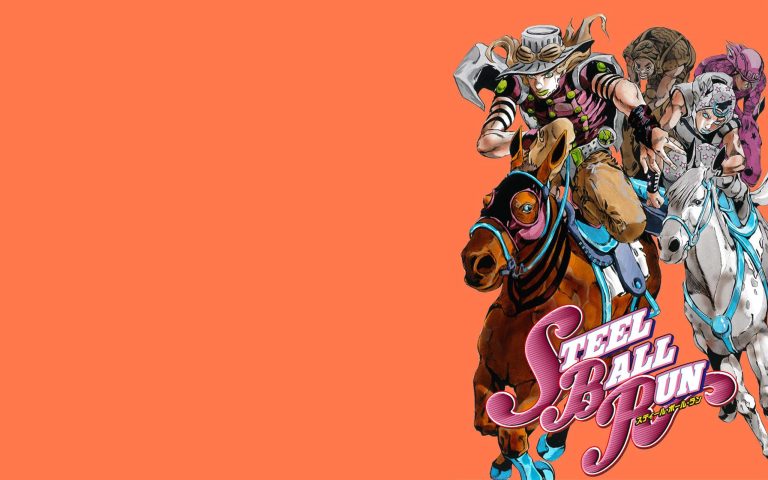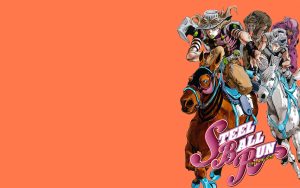
Ever since the melancholic, bittersweet notes of Duffy’s “Distant Dreamer” faded over the credits of Stone Ocean‘s finale in late 2022, a quiet, electric tension has gripped the anime community. For over a decade, David Production pulled off what was once deemed impossible: adapting the labyrinthine, genre-defying multi-generational bloodline epic of Hirohiko Araki’s JoJo’s Bizarre Adventure with kinetic fidelity and stylistic bravura. Yet, even as Enrico Pucci reset the universe, fans were looking past the celestial horizon toward the dusty, unforgiving plains of 1890s America. The whispering winds carry only one name: Steel Ball Run.
Widely heralded across critical forums and MyAnimeList rankings as Araki’s indisputable magnum opus, Part 7 isn’t merely the next sequential chapter in the JoJo pantheon—it is a complete philosophical, aesthetic, and demographic rebirth. But as studio chatter, trademark maneuvers, and ambiguous animator teases churn through social feeds, the monumental weight of bringing this cross-country equestrian race to life looms large over David Production. Can the studio tame anime’s most notorious production nightmare to deliver Araki’s holy grail?
The ‘Equestrian Crucible’: Why Steel Ball Run Terrifies Animators
Before diving into Stand abilities or character psychology, any serious conversation about a Steel Ball Run anime must address the elephant—or rather, the thoroughbred—in the room. In the traditional 2D animation ecosystem, horses are universally recognized as an unmitigated nightmare. Their complex quadrupeds, undulating muscular anatomy, shifting centers of gravity, and erratic skeletal movement require an absurd count of unique, highly detailed hand-drawn cels to look natural.
Steel Ball Run is not a story that merely features horses; it is an epic trans-continental marathon from San Diego Beach to New York City where dozens of equestrians gallop across unforgiving deserts, snowstorms, and rocky canyons for the bulk of its narrative real estate. Animating hundreds of miles of dynamic, high-speed equine kinetic motion has broken lesser productions. It is why animators speak of Part 7 with a mixture of reverence and genuine dread.
David Production stands at a technological and artistic crossroad. Do they lean heavily on cutting-edge 3D CGI cel-shaded models for the horses—an approach popularized by studios like MAPPA in Attack on Titan or Wit Studio in Vinland Saga—or do they attempt a hybrid composite that preserves Araki’s iconic, crosshatched manga linework? The studio’s legendary 3D openings by Kamikaze Douga proved decades ago that JoJo flourishes in three dimensions when handled by visionaries. Yet, finding a cohesive visual language that marries Johnny Joestar’s fluid riding with the grotesque, anatomical transformations of Stand combat will be David Production’s definitive technical litmus test.
Tusk and the Golden Spin: Deconstructing Johnny and Gyro
A Crippled Prodigy and a Reluctant Mentor
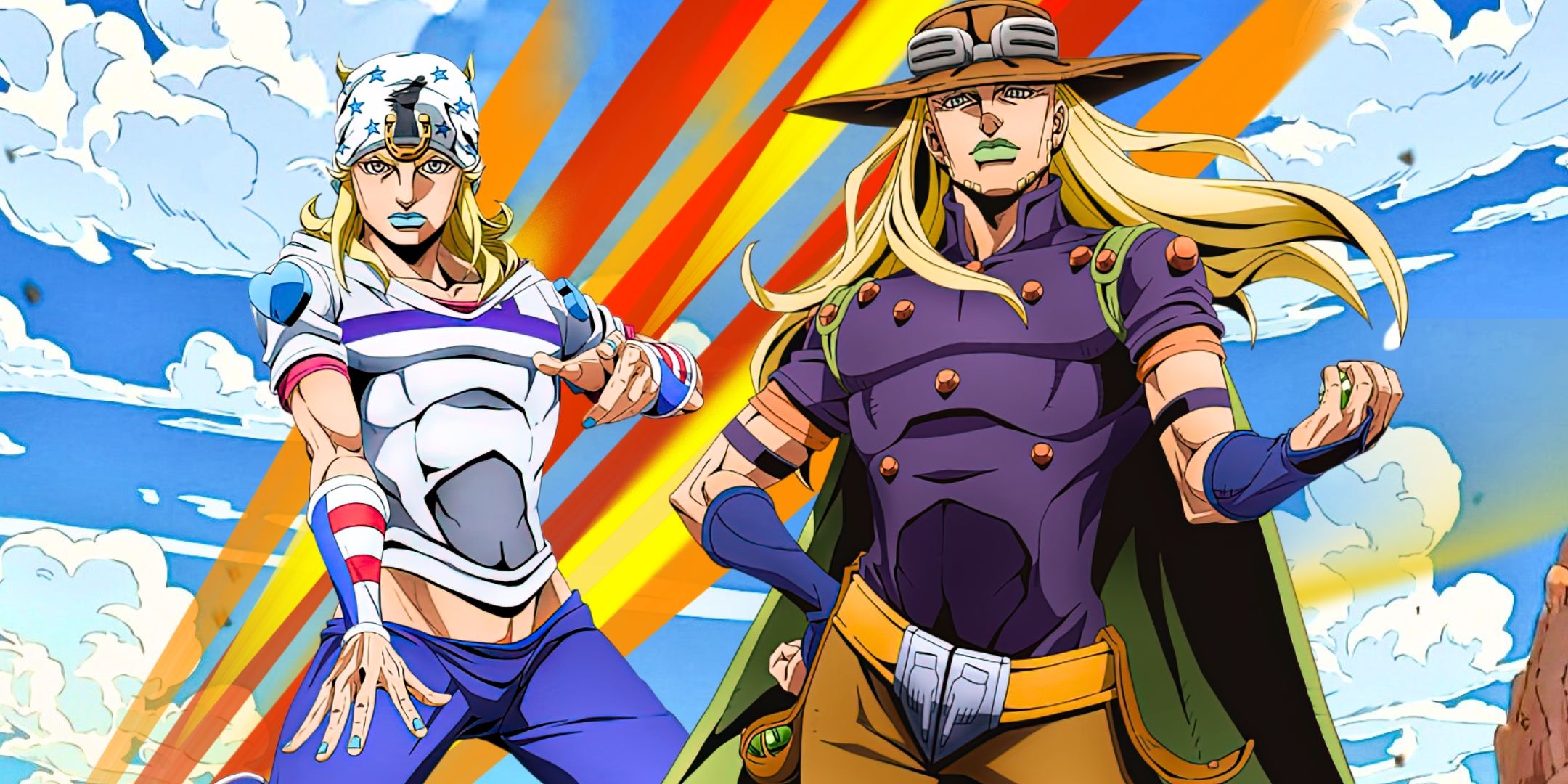
At the beating heart of Part 7 lies an intimate, character-driven masterclass in character writing: the partnership between Johnny Joestar and Gyro Zeppeli. Abandoning the towering, aristocratic chivalry of Jonathan Joestar and the razor-sharp trickster bravado of Joseph, Johnny represents Araki’s boldest protagonist leap. Paralyzed from the waist down following an act of youthful vanity, Johnny is bitter, spiritually broken, and driven by a desperate, borderline-homicidal obsession to regain the sensation of his legs. He is not setting out to save the world; he is a man desperately grasping for personal absolution.
Enter Gyro Zeppeli: grill-toothed, audacious, cracking deadpan jokes about cheese and days of the week, yet harboring the heavy burden of a kingdom’s executioner bound by familial duty. Their dynamic moves with the rhythm of a classic American Western road trip, but inflected with profound spiritual kinship. Unlike the rigid hero-mentor archetypes common in mainstream shonen, Johnny and Gyro operate in a murky moral gray space. They are deeply flawed human beings who share campfires, exchange nonsensical banter, and push each other through the grueling trials of survival.
The Golden Ratio: Reimagining Supernatural Combat
Lore-wise, Steel Ball Run bridges the metaphysical bridge between the long-abandoned mechanics of Hamon and modern Stand metaphysics via the Spin. Grounded in the mathematical elegance of the Golden Ratio and the Fibonacci Sequence, the Spin turns steel spheres and rotational momentum into an ancient, medical, and lethal art form. Watching Johnny’s Stand, Tusk, evolve through four distinct acts—from firing fingernails as rudimentary spinning bullets to tearing open dimensional barriers through the infinite rotation of a galloping horse—promises some of the most conceptually sublime combat sequences in modern anime history.
Funny Valentine and the Moral Wilderness of 19th-Century America
A narrative is often only as compelling as its antagonist, and in the 23rd President of the United States, Funny Valentine, Araki crafted arguably his most complex ideological adversary. Valentine’s pursuit of the scattered mummified relics of the Holy Corpse across the American continent is not an ambition born of petty sadism or chaotic whimsy like Dio Brando or Yoshikage Kira. It is an unyielding, zealous manifestation of American exceptionalism and Manifest Destiny.
Armed with the reality-splitting, inter-dimensional Stand Dirty Deeds Done Dirt Cheap (D4C), Valentine introduces mind-bending quantum puzzles to the combat scenes, pulling alternate dimensions into collision. His iconic “First Napkin” monologue remains a terrifyingly cogent thesis on political power, charisma, and dominance. For David Production, portraying Valentine’s metamorphosis from an unassuming statesman to an imposing, muscular avatar of nationalistic purity will provide a rare showcase for nuanced socio-political commentary rarely seen in mainstream action anime.
Furthermore, Part 7’s historical shift—marking the franchise’s migration from Weekly Shonen Jump to the monthly, mature pages of Ultra Jump—allows Araki to abandon editorial restraint. The body horror is viscerally tactile, the psychological trauma runs deep, and the pacing breathes with cinematic grandeur. A faithful adaptation cannot pull its punches; it demands an uncensored, prestige television treatment.
David Production’s Horizon: When Will the Race Begin?
While the online hype machine operates at a permanent fever pitch, David Production has kept its cards close to the vest. The studio has spent the post-Stone Ocean window expanding its portfolio with projects like Urusei Yatsura, Undead Unluck, and continuing work on Fire Force. Far from a sign of abandonment, industry insiders view this breather as a critical production buffer.
Adapting Steel Ball Run will necessitate a multi-year pipeline. With 95 dense, monthly manga chapters containing enough intricate choreography and sprawling landscapes to easily fill 48 to 52 episodes, this is not a production that can be rushed through outsourced crunch. There is also the crucial question of distribution: after the controversial, fractured “batch-drop” model on Netflix that crippled Stone Ocean‘s conversational cultural momentum, fans are vocally pleading for a return to a weekly, serialized television broadcast that allows theories, memes, and communal excitement to breathe over the course of a year.
The Final Lap: A Monument Awaiting Its Canvas
JoJo’s Bizarre Adventure: Steel Ball Run is the mountain that anime fans have been staring at for over two decades. It represents Hirohiko Araki operating at the absolute peak of his illustrative genius and narrative audacity—a dizzying intersection of Sergio Leone grit, supernatural mystery, and heart-wrenching brotherhood. When Johnny Joestar finally mounts Slow Dancer under the brilliant desert sun to David Production’s inevitable brass-and-guitar soundtrack, the anime medium will bear witness to an event years in the making.
The course is set, the track is laid, and the horses are at the gate. The only question that remains is whether we are truly ready for the race of a lifetime.
How do you think David Production should tackle the legendary horse animation? Should Part 7 return to weekly releases, or are you hoping for high-budget cinematic drops? Let your voice be heard in the comments below!