

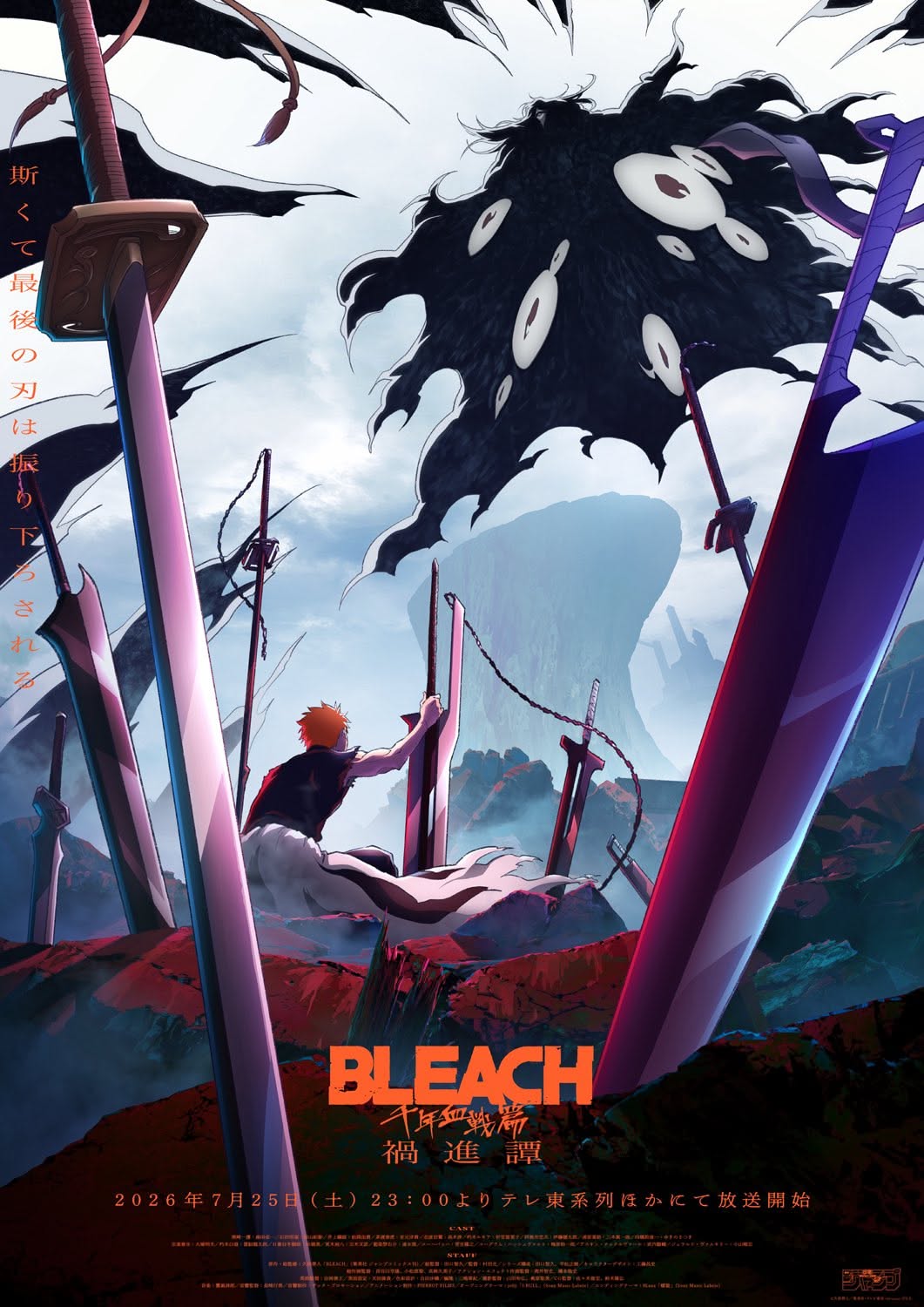
What if the most explosive anime finale of the decade is about to deliver scenes that never even existed in the original manga pages? When Studio Pierrot officially unveiled the title for the fourth and ultimate cour—Bleach: Thousand-Year Blood War Part 4 – The Calamity (Kashin-tan)—the worldwide anime community experienced collective goosebumps. After witnessing the earth-shattering clashes in Part 3 The Conflict, Soul Reaper enthusiasts knew the stakes were monumental, but nobody anticipated the sheer narrative ambition director Tomohisa Taguchi and author Tite Kubo had quietly prepared behind closed doors.
For more than twenty years, Bleach stood tall as one of the legendary pillars of Weekly Shonen Jump alongside juggernauts like Chainsaw Man and modern titan releases like Demon Slayer Infinity Castle. Yet, longtime manga readers vividly recall how rushed the climactic royal palace battles originally felt during the serial run due to creator health struggles. Now, The Calamity arrives not simply as an adaptation, but as the complete canonical realization of Kubo’s unfettered artistic dream.
The Almighty Unleashed: Yhwach and the Inevitable Despair
At the epicenter of this cosmic catastrophe stands Yhwach, Father of the Quincy and emperor of the Wandenreich, who has absorbed the Soul King and awakened his omnipotent gaze—The Almighty. In this state, Yhwach does not merely foresee future possibilities; he actively manipulates and alters timelines before attacks can even manifest. The terror this brings to the battlefield cannot be overstated.
Protagonist Ichigo Kurosaki, accompanied by Orihime Inoue and Renji Abarai, ascends toward Wahrwelt knowing brute strength is utterly meaningless against an omniscient deity. Animators at Pierrot Films have pushed visual effects into uncharted territory, transforming the Soul King Palace into an eerie, reality-bending colosseum where darkness, raw spiritual pressure, and chromatic lightning swallow every frame.
Anime-Original Fights and Tite Kubo’s Direct Creative Mastery
The defining triumph of the Thousand-Year Blood War anime project has consistently been its fearless willingness to expand canon lore. Tite Kubo personally supervised storyboards, scripts, and fight choreography, gifting audiences sequences that filled critical manga gaps: Senjumaru Shutara’s universe-shaking Bankai reveal, the expanded roles of the Zero Division, and prolonged skirmishes that felt brutally authentic.
In The Calamity, insiders tease that anime-only additions will reach their absolute zenith:
- Expanded Royal Realm Clashes: Legendary captains like Shunsui Kyoraku, Kisuke Urahara, and Kenpachi Zaraki push their ultimate Bankai releases to the outer brink against the elite Schutzstaffel—Gerard Valkyrie, Lille Barro, and Jugram Haschwalth.
- Sosuke Aizen’s Reality-Bending Return: Bound to the Muken chair yet exuding suffocating spiritual pressure, Aizen’s psychological mind games with Yhwach will receive expanded dialogue, brand-new tactical maneuvers, and mind-melting optical illusions.
- Ryuken Ishida and Isshin Kurosaki: Crucial father-figure interventions that felt abrupt in the 2016 manga ending are receiving meticulously planned pacing, illuminating the silver arrow lore and Quincy heritage deeper than ever before.
The Culmination of Ichigo Kurosaki’s Dual Heritage
From the opening arc in Karakura Town to the fractured skies of the Soul Society, Ichigo Kurosaki’s journey has mirrored the synthesis of competing spiritual identities: Soul Reaper, Hollow, and Quincy. In Part 4, his true Bankai—forged through acceptance of the “Blade is Me” philosophy—faces its ultimate crucible.
When Yhwach effortlessly shatters Ichigo’s blade across timelines, the narrative plunges into psychological despair. Yet, it is precisely within this abyss where unexpected alliances bloom. Uryu Ishida’s perilous double-agent operation reaches its fever pitch, testing bonds forged across hundreds of chapters. The tension between destiny and free will erupts into cinematic mastery, punctuated by Shiro Sagisu’s orchestral score which blends operatic choral chants with heavy metal guitar riffs.
Why Part 4 The Calamity Sets a New Standard for Anime Finales
In modern anime production, grand conclusions frequently get truncated or diluted into rushed OVA formats. Pierrot’s decision to divide the final manga arc into four distinct cours afforded production teams breathing room to deliver cinema-quality fluid animation, pristine compositing, and emotionally resonant character beats.
As The Calamity prepares to broadcast on international streaming services including Disney+ and Hulu, it represents more than just a seasonal milestone; it marks the triumphant, redemptive coronation of a classic franchise reclaiming its rightful throne atop the global anime pantheon.
What Do You Think?
Are you most excited to witness Ichigo and Aizen’s jaw-dropping tag team against Yhwach, or are you holding your breath for the anime-original Bankai expansions and extended epilogue scenes? How do you think Studio Pierrot will handle the legendary Silver Arrow climax? Drop your theories, favorite captain moments, and expectations in the comments below—let’s talk Bleach!