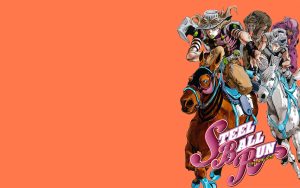
Ever since the bittersweet, melancholic strings of “Distant Dreamer” faded out over the oceanic horizon at the climax of Stone Ocean, the global anime community has existed in a collective state of breath-holding tension. For over a decade, David Production pulled off what was once deemed impossible: translating Hirohiko Araki’s genre-defying, stylistically protean multi-generational manga into a landmark television adaptation. Yet, the end of the original universe was never the finish line. For millions of die-hard fans and manga purists, every preceding punch-ghost beatdown was merely a prelude to the true summit—JoJo’s Bizarre Adventure: Part 7 – Steel Ball Run.
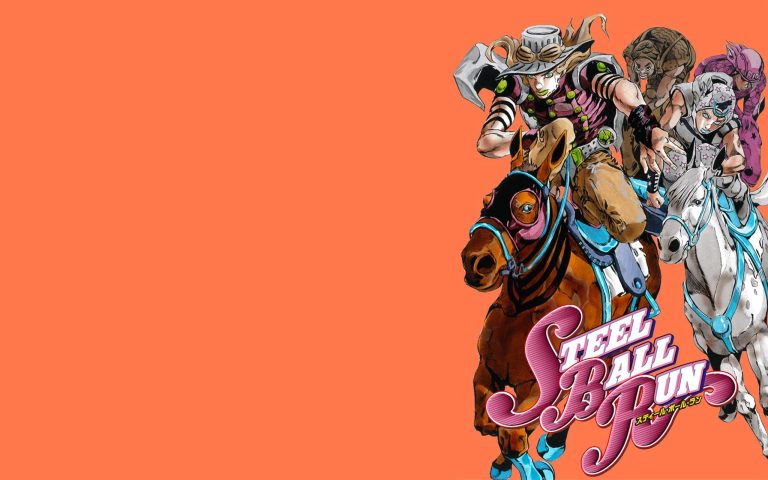
Widely regarded by critics and readers alike as Araki’s undisputed magnum opus—perennially occupying the upper echelons of MyAnimeList alongside Berserk—Steel Ball Run is more than just another sequel. It is a radical reimagining, an audacious reset, and an existential Western epic that forever altered the structural vocabulary of battle manga. As speculation surrounding David Production’s production pipeline reaches a fever pitch across social media and convention floors, the anticipation begs a critical examination: why does Steel Ball Run hold such an unshakeable grip over modern anime culture, and what will it actually take to bring this sprawling trans-American race to the screen?
The Trans-American Odyssey: Araki’s Masterclass in Narrative Rebirth
When serialized in 2004, Steel Ball Run initially arrived without the explicit “JoJo” moniker, masquerading as a standalone historical drama before formally reclaiming its lineage. The narrative gambit was breathtakingly bold: transport the audience to 1890 America, establish a coast-to-coast horseback marathon across 6,000 kilometers of brutal, untamed frontier from San Diego to New York City, and inject a prize purse of 50 million dollars. But beneath the dust, steam engines, and Colt revolvers lies a deeply supernatural, geopolitical conspiracy fueled by the pursuit of the sacred mummified relics of Jesus Christ.
Crucially, Part 7 marked Araki’s transition from the grueling weekly constraints of Weekly Shōnen Jump to the monthly, mature pastures of Ultra Jump. This structural liberation revolutionized his storytelling. The pacing expanded, allowing panels to breathe with panoramic landscapes, intricate psychological skirmishes, and visceral, R-rated brutality. Araki shifted from the classic monster-of-the-week formula into a sustained, cohesive survival odyssey. The gritty dust-bowl realism constantly crashes against esoteric Stand powers, creating an atmosphere that feels equal parts Sergio Leone spaghetti western, Cormac McCarthy existential dread, and high-octane anime absurdity.
Johnny Joestar and Gyro Zeppeli: The Anatomy of a Flawed Brotherhood
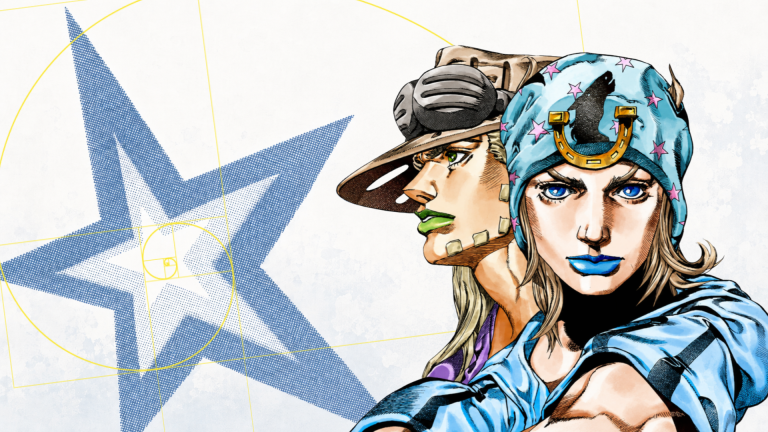
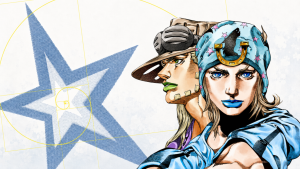
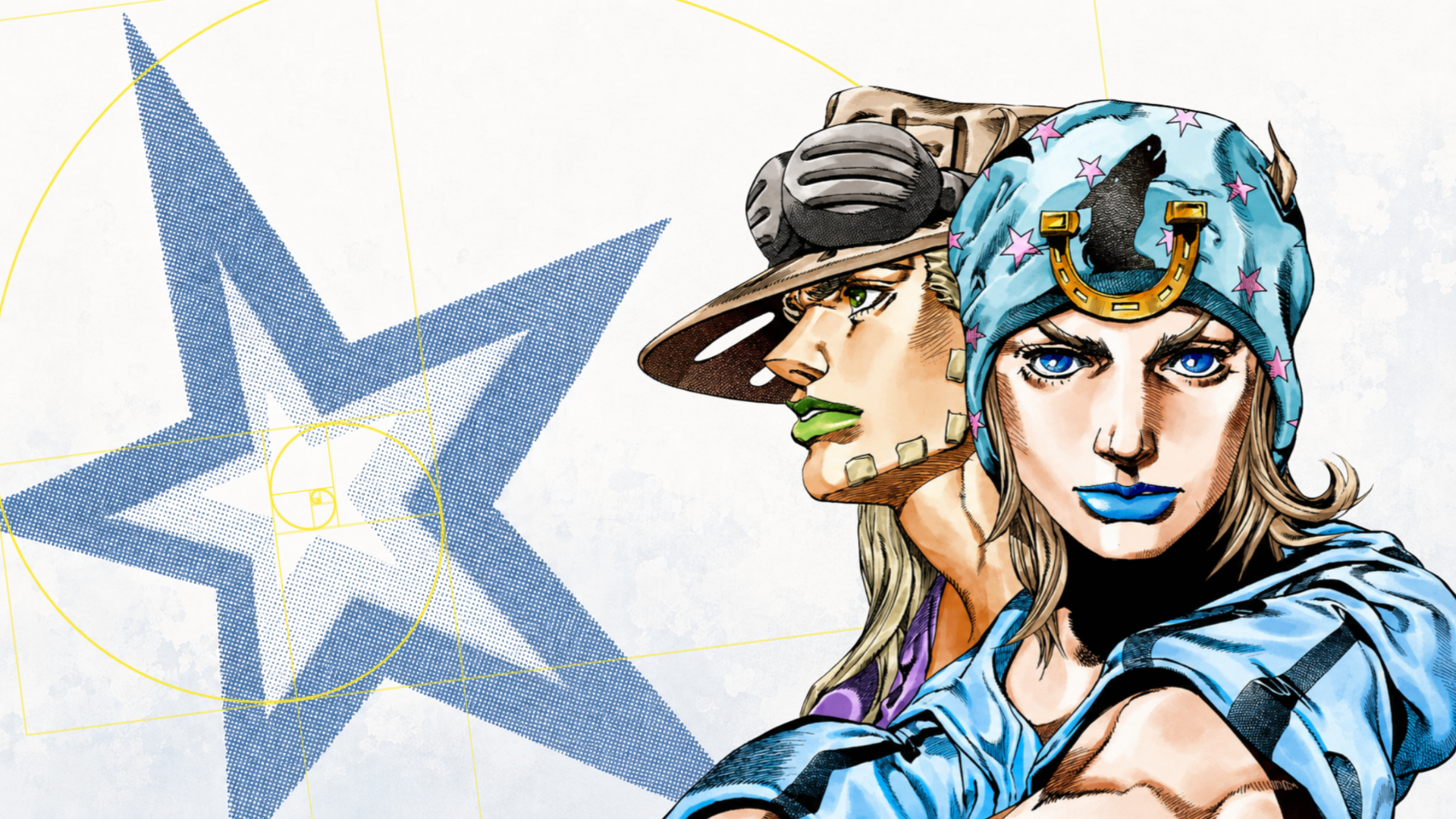
At the beating heart of Steel Ball Run is the electric, tragic dynamic between its two co-protagonists: Johnny Joestar and Gyro Zeppeli. Their partnership stands as Araki’s most emotionally complex character study to date, stripping away the flawless, chivalric virtue of classic heroes in favor of deeply wounded, desperate men.
Johnny Joestar: The Fall and Rebirth of a Broken Icon
Unlike his parallel predecessor Jonathan Joestar—who embodied unwavering moral purity—Johnny begins his journey as an unlikable, washed-up horse-racing prodigy whose hubris cost him his family, his fame, and the use of his legs. Johnny is petty, bitter, and harbors what Araki overtly terms “the dark determination”—the cold, remorseless gaze of someone willing to sacrifice morality to achieve his ends. Johnny does not run the race to save humanity; he runs it because a fleeting encounter with a mysterious weapon gave him a momentary flicker of sensation in his feet. His journey is an agonizing psychological pilgrimage from negative back to zero, embodied by his evolving Stand, Tusk, which charts his metamorphosis from a nail-firing cripple into a force capable of shredding the very fabric of space-time.
Gyro Zeppeli and the Golden Ratio: The Science of the Spin
Balancing Johnny’s brooding desperation is Gyro Zeppeli, a disgraced Neapolitan executioner’s son armed with steel spheres, grill-capped teeth that flash “GO! GO! ZEPPELI,” and an absurdly infectious levity. Yet, Gyro carries his own crushing baggage: he rides to win the race to grant royal clemency to an innocent child sentenced to death. Instead of traditional Hamon or raw punching Stands, Gyro wields The Spin—an ancient kinetic martial art rooted in Renaissance geometry, Fibonacci sequences, and the visual absolute of the Golden Rectangle. The duo’s campfire banters, recurring running gags about cheese songs, and profound mutual reliance form the philosophical core of Part 7. They are not merely allies; they are fractured souls who heal each other through shared trauma and velocity.
The Technical Everest: David Production’s Equestrian Nightmare
If Steel Ball Run is an undisputed storytelling triumph, it is also a notorious logistical terror for animators. There is an open secret within the Japanese animation industry: nothing breaks an animation budget and schedule faster than four-legged animals in continuous motion.
Unlike previous JoJo parts, which primarily featured bipedal fighters clashing in urban alleyways, claustrophobic prison blocks, or lavish mansions, Steel Ball Run is an uninterrupted horseback race. Animating a single horse galloping involves complex skeletal articulation, weight distribution, and rhythmic muscle tension. Animating dozens of horses stampeding across shifting sand dunes, raging rivers, and snow-choked mountain passes alongside perspective-bending Stand manifestations is a Herculean task. To put it bluntly: a traditional, purely 2D hand-drawn adaptation across a projected 36 to 48 episodes would risk utterly collapsing a studio’s operational bandwidth.
This technical barrier explains David Production’s deliberate hesitation and tactical silence following Stone Ocean. The industry consensus leans toward an inevitable hybrid pipeline: utilizing hyper-detailed 3D CGI horse models blended with proprietary non-photorealistic rendering (NPR) shaders, juxtaposed against expressive, hand-drawn 2D character close-ups. Yet, the JoJo fandom holds an exceptionally high visual standard. The challenge for director Kenichi Suzuki and the core creative team will be ensuring that any digital rendering maintains Araki’s iconic cross-hatching, idiosyncratic color shifts, and heavy, dramatic linework without feeling floaty or soulless.
Funny Valentine, The First Napkin, and Political Metaphysics
An adaptation discussion cannot exist without acknowledging the looming presence of the 23rd President of the United States, Funny Valentine. As an antagonist, Valentine elevates Steel Ball Run into high-stakes political metaphysics. Backed by his reality-hopping Stand, Dirty Deeds Done Dirt Cheap (D4C), Valentine is driven by an uncompromising, ultranationalist vision: to secure the Saint’s Corpse and ensure America holds perpetual hegemony over all global suffering.
His chilling monologue regarding “taking the first napkin”—a meditation on power, authority, and conformity—remains one of the most intellectually compelling diatribes in modern fiction. Valentine acts not out of sheer sadism or petty greed, but from an unwavering, patriotic utilitarianism that forces viewers to genuinely interrogate whether the protagonists’ desperate, self-centered survivalism makes them any more righteous than the tyrant they seek to defeat.
The Long Road to the Starting Line
The journey to the Steel Ball Run anime is a marathon, not a sprint. Rumors of David Production exploring cutting-edge technical tests, combined with the recent conclusion of JoJolion and the ongoing serialization of The JOJOLands, suggest that the studio understands the sacred gravity of what lies ahead. There is no cutting corners with this material; to butcher Part 7’s production would be to deface the crowning jewel of Hirohiko Araki’s lifetime achievement.
When the signal gun finally fires, and we hear the thunder of hooves echoing over the San Diego plains, it will mark the beginning of one of the most culturally seismic events in modern anime history. The bar is monumentally high, the terrain is treacherous, but if David Production pulls it off, the world will once again learn to appreciate the transcendental beauty of the Spin.
What do you think will be the biggest challenge in adapting Steel Ball Run? Can David Production nail the horses without relying entirely on jarring CGI? Drop your theories, favorite character moments, and hype levels in the comments below, and stay tuned to Wibux.com for all breaking JoJo updates!