Ever since the cosmic, bittersweet culmination of Stone Ocean closed the curtain on the generational blood feud between the Joestar bloodline and DIO, the anime community has existed in a collective state of suspended animation. The reset button wasn’t just hit on Hirohiko Araki’s timeline; it cleared the board for what is universally hailed as the creator’s crowning narrative achievement. For years, whisperings of a Steel Ball Run adaptation lived purely in the realm of fan-render mockups, dream-casting threads, and optimistic convention panels. Yet, as David Production wraps up extraneous projects and recalibrates its internal pipeline, the rumblings surrounding Part 7 have shifted from wistful speculation to an inevitable, thunderous reality.
Adapting Steel Ball Run is not simply a matter of greenlighting another cour of television. It represents an inflection point for contemporary anime—a convergence of insurmountable production challenges, unmatched literary prestige in the seinen space, and the staggering weight of living up to MyAnimeList’s perpetually second-highest-rated manga of all time. The hype isn’t just real; it’s an all-consuming cultural vortex waiting to sweep across the medium.
The Seinen Evolution: Hirohiko Araki’s American Odyssey
To understand the religious reverence surrounding Steel Ball Run, one must first unpack the seismic structural evolution of Araki’s creative process during its serialization. When Part 7 began its run in 2004 within the pages of Weekly Shonen Jump, it was initially presented without the iconic JoJo’s Bizarre Adventure subtitle—a calculated choice that mirrored Araki’s desire to uncouple his storytelling from conventional shonen editorial shackles. By the time the series migrated to the monthly, mature-skewing Ultra Jump in 2005, the training wheels weren’t just off; they were scorched to ash.
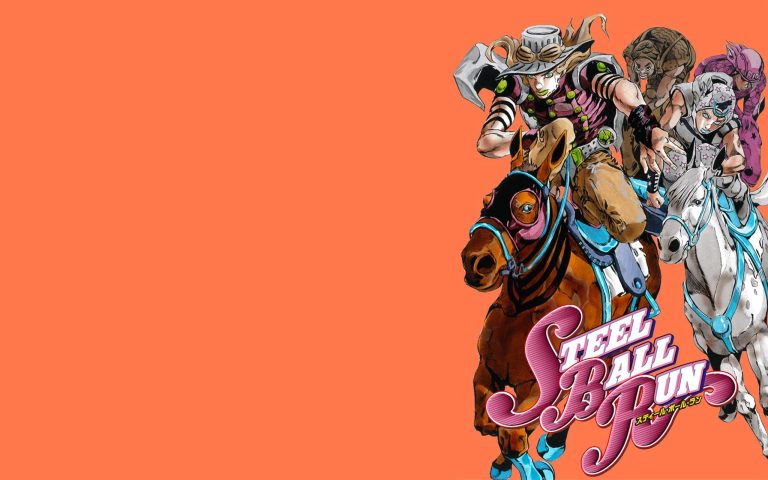
Set against the sprawling, mythic backdrop of late 19th-century America, Steel Ball Run trades the localized brawls of Morioh and the claustrophobic corridors of Green Dolphin Street Prison for a grueling, 4,000-mile cross-country equestrian race. Stretching from the beaches of San Diego to the concrete monoliths of New York City, the Steel Ball Run race operates on surface level as an eccentric sporting spectacle orchestrated by promoter Steven Steel. Beneath the dusty grit and adrenaline, however, lies an existential pilgrimage: an international scramble to secure the mummified pieces of the Saint’s Corpse, an artifact endowed with reality-bending miracles.
The monthly release schedule freed Araki to indulge in peerless panel density, sophisticated political allegories, and psychological nuances that simply cannot survive the breakneck pace of weekly deadlines. In doing so, he elevated JoJo from an eccentric, beloved punch-fest into a cinematic, literary tour de force that seamlessly melds historical revisionism, esoteric philosophy, and unrelenting body horror.
Johnny Joestar and Gyro Zeppeli: Character Psychology and the Spin
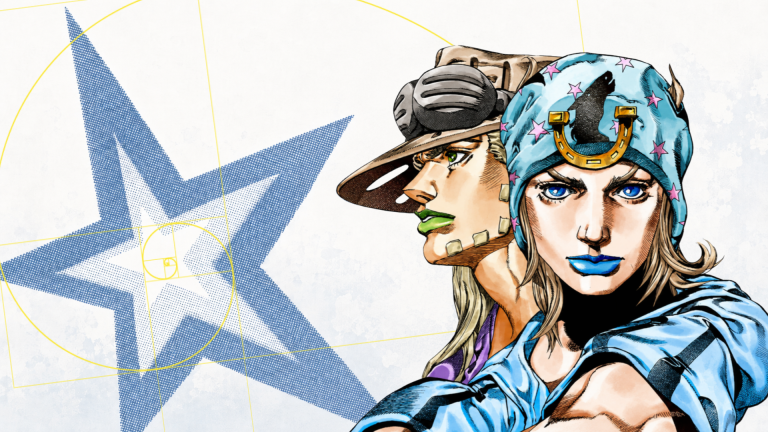
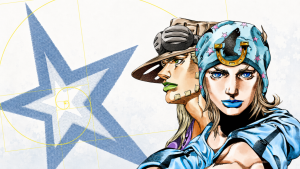
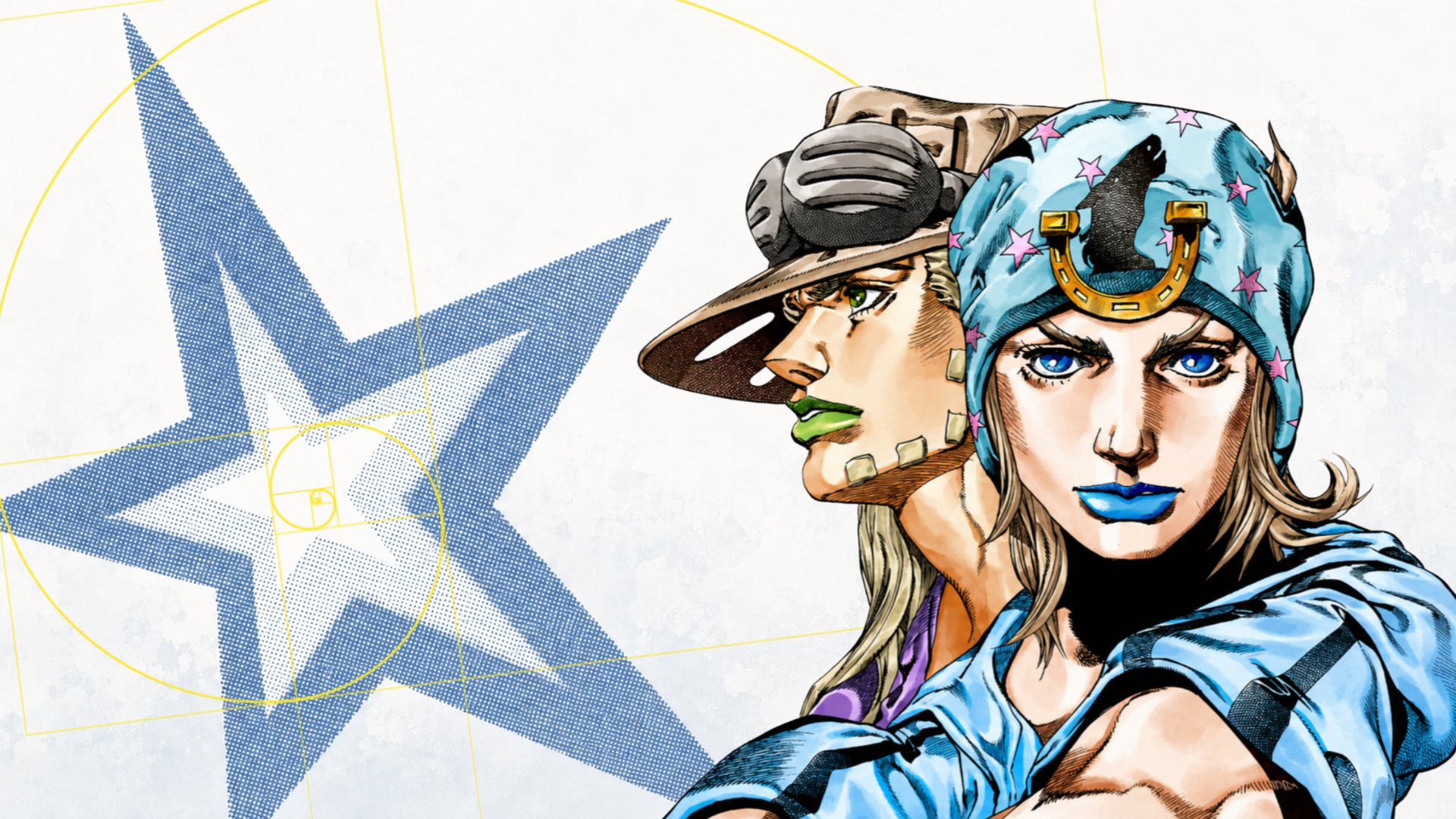
At the beating heart of this sprawling transcontinental epic is the dynamic between two broken men who form what is arguably the most organic, emotionally devastating duo in modern sequential art: Johnny Joestar and Gyro Zeppeli.
Johnny is a radical departure from the hyper-noble archetypes of Jonathan or the effortlessly cool swagger of Jotaro. A former equestrian prodigy rendered paraplegic through an act of sheer, arrogant folly, Johnny begins his journey stripped of dignity, purpose, and self-worth. He is not fighting for world peace, justice, or family honor. He is selfish, desperate, and driven by what Araki famously characterizes as “dark determinations”—a pitch-black internal flame that will see him cross every moral boundary just to achieve the metaphorical and literal sensation of “getting his feet back to zero.” His Stand, Tusk, mirrors this harrowing, multi-stage metamorphosis, evolving from a fragile, embryonic nail-shooting anomaly into an omnipotent harbinger of infinite gravity.
Counterbalancing Johnny’s brooding desperation is Gyro Zeppeli, a disgraced Neapolitan executioner whose flamboyant posturing—punctuated by gold-plated teeth and absurd musical compositions—masks an excruciating moral crisis. Gyro does not enter the race for conquest, but to save a condemned, innocent child from the executioner’s block back home, wrestling constantly with the heavy legacy of his royal heritage.
The Mechanics of the Spin vs. Traditional Stands
What binds the two together is not initially friendship, but the Spin. Moving beyond the solar-powered Hamon of Parts 1 and 2 and the spiritual avatars of Parts 3 through 6, the Spin represents an ingenious unification of Araki’s conceptual fascination with mathematics and biological physiology. Grounded in the Golden Ratio—the divine, self-replicating spiral found everywhere from nautilus shells to swirling galaxies—the Spin is a discipline practiced via the manipulation of spherical steel balls. It acts as an esoteric martial art, a medical technique, and a bridge to summoning localized dimensions. The thematic symmetry of two outcasts using a divine mathematical law to challenge emperors and cosmic luck forms a narrative poetry rarely matched in the genre.
The Technical Hurdle: Equine Kinematics and David Production’s Crucible
If Steel Ball Run is so universally beloved, why has the adaptation been met with as much dread as delight? The answer lies in a single word: horses.
Within the animation industry, horses are notoriously regarded as production poison. Unlike humanoid figures, quadrupeds—particularly horses undergoing rhythmic, anatomically intricate gallop cycles—require an immense volume of drawn frames to convey weight, muscle flex, perspective, and skeletal inertia. When multiplied by hundreds of racers sprinting simultaneously through open dust storms, blizzards, and river crossings, the traditional 2D approach becomes economically and physically ruinous for any typical production pipeline.
David Production, whose brilliant mastery of stylized line weight, hyper-saturated color palettes, and kinetic on-screen sound effects defined the look of previous JoJo parts, stands at a pivotal technological crossroads:
- The CG Hybrid Conundrum: If the horses are rendered via 3D computer generation, they risk inciting violent blowback from purists, conjuring traumatic flashbacks to the stiff, disjointed integration seen in productions like Berserk (2016).
- The Modern Tech Stack: Conversely, looking at David Production’s staggering digital output on Fire Force and the visual reinvention of Urusei Yatsura, the studio has demonstrated world-class digital composite techniques. Utilizing high-end 3D models with bespoke cel-shading—then hand-drawing over key contact frames—may provide the golden path to animating constant cavalry clashes without bankrupting the studio’s sanity.
- Pacing and Scope: Spanning 95 expansive monthly chapters (equivalent to roughly 190 weekly chapters), a proper adaptation of Steel Ball Run demands at least 48 to 60 lavishly produced episodes, likely necessitating a multi-cour, phased production pipeline rather than an exhaustive single run.
Fandom Anticipation and the Streaming Era Reckoning
The anticipation surrounding Part 7 is further magnified by the contentious distribution model that characterized Stone Ocean. The “Netflix Batch Release”—dropping chunks of episodes months apart with zero domestic broadcast rollout—severely crippled organic week-to-week watercooler engagement. The communal joy of analyzing tactical Stand interactions, dissecting ending-theme musical Easter eggs, and propagating viral memes within the zeitgeist suffered under the weight of algorithm-driven binge dumps.
For Steel Ball Run, the community is demanding a return to tradition. Moments like Gyro’s absurd “Pizza Mozzarella” ditty, the mind-bending reveal of President Funny Valentine’s dimension-hopping Stand Dirty Deeds Done Dirt Cheap (D4C), and the legendary showdown along the Philadelphia shoreline deserve the shared oxygen of a serialized weekly broadcast. The cultural cachet of this adaptation hinges on its ability to command the social feeds every seven days, transforming each dramatic race leg into a global event.
The Grand Verdict: Preparing for Anime’s Next Masterwork
There is no underestimating the mountain David Production has to climb. In taking on Steel Ball Run, they are not just adapting a beloved manga; they are undertaking the definitive transition from cult shonen phenomenon to elite literary prestige. Araki’s trans-American race is a masterclass in philosophical depth, romantic tragedy, and relentless, kinetic action—a story where miracles aren’t given by the heavens, but dragged out of the dirt through unfaltering, wounded willpower.
When that starting pistol finally sounds, the anime landscape will change forever. The question isn’t whether Steel Ball Run will be great; it’s whether our collective minds are ready to process its sheer scale.
What do you think is the biggest hurdle for a Steel Ball Run anime? Are you worried about CGI horses, or do you have absolute faith in David Production’s vision? Drop your theories, voice-casting wishes, and favorite Part 7 moments in the comments below!