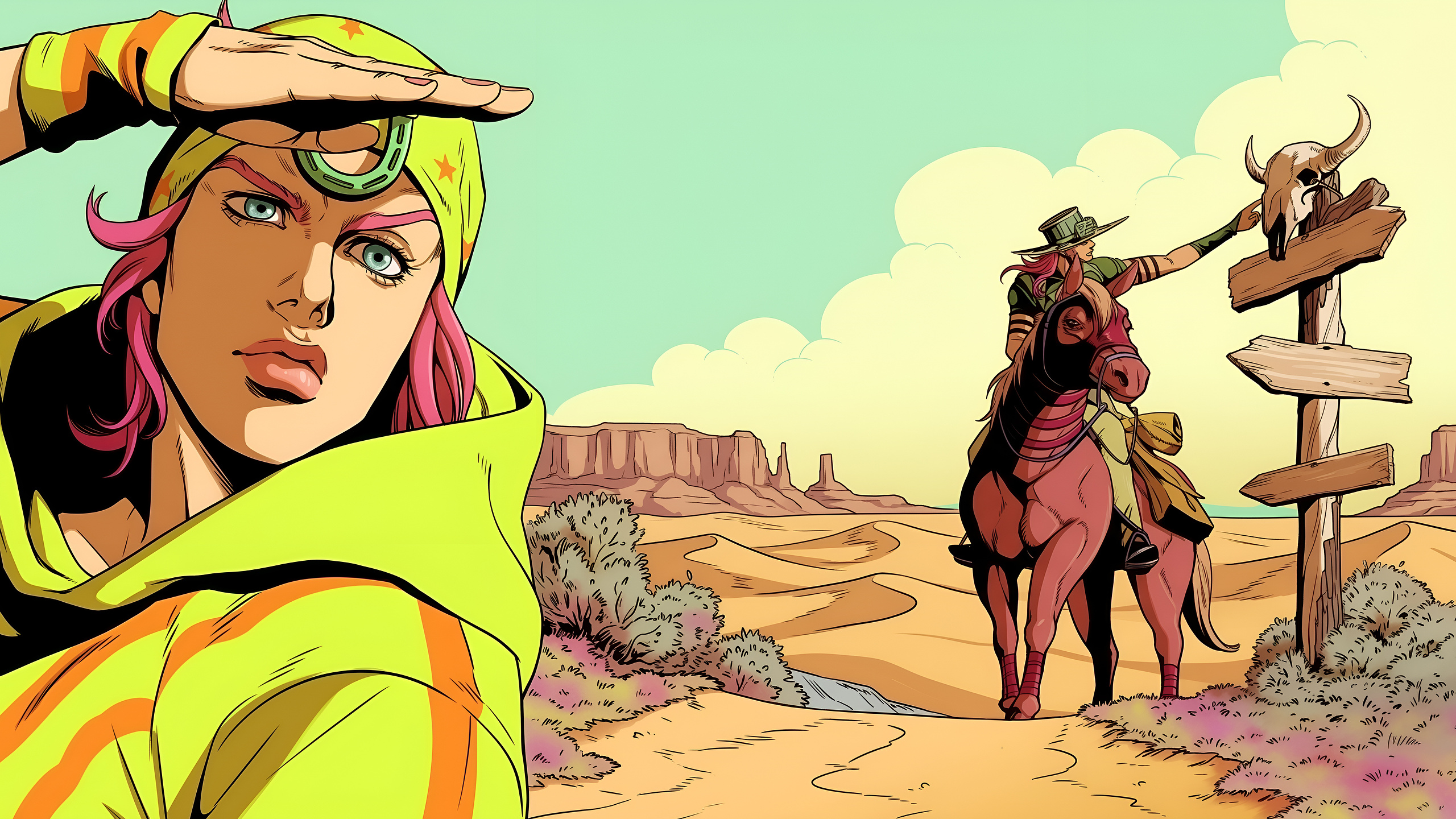
Ever since the bittersweet, reality-shattering strings of “Distant Dreamer” faded at the climax of Stone Ocean, the anime community has occupied a collective state of breath-holding anticipation. The original Joestar bloodline reached its cosmic, poignant terminus in a Florida prison courtyard, but for millions of Hirohiko Araki acolytes across the globe, that finale was merely a prelude to the true summit. Sitting comfortably near the apex of MyAnimeList’s all-time highest-rated manga for well over a decade, JoJo’s Bizarre Adventure: Part 7 – Steel Ball Run is not merely another franchise installment; it is widely heralded as Araki’s undisputed magnum opus. Now, as speculative chatter, cryptic industry rumblings, and animators’ trade whispers intensify, the question isn’t whether David Production will adapt this transcontinental epic, but whether modern television animation can actually bear its gargantuan weight.
The American Odyssey: Reinventing JoJo in the Dust of 1890
To understand the feral hunger surrounding an anime adaptation of Steel Ball Run, one must first recognize the structural metamorphosis that birthed it. When Araki commenced serialization in 2004, the series initially ran in Weekly Shōnen Jump without the explicit “JoJo” branding on its primary masthead, masquerading as a gritty, revisionist historical western. However, the true creative watershed occurred with its migration to the monthly seinen publication Ultra Jump in 2005.
From Weekly Grinds to Monthly Masterstrokes
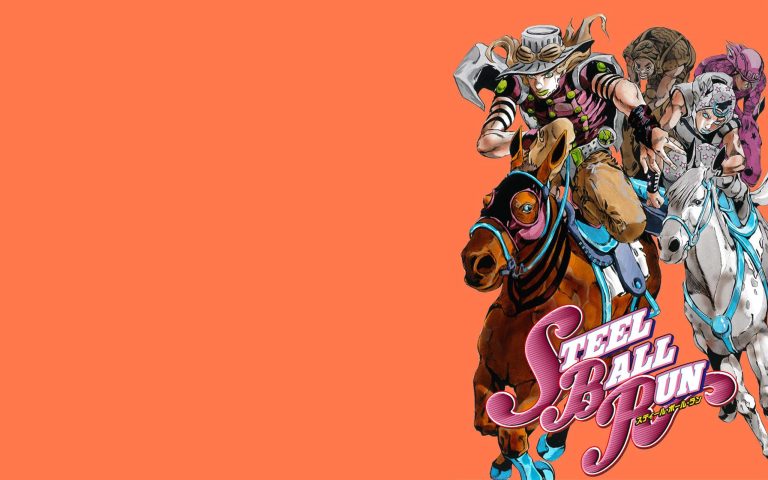
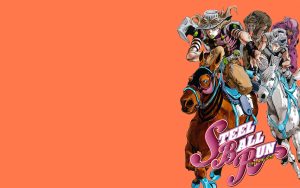
Unshackled from the suffocating weekly deadlines and rigid editorial censorship of traditional shōnen, Araki’s narrative canvas broadened dramatically. Steel Ball Run reimagines the entire franchise within an alternate timeline—a grueling, 6,000-kilometer horseback race across the untamed American frontier, from San Diego to New York City, bankrolled by the enigmatic promoter Steven Steel. The monthly release schedule allowed Araki to experiment with sweeping, panoramic vistas, complex multi-chapter tactical stalemates, and a distinctly mature, literary texture that eclipsed anything seen in Stardust Crusaders or Golden Wind.
The race itself serves as an extraordinary narrative engine. It is not merely a sports chronicle, nor is it a simple sprint for a $50 million purse. As the contestants navigate treacherous desert plains, frozen bluffs, and dense wilderness, the race gradually morphs into an occult pilgrimage, an ideological battlefield, and an existential character study of ambition and desperation.
Johnny and Gyro: A Masterclass in Character Symbiosis and Morality
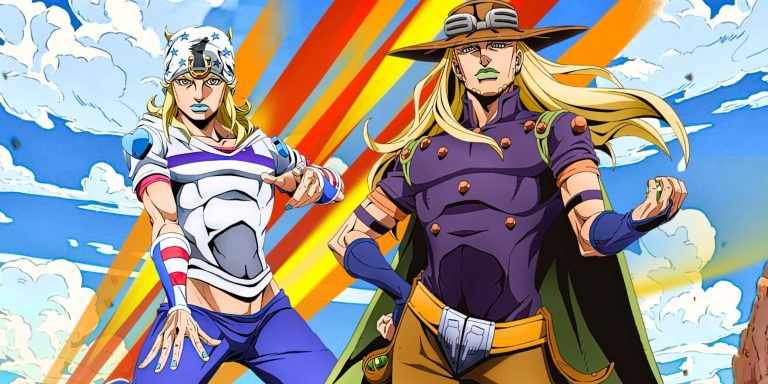
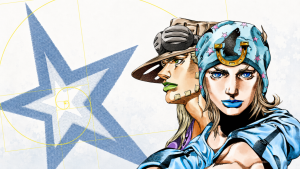
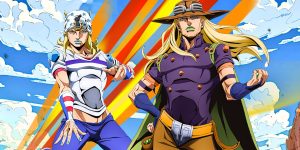
At the beating, bruised heart of Steel Ball Run lies arguably the greatest duo in modern sequential art: Johnny Joestar and Gyro Zeppeli. Their dynamic elevates the narrative far beyond the eccentric camaraderie of past JoJo squads, delivering a masterclass in psychological realism and mutual redemption.
The Broken Ego of Johnny Joestar
Johnny is a striking subversion of the archetypal shōnen protagonist. Introduced as a former horse-racing prodigy whose vanity, arrogance, and privilege culminated in a devastating gunshot wound that left him paraplegic, Johnny begins the story as a bitter, washed-up shell of a man. He possesses what Araki famously terms a “dark determination”—a cold, unblinking willingness to kill, betray, or sacrifice whatever is necessary to regain the use of his legs. Johnny is not fighting to save the world, nor is he pursuing chivalrous ideals; he is chasing a personal “zero,” fighting desperately to drag his fractured soul back from a negative state to neutral ground.
Gyro Zeppeli and the Way of the Spin
In contrast stands Gyro Zeppeli, a disgraced executioner’s son from the Kingdom of Naples with grillz spelling out “GO! GO! ZEPPELI” and an eccentric, deadpan humor that masks immense philosophical weight. Gyro enters the race to win royal amnesty for an innocent child condemned to death. More importantly, Gyro is the custodian of the Spin—a mystical, forgotten martial discipline based on the mathematical perfection of the Golden Ratio.
Where the original universe leaned into Hamon (Ripple) and later Stands, the Spin serves as a breathtaking thematic synthesis of both. It turns kinetic energy into a metaphysical phenomenon, weaponizing steel balls through rotational physics that can warp space, pierce dimensions, and bypass mortality. The evolving mentorship between Gyro and Johnny—shifting from reluctant master-and-apprentice to an unbreakable, co-dependent brotherhood forged in gunfire, terrible mozzarella songs, and shared trauma—is the emotional engine that will reduce audiences to tears if rendered with the nuance it deserves.
The Stallion in the Room: David Production’s Equestrian Challenge
If the narrative pedigree of Steel Ball Run is undisputed, its physical path to the screen represents an industry-wide technical nightmare. There is an infamous, pervasive adage in the animation community: horses break studios.
The Notorious Nightmare of Quadruped Animation
Anatomically, horses are among the most notoriously complex creatures to illustrate in kinetic motion. Their multi-jointed leg gaits, shifting muscular groups, weight distribution, and flowing manes require immense frame-by-frame precision. In an ordinary anime production, a sequence involving a single horse trotting for five seconds is approached with dread. Steel Ball Run features hundreds of horses galloping simultaneously at breakneck speeds, across complex terrains, often while riders are engaging in supernatural firefights and dynamic Stand battles.
This reality brings David Production to a historic crossroads:
- The Hybrid 3DCG Dilemma: To execute the relentless kineticism of the race, David Production will almost certainly have to rely on advanced 3DCG modeling for the steeds, a prospect that historically terrifies purists. However, the studio has evolved significantly since their raw CGI work on Part 1’s opening; modern cel-shading, dynamic lighting, and hybrid compositing could mirror the visceral momentum seen in shows like Chainsaw Man or the horse-charging spectacles of Wit Studio’s Attack on Titan.
- Maintaining the “Araki Sakuga”: Fans will not tolerate plastic, sterile models clashing against the mangaka’s trademark high-contrast, heavily crosshatched aesthetic. The studio must balance digital efficiency with hand-drawn close-ups, explosive color-palette shifts, and visceral physical impacts to preserve the unmistakable JoJo DNA.
Ideological Cosmic Horror: Funny Valentine and the Holy Corpse
Any serious examination of Steel Ball Run’s animated potential must confront its extraordinary thematic stakes. The true quest of the cross-country race is not athletic supremacy, but the covert recovery of the Holy Corpse—an ancient, scattered relic with divine, reality-altering properties strongly implied to be the earthly remains of Jesus Christ.
This introduces Funny Valentine, the 23rd President of the United States and undeniably Araki’s most layered antagonist. Armed with the terrifying, interdimensional Stand Dirty Deeds Done Dirt Cheap (D4C), Valentine is not a cackling villain of megalomaniacal cruelty; he is an uncompromising utilitarian zealot driven by profound, almost beautiful patriotism. His iconic “First Napkin” philosophical monologue, which interrogates societal conformity, authority, and destiny, remains a monumental piece of character writing.
The resulting narrative is an inverted moral spectrum: a paralyzed, morally ambiguous young man wielding a nail-shooting Stand fueled by cosmic rotational geometry, going to war against the head of state whose sole desire is to bless his homeland with eternal, untouchable prosperity at the expense of the rest of the planet. Adapting this ideological war demands a cinematic maturity, pacing, and sound design that transcends conventional anime storytelling.
Verdict: The Stage Is Set for Anime History
Steel Ball Run is not just the next season of a popular franchise; it is David Production’s Mount Everest. It represents a stylistic reinvention, a production gauntlet, and an emotional reckoning all at once. If the studio takes its time, allocates the titanic budget required to conquer the equestrian animation hurdles, and honors the literary grandeur of Araki’s monthly magnum opus, the adaptation will not merely dominate the seasonal charts—it will redefine what a prestige anime can achieve on a global scale.
The starting gun has not yet fired, but the tension across the starting line is palpable. Gyro has mounted Valkyrie, Johnny is holding the reins of Slow Dancer, and the golden rectangle beckons. It’s time to spin the wheel.