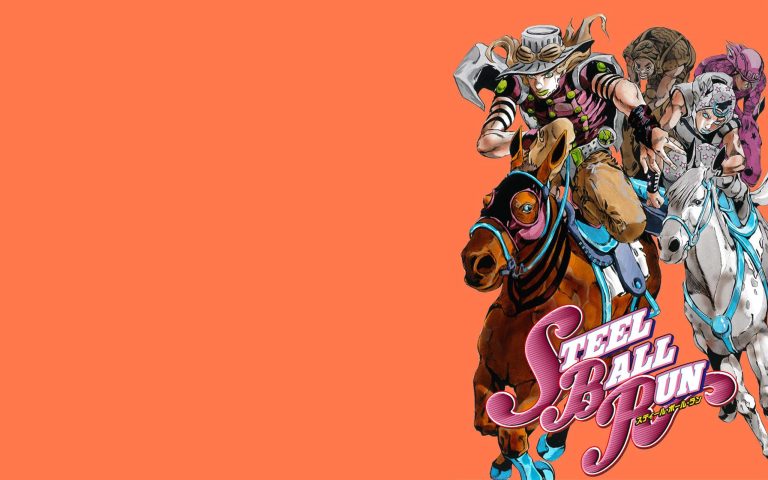
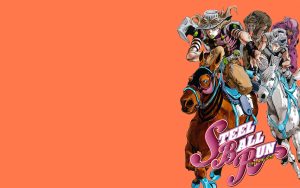
Ever since the cosmic strings of Father Pucci’s Made in Heaven unraveled and rewove reality at the climax of Stone Ocean, the collective anime fandom has been trapped in a state of suspended animation. For casual observers, the finale of Part 6 was an audacious, universe-resetting punctuation mark on Hirohiko Araki’s generational bloodline saga. But for the initiated, it meant only one thing: the gates to the holy grail had finally swung open. We are officially on the threshold of JoJo’s Bizarre Adventure: Steel Ball Run—Araki’s magnum opus, a masterclass in visual storytelling, and universally hailed as one of the greatest manga ever put to paper.
Yet, whispered across community forums, production corridors, and social media feeds is a distinct mixture of reverent awe and acute anxiety. Adapting Part 7 is not merely a matter of greenlighting another cour; it represents an unprecedented trial by fire for David Production. Between the existential technical challenge of animating a 6,000-kilometer equestrian race and the thematic weight of a rebooted continuity, the buzz surrounding Steel Ball Run isn’t just hype—it’s an industry event in the making.
The Western Horizon: How Steel Ball Run Redefined Araki’s Canvas
To understand the sheer magnitude of the anticipation, one must understand the tectonic shift Part 7 represented in Araki’s creative journey. Serialized in 2004 before transitioning from the frantic sprint of Weekly Shonen Jump to the monthly, mature sanctuary of Ultra Jump, Steel Ball Run liberated the mangaka. No longer shackled by the demographic restrictions of teenage shonen tropes or the exhausting pace of weekly chapter deadlines, Araki transformed his pulpy, idiosyncratic battle manga into a sweeping, literary, supernatural Western epic.
Set against the backdrop of late 19th-century America, the narrative follows the titular Steel Ball Run race—an audacious transcontinental gauntlet from San Diego to New York City boasting a staggering $50 million grand prize. On its sun-drenched surface, it is a spectacle of grit, steam-engine industrialism, and historical revisionism. Beneath it lies a grim, metaphysical pilgrimage across an untamed continent, where ambition is currency and morality is bleached white beneath the prairie sun.
A Symphony of Wounds: Johnny, Gyro, and the Alchemy of the Spin
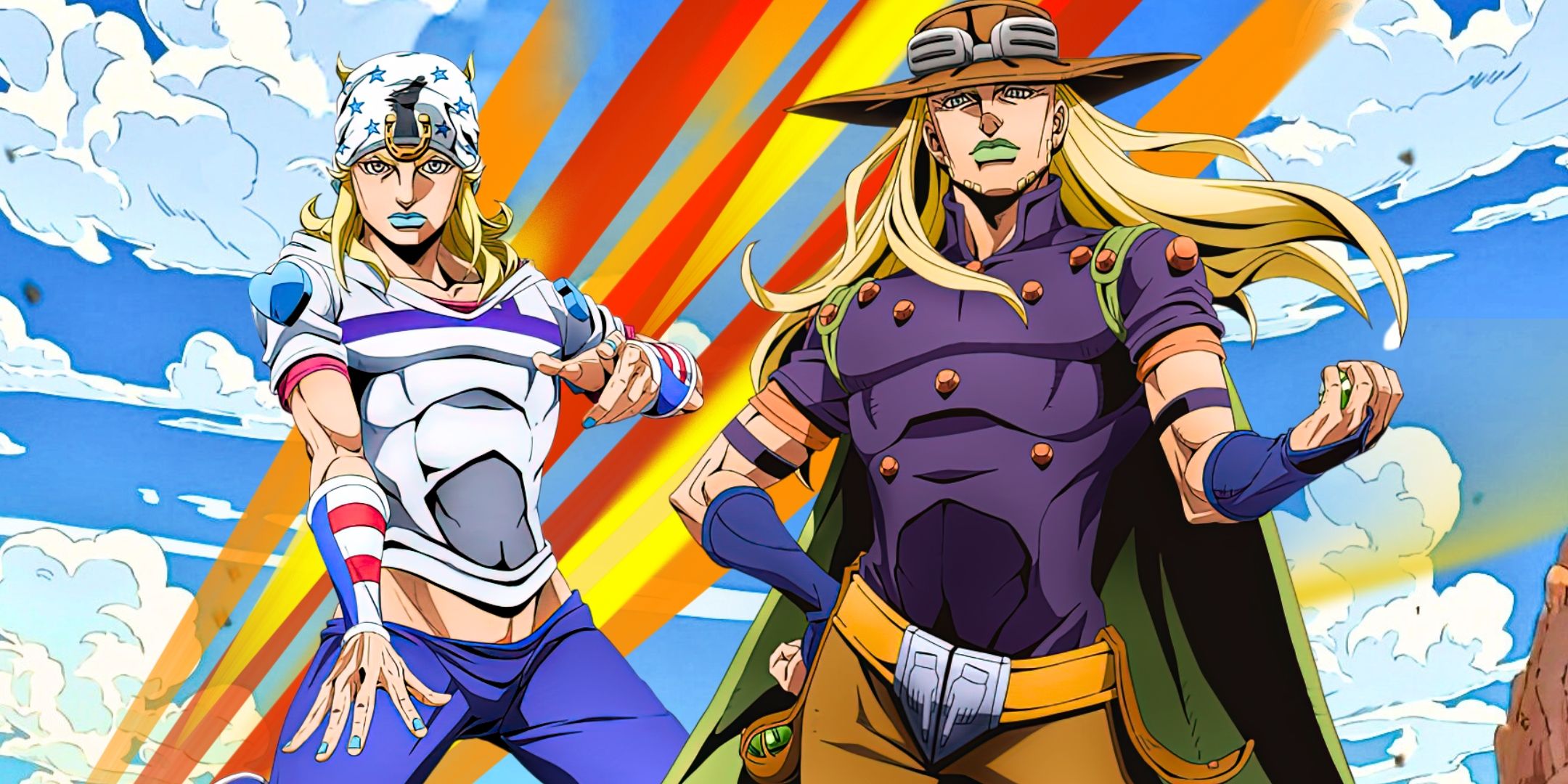
At the beating heart of this American gothic odyssey is what remains arguably the finest character dynamic Araki has ever penned: the complex, melancholic brotherhood between Johnny Joestar and Gyro Zeppeli.
Johnny Joestar: The Rejection of Traditional Heroism
Johnny is an aberration within the Joestar lineage. He is not the gentleman brawler Jonathan was, nor the brazen trickster Joseph proved to be. Introduced as an ex-jockey prodigy struck down by his own hubris and paralyzed from the waist down, Johnny is fundamentally broken—both physically and spiritually. He does not enter the cross-country race out of patriotic duty or noble chivalry; his initial motivation is raw, desperate self-interest, sparked by the momentary flicker of sensation he feels in his legs after touching one of Gyro’s mysterious spheres.
Araki endows Johnny with what the series explicitly coins as “dark determination” (shikkoku no ishi)—a cold, pitiless resolve that walks the knife-edge of villainy. Watching Johnny slowly evolve his Stand, Tusk, across four distinct “Acts” is an intimate, gut-wrenching study in trauma, consequence, and personal rebirth that subverts modern protagonist archetypes.
Gyro Zeppeli and the Renaissance of the Spin
Acting as the foil, mentor, and emotional anchor to Johnny’s brooding cynic is Gyro Zeppeli, a disgraced Neapolitan executioner wielding steel spheres infused with the “Spin”—a mystical rotational technique rooted in the mathematical Golden Ratio. If Johnny represents spiritual entropy, Gyro represents ancient harmony. The Spin does not merely serve as an ingenious pivot away from the fatigue of conventional Stand mechanics; it grounds the combat in sacred geometry and visceral kinetic energy.
Their dynamic eschews the conventional “rival-turned-friend” tropes of modern anime. Through campfire banter about bad jokes, Italian pop culture, shared grief, and life-or-death tactical shootouts, Johnny and Gyro form a partnership characterized by an unvarnished, tragic vulnerability that elevates Part 7 beyond its genre peers.
The Technical Mount: David Production’s Equestrian Nightmare
If the narrative potential of Steel Ball Run is a goldmine, the logistics of animating it are a certified minefield. For over a decade, David Production has served as the passionate custodian of Araki’s legacy, navigating the vibrant color shifts, localized pop-music motifs, and idiosyncratic sound-effect lettering that make JoJo iconic. But horses are the historical graveyard of anime production schedules.
Quadrupedal anatomy in motion—particularly horses galloping, trotting, and shifting weight across dynamic, three-dimensional terrain—is widely recognized as one of the most grueling feats in 2D hand-drawn animation. Part 7 doesn’t just feature incidental horses; it features dozens of them locked in claustrophobic, high-speed skirmishes across deserts, snowfields, and rocky riverbeds for dozens of consecutive chapters.
The central question gripping industry insiders is simple: How will David Production bridge the gap between aesthetic fidelity and budgetary reality?
- The 3DCG Dilemma: Modern studios increasingly rely on CGI rigs for complex animal motion. Yet, if the horses are rendered via stiff, unshaded 3D models juxtaposed against hyper-stylized 2D riders, the resulting visual dissonance could instantly shatter immersion—a pitfall fans vividly recall from adaptations like Berserk (2016) or the mixed CG implementations in early seasons of Attack on Titan.
- The Hybrid Pipeline: The golden path likely lies in a hybrid pipeline, utilizing sophisticated 3D base choreography layered under heavily corrected, hand-drawn key frames. David Production showcased their growing prowess with vehicular movement and stylized 3D spaces during the road-trip sections of Stardust Crusaders and the aerial combat of Golden Wind, but Steel Ball Run demands an order of magnitude more horsepower.
- Release Format Trauma: Compounding the technical anxiety is the lingering ghost of the Stone Ocean rollout. The widely criticized Netflix “batch drop” model throttled community discussion, derailed weekly hype cycles, and left animators scrambling under opaque deadlines. For Part 7 to claim its rightful place in the cultural conversation, fans are loudly advocating for a return to traditional, weekly broadcast syndication that allows Araki’s grand race to unfold in real-time.
Holy Relics and Manifest Destiny: The Shadow of Funny Valentine
No discussion of Steel Ball Run can be complete without acknowledging its geopolitical theater and its staggering antagonist, the 23rd President of the United States, Funny Valentine. Armed with an immovable patriotic zeal and the reality-shattering Stand known as Dirty Deeds Done Dirt Cheap (D4C), Valentine challenges the very premise of good versus evil.
The race is quickly unveiled as a smoke screen for Valentine’s true agenda: the clandestine collection of the mummified Corpse Parts of an unnamed sacred figure, scattered across the North American continent. The corpse bestows miraculous blessings, and Valentine seeks it to turn the United States into the untouchable epicenter of global fortune—at the cost of shifting the nation’s suffering onto the rest of the world. Valentine’s charismatic, deeply utilitarian philosophy provides an ideological crucible that forces both Johnny and Gyro to confront the ultimate cost of their own ambitions. When translated to screen, Valentine’s universe-hopping encounters promise to redefine what anime audiences expect from psychological battle encounters.
The Horizon Beckons: Can the Anime Deliver on Mythic Expectations?
JoJo’s Bizarre Adventure: Steel Ball Run stands as a monument to what manga can achieve when an auteur breaks past the conventional boundaries of his craft. It is a story of grit, divine intervention, golden spirals, and shattered souls searching for a starting line. David Production has an Everest to climb—an undertaking that will require visionary directing, extraordinary budget allocation, and technical ingenuity to realize Araki’s panoramic wilderness without diluting its visceral hand-drawn soul.
Yet if David Production succeeds, they won’t just deliver another great season of television; they will orchestrate one of the most culturally seismic moments in anime history. The race has not yet officially been flagged off, but across the globe, the stands are already full, waiting for the crack of the starting gun.
What do you think is the biggest hurdle David Production faces for Steel Ball Run—the horses, the pacing, or the release format? Drop your theories and favorite Part 7 moments in the comments below!