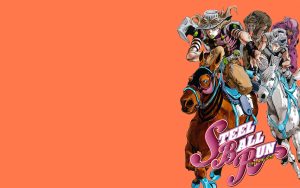
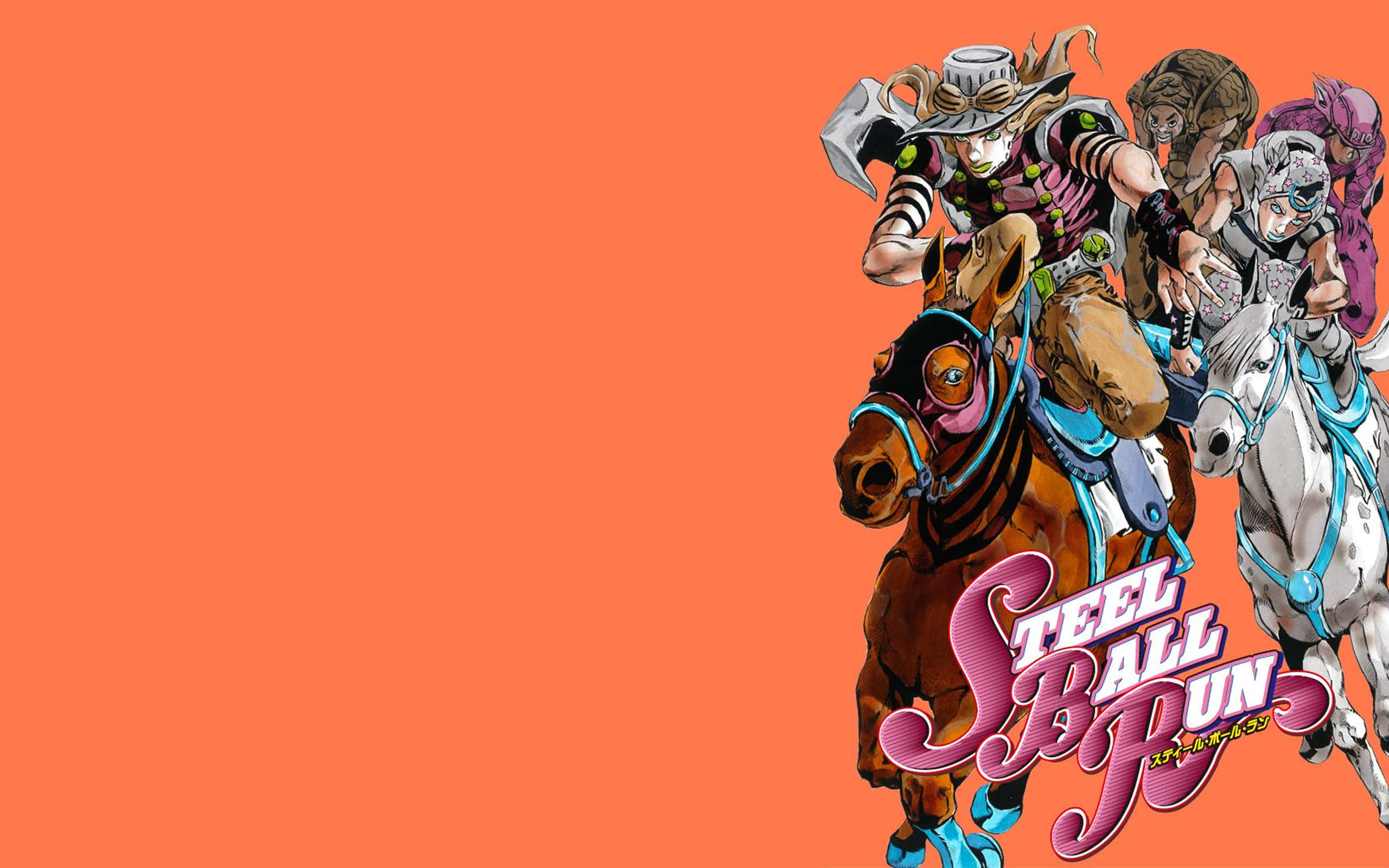
Ever since the bittersweet, timeline-shattering conclusion of Stone Ocean aired on Netflix, a singular, deafening murmur has echoed across the anime community: When is Steel Ball Run? For over two decades, Hirohiko Araki’s seventh installment of JoJo’s Bizarre Adventure has existed in the upper stratosphere of sequential art. Regularly battling Kentaro Miura’s Berserk for the top spot on MyAnimeList, Steel Ball Run is not just viewed by the fandom as another episodic detour; it is revered as Araki’s magnum opus—a reinvention that transformed a stylish, eccentric battle-shonen into an evocative, prestige historical epic.
Yet, bringing this high-octane, cross-country equestrian race to life presents David Production with its most daunting artistic hurdle yet. As whispers grow regarding pre-production, voice casting, and creative timelines, the adaptation of Steel Ball Run stands as the anime industry’s next frontier—a crucible that will test the boundaries of modern TV animation, narrative fidelity, and the shifting identity of the JoJo mythos.
The Trans-American Odyssey: Araki’s Masterpiece Reborn
First serialized in 2004 before migrating from Weekly Shonen Jump to the monthly seinen pages of Ultra Jump, Steel Ball Run marks the point where Araki stripped away the constraints of standard demographic expectations. Set in an alternate 1890, the story chronicles the Steel Ball Run race: an arduous, 3,700-mile horseback trek from San Diego to New York City, bankrolled by philanthropist Stephen Steel with a tantalizing $50 million purse.
What begins as a celebration of pioneer grit rapidly morphs into a supernatural conspiracy involving alternate dimensions, ancient miracles, and high-stakes espionage. By grounding the narrative in the dust, blood, and chaparral of late-19th-century America, Araki merged the visual grammar of Sergio Leone’s Spaghetti Westerns with the body-horror sensibilities of John Carpenter. This was no longer just about flamboyant punch-ghosts duking it out in urban backalleys; it was a grueling survivalist journey across harsh deserts, treacherous mountain passes, and snowblind tundras.
The Search for the Holy Relics
The race serves as a kinetic decoy for something far more cosmic: the recovery of the scattered mummified remains of a sacred holy figure (strongly implied to be Jesus Christ). The pieces bestow reality-bending abilities upon those who possess them, turning every checkpoint into a psychological bloodbath. This paradigm shift gave Araki the latitude to write some of the most haunting, deeply philosophical conflicts in manga history, culminating in an ideological clash with the twenty-third President of the United States, Funny Valentine.
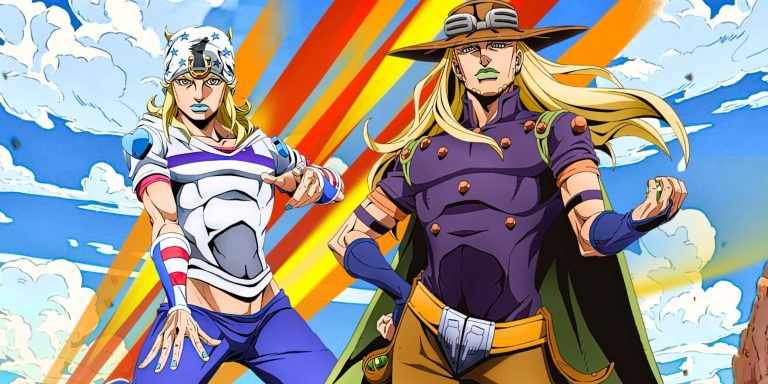
Johnny Joestar and Gyro Zeppeli: Character Psychology and ‘Dark Resolve’
At the center of this grueling trek lies arguably the most emotionally complex duo in modern manga. Johnny Joestar is a far cry from the chivalrous gentleman Jonathan Joestar of Phantom Blood. Introduced as a former horse-racing prodigy who lost the use of his legs due to his own arrogance, Johnny is bitter, cynical, and self-serving. He does not join the race to save humanity or claim fortune; he joins because a strange encounter with the mystic “Spin” momentarily restored feeling to his legs.
Johnny’s psychology is defined by what Araki coins as “dark resolve”—a willingness to kill, exploit, and sacrifice whatever it takes to claw his way back from “negative” to “zero.” He is a deeply flawed, anti-heroic lead whose vulnerability makes his eventual growth feel earned rather than ordained.
Balancing Johnny’s quiet desperation is Gyro Zeppeli, a disgraced Neapolitan executioner armed with steel spheres and an irrepressible flair for the absurd. Gyro’s quest is fundamentally altruistic—racing to secure an amnesty for an innocent child condemned to death back home—yet his exterior is marked by gold-plated teeth, corny musical interludes, and profound existential weariness. Their dynamic transcends the typical mentor-student paradigm, shifting organically into an intimate brotherhood forged over shared fires, mutual failures, and metaphysical lessons.
The Mechanics of the Spin
From a mechanical perspective, Steel Ball Run brilliantly reinterprets the series’ original power system. Moving beyond the respiratory mechanics of Hamon, Araki introduced the Spin: an ancient medical and combat technique rooted in the Fibonacci sequence and the Golden Ratio. Watching the Spin develop alongside Stand evolutions—most notably the multi-stage progression of Johnny’s Tusk—creates a palpable sense of mechanical discovery that animation can elevate into pure visual poetry.
The Horse Problem: David Production’s Technical Gauntlet
While fans passionately demand an adaptation, industry insiders know the truth: Steel Ball Run is a logistical nightmare for animators. Animating four-legged quadrupeds is universally recognized as one of the most grueling assignments in hand-drawn 2D animation. Horses possess intricate skeletal anatomy, rippling muscularity, and complex locomotion that breaks down the moment a single perspective angle is slightly off.
In Steel Ball Run, horses are not incidental background set-pieces; they are central protagonists. They sprint in packs of dozens, vault over ravines, sustain graphic damage, and interact dynamically with human riders who are concurrently summoning Stands. When David Production tackled Phantom Blood through Stone Ocean, they relied on tactile line work, neon-soaked color shifting, and bombastic camera pans. But applying that traditional methodology to thousands of cuts of galloping stallions is financially and physically unsustainable on a typical television broadcast schedule.
2D Tradition vs. 3D Hybrid Innovation
To pull this off, David Production will likely have to pioneer a bespoke 2D/3D pipeline. Studios like Orange (Trigun Stampede) and Wit Studio (Attack on Titan‘s cavalry charges) have proven that CGI can replicate organic motion when handled with absolute nuance. However, the true test will be matching Araki’s dense, cross-hatched line art without creating an uncanny disconnect between cel-shaded horses and hand-drawn riders. The production committee must allocate unprecedented resources and extended lead time if they hope to do justice to the kinetic madness of the race without breaking the animators tasked with realizing it.
The Road Ahead: High Expectations in the Post-Streaming Era
The cultural discourse surrounding a potential Steel Ball Run anime is amplified by lessons learned from Stone Ocean. The contentious batch-drop release model employed by Netflix drained much of Part 6’s week-to-week community buzz, a mistake fans and critics fervently hope won’t be repeated. Steel Ball Run thrives on suspense, momentum, and agonizing cliffhangers; it is an adventure tailor-made for episodic, weekly appointment viewing.
Moreover, the philosophical resonance of Funny Valentine’s Stand, Dirty Deeds Done Dirt Cheap (D4C), and his chilling “First Napkin” doctrine feel eerily prophetic in today’s polarized political climate. The anime market is currently hungry for mature, high-concept narratives that refuse to treat viewers like children—and Part 7 has that thematic depth in spades.
The Inevitable Masterpiece
Adapting JoJo’s Bizarre Adventure: Steel Ball Run is David Production’s mountain to climb. It will require an evolved aesthetic toolkit, immense financial backing, and an uncompromising commitment to Araki’s visionary reinvention. Yet, should the studio clear the equestrian hurdle, the rewards will be historic. Steel Ball Run has all the ingredients to become an era-defining anime event—a breathless, heartbreaking, dust-choked triumph that proves some legends are worth riding to the ends of the earth for.
What do you think is the biggest challenge facing David Production for Part 7: the horse animation, or adapting Araki’s mature narrative shift? Sound off in the comments below, and stay tuned to Wibux.com for all your anime updates!