Ever since the melancholic, universe-resetting notes of Stone Ocean faded into memory, the anime community has occupied a state of feverish, collective suspended animation. For over a decade, David Production pulled off what was once considered fundamentally unfilmable: a decade-long, stylistically faithful adaptation of Hirohiko Araki’s multi-generational bloodline epic. Yet, among seasoned manga veterans and anime-only converts alike, every prior part feels like a prelude to a singular, monumental horizon. We have arrived at the precipice of JoJo’s Bizarre Adventure: Steel Ball Run—Araki’s undisputed magnum opus, a seismic narrative detour that transformed a bombastic supernatural battle manga into an existential, dust-choked American epic.
The buzz surrounding an eventual anime adaptation is not merely standard fandom impatience; it is a cultural reckoning. Steel Ball Run regularly jostles with Berserk at the absolute peak of user-rated manga rankings worldwide. Transposing this sprawling, trans-continental race from the page to the screen represents both the ultimate prestige project and an unprecedented technical nightmare for any animation studio bold enough to crack the whip.
The Seinen Metamorphosis: Araki’s True Magnum Opus
To understand the immense weight carried by Steel Ball Run, one must grasp its peculiar publishing history. Originally serialised in 2004 in Weekly Shonen Jump simply as Steel Ball Run—deliberately obscured from the JoJo branding—the series eventually migrated to the monthly seinen imprint Ultra Jump. This structural liberation altered Araki’s artistic trajectory forever. Freed from the relentless weekly crunch and juvenile editorial restrictions, Araki adopted a hyper-detailed, classically proportioned illustration style influenced by high fashion and classical sculpture, married to a grounded, brutally complex narrative architecture.
Set in a rebooted continuity in 1890, the story follows an eccentric international ensemble competing in a grueling, 3,800-mile cross-country equestrian race from San Diego Beach to New York City. The prize: fifty million dollars. But beneath the surface-level historical sports tournament lies a labyrinthine conspiracy orchestrated by the Commander-in-Chief of the United States, revolving around the sacred, scattered mummified relics of an unnamed Saint. Steel Ball Run entirely discards standard binary morality, replacing it with an atmospheric, grit-and-sweat neo-Western where every bullet, hoof-beat, and psychological rupture carries lethal permanence.
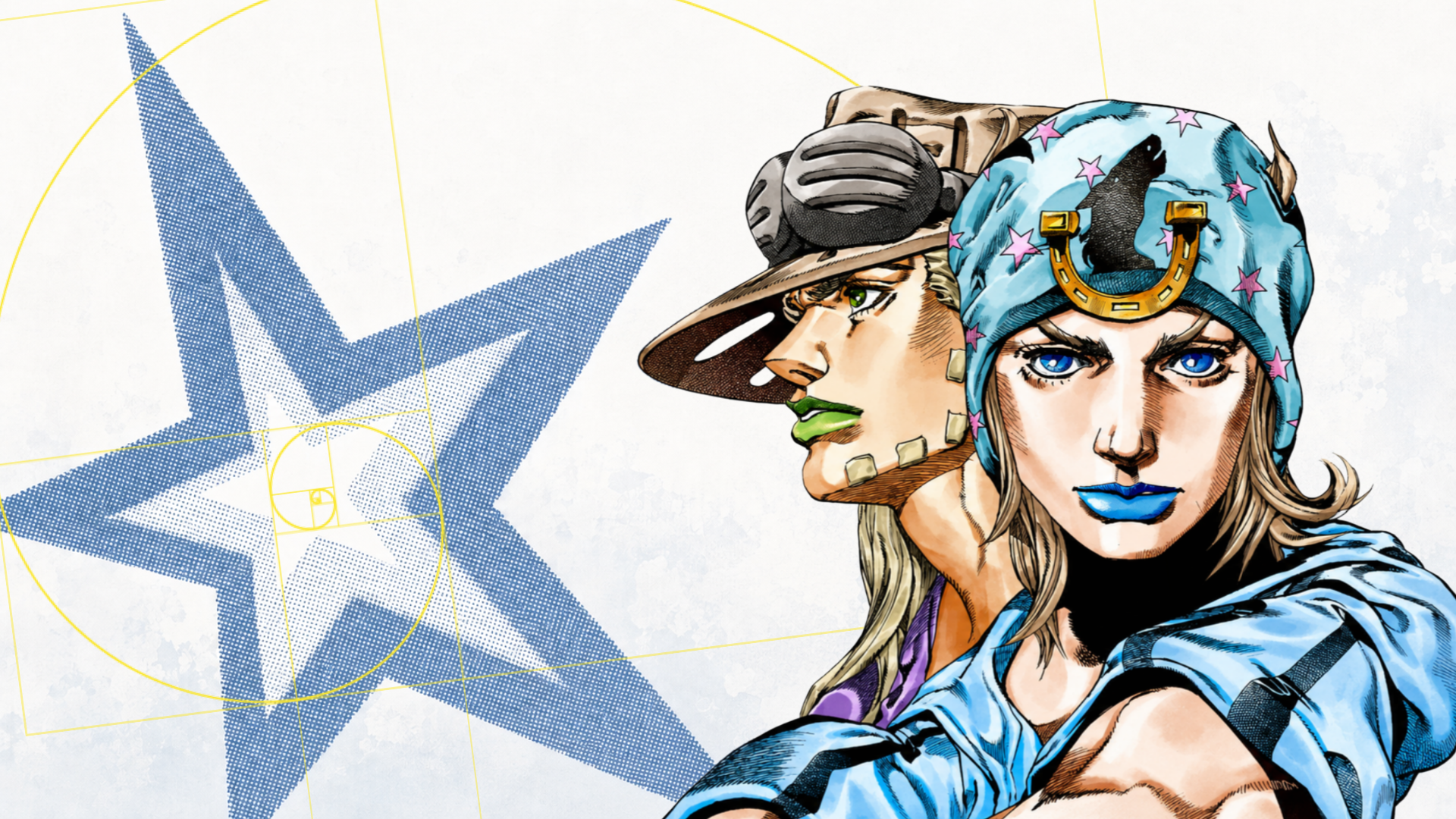
Johnny Joestar and Gyro Zeppeli: A Masterclass in Character Symbiosis
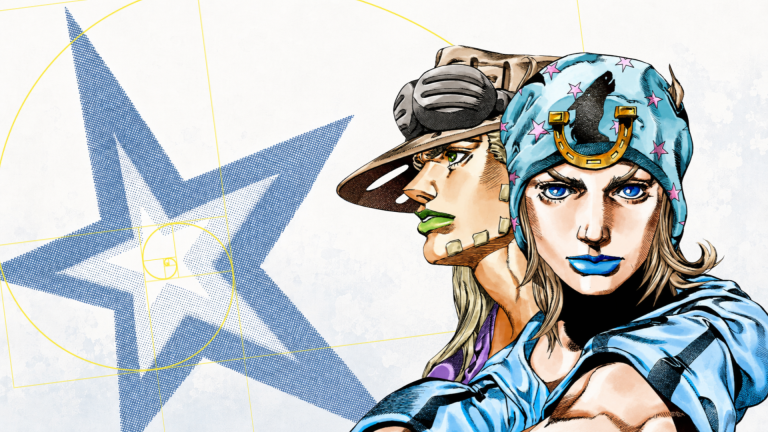
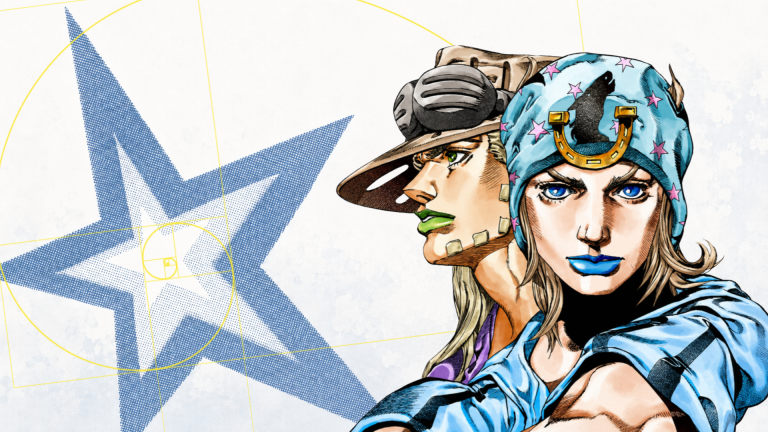
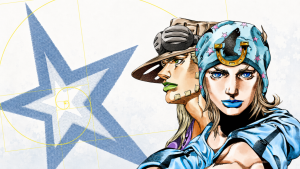
At the beating heart of Part 7 is the finest dual-protagonist dynamic Hirohiko Araki has ever penned. In stark contrast to the noble chivalry of Jonathan Joestar or the swaggering tactical brilliance of Jotaro Kujo, Johnny Joestar enters the frame fundamentally broken. A former prodigy jockey struck down by hubris and paralyzed from the waist down by a senseless act of violence, Johnny is bitter, cynical, and emotionally guarded. He is not setting out to save the world, reclaim his legacy, or avenge a loved one; his journey is one of desperate, primal rehabilitation. He simply wants to get back to “zero”—to stand on his own two feet again, both literally and spiritually.
The “Dark Determination” of a Flawed Hero
Johnny represents Araki’s deepest dive into moral ambiguity. As his Stand, Tusk, gradually evolves across distinct acts alongside his psychological state, Johnny reveals an unnerving, obsidian resolve that Araki explicitly dubs “Dark Determination.” He is willing to sacrifice allies, compromise ethics, and spill blood if it edges him closer to understanding the miracle that temporarily restored movement to his legs. It is an astonishingly human depiction of trauma and obsession, devoid of sanitized shonen idealism.
Gyro Zeppeli and the Miracle of the Spin
Balancing Johnny’s brooding desperation is Gyro Zeppeli, a disgraced Neapolitan royal executioner whose flippant theatrics, golden-lettered grill, and absurd gags mask a soul burdened by unbearable institutional duty. Gyro’s quest is explicitly altruistic: win the race to secure amnesty for a condemned child back in Naples. Crucially, Gyro serves not as a traditional sensei, but as an ideological mirror and brother-in-arms.
Through Gyro, Araki replaces the classic system of Hamon with The Spin—a profound, mathematically driven supernatural craft rooted in the Golden Ratio. By channeling the divine proportions of nature through meticulously crafted steel spheres, the Spin operates simultaneously as an ancient martial science, an anatomical scalpel, and an artistic philosophy. Watching the visual mechanics of the Golden Spin translate into motion—rotational energy tearing through flesh, terrain, and dimensions—is arguably the single most anticipated visual spectacle in modern anime discourse.
The Technical Crucible: David Production’s Equestrian Challenge
If the creative ceiling of Steel Ball Run is limitless, its production reality is terrifying. Within the commercial anime industry, two elements are universally dreaded by storyboarders and animators: moving water and galloping horses. Steel Ball Run consists almost entirely of both, sustained across hundreds of miles of changing biome topography.
Equine locomotion is famously unforgiving. A horse’s anatomy demands precise weight distribution, skeletal shifting, and complex musculature during high-speed movement. Hand-drawing dozens of distinct steeds across twenty-four frames a second over a projected multi-cour run would break the back of even the most lavishly funded studio. David Production, despite their universally celebrated handling of color palettes, signature sound design, and onomatopoeic kineticism throughout Parts 1 through 6, faces an unprecedented dilemma:
Will they attempt the painstaking hybrid approach seen in modern masterworks like Vinland Saga and Attack on Titan, blending expertly textured 3D CGI models for galloping wide-shots with bespoke 2D close-ups for key character beats? Or will they push the technical envelope further, pioneering a rotoscoped or cel-shaded pipeline designed specifically to retain Araki’s cross-hatch shading without plunging the production into the uncanny valley? The industry consensus is clear: David Production cannot simply rush Part 7 into production. It demands an elongated pre-production schedule, significant capital, and specialized talent tailored for cinematic-tier mechanical and animal draughtsmanship.
Funny Valentine, D4C, and the Philosophy of the “First Napkin”
Beyond the logistical nightmare of animated horse races lies the series’ ideological climax: Funny Valentine. The 23rd President of the United States stands tall as Araki’s most conceptually terrifying and charismatic antagonist. Valentine does not seek world destruction or personal godhood; he seeks absolute, unquestioned prosperity for his nation at the deliberate expense of the rest of the planet.
Armed with Dirty Deeds Done Dirt Cheap (D4C)—a dimension-hopping Stand that exploits parallel realities to render him immortal and omnipresent—Valentine articulates his worldview through the famous “First Napkin” monologue. Power, according to Valentine, belongs to the individual who sets the precedent, dictating whether society moves left or right. The psychological collision between Johnny’s desperate, selfish drive to survive and Valentine’s fanatical, self-righteous patriotism elevates Steel Ball Run into an unforgettable treatise on American destiny, sacrifice, and the corruptive nature of the absolute ideal.
The Long Road to the Starting Line
The anticipation for Steel Ball Run is no longer a question of if, but when and how. David Production’s recent diversification into other high-profile properties like Urusei Yatsura and Undead Unluck proves the studio is refining its workflows, building technical infrastructure, and refusing to recklessly dive headlong into their most scrutinized asset. Part 7 cannot be churned out as seasonal television fodder; it requires the reverent, uncompromising prestige execution of an international television event.
When that starting gun finally fires on San Diego Beach, and the thunderous beat of hooves meets the hum of a spinning steel sphere, anime history will turn a decisive page. Until then, the global fandom waits with bated breath, eyes fixed on the Western horizon.
How do you think David Production should tackle the legendary horse-racing sequences—pure 2D craft, or stylized hybrid CGI? Sound off in the comments below, and tell us which Steel Ball Run stand battle you’re most desperate to see animated!