

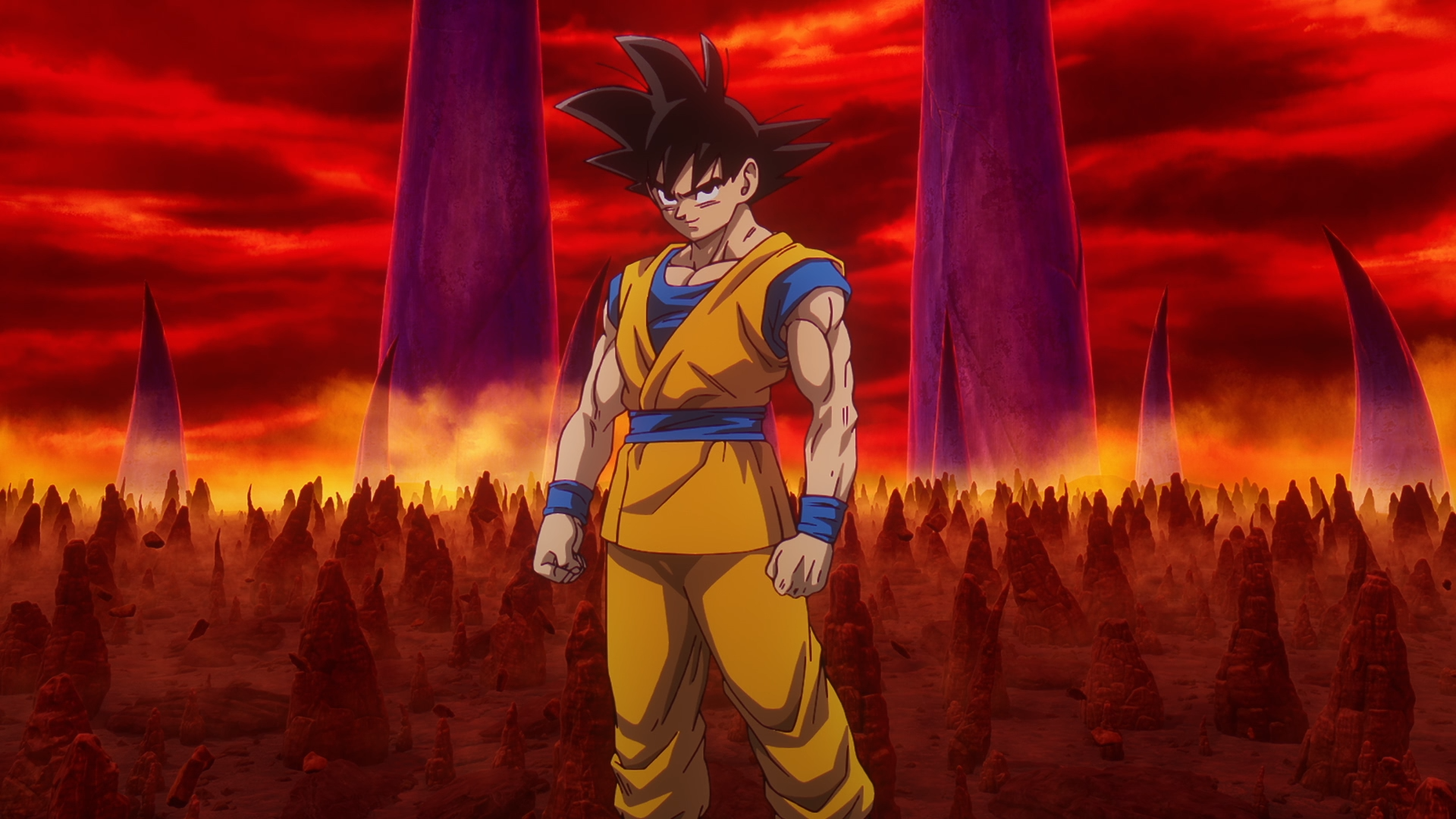
When the first frame of Dragon Ball Daima flickered onto screens worldwide, it arrived not merely as another seasonal anime premiere, but as an artifact carrying monumental emotional and cultural weight. For four decades, Akira Toriyama’s magnum opus has served as the universal lingua franca of shonen storytelling, molding generations of mangaka, animators, and fans. Following Toriyama’s sudden passing in March 2024, the anticipation surrounding Daima mutated from simple franchise curiosity into a collective vigil. This was the master’s final hands-on gift—a project where he held unprecedented creative dominion over the plot, character designs, and mechanics. Far from being a corporate retread, Dragon Ball Daima launches Goku directly into the enigmatic Demon Realm, proving that even after forty years, this mythos still retains the magical, whimsical pulse that defined its creator’s genius.
A Master’s Final Canvas: Toriyama’s Direct Touch in Every Frame
Unlike the sprawling, multi-tier corporate development that often characterizes modern long-running franchises, Dragon Ball Daima is unmistakably Toriyama at his most uninhibited. Conceived deliberately to celebrate the franchise’s 40th anniversary, the series bypasses the cosmic escalation fatigue that plagued later portions of Dragon Ball Super. Instead, it redirects our focus back to what Toriyama always loved most: curious creatures, whimsical contraptions, tactile landscapes, and an infectious, unpretentious sense of wonder.
The premiere episode wastes zero time establishing its prestige status. Toriyama’s distinctive artistic sensibilities bleed through every sequence, from the intricately paneled architecture of otherworldly dwellings to the idiosyncratic, slightly retro design of Makai transports. Where Super frequently opted for god-like, multi-dimensional stakes that made individual punches lose their physical impact, Daima re-anchors the narrative in physical reality. Watching Goku adapt to his transformed, diminutive state does not feel like a cynical gimmick; it feels like an artist affectionately stripping his protagonist of godhood to force him—and the audience—to fall in love with fundamental martial arts all over again.
Unlocking the Makai: The Deep Lore of the Demon Realm
For decades, the Demon Realm (or Makai) remained one of the most tantalizing blind spots in Dragon Ball geography. Aside from Dabura’s fleeting appearance during the Majin Buu saga and non-canon extrapolations in video games like Dragon Ball Heroes and Xenoverse, the canonical hierarchy of this underworld remained largely shrouded in myth. Daima boldly rips off the curtain, transforming a long-neglected concept into the narrative epicenter of this new era.
The Throne of Gomah and the Legacy of Babidi
The premiere expertly weaves historical canon with radical new worldbuilding. By setting its catalyst in the aftermath of Kid Buu’s defeat, the narrative immediately justifies the presence of its new antagonists: King Gomah, the newly elevated ruler of the Demon Realm, alongside his calculating confidant Degesu—who happens to be the brother of the Supreme Kai, Shin—and the rogue scientist Dr. Arinsu. The revelation that Babidi and Dabura were merely playing minor parts on a much larger, politically fractious stage gives the Demon Realm immediate sociopolitical texture.
A Different Set of Dragon Balls
Toriyama subverts our expectations of the titular wish-granting spheres. The Makai possesses its own unique Dragon Balls, guarded not by benevolent Namekians, but by the imposing Tamagami—giant, biomechanical sentinels designed with that unmistakable, rounded Toriyama aesthetic. This clever lore recalibration not only restores danger to the pursuit of the Dragon Balls, but establishes an entirely new set of mystical rules, effectively un-tethering the series from the tired routines of Planet Earth and Beerus’ temple.
Visual Kineticism: Tactile Choreography and Animation Pedigree
Toei Animation assembled an undeniable dream team for Daima, and the cinematic pedigree of this production is visible in every single cut. Under the co-direction of Aya Komaki (One Piece Stampede) and Yoshitaka Yashima, and spearheaded by character designs from the revered Katsuyoshi Nakatsuru and Chikashi Kubota, the premiere sets a brand-new benchmark for serialized shonen animation.
The visual direction completely abandons the glossy, digital rigidity that burdened early runs of Dragon Ball Super. Instead, Daima embraces lush background paintings, expressive character animations, and a rich color palette reminiscent of vintage late-1980s cel work polished through modern compositing. When the action breaks out, it does not rely on flashing auras or cataclysmic energy beams that vaporize mountain ranges. Instead, the choreography is crisp, grounded, and focused on weight, momentum, and physical leverage. Goku reaching behind his back to draw the Nyoibo (Power Pole) is not merely a nostalgic wink to 1984; it is a structural declaration that this series prioritizes close-quarters martial artistry over indiscriminate beam struggles.
Subverting the GT Curse: Character Psychology and the Miniaturization Dilemma
Inevitably, the initial reveal of Daima caused tremors across the fandom, with many drawing instant comparisons to 1996’s polarizing Dragon Ball GT. The premise of Goku turning small again felt, on paper, like familiar territory. Yet the premiere immediately dismantles this skepticism through an entirely different tonal architecture and character dynamic.
In GT, Goku’s regression felt lonely, isolating him from the ensemble while shoehorning in an angst-ridden tone. Daima subverts this entirely by subjecting the entire main cast to the curse. Seeing Vegeta, Bulma, Piccolo, and the rest of the Z-Fighters grappling with their altered centers of gravity and stubby limbs injects the narrative with classic Toriyama comedy. Rather than descending into melodrama, the characters approach their dilemma with pragmatic annoyance and adventurous resignation. Goku’s psychology remains steadfast: he is not paralyzed by tragedy or existential dread; he is genuinely thrilled by the physical challenge of mastering a smaller body. It is this indomitable, joyous spirit that keeps the narrative soaring above mere pastiche.
The Legacy of Daima: A Warm, Unforgettable Farewell
The premiere of Dragon Ball Daima succeeds brilliantly because it refuses to coast on raw sentimentality. Yes, watching this debut in a world without Akira Toriyama imparts a bittersweet, lump-in-the-throat quality to every visual flourish and sight gag. But Toriyama’s real triumph here is that the episode never begs for mourning—it insists on celebration. It is an adventurous, vibrant, visually stunning love letter to the foundational joys of serialization, martial arts, and boundless imagination.
By untethering Goku from cosmic deities and dragging the mythology into the unexplored shadows of the Makai, Daima breathes revitalizing fire into a forty-year-old titan. It honors its creator by doing precisely what he did best: having absolute fun with the medium of manga and anime. If this journey through the Demon Realm serves as Akira Toriyama’s final televised curtain call, then Dragon Ball is departing the stage at the absolute peak of its charismatic power.
What were your favorite moments from the Dragon Ball Daima premiere? Did the exploration of the Demon Realm live up to your decades-long theories, or are you just thrilled to see Goku wielding the Power Pole once more? Sound off in the comments below, and stay tuned to Wibux.com for our weekly episode breakdowns, lore deep-dives, and production retrospectives!