For more than a decade, the anime community has treated Hirohiko Araki’s Steel Ball Run not merely as the next sequential arc of an eccentric franchise, but as an untouchable holy grail. Since David Production first ignited the modern JoJo’s Bizarre Adventure renaissance in 2012, every adaptation—from the kinetic slapstick of Battle Tendency to the operatic, sun-drenched tragedy of Golden Wind—felt like an audition for the main event. When the melancholic strains of Stone Ocean’s finale faded in late 2022, effectively closing the book on the original Joestar-Brando timeline, a collective breath was held across the global fandom. The foundational mythos had concluded. The true frontier was finally in sight.
Yet, the deafening silence surrounding an official Part 7 announcement has transformed excitement into an excruciating test of endurance. Steel Ball Run is widely considered Araki’s magnum opus, a 1890 trans-continental equestrian race across the untamed American landscape that deconstructs the very narrative mechanisms JoJo spent decades building. Translating this sprawling, hyper-detailed seinen masterwork to the screen is an undertaking fraught with artistic, thematic, and monumental technical challenges.
The Seinen Rebirth: Why Steel Ball Run is Araki’s Masterpiece
To understand the immense buzz surrounding a potential anime adaptation, one must grasp the historic pivot point Steel Ball Run represents in Hirohiko Araki’s career. Originally launched in Weekly Shonen Jump in 2004 before moving to the monthly pages of Ultra Jump, the relocation unlocked an unprecedented artistic evolution. Unshackled from weekly deadlines and the demographic censorship of teenage-oriented publishing, Araki turned the clock back to the late 19th century and crafted a narrative drenched in moral ambiguity, historical paranoia, and visceral grit.
The premise is deceptively accessible: thousands of eccentric racers gather in San Diego to traverse six thousand miles to New York City, competing for a staggering fifty-million-dollar prize purse organized by eccentric promoter Steven Steel. However, beneath the dust, hooves, and gunsmoke lies a geopolitical conspiracy centered on the gathering of the mummified pieces of the Holy Corpse. Araki transformed the series from a sequence of episodic villain-of-the-week brawls into an existential odyssey where every mile conquered exacts a severe psychological tax on its riders.
Johnny Joestar & Gyro Zeppeli: Deconstructing the Joestar Hero
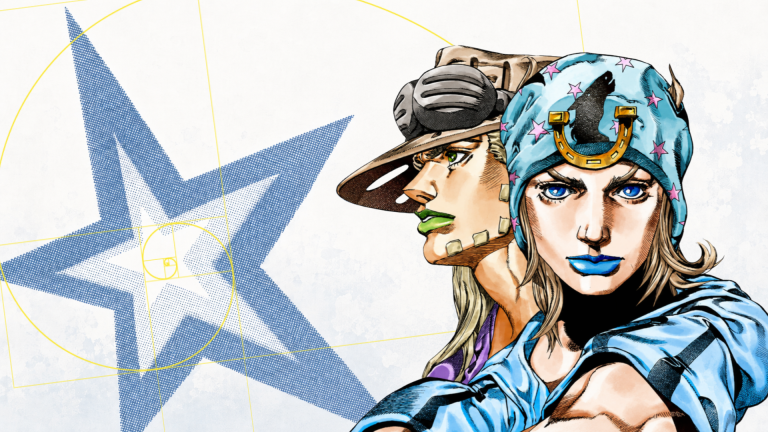
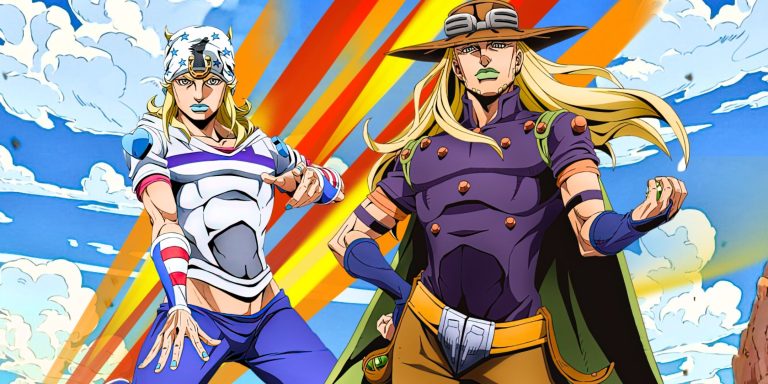
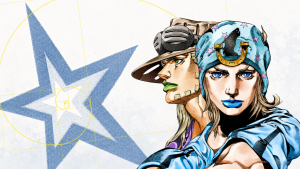
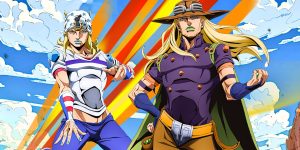
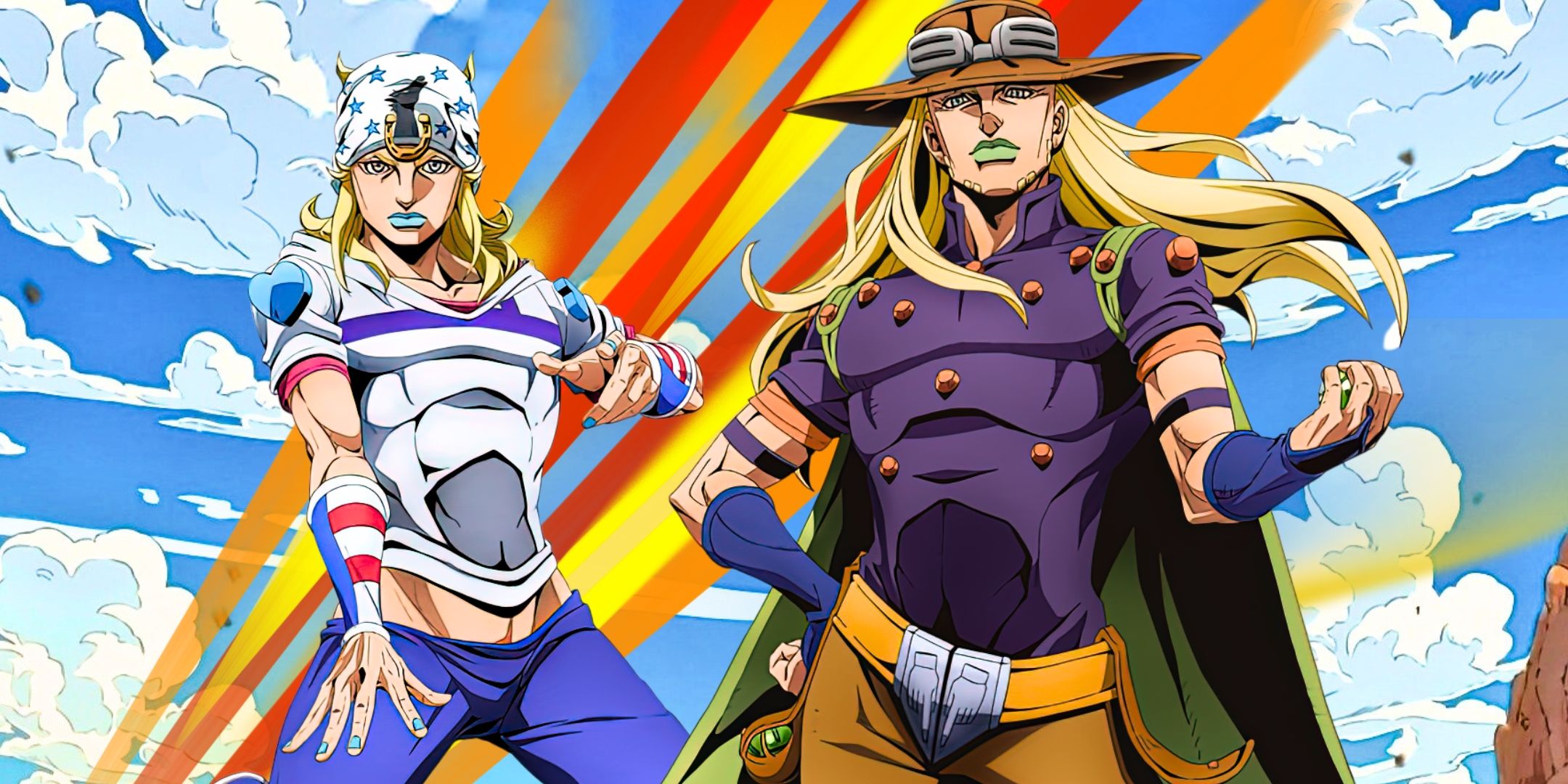
At the center of this dust-swept epic sits what is arguably the most nuanced, emotionally resonant dual-protagonist dynamic in modern sequential art: Johnny Joestar and Gyro Zeppeli. Their partnership completely subverts the traditional heroism that defined Jonathan, Jotaro, or Josuke.
Johnny is a fallen prodigy. Struck by a bullet that left him paraplegic following a display of unearned hubris, he begins the story not as an aspiring savior, but as a bitter, cynical shell of a man driven by transparently selfish motives. He enters the Steel Ball Run race not for glory or patriotism, but because of a fleeting kinetic encounter with Gyro Zeppeli’s steel sphere that momentarily restored sensation to his paralyzed legs. Araki frequently frames Johnny through the lens of “Dark Determination”—a chilling, pitch-black resolve where his cold, predatory stare makes him look more like an antagonist than a crusader for justice.
The Philosophy of the Spin
Contrasting Johnny’s brooding desperation is Gyro Zeppeli, a disgraced executioner from the Kingdom of Naples operating under the guise of an arrogant, golden-toothed cowboy. Gyro does not merely carry the narrative; he introduces The Spin, a biological and metaphysical evolution of the ancestral Hamon technique based on the natural world’s Golden Ratio.
The interplay between Johnny’s evolving Stand ability, Tusk (spanning distinct evolutionary “Acts”), and Gyro’s mathematical mastery of rotational physics replaces raw punch-ghost slugfests with breathtaking, puzzle-like tactical standoffs. As the grueling miles forge an ironclad bond between the two, their journey transitions from a cynical pursuit of personal redemption into an emotionally devastating meditation on sacrifice, brotherhood, and spiritual healing.
The Elephant—or Horse—in the Room: David Production’s Technical Hurdle
If the narrative material is universally celebrated, why hasn’t David Production fired the starting pistol? The answer boils down to one word that strikes terror into the heart of any key animator: horses.
Equine anatomy and movement are notoriously the most difficult, labor-intensive subjects to render in traditional 2D hand-drawn animation. A galloping horse requires an immense degree of skeletal consistency, muscular shifting, and perspective rotation. While studios occasionally handle cavalry charges through brief, blended 3DCG sequences—often with divisive results, as seen in projects like Attack on Titan or Kingdom—Steel Ball Run is not an anime with a few horse scenes; it is an anime that lives on horseback for ninety-five chapters across varied terrain.
David Production established its sterling industry reputation on stylized color shifts, kinetic line-art, sound-effect kanji manifesting in mid-air, and dynamic physical choreography. Replicating the sheer density of Araki’s mid-2000s hatching and anatomy while choreographing dozens of thoroughbreds galloping at high speeds across prairies and blizzards demands a technological and budgetary rethink. To do Part 7 justice, the studio must construct a revolutionary hybrid pipeline—blending state-of-the-art non-photorealistic 3D rendering (NPR) with hand-drawn character flourishes. Anything less risks shattering the immersion of a fandom that has spent a decade treating the source material as untouchable canon.
Funny Valentine and the Grand Political Canvas
A masterclass in character writing requires an equally transcendent foil, and in the 23rd President of the United States, Funny Valentine, Araki delivered arguably the best antagonist in manga history. Valentine operates not out of sadism or cartoonish villainy, but through an uncompromising, zealous vision of American exceptionalism.
Armed with Dirty Deeds Done Dirt Cheap (D4C)—a dimension-hopping Stand that allows him to swap realities and coordinate paradoxical ambushes—Valentine represents the philosophical climax of Araki’s exploration of fate. His famous “First Napkin” monologue is a chillingly prescient critique of societal hegemony, realpolitik, and the nature of power. The inevitable clash between Johnny’s raw, personal individualism and Valentine’s collectivist manifest destiny elevates Steel Ball Run far above typical genre conventions, lending it the gravitas of a sprawling historical tragedy.
The Verdict: The High Cost of Perfection
Following the divisive, fragmented batch-release strategy of Stone Ocean on Netflix, David Production and Warner Bros. Japan find themselves at an existential crossroads. Steel Ball Run cannot survive a low-priority, staggered release cycle; it demands the scale, prestige, and episodic weekly communal energy that turned Stardust Crusaders and Golden Wind into global phenomena.
Whether David Production announces the adaptation tomorrow or asks the fandom to wait another two years, one truth remains self-evident: whenever the starting gun finally goes off in San Diego, it will mark one of the most culturally seismic moments in modern anime history. The race is long, the terrain is unforgiving, but the golden ratio never lies.
What are you most desperate to see brought to life in the Steel Ball Run anime—Gyro’s bizarre campfire gags, the terror of Scary Monsters, or the mind-bending reveal of D4C? Sound off in the comments below!