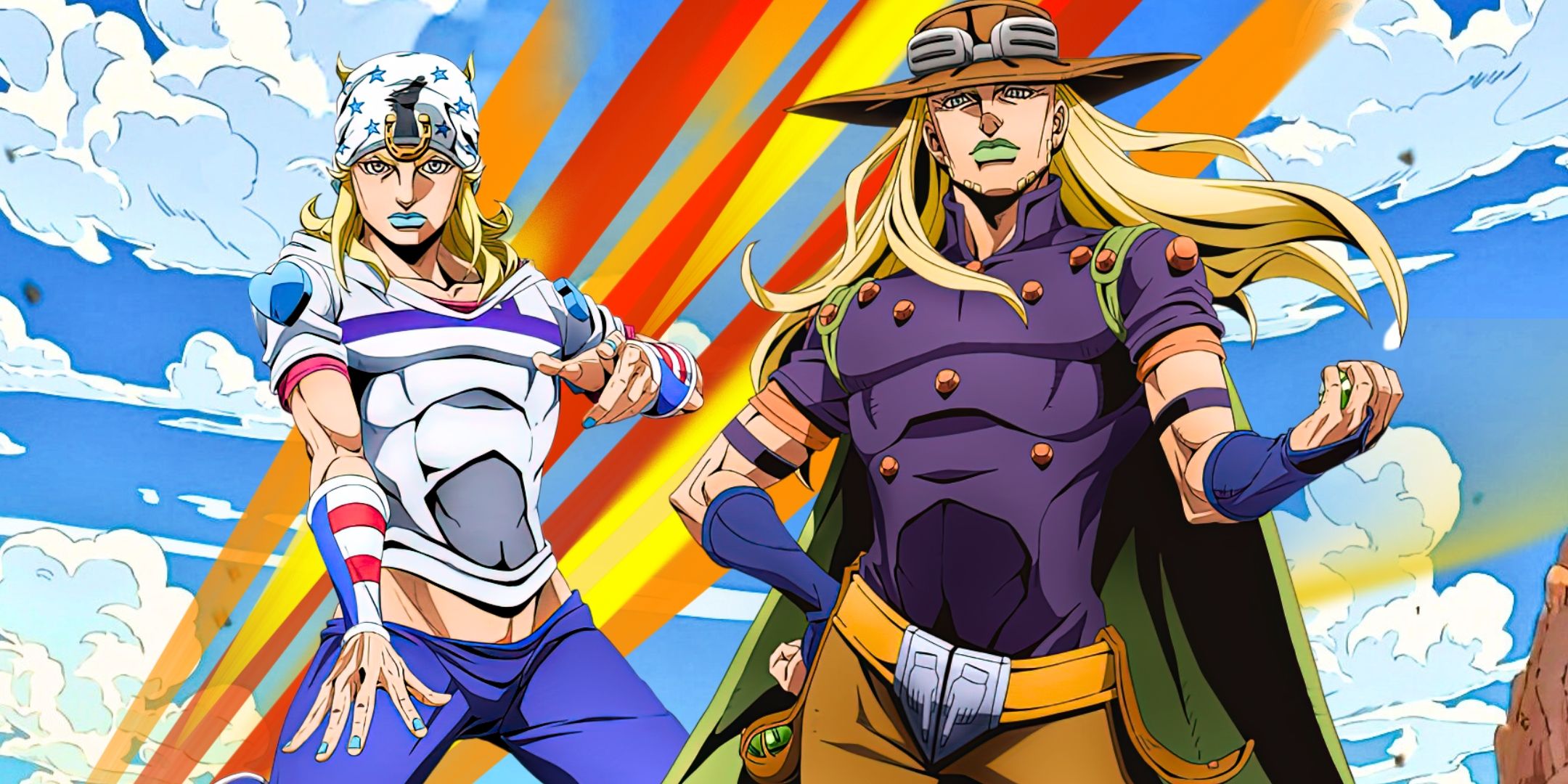
Every few years, the anime zeitgeist fixates on an adaptation so monumental that its mere mention sparks equal parts reverent awe and logistical panic. In the post-Stone Ocean landscape, that white whale is unequivocal: JoJo’s Bizarre Adventure Part 7: Steel Ball Run. Sitting comfortably near the apex of critical rankings worldwide, Hirohiko Araki’s trans-American epic is universally lauded as his magnum opus. Yet, as whispers turn into roaring speculation regarding David Production’s next strategic move, the collective anime community finds itself suspended between ravenous anticipation and anxious skepticism. Adapting Steel Ball Run is not just a matter of greenlighting another cour of television; it is a staggering production gauntlet that could fundamentally redefine what modern television anime is capable of executing.
The Transcontinental Paradigm Shift: Araki’s Seinen Metamorphosis
To understand the volcanic buzz surrounding a potential anime adaptation, one must comprehend what Steel Ball Run represents within the broader tapestry of the franchise. Serialized initially in Weekly Shonen Jump before migrating to the monthly seinen catalog of Ultra Jump in 2005, Part 7 served as a creative hard-reset. Unshackled from weekly deadlines and demographic guardrails, Araki pivoted from urban supernatural brawls to an unforgiving, sun-drenched historical Western set in an alternate 1890.
The premise—a cross-country equestrian race spanning 6,000 kilometers from San Diego to New York City with a $50 million purse—quickly peels back its sports-epic veneer to reveal a visceral narrative of nationalistic conspiracy, metaphysical horrors, and profound spiritual redemption. The monthly pacing allowed Araki’s linework to evolve into something approaching classical fine art, characterized by cross-hatched grit, photorealistic anatomy, and sprawling wilderness landscapes. For an animation studio, transitioning from the claustrophobic corridors of Green Dolphin Street Prison to the vast, windswept plains of late-19th-century America is an aesthetic chasm of tectonic proportions.
Johnny Joestar & Gyro Zeppeli: Broken Souls and Sacred Geometry
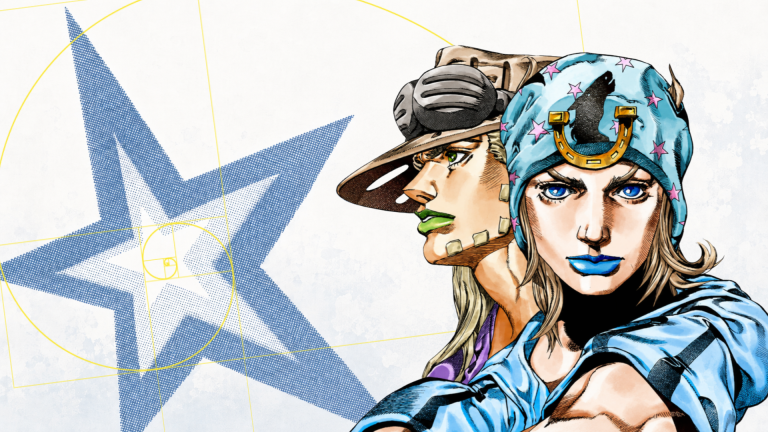
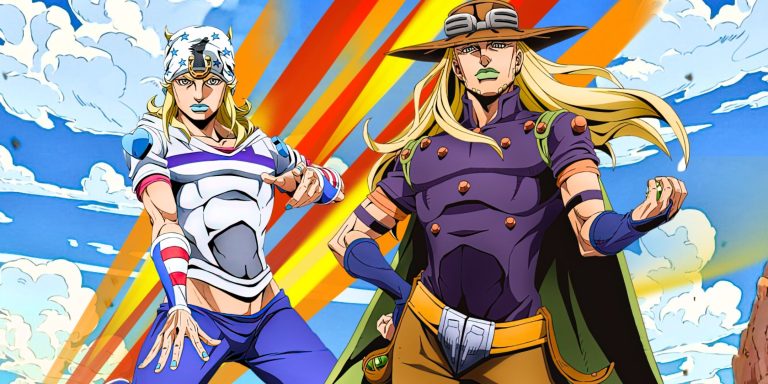
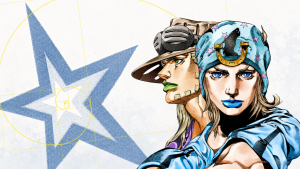
At the beating, bruised heart of Steel Ball Run lies arguably the most captivating dual-protagonist dynamic in contemporary graphic fiction. In a radical subversion of shonen heroism, Johnny Joestar is not a virtuous crusader like his ancestor Jonathan. He begins the journey as an arrogant, paraplegic former horse-racing prodigy who has lost everything to his own hubris. Johnny is bitter, morally ambiguous, and harbors what Araki explicitly terms “dark determination”—an unyielding, sometimes terrifying willingness to commit atrocities if it means regaining the use of his legs and finding personal absolution.
The Spin and the Mathematics of Survival
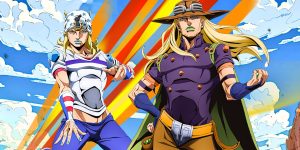
Johnny’s foil and mentor, Gyro Zeppeli, counterbalances this existential gloom with eccentric bravado, steel balls, and an opera of bizarre humor. Yet Gyro bears his own heavy cross as a disgraced Neapolitan executioner attempting to win the race to secure royal amnesty for an innocent child. The mechanical underpinning of their bond is the Spin, Araki’s brilliant conceptual evolution of the early franchise’s Hamon energy.
Rooted in the Fibonacci sequence and the aesthetics of the Golden Ratio, the Spin elevates combat beyond standard power-scaling into an intellectual and visual spectacle. Watching Johnny’s Stand, Tusk, evolve across four distinct narrative acts alongside Gyro’s pedagogical “Lessons” provides an emotionally raw progression. Translating this dynamic to screen requires phenomenal voice casting and nuanced directorial pacing; the quiet, melancholy campfire conversations between Johnny and Gyro carry just as much narrative gravity as their high-velocity shootouts.
The David Production Crucible: The Nightmare of Animating Equine Locomotion
Behind the celebratory fan-art and speculative forum threads lies the terrifying practical reality of modern production pipelines: horses. In the animation industry, quadrupeds—specifically galloping equines with shifting skeletal muscularity—are universally recognized as an animator’s logistical nightmare. Steel Ball Run doesn’t feature a horse in the background of a single scene; it features dozens of thoroughbreds, painted horses, and wild stallions running at full tilt through varying terrains across hundreds of chapters.
David Production, whose stewardship of the JoJo franchise since 2012 has cemented their legendary status, faces their most daunting engineering challenge yet:
- The 2D vs. 3D Hybrid Dilemma: Hand-drawing hundreds of cuts of hyper-detailed horses charging across shifting camera perspectives is financially and physically unsustainable for modern staff. A hybrid approach utilizing sophisticated 3D CGI models—akin to modern studio workflows seen in MAPPA’s recent action sequences or Orange’s masterclasses—is almost inevitable.
- Maintaining the Araki Aesthetic: The studio must painstakingly integrate cel-shaded horse models with the signature, heavy-inked hand-drawn aesthetic of the human riders. If the horses feel weightless, rigid, or detached from their environments, the tension of the race entirely evaporates.
- Direction and Kinetic Framing: Adapting the sheer kinetic momentum of equestrian velocity demands innovative camera work, dramatic sound design, and an uncompromising approach to scale that David Production has yet to tackle on this magnitude.
The Holy Corpse and Manifest Destiny: Redefining the Shonen Antagonist
A narrative is only as potent as its central conflict, and Steel Ball Run redefines narrative stakes through the introduction of the Holy Corpse Parts—relics scattered across the American frontier that bestow unfathomable Stand capabilities. Enter President Funny Valentine, widely regarded as one of the most compelling antagonists in manga history.
Valentine, armed with his dimension-hopping Stand Dirty Deeds Done Dirt Cheap (D4C), operates on an intoxicating, Machiavellian philosophy encapsulated by his famous “first napkin” doctrine. He is not motivated by megalomania or sadistic impulse, but by an extreme, zealous patriotism: he desires to make the United States an untouchable bastion of prosperity, regardless of the global suffering required to achieve it. The ideological clash between Valentine’s grandiose utilitarianism and Johnny Joestar’s desperate, selfish quest for self-worth subverts the traditional good-versus-evil dichotomy, ensuring the narrative remains provocative long after the dust settles on the track.
The Next Frontier: Why Steel Ball Run is Worth the Wait
The clamor for a Steel Ball Run anime is more than simple fandom impatience; it is the collective desire to see a genre-defining literary achievement receive the definitive multimedia treatment it deserves. Rumors will undoubtedly continue to churn across social feeds, but seasoned industry observers know that an adaptation of this complexity cannot—and should not—be rushed to meet arbitrary quarterly schedules.
If David Production takes the necessary time, allocates the requisite resources, and reinvents its technical pipeline to master the grueling realities of equestrian animation, Steel Ball Run will not just be another successful entry in the Joestar lineage. It has the distinct potential to stand as a singular high-water mark for high-concept anime adaptations in the modern era.
Are you holding out hope for a purely 2D hand-drawn race, or do you think high-end CGI is the only realistic future for Johnny and Gyro’s journey? Sound off in the comments below, and keep your browsers locked to Wibux.com for all your frontline anime breakdowns, scoops, and analyses.