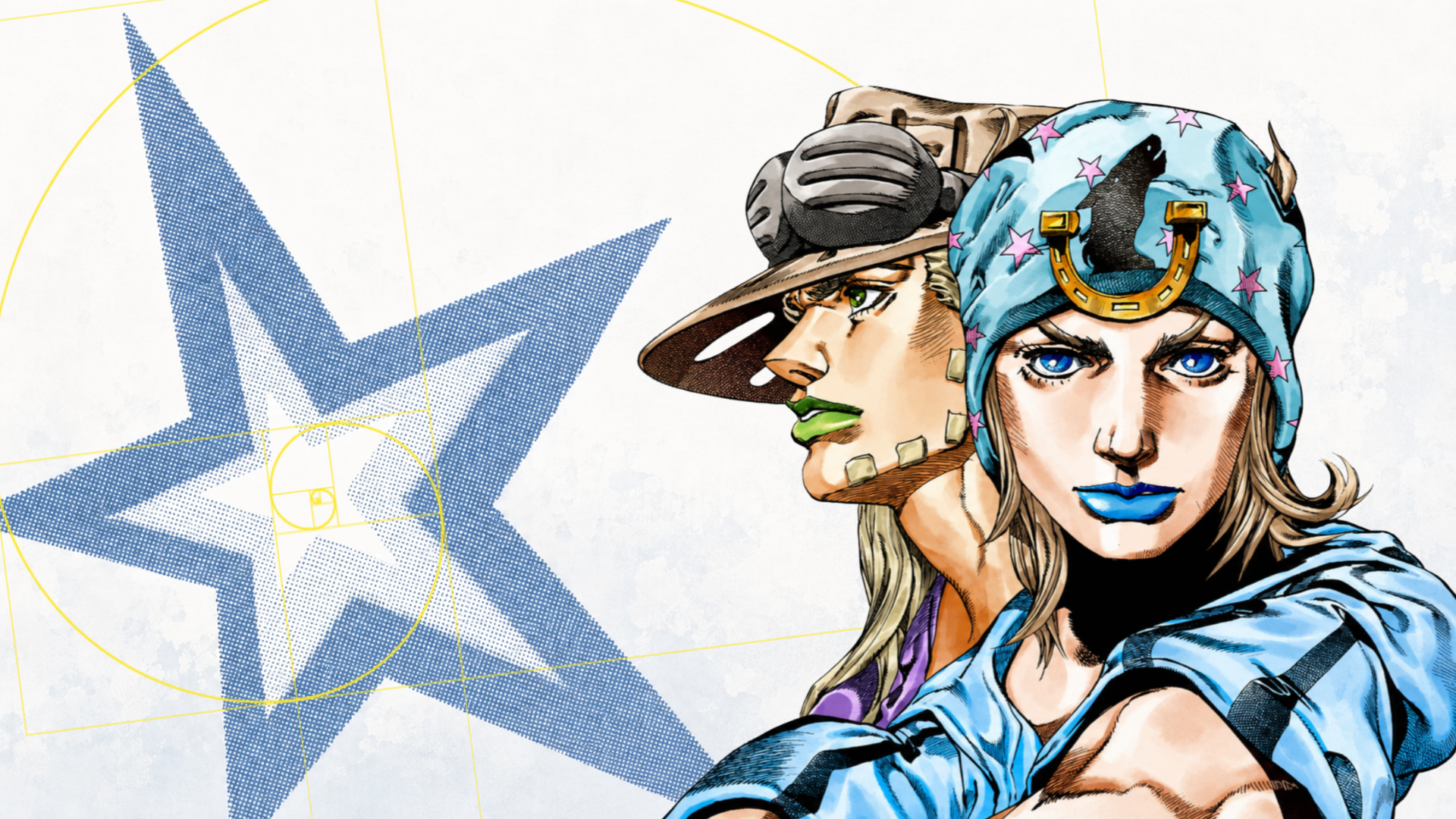
Ever since the melancholic, bittersweet chords of “Roundabout” faded out following the cosmic, universe-resetting climax of Stone Ocean, the collective consciousness of the global anime community has fixated on a singular, almost mythical horizon: Steel Ball Run. For over a decade, Hirohiko Araki’s seventh serialized arc has occupied an echelon of reverent, near-sacred acclaim. On critical hubs like MyAnimeList and AniList, the manga hovers consistently near the absolute zenith of all-time reader rankings, outstripping foundational masterpieces across the medium. Yet, as David Production remains tantalizingly tight-lipped regarding an official greenlight, the fervor surrounding the trans-continental race across 1890s America has transformed from a polite wish-list item into one of the most vociferous creative campaigns in modern pop culture.
Adapting Steel Ball Run is not simply a matter of drawing the next sequential chapter in the Joestar genealogy; it is a creative Rubicon. To transition from the vibrant, episodic urban melodrama of Florida’s Green Dolphin Street Prison to the vast, dust-choked plains of North America requires a fundamental reinvention of what JoJo’s Bizarre Adventure looks, feels, and moves like on screen. Here is why the buzz refuses to die down, how Araki re-engineered his narrative philosophy, and what stands between David Production and anime immortality.
The Seinen Shift: Araki’s Reinvention of the American Mythos
To understand the monumental cultural weight of Steel Ball Run, one must contextualize its publication history. When the arc debuted in 2004 within the pages of Weekly Shonen Jump, it originally shed the iconic JoJo’s Bizarre Adventure moniker, masquerading as a standalone frontier odyssey. However, its true metamorphosis occurred when Araki migrated the series to the monthly seinen magazine Ultra Jump in 2005. Free from the breakneck weekly deadlines and demographic guardrails of Shonen, Araki expanded his canvas with staggering literary ambition.
The plot—a grueling, 6,000-kilometer coast-to-coast horseback marathon boasting a $50 million grand prize—serves merely as the macroscopic veneer for a profound, existential meditation on fate, theological relics, and manifest destiny. The race is not just a contest of athletic endurance; it is a clandestine proxy war for the fragmented mummified parts of a holy, divine corpse, implied heavily to belong to Jesus Christ himself. Araki traded the hyper-stylized punk fashion and runway-model braggadocio of earlier parts for grit, sweat, and moral decrepitude. It is an unsparing work where good and evil cease to exist in clear binaries, supplanted instead by competing philosophies of will, hunger, and nationalistic ambition.
Johnny Joestar and Gyro Zeppeli: A Masterclass in Flawed Psychology
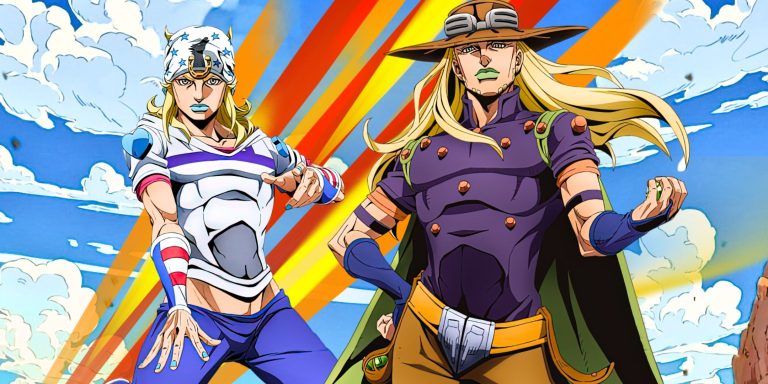
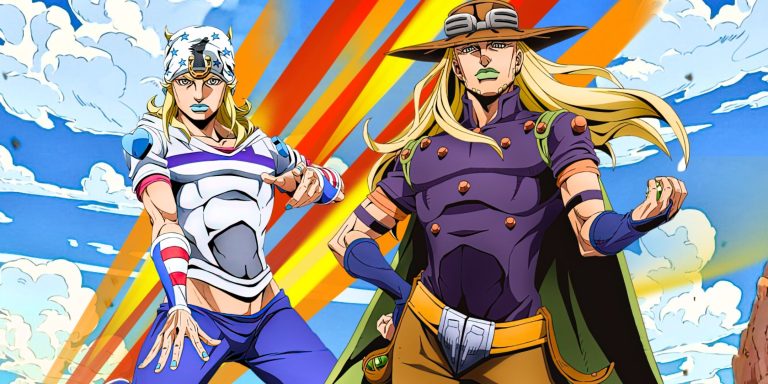
Central to the reverence surrounding Part 7 is the tectonic shift in character dynamics. Where previous Joestars entered their narratives armed with indomitable justice or righteous indignation, Johnny Joestar arrives as an anti-hero defined by profound physical and psychological trauma. A former horse-racing prodigy whose hubris cost him the use of his legs, Johnny begins the story not as an aspiring savior, but as a bitter, alienated paraplegic drowning in self-loathing. He does not join the race to save the world; he rides solely to discover the metaphysical secret behind a strange, kinetic phenomenon that momentarily stimulated his dormant nerves.
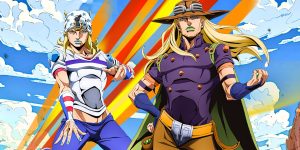
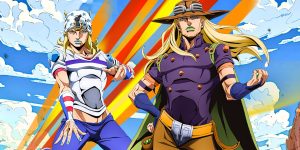
Enter Gyro Zeppeli, the undisputed soul of the narrative. An eccentric executioner from the Kingdom of Naples carrying two steel spheres and a grill inlaid with “GO! GO! ZEPPELI,” Gyro acts as Johnny’s mentor, companion, and foil. Their dynamic transcends standard shonen camaraderie, evolving into a brutally raw, mutually transformative brotherhood built on shared misery, bad jokes about cheese, and deep personal redemption.
The Golden Spin: Deconstructing the Battle System
Crucially, Steel Ball Run overhauls the legendary power mechanics of the franchise. While traditional Stands remain present, they are secondary to the concept of The Spin—an ancient Neapolitan art form predicated on the mathematical elegance of the Fibonacci Sequence and the Golden Ratio. By harnessing natural rotational energy through steel spheres, Gyro unleashes ballistic, kinetic miracles that can manipulate flesh, bend light, and pierce dimensional barriers.
Johnny’s eventual awakening of his Stand, Tusk, mirrors his psychological healing. As he learns the four successive acts of the Spin, Johnny progresses from a desperate man firing mere fingernail bullets to a terrifying conduit of infinite, multiversal gravity. Araki frames Johnny’s evolution with what Gyro terms “Dark Determination”—a terrifying, flame-like gaze that reveals Johnny’s willingness to kill without hesitation to achieve his goals. It is a psychological depth rarely afforded to mainstream anime protagonists, demanding nuanced voice acting and subtle visual pacing that fans are desperate to see realized.
The Technical Crossroad: David Production’s Equestrian Nightmare
If the narrative of Part 7 is pure gold, its production reality is an animator’s logistical inferno. The elephant—or rather, the thoroughbred—in the room is horses. In the realm of hand-drawn 2D animation, dynamic quadruped locomotion is widely regarded as one of the most labor-intensive, technically punitive challenges in the craft. Unlike humans, whose anatomy hinges on bi-pedal balance and broad torso rotation, horses require precise, volumetric skeletal shifts across four moving legs, undulating muscular coats, and complex mane dynamics.
Now, multiply that challenge by a pack of twenty competitors galloping at full tilt across shifting desert sands, riverbeds, and forest switchbacks, while dodging supernatural attacks, and the scale of the challenge becomes terrifyingly clear. We have seen industry titans stumble here before:
- Wit Studio relied heavily on hybrid, meticulously framed models to manage the cavalry charges in Attack on Titan.
- Studios often pivot toward clunky, soulless 3D CGI models that break immersion and alienate viewers when pushed by unforgiving broadcast schedules.
David Production, lauded for their vibrant color swaps, kinetic sound-effect typography, and sacred fidelity to Araki’s line-work, faces an unprecedented dilemma. If they rush Steel Ball Run with low-cost 3D equine models, the visual magic dissolves. The enduring buzz is largely colored by this collective anxiety: fans would rather wait half a decade for a hybrid masterpiece featuring the 3D-integration expertise of studios like Orange or Ufotable than receive a compromised product. Reports of David Production’s recent staffing expansions and experiments with Unreal Engine pipelines suggest that if SBR is currently in pre-production, it is undergoing an extensive, delicate R&D phase.
The Ideological Colosseum: Funny Valentine’s Enduring Shadow
No discourse on Part 7 is complete without addressing its antagonist: the 23rd President of the United States, Funny Valentine. Armed with his dimensional Stand, Dirty Deeds Done Dirt Cheap (D4C), Valentine represents the apex of Araki’s villainous writing. Unlike the theatrical sadism of Dio Brando or the paranoid psychopathy of Yoshikage Kira, Valentine operates with an unshakeable, hyper-utilitarian patriotism. His ambition to secure the holy relics to elevate the United States as an untouchable global hegemon—redirecting all global misfortune to other nations—serves as a razor-sharp deconstruction of American exceptionalism.
The philosophical clash between Valentine’s collectivist tyranny and Johnny Joestar’s deeply selfish, individualistic pursuit of spiritual wholeness elevates the narrative into high-concept political literature. In an anime landscape saturated with simplistic power-scaling battles, this thematic sophistication is precisely why the hype refuses to diminish with age.
The Horizon: When Will the Race Begin?
As David Production clears its production slate following spinoff projects like Thus Spoke Kishibe Rohan and alternative studio commitments, the drumbeat for Part 7 grows louder. The sheer economic viability and global prestige of the JoJo IP ensure that Steel Ball Run is a matter of when, not if. When that starting gun inevitably fires on San Diego’s coastline, it will likely mark the most watched, hyper-scrutinized premiere in David Production’s history.
Until then, the community continues to dissect every frame of previous adaptations, keeping the fires of the Golden Spin burning through fan animations, music tributes, and endless speculation. Steel Ball Run is the mountain peak of Hirohiko Araki’s lifelong creative experiment—and when it finally lands, anime as a medium may never be the same.
Are you prepared to embrace the Spin? Do you want David Production to go fully hand-drawn, or can a high-end 3D hybrid do justice to the Steel Ball Run race? Drop your predictions and dream voice casts in the comments below, and stay tuned to Wibux.com for all breaking anime updates.