


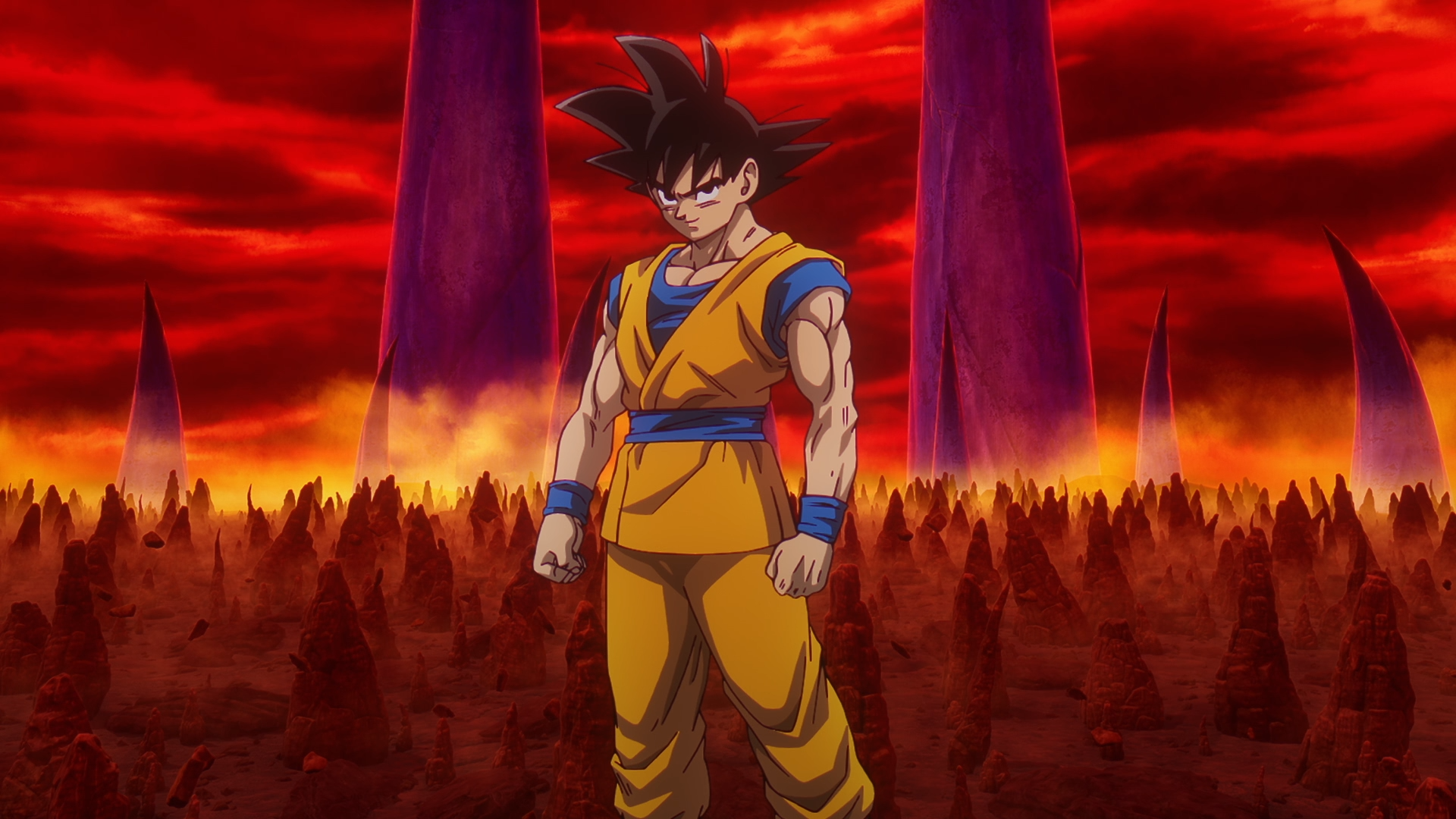
For four decades, the late Akira Toriyama’s opus has served as the undisputed bedrock of global shonen culture. Yet, when the lights dimmed for the global premiere of Dragon Ball Daima, the air was thick with something far heavier than standard franchise hype. Arriving mere months after Toriyama’s sudden passing in March 2024, Daima is no longer just another celebratory spin-off marking the franchise’s 40th anniversary; it stands as the maestro’s final completed creative testament. Where modern iterations like Dragon Ball Super often relied on runaway cosmic power-scaling and multiversal tournaments, Daima swerves back to Toriyama’s heartland: whimsical adventure, eccentric character designs, and an overdue deep-dive into the shadowed corners of the canon’s untamed cosmology.
A Bittersweet Milestone: Toriyama’s Direct Handprint on the 40th Anniversary
From the moment the opening credits roll, Toriyama’s personal involvement—unprecedented in its creative depth since the original manga’s run—radiates across every frame. Unlike Dragon Ball GT, which leaned on Toei Animation’s writers while Toriyama contributed primarily conceptual character drafts, Daima was penned, storyboarded, and curated in close collaboration with the creator himself. The result is an idiosyncratic blend of laugh-out-loud visual comedy, retro-futuristic vehicle machinery, and a narrative grounded in the classic journey-to-the-unknown framework of Journey to the West.
The Shadow of a Titan and the Rebirth of Adventure
The premiere wastes no time acknowledging the emotional weight it carries. Opening with a gorgeous, reverently animated recap of the Majin Buu conflict, the episode bridges the gap between legendary nostalgia and fresh narrative soil. However, rather than resting on the laurels of Super Saiyan 3 theatrics, the story pivots instantly toward consequence. Toriyama refuses to let the past remain static, reminding longtime readers that every cataclysm on Earth reverberates across dimensions that Goku and his cohorts scarcely understand.
Expanding the Mythos: Unveiling the Enigmatic Demon Realm
For decades, the Demon Realm (Makai) remained one of the most frustratingly tantalizing blind spots in Dragon Ball lore. Aside from the brief introduction of Dabura during the Buu Saga and non-canonical excursions in video games like Dragon Ball Heroes and Xenoverse, the plane was largely left unexplored. The premiere of Daima remedies this in a single stroke of worldbuilding brilliance, formally cataloging the Demon Realm’s geopolitical architecture and its complex hierarchy.
The Bureaucracy of Evil: King Gomah, Degesu, and the Tamagami
Enter King Gomah, the newly elevated ruler of the Demon Realm, alongside his scheming confidant Degesu (brother to the Supreme Kai, Shin) and the brilliantly aloof scientist Dr. Arinsu. The premiere dedicates significant narrative real estate to establishing their perspective, watching archival broadcasts of the Z-Fighters dismantling Kid Buu with petrified awe. Gomah’s motivation is delightfully petty yet strategically sound: recognizing that Earth harbors mortals capable of eradicating godly abominations, he utilizes his realm’s own distinct set of Dragon Balls—guarded by monstrous arbiters known as the Tamagami—to systematically neutralize the threat.
Instead of wishing for unconditional destruction, Gomah wishes for Goku and his allies to be transformed into children, seeking to strip them of their physical reach, adult stamina, and combat equilibrium. It is classic Toriyama logic: terrifying stakes resolved through absurd, disarming mechanics that subvert typical shonen grandiosity.
Animation Pedigree: Classic Wuxia Meets Modern Kinetic Mastery
Visually, Dragon Ball Daima is a masterclass in modern hand-drawn aesthetics, representing a pinnacle production effort from Toei Animation. Helmed by directors Yoshitaka Yashima and Aya Komaki, with character designs meticulously translated by Katsuyoshi Nakatsuru and Chikashi Kubota, the premiere rejects the over-saturated, hyper-glossy digital sheen that plagued the early arcs of Dragon Ball Super.
The action choreography honors old-school wuxia roots. In sequences where Goku tests his newly shrunken body, the kinetic weight of martial arts takes center stage over world-shattering energy blasts. Fluid character weight, expressive smear frames, and inventive camera angles elevate mundane sparring into pure sakuga gold. Furthermore, the deliberate return of the Nyoibo (the Power Pole) emphasizes grounded, physical weapon choreography that forces Goku to rely on balance, leverage, and sheer martial discipline rather than brute-forcing his way forward with God Ki.
The Mini-fication Gambit: Why Daima is Not Dragon Ball GT 2.0
When the concept of Daima was first unveiled, a vocal segment of the anime community immediately drew apprehensive parallels to the divisive “kid Goku” premise of Dragon Ball GT. The premiere decisively obliterates those comparisons through tonal precision and character psychology.
Where GT isolated Goku with an inconsistent supporting cast, Daima transforms the entire ensemble—including Vegeta, Bulma, Piccolo, and Krillin—into diminutive versions of themselves. This choice generates immediate, rich comedic friction. Vegeta’s wounded aristocratic pride juxtaposed against his stubby limbs provides instant levity, while Goku treats the entire transformation not as a tragedy, but as a novel physical puzzle to be solved. Furthermore, by pairing Goku with Supreme Kai and the enigmatic new rogue Glorio, Daima establishes an intriguing road-trip dynamic infused with mystery, intrigue, and distinct planar politics that GT never managed to cultivate.
Looking Beyond the Horizon: What Daima Means for Dragon Ball’s Future
The premiere of Dragon Ball Daima serves as both a joyous celebration and an exquisite goodbye. By stripping the cast down to their physical roots and thrusting them into the alien ecosystems of the Demon Realm, the series reconnects with the innocent, exploratory spirit that made Toriyama’s work a global phenomenon in 1984. It doesn’t overwrite the grand cosmic scale of modern canon; instead, it enriches the tapestry, proving that true narrative stakes rely on creative curiosity rather than arbitrarily soaring power levels.
As Goku leaps aboard Glorio’s ship, Power Pole slung over his back and a grin stretched across his face, fans are treated to a vision of the Saiyan at his most pure: an intrepid explorer hungry for a fight, unburdened by destiny, and ready to meet the unknown with open arms. Akira Toriyama’s curtain call reminds us precisely why the world fell in love with his universe in the first place.
What were your thoughts on the Dragon Ball Daima premiere? Did the animation live up to your expectations, and what secrets do you think lie deep within the Demon Realm? Drop your theories in the comments below, and stay tuned to Wibux.com for weekly episodic breakdowns!

2 thoughts on “Dragon Ball Daima Premiere Breakdown: Akira Toriyama’s Final Masterpiece Takes Goku to the Mysterious Demon Realm”