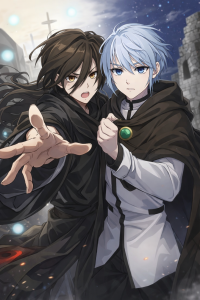
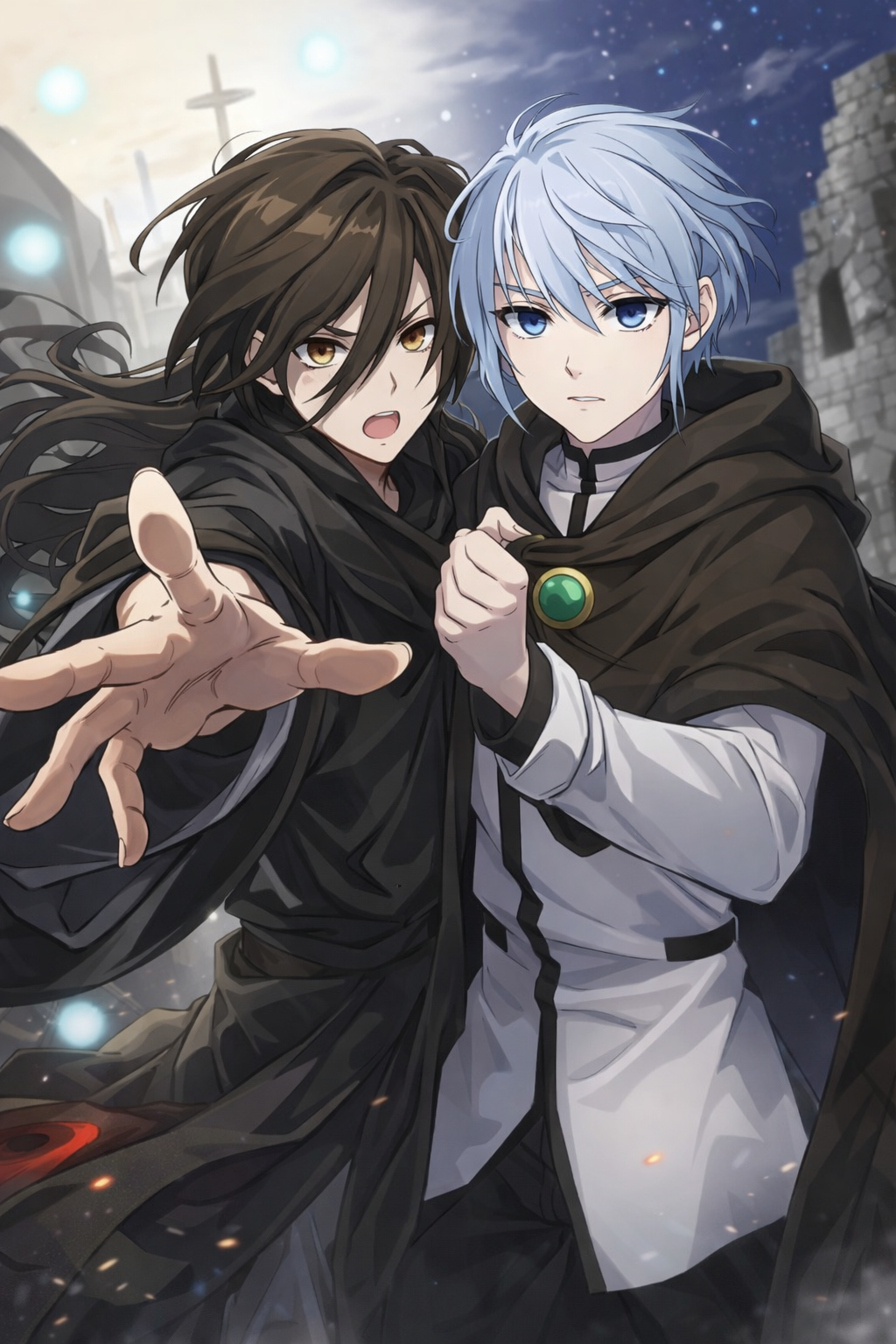
When SIU’s magnum opus first burst onto screens in 2020, it carried the mythic, analog mystique of a modern dark fairy tale. The Floor of Tests was claustrophobic, primal, and punctuated by Kevin Penkin’s haunting electronic score. Fast-forward to the dramatic escalation of Tower of God Season 2, and the series has radically mutated. Nowhere is this transformation more violently apparent than in the Workshop Battle Arc—a sprawling, techno-industrial gauntlet that strips Twenty-Fifth Baam of his innocence and forces the fractured remnants of his past to collide within the belly of the floating dreadnought, the Archimedes.
For long-time webtoon devotees and anime-only converts alike, this arc represents the definitive turning point of the narrative. It moves the series past the localized betrayal of Rachel and throws Baam headfirst into the grand geopolitical machinations of the Tower. At the center of this storm lies an excruciating identity crisis: the boy who wanted nothing more than to chase the stars has been forged into an apocalyptic deity named Jyu Viole Grace.
The Mask of Viole: Weaponized Grief and FUG’s Grand Design
The tragedy of Jyu Viole Grace is rooted in total disenfranchisement. Following Rachel’s betrayal at the end of the Floor of Tests, Baam did not escape into agency; he fell directly into the maws of FUG, the Tower’s notorious anti-Zahard criminal syndicate. Under the tutelage of high rankers like Ha Jinsung and the suffocating surveillance of the Guide Hwaryun, Baam was methodically broken down and reassembled as a living weapon.
What makes the Workshop Battle so psychologically excruciating is how thoroughly Baam suppresses his own selfhood to protect the very people who believe him dead. His adoption of the moniker “Jyu Viole Grace”—a name heavy with ancestral mystery—is not an act of rebellion, but one of absolute hostage collateral. FUG’s mandate is simple: comply, climb, and bear the mantle of a Slayer Candidate, or watch his original companions die one by one. The boy once defined by warm, unyielding loyalty is transformed into a cold, purple-robed phantom executing devastating Shinsu control with detached melancholy.
The Architecture of Deceit: Emily, Ignition, and the Workshop
The Workshop Battle isn’t just an arena for Regulars to measure their growth; it is an unregulated black-market nexus where corporate science usurps the Tower’s natural laws. Central to this descent is the grotesque exploitation of Living Ignition Weapons. Through the agonizing histories of Kang Horyang and Beniamino Cassano, the narrative exposes the Workshop’s hubris: melting souls and fusing them with Shinsu-reactive metals to forge man-made horrors.
Layered over this is Emily, the pseudo-sentient chatbot that functions as a thematic manifestation of the Tower’s digital rot. By funneling desires, whispering falsehoods, and manipulating navigation routes, Emily becomes both an information-warfare weapon and an existential trap. FUG’s rogue faction, spearheaded by the fanatical Reflejo and hidden behind the influence of Karaka, intends to use the Workshop as an unholy forge—not merely to arm Viole, but to dissolve him into the terrifying spatial anomaly known as the Thorn.
The Archimedes Crucible: Tactical Warfare and Emotional Catharsis
Unlike the pastoral and isolated environments of earlier floors, the Archimedes transforms the competition into a high-stakes corporate spectacle. Teams are fractured, alliances are contingent, and survival requires navigating a maze of bureaucratic murder games. Yet beneath the dynamic combat rules, the true battle line is emotional: how long can a boy remain a ghost when the people who loved him are breathing the same recycled air?
Khun Aguero Agnes’s trajectory across this arc is an absolute masterclass in tactical grief. Refusing to accept the official narrative of Baam’s demise, Khun has spent years building an armada of talent, manipulating competitors, and descending into the moral gray just to claw closer to the truth. His calculated cynicism stands in stark, brilliant contrast to Rak Wraithraiser’s primal certainty. Where Khun searches for logistical fingerprints and deductive breadcrumbs, the colossal crocodile operates entirely on primal instinct.
The anime’s handling of the long-awaited reunion between the core trio serves as the emotional crescendo of the entire season. When Rak shatters the tension—ignoring protocol, factional warfare, and death threats simply to tackle his “Black Turtle” into the dirt with tears streaming down his reptilian face—the armor of Jyu Viole Grace fundamentally cracks. It is a vital subversion of typical shonen stoicism: Baam’s stoic shell does not break because he acquires ultimate power, but because he is finally permitted to be weak in the arms of his brothers.
Production Realities: The Answer Studio and the Visual Shift
Discussing the Workshop Battle Arc requires addressing the elephant in the screening room: the stark shift in production pedigree. When the baton passed from Telecom Animation Film to The Answer Studio for Season 2, the community braced for an inevitable aesthetic recalculation. The results have been a point of impassioned discourse across the fandom.
On one hand, the character designs adopted a more crisp, mainstream digital fidelity that closely mirrors SIU’s mid-run manhwa evolution. The scale of the Workshop’s floating venues, the ominous silhouette of the Thorn container, and the claustrophobic dread of FUG’s backrooms are handsomely executed in visual direction. However, the fluid, organic choreography that defined Season 1’s legendary battles occasionally stiffens here into static tableaux, leaning heavily on Shinsu light-bursts to compensate for kinetic martial-arts continuity.
Yet, when the narrative stakes reach boiling point—particularly during Baam’s desperate resistance against the FUG ambush and his synchronization with the Thorn—the adaptation finds its footing. The dramatic resonance and voice acting, led by Taichi Ichikawa’s gut-wrenching performance as Baam/Viole, effectively carry the production over its occasional technical hurdles, delivering the narrative punch that this milestone climax demands.
Lore Implications: Unsheathing the Thorn and Fracturing the Climb
The climax aboard the Archimedes is not just a localized rescue mission; it irrevocably destabilizes the Tower’s political hierarchy. Baam’s successful bonding with the Thorn represents the first genuine existential threat to King Zahard’s millennia-long dominion. This fragment is not merely an amplification of Shinsu—it is an ontological cheat code, a relic capable of bypassing the absolute laws imposed by the Administrators.
By claiming the Thorn and standing alongside his reunited comrades, Baam definitively discards the passive persona of his youth without fully surrendering to FUG’s malevolent orthodoxy. He refuses to be their mindless god of slaughter, just as he refuses to return to being an ignorant child in a cave. Instead, a third path emerges: an Irregular who will climb on his own terms, dragging his friends into the upper floors despite the cosmic targets painted on their backs.
The Workshop Battle closes the chapter on the Regulars’ innocence. Moving forward, the boundary between test-taker and revolutionary is permanently dissolved. Baam, Khun, and Rak are no longer simply climbing a Tower; they have ignited the fuse of a war that will inevitably tear it down floor by floor.
What was your favorite moment from the Workshop Battle’s explosive climax? Did the reunion between Baam, Khun, and Rak hit the emotional beats you hoped for, or do you think the adaptation missed a step compared to SIU’s original manhwa? Let your voice be heard in the comments below, and stay tuned to Wibux.com for our weekly Tower of God lore breakdowns!