
When Ken Wakui’s time-slipping delinquent opus concluded its blistering Tenjiku Arc, the anime community exhaled a collective sigh of bittersweet relief. Kisaki Tetta—the Machiavellian architect of Takemichi Hanagaki’s decade-long torment—was finally erased from the board. Hinata Tachibana was alive, breathing, and smiling in a future where the Tokyo Manji Gang’s founding pillars were running successful businesses instead of lining chalk outlines on Shibuya asphalt. For any conventional narrative, this would be the curtain call. The credits would roll over a triumphant walk down the aisle, cementing Takemichi’s status as anime’s most resilient underdog.
Yet, true connoisseurs of Wakui’s storytelling knew that peace in the Tokyo Revengers mythos is merely the eye of a hurricane. The tantalizing arrival of the Bonten Arc anime teaser has confirmed our darkest prognostications: the game is far from won. By pulling back the curtain on Japan’s most ruthless criminal syndicate and unveiling Manjiro “Mikey” Sano in his most haunting incarnation to date, the series is preparing to cross a threshold from nostalgic, blood-soaked youth delinquency into full-blown neo-noir tragedy. The stakes are no longer about saving a childhood sweetheart; they are about dragging a brother’s soul back from the mouth of an existential abyss.
The Underworld Ascendance: Decrypting Bonten and the Ruins of Toman
The transition from bosozoku gang turf wars to organized cartel violence represents the most radical tonal shift in Tokyo Revengers history. The teaser wastes no time in establishing the claustrophobic dread surrounding Bonten, an omnipresent syndicate that makes Moebius, Valhalla, and the Black Dragons look like child’s play. Operating from the penthouse shadows of Tokyo, Bonten is not an association of spirited brawlers fighting for teenage honor; they are an execution squad, an extortion machine, and the undisputed kings of the modern underworld.
What makes Bonten so visually and thematically arresting is the grim irony etched into its leadership. Marked by the stylized hanafuda earrings tattoo once worn by Izana Kurokawa, the syndicate’s executive roster reads like an uncanny memorial of past battlefields:
- Sanzu Haruchiyo: No longer just a quiet mask-wearing soldier, but Mikey’s fanatical, katana-wielding zealot who views his commander with borderline religious delirium.
- Kakucho: Stripped of his Tenjiku pride, serving as Bonten’s brutally efficient enforcer while nursing the ghost of Izana’s memory.
- Hajime Kokonoi: The economic engine whose monetary genius has industrialized street warfare into a multi-billion-yen criminal empire.
- The Haitani Brothers (Ran and Rindo): Exuding calculated, bespoke malevolence as the organization’s frontline clean-up crew.
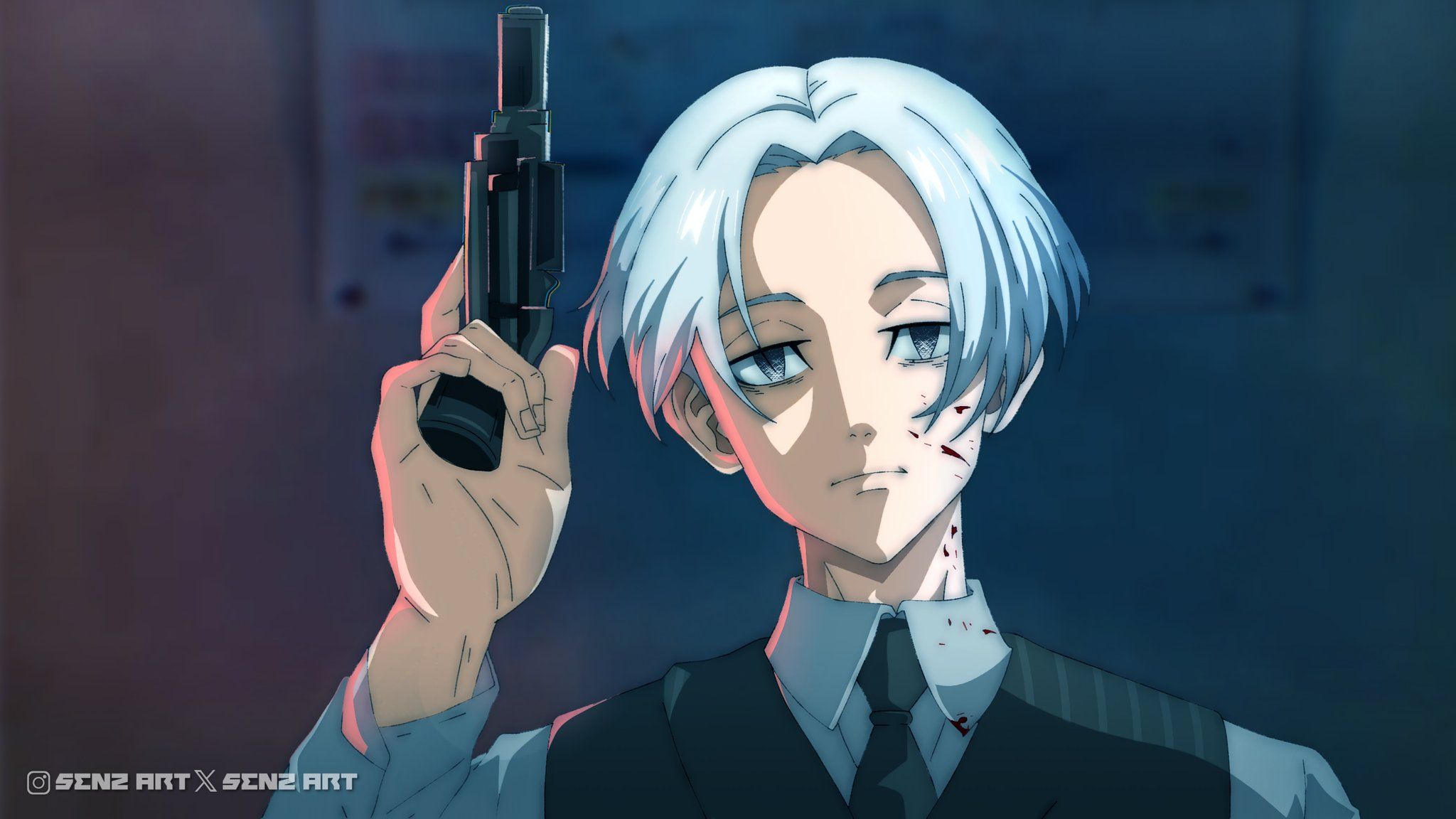
Presiding over this den of vipers is Mikey himself—not as the radiant, dorayaki-loving “Invincible Mikey” who inspired a generation of Toman riders, but as an emaciated, hollow-eyed patriarch with stark white hair and a neck tattoo signaling his total assimilation into grief. The teaser frames him not as an antagonist to be defeated, but as a monument to terminal loneliness.
Manjiro Sano’s Absolute Desolation: Unpacking the ‘Dark Impulses’
At the beating, bruised heart of the Bonten Arc lies the thematic reckoning with Mikey’s Dark Impulse (Kuroi Shōdō). Long debated among anime fans as either an artistic metaphor for untreated PTSD or a near-supernatural curse, the upcoming arc reframes this affliction as a profound psychological autopsy. Mikey spent his youth acting as an unbreakable pillar of strength for everyone around him, but that strength was purchased at the expense of his humanity.
With Shinichiro murdered, Baji dead by his own hand, Emma butchered in cold blood, and Draken intentionally pushed out of the blast radius, Mikey has systematically severed every emotional anchor tying him to sanity. The Bonten teaser emphasizes his radical self-isolation. In a tragic inversion of the hero’s sacrifice, Mikey purposefully orchestrated the disbandment of Toman to guarantee his friends a peaceful future—voluntarily sentencing himself to hell so that Chifuyu, Mitsuya, and Hakkai could live in the light.
Mikey’s descent challenges the fundamental ethos of the shonen genre. Typically, camaraderie is a cure-all; in Mikey’s warped calculus, camaraderie is a liability that gets the people he loves killed. His surrender to the Dark Impulse is not an act of malice toward the world, but a despairing defense mechanism to protect the world from himself.
The Paradox of the Hero: Takemichi’s Broken Truce with Destiny
This brings us to the narrative crux that will define the forthcoming season: Takemichi Hanagaki’s ultimate moral dilemma. The teaser heavily underscores the agonizing tragedy of Takemichi’s positioning. He achieved the unachievable. Hinata is alive; the bloody future that kicked off episode one has been completely rewritten into domestic bliss. By all objective metrics, Takemichi should lay down his mantle, put on his tuxedo, and walk away.
Yet, doing so requires accepting Mikey as acceptable collateral damage. Can you truly call a future “happy” if it was purchased with the damnation of the man who saved your life a dozen times over? Takemichi’s refusal to accept an incomplete miracle is his greatest strength and his most ruinous flaw.
The Subversion of the Time-Leap Mechanism
Narratively, Ken Wakui pulls off a masterstroke by destabilizing the mechanics of time travel itself. Throughout the series, the leap was predicated on a shared, desperate desire between Takemichi and Naoto Tachibana to save Hinata. Once Hinata was saved, that circuit was permanently closed. For Takemichi to plunge back into the temporal crosscurrents, a new catalyst is required—and the teaser subtly teases the jaw-dropping realization that Mikey himself must become the trigger.
This fundamentally alters the temporal stakes. Takemichi isn’t leaping with the tactical backing of law enforcement; he is leaping into the unknown, held together only by the fragile, bleeding emotional tether between two broken young men who refuse to let each other drown.
Liden Films’ Aesthetic Evolution: From Bruised Sunsets to Neo-Noir Rot
From a production perspective, the Bonten Arc demands an aggressive artistic recalibration, and Liden Films appears poised to deliver. Where early seasons leaned into the warm, nostalgic, sun-drenched palettes of early-2000s summer youth culture, the Bonten imagery is stark, metallic, and desaturated. The visual language mirrors the transition from bruised delinquent street brawls to the sterilized brutality of executive suites and underground torture chambers.
The character designs have undergone a mature refinement. The silhouettes are sharper, the tailoring of Bonten’s signature suits contrasts violently with the loose-fitting tokkō-fuku of yesterday, and the lighting employs high-contrast chiaroscuro to highlight the hollow, sunken cheeks of its central tragic figure. If the teaser’s kinetic direction carries over into the seasonal episodes, audiences are in store for an atmospheric masterclass that trades standard action-shonen beats for the psychological claustrophobia of a prestige crime thriller.
The Final Reckoning: Can the Crybaby Hero Redeem the Irredeemable?
The Bonten Arc stands as the philosophical litmus test of Tokyo Revengers. It poses a haunting question that reverberates far beyond the boundaries of delinquent anime: How far are you willing to unravel paradise to save someone who has already resigned themselves to hell?
Takemichi has absorbed countless beatings, fractured his bones, and watched his mentors die in his arms. But confronting Mikey in the belly of Bonten is not a fight that can be won with stubborn punches or tearful speeches. It is a psychological siege against a boy who has locked his heart in a vault and thrown away the key. As the anime prepares to delve into this pitch-black saga, one thing is abundantly clear: the crybaby hero’s greatest battle won’t be against rival gangs, but against the inexorable pull of fate itself.
What are your theories on the Bonten Arc? Do you believe Mikey can ever truly find redemption, or was his fate sealed the moment Shinichiro died? Sound off in the comments below, and keep your browsers locked to Wibux.com for all your breaking anime analysis, character breakdowns, and seasonal news!