


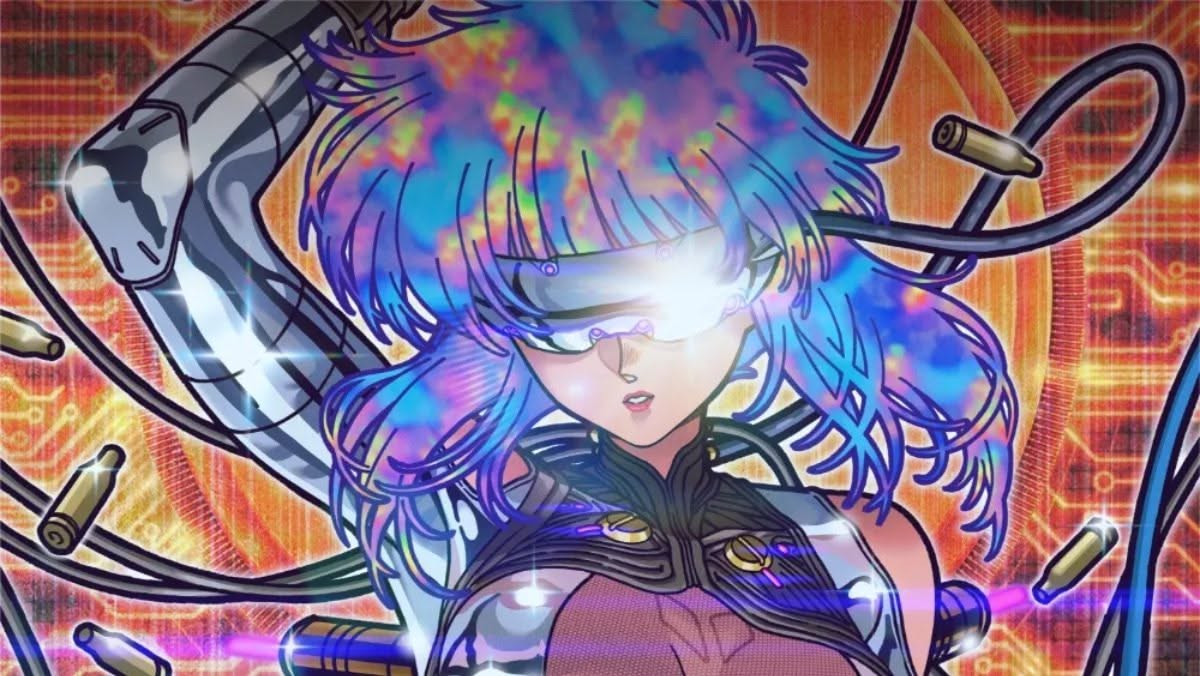
The year is 2029. The line between human and machine has never been thinner. And for the first time in over a decade, a brand-new Ghost in the Shell anime has arrived — but not from the studio you’d expect, and not in a way anyone predicted.
On July 7, 2026, Amazon Prime Video dropped the new The Ghost in the Shell series in over 240 countries worldwide, and the anime community is absolutely buzzing. Why? Because for the first time in the franchise’s 37-year history, this adaptation was NOT produced by Production I.G. Instead, the legendary cyberpunk manga by Masamune Shirow landed in the hands of Science SARU — the studio behind hits like DAN DA DAN, Devilman Crybaby, and Scott Pilgrim Takes Off.
The result? Critics are calling it the best Ghost in the Shell adaptation in 30 years. IGN gave the first two episodes a glowing review, praising its vibrant hand-drawn animation and creative 3D integration. Even Masamune Shirow himself endorsed the production, describing it as potentially “the first installment of a second generation.”
A Director Who Earned His Stripes
The 2026 series marks the full directorial debut of Mokochan (also known as Toma Kimura), who previously worked as a storyboarder and key animator on DAN DA DAN and The Heike Story. Scripts are handled by novelist Toh Enjoe, whose prior anime credits include Space Dandy and Godzilla Singular Point — both known for refusing to talk down to their audiences.
Character designs come from Shuhei Handa (Little Witch Academia, Scott Pilgrim Takes Off), and the music direction is led by Taisei Iwasaki (Belle) alongside Ryo Konishi and Yuki Kanesaka. The ending theme, titled “Blue,” is performed by Millennium Parade featuring Saya Gray and Daniel Caesar.
That’s a stacked creative team by any measure.
What Makes This Adaptation Different
Unlike the 1995 film by Mamoru Oshii, which famously stripped out the humor from the manga, this new series stays much closer to Masamune Shirow‘s original vision. It embraces the comedic banter between characters, including the goofy gags and facial expressions that balance the heavier existential themes.
Set in 2029, the series follows Motoko Kusanagi, a full-body cyborg commanding the elite Public Security Section 9, as she pursues an unidentified hacker known as the Puppet Master. Fans of the franchise will immediately recognize familiar elements: the cyberbrains, the prosthetic cyborg bodies, and the blurry boundary between human consciousness and artificial intelligence.
Visually, the show goes for a retro-futuristic aesthetic. There are no touchscreens or holograms here. Instead, the world is populated with CD drives, physical buttons, and even VCRs — a deliberate stylistic choice that evokes the look and feel of 1990s OVAs.
The hand-drawn animation gives the action sequences a fluidity and tactile feel that’s become rare in modern anime. Even when 3D elements appear, they’re mostly reserved for machines and robots, playing into the show’s themes of technology creeping into human spaces.
Zero AI. Every Frame Drawn by Human Hands.
Perhaps the most talked-about aspect of this production is Science SARU’s explicit commitment to zero AI-generated content. At the 2026 Annecy International Animation Film Festival, where the first two episodes received their world premiere on June 22, director Mokochan stated the production used absolutely zero generative AI.
That statement carries real weight. In April 2026, Wit Studio confirmed it had used AI-generated backgrounds in a recent production, reigniting fierce debate within the anime industry about whether studios will eventually phase out human artists entirely. Science SARU’s hand-drawn approach represents a deliberate bet in the opposite direction — a statement that human creativity still matters.
The Fuchikoma Are Back
Longtime fans will notice another detail: the return of the original Fuchikoma spider tanks, not the Tachikoma variant introduced in Stand Alone Complex. This signals a closer adherence to Shirow’s original manga and hints that Science SARU is building something that honors the source material while bringing its own visual flair.
The series also features a jazz-meets-orchestral-meets-synth soundtrack that creates an old-school vibe unlike any other adaptation. It’s vibrant, colorful, and at times surprisingly violent — with pixelated blood effects that add a darkly humorous touch to the action sequences.
Beyond the Action: Themes That Still Resonate
Despite its comedic moments, this is still Ghost in the Shell at its core. The series tackles heavy themes that feel more relevant in 2026 than they did in 1989: the exploitation of foreign workers, government corruption, human experimentation, and the ongoing debate about whether machines can truly replace human intelligence.
The show doesn’t shy away from political commentary either. Some episodes include what feel like not-so-subtle jabs at historical foreign policy in the Middle East, while others explore how AI is quietly taking over jobs once thought to require uniquely human skills.
In many ways, The Ghost in the Shell was always prophetic. Now, it’s almost uncomfortably prescient.
Where to Watch
The series is available exclusively on Amazon Prime Video in over 240 countries and territories, with dubbed versions in eight languages including English. Episodes are released weekly, with the first two episodes already available.
For fans who have never watched Ghost in the Shell, there has genuinely never been a better starting point. For longtime fans, this adaptation offers a fresh enough take to complement every version that came before it.
What Do You Think?
Is Science SARU the right studio to carry the Ghost in the Shell torch into a new era? Does the hand-drawn, zero-AI approach make this adaptation stand out, or is the franchise better served by Production I.G.’s more polished, hyper-detailed style? And the biggest question of all: can this new Motoko Kusanagi ever fill the void left by the late Atsuko Tanaka, who voiced the character across virtually every prior anime adaptation before passing away in August 2024?
Drop your thoughts in the comments — Ve-chan wants to hear from you!