
Few anime adaptations in modern memory carry the staggering narrative weight, polarizing reputation, and undisputed technical prestige of Mushoku Tensei: Jobless Reincarnation. When Studio Bind was forged in 2019 exclusively to bring Rifujin na Magonote’s sprawling web novel to life, purists dared to hope for a faithful adaptation; what audiences received instead was a masterclass in cinematic world-building that redefined high fantasy in the medium. Following the emotionally harrowing and melancholic triumphs of the Teleport Labyrinth arc in Season 2—a chapter scarred by the tragic loss of Paul Greyrat and redeemed through the bittersweet expansion of Rudeus’s household—the series stands at a monumental crossroads. Season 3 is no longer merely about self-discovery or overcoming agoraphobic trauma; it is the opening salvo of an existential war against the heavens themselves.
Shattering the False Sanctuary: The Inevitable Clash with Hitogami
For two seasons, the enigmatic entity known as Hitogami (the Man-God) operated from the ethereal, blank canvas of Rudeus’s dreamscape like a jovial, omniscient benefactor. He traded ostensibly benign advice for trust, whispering prophecies that nudged Rudeus across the Demon Continent and eventually toward the Ranoa Magic Academy. Yet beneath that faceless mosaic of false benevolence lay a terrifying, self-preserving puppet master. Season 3 arrives as the grand unveiling of Hitogami’s insidious gambit, transforming the series from an introspective character study into an apocalyptic chess match.
The Deceit of Divine Guidance
What makes the impending collision so psychologically agonizing is the calculated erosion of Rudeus’s hard-won domestic bliss. After decades of social isolation in his previous life and years of grueling physical exile in his second, Rudeus has finally built what he craved most: a sanctuary. With Sylphiette, Roxy, his siblings, and a home rooted in the city of Sharia, the stakes are profoundly intimate. Hitogami does not threaten abstract kingdom borders; he targets the dinner table. As light-novel readers well know, the impending adaptation of the infamous narrative junction—often hailed by the fandom as the legendary Turning Point 4—will completely invert the paradigm. Hitogami ceases to be an elusive adviser and reveals himself as an existential predator, forcing Rudeus to confront the horrifying reality that his divine counselor has spent years orchestrating the slaughter of his bloodline.
The Dragon and the Quagmire: An Unholy Alliance with Orsted
To survive a god, one must seek an absolute monster. Enter Dragon God Orsted, the white-haired calamity whose single encounter with Rudeus in Season 1 remains one of the most chilling displays of visceral dominance in modern animation. Orsted is a walking extinction-level event, cursed to walk the Six-Faced World in eternal repetition, loathed by all living beings due to an inherited divine affliction. Season 3 shifts this terrifying figure from an insurmountable obstacle into an impossible, desperate ally.
Submitting to the God of Destruction
The thematic brilliance of Rudeus’s impending alliance with Orsted lies in complete psychological ego-death. Rudeus is not a traditional shonen protagonist armed with unshakeable bravado; he is a reformed coward who knows intimately the sound of his own ribcage caving in under Orsted’s fist. Aligning with the Dragon God requires Rudeus to cast aside pride, fall to his knees, and barter his absolute obedience in exchange for the survival of his wives and children. This dynamic injects an electric, friction-filled tension into every strategic council. Orsted possesses ancient, millennial knowledge of the world’s timeline loops, yet he lacks the human touch; Rudeus provides the chaotic wildcard variable that breaks Hitogami’s foresight, transforming an isolated, cursed dragon into an active force of coordinated retribution.
Steel, Mana, and Desperation: The Genesis of the Magic Armor
From a mechanical perspective, Mushoku Tensei has always excelled by treating its magic system with consistent, tactile rigor. Rudeus is a functional glass cannon. While his mana capacity rivals or eclipses that of the mythical Demon Lord Laplace, his mortal body is incapable of cloaking itself in Battle Aura (Touki), leaving him perpetually vulnerable to high-speed melee specialists like Sword Kings and God-ranked combatants. Season 3 answers this structural weakness through sheer magiteck innovation: the fabrication of the iconic Magic Armor.
Bridging the Gap Between Man and God
The construction of the Magic Armor Mk. I is not treated as an instantaneous, convenient power-up, but rather as an exhaustive engineering odyssey. Collaborating with the physical durability of Zanoba Shirone and the esoteric curse research of Cliff Grimoire, Rudeus leverages his bottomless mana reserves to fuel an exoskeleton capable of absorbing devastating kinetic impacts and outputting God-tier destructive spells. It is a visual and narrative realization of Rudeus’s ingenuity, wedding Earth-born mechanical concepts with fantasy metallurgy. Watching Studio Bind animate this hulking mass of iron, mana-stone arrays, and mounted rock-cannonry will fundamentally shift the aesthetic texture of the series, trading pastoral fantasy for heavyweight, industrial warfare.
Studio Bind’s Crucible: Adapting the Benchmark of Modern Fantasy
The anticipation surrounding Season 3 cannot be decoupled from Studio Bind itself. Formed through a joint venture between White Fox and Egg Firm, Bind proved throughout the first two seasons that their animators, layout artists, and background designers operate on an entirely different artistic plane. Under meticulous direction, the series has consistently treated landscape, architectural decay, cultural dress, and atmospheric lighting as secondary characters.
Visual Storytelling and the Burden of Execution
Season 3 demands unprecedented production scope. The coming arcs demand that the production team fluidly balance intense domestic tranquility—the tender, everyday moments that make Rudeus’s struggle worth fighting for—with some of the most frantic, spatial-distortion combat sequences in light novel history. Animating high-tier sword arts like the Sword God Style requires conveying near-supersonic physical movement without sacrificing geographic clarity, while the physical presence of the Magic Armor demands a sense of agonizing weight and raw recoil. Studio Bind has demonstrated time and again that it does not cut corners; its creative leads understand that Mushoku Tensei‘s action sequences only resonate because the emotional and physical consequences hit the dirt with brutal realism.
Verdict: The Metamorphosis from Isekai Scum to Mythic Patriarch
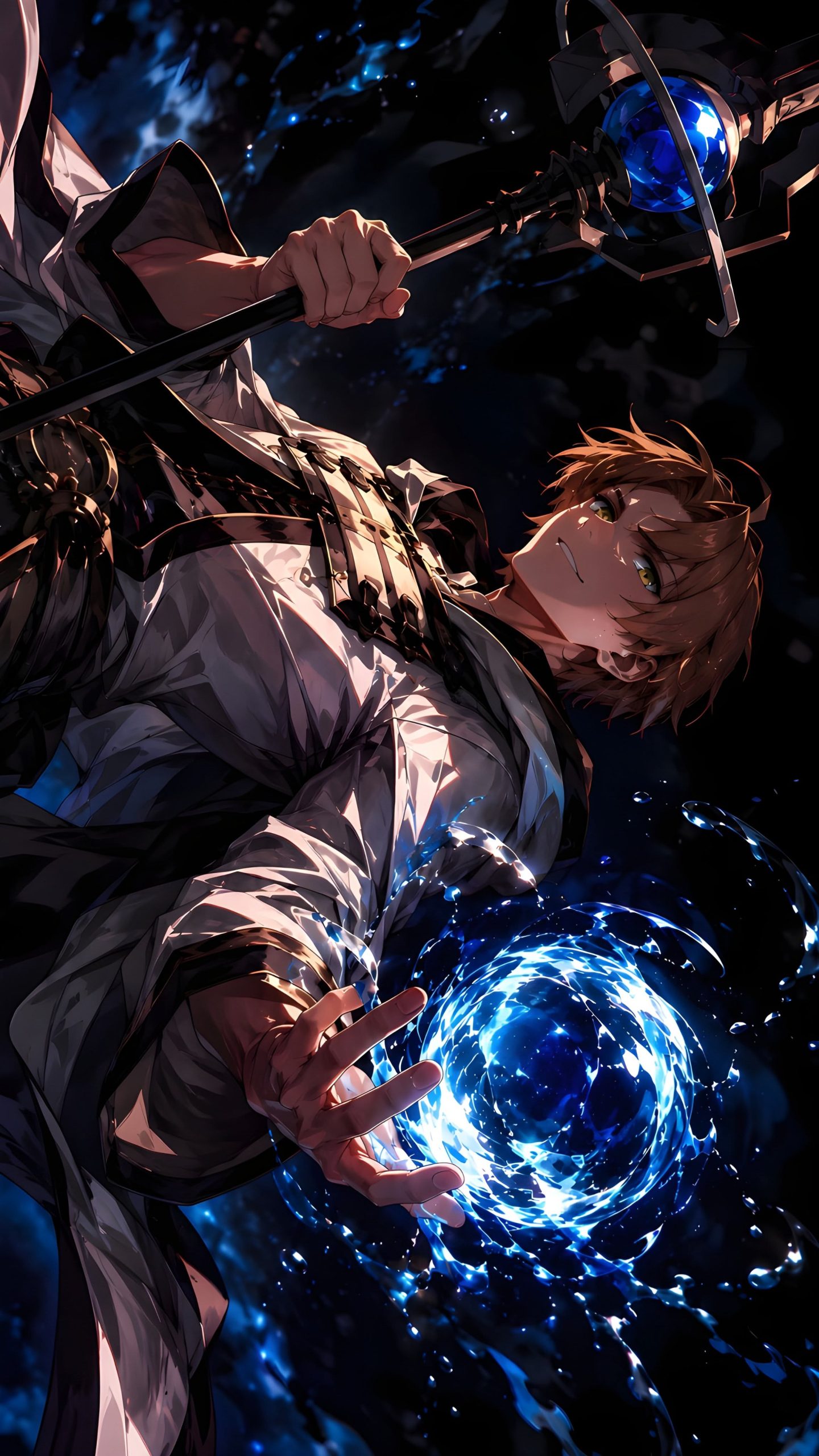
At its core, Mushoku Tensei’s enduring brilliance rests on its commitment to consequence. Rudeus Greyrat started his second life as a deeply broken, deeply repulsive individual whose modern-day trauma corrupted his initial reincarnation. Through seasons of failure, heartbreak, physical mutilation, and quiet labor, he has aged in real-time, shedding his self-absorption to inherit the mantle of a protective patriarch. Season 3 is the culmination of that redemption arc.
When the clouds gather over Sharia and the Man-God’s machinations tear the sky asunder, Rudeus will not step onto the battlefield to save the world, nor does he harbor ambitions of being immortalized in verse. He enters the arena because a broken man finally discovered something sacred enough to die—and kill—for. As Studio Bind readies its magnum opus, Mushoku Tensei Season 3 promises not merely another cour of prestige television, but an operatic masterclass in the price of salvation.
How do you think Studio Bind will handle the legendary emotional stakes of Turning Point 4? Are you ready to see the Magic Armor fully mobilized in combat? Sound off in the comments below and let us know your theories!