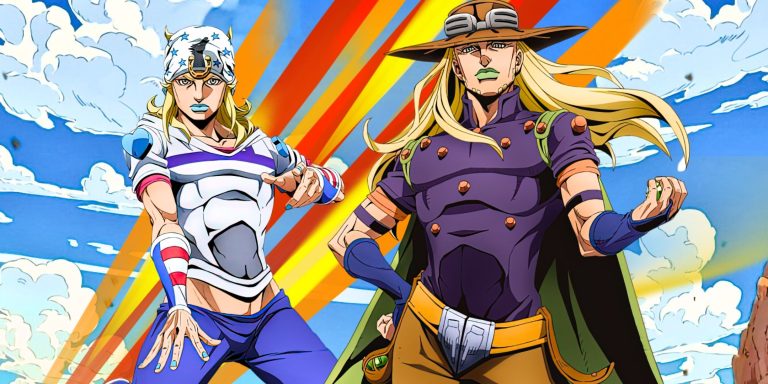
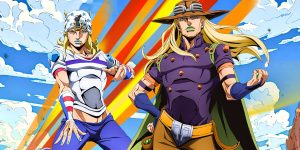
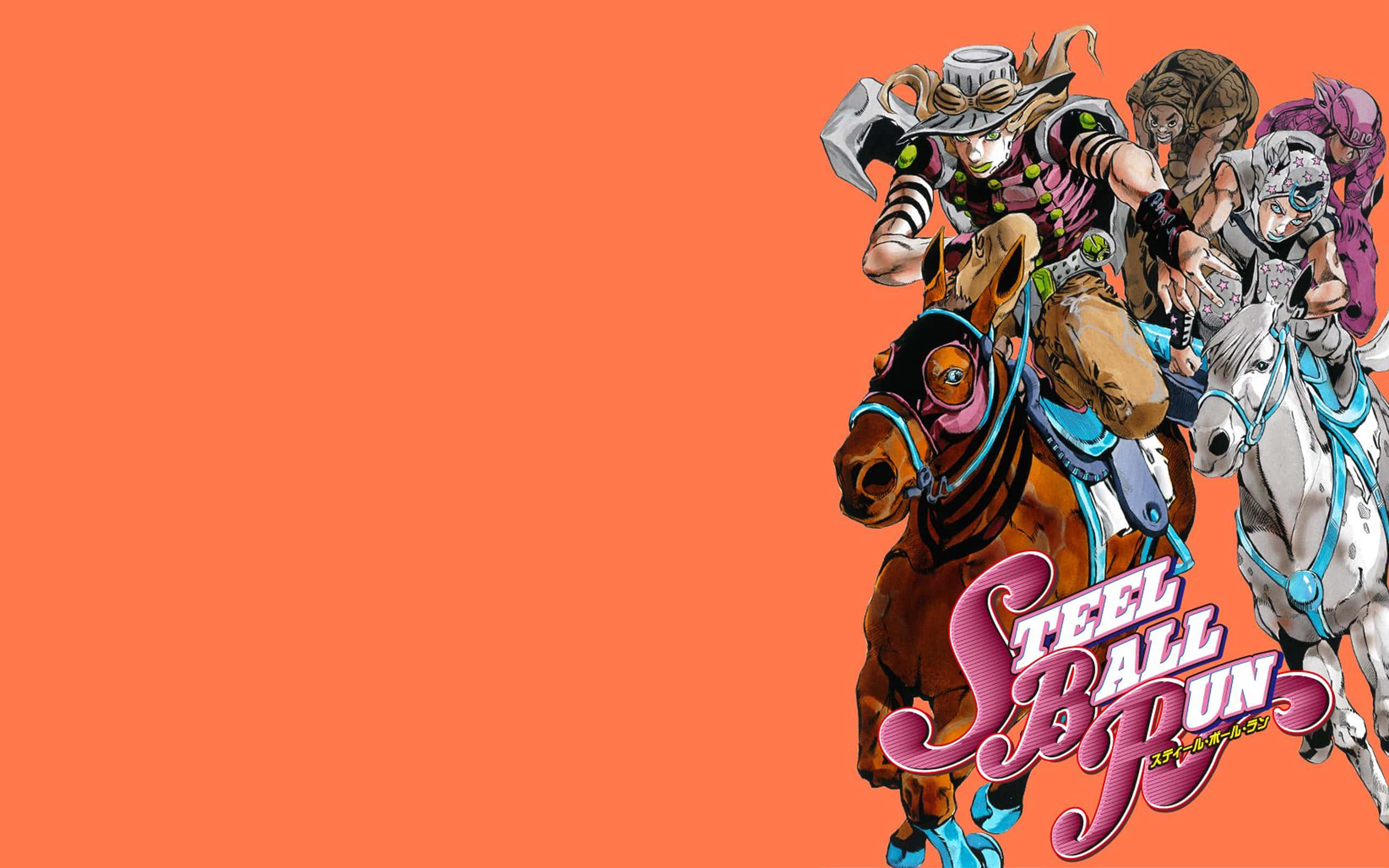
Ever since the melancholic finality of Stone Ocean drew the curtain on the original Joestar lineage in late 2022, the collective gaze of the anime world has remained locked on a singular, sun-drenched horizon: San Diego Beach, September 25, 1890. For over two decades, Hirohiko Araki’s JoJo’s Bizarre Adventure: Steel Ball Run has occupied a mythical pedestal in modern manga history. Currently standing shoulder-to-shoulder with Berserk atop global critical aggregators, Part 7 is widely revered as Araki’s magnum opus—a high-stakes, supernatural trans-continental horse race that completely redefined his storytelling sensibilities. Yet, as David Production remains uncharacteristically silent regarding their upcoming production slate, the internet buzz surrounding an SBR anime adaptation has transformed from idle wishful thinking into a full-scale cultural demand.
The Trans-American Odyssey: Araki’s Seinen Metamorphosis
To understand why an anime adaptation of Steel Ball Run carries such monumental gravity, one must look back at the publishing tectonic shift of 2004. Originally serialized in Weekly Shonen Jump before moving to the monthly pages of Ultra Jump, Steel Ball Run liberated Araki from the grueling weekly grind and the tonal constraints of teenage-targeted demographic molds. The results were revolutionary. The race—spanning roughly 6,000 kilometers from San Diego to New York City—wasn’t merely a competition; it was a sprawling, gritty reimagining of 19th-century Americana soaked in surreal body horror, historical revisionism, and existential despair.
The shift to a monthly publication schedule allowed Araki to produce some of the most meticulously detailed pen-and-ink illustrations in the medium’s history. Panels overflow with sweeping frontier vistas, dynamic horse musculature, and visceral close-quarters combat. Translating this grand scale to the screen requires an entirely different creative baseline than the urban claustrophobia of Diamond is Unbreakable or the neon-tinted Italian prison breaks of Golden Wind. Steel Ball Run demands cinematic scale—an expansive Western epic wrapped in supernatural bravado.
Johnny Joestar & Gyro Zeppeli: Broken Men Chasing the Golden Ratio
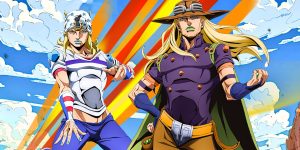
At the beating heart of Part 7 lies an intimate, character-driven journey that completely subverts standard shonen dynamics. In replacing the righteous, noble hero archetype with two deeply flawed vagabonds, Araki struck gold.
Deconstructing the Joestar Mythos: Johnny’s Dark Determination
Johnny Joestar is not Jonathan Joestar. He isn’t Jotaro Kujo, nor is he an idealistic protector of humanity. Paralyzed from the waist down following an act of youthful arrogance, Johnny enters the narrative as a washed-up former horse racing prodigy drowning in self-loathing. He does not embark on the Steel Ball Run to save the world; he rides because the mysterious kinetic energy wielded by a strange Neapolitan executioner gave him a single, fleeting twitch in his legs.
Johnny’s psychology is defined by what Araki calls “dark determination”—an unblinking, borderline-sociopathic willingness to commit moral atrocities if it means climbing out of his spiritual abyss. Watching this anti-hero slowly evolve alongside his Stand, Tusk, promises to deliver one of the most complex protagonist arcs anime has ever witnessed, provided David Production captures his vulnerability without scrubbing his jagged edges.
Gyro Zeppeli and the Sacred Mechanics of the Spin
If Johnny provides the narrative’s broken chassis, Gyro Zeppeli is its roaring engine. Flamboyant, deeply eccentric, and burdened by the grim duties of his royal lineage, Gyro replaces the antiquated concept of Hamon with The Spin (Kaiten). Grounded in the mathematical mystery of the Golden Ratio and Fibonacci sequence, the Spin is a weaponized marvel of spatial geometry. Gyro’s throwing steel balls warp wood, alter flesh, and bend the laws of physics itself.
The chemistry between Johnny and Gyro forms the undisputed emotional anchor of the entire saga. Their campfire banter—trading absurd jokes about mozzarella cheese and days of the week—juxtaposed against bone-chilling battles for their very souls, creates a buddy-comedy rhythm that masks a profound tragedy. Few duos in manga history possess this level of natural, unforced camaraderie.
The Four-Legged Hurdle: David Production’s Technical Gauntlet
The primary reason an official confirmation hasn’t landed yet is simple: horses. In the animation industry, quadrupeds—particularly horses undergoing continuous, dynamic locomotion—are widely considered the ultimate production nightmare. Animating dozens of horses running side-by-side at high speeds across varied terrain while riders engage in Stand combat requires an astronomical budget, complex 3D modeling, or grueling hand-drawn rotoscoping.
The CGI Dilemma vs. Hand-Drawn Sakuga
Anime fans have grown understandably wary of 3D horse rendering. Productions ranging from Wit Studio’s Attack on Titan to MAPPA’s ambitious period pieces have struggled to seamlessly integrate CG steeds into traditional 2D backdrops without hitting the uncanny valley. For David Production, the challenge is twofold: they must capture the hyper-stylized anatomy of Araki’s horses without sacrificing the fluidity of movement.
Industry insiders speculate that David Production may take a hybrid approach, using specialized cel-shaded 3D CGI for wide-angle pack-racing shots, paired with high-impact, hand-drawn genga for crucial narrative collisions. The studio’s legendary pedigree in auditory direction—pairing crunchy, thunderous Foley sound design with bold on-screen onomatopoeia—will be paramount in conveying the sheer mechanical weight of hoofbeats carving up the American prairie.
The Corpse, the Presidency, and Manifest Destiny
Beyond the personal stakes of its leads, Steel Ball Run escalates into a chilling sociopolitical confrontation that challenges the traditional concept of an antagonist. The race is revealed to be an elaborate front orchestrated by the 23rd President of the United States, Funny Valentine, to locate the mummified relics of a divine holy figure known as the Saint’s Corpse.
Valentine is arguably Araki’s most sophisticated antagonist. Driven not by cartoonish malice or sadistic indulgence, but by an unyielding, patriotic pursuit of American prosperity, Valentine’s stand, Dirty Deeds Done Dirt Cheap (D4C), enables him to traverse infinite parallel dimensions. The ideological collision between Valentine’s utilitarian nationalism and Johnny’s selfish pursuit of personal salvation elevates the story into an elevated discourse on destiny, sacrifice, and the violent birth of modern imperialism.
The Verdict: A New Epoch for JoJo on the Horizon
David Production has built a decade-long reputation on honoring Araki’s visual ethos down to the letter, pioneering wild color-palette shifts, tactile sound design, and an uncompromising faithfulness to the source material. Steel Ball Run represents their final frontier: a total technical and aesthetic rebirth that bridges the kinetic joy of classic shonen with the prestige weight of adult prestige drama.
The question surrounding the Steel Ball Run anime is no longer a matter of if, but how. When that starting gun inevitably fires, anime fans will bear witness to an era-defining production that could forever rewrite the standards of modern adaptation.
What do you think of the upcoming Steel Ball Run adaptation? Are you confident in David Production’s ability to tackle the animation challenges, or should Part 7 be split into an episodic prestige series? Sound off in the comments below!