When the melancholic, rain-soaked strings of *Stone Ocean*’s finale faded into the cosmos, closing the generational loop of the original Joestar bloodline, a collective hush fell over the global anime community. It was not a silence of finality, but of bated, anxious breath. For nearly two decades, manga purists, casual viewers, and internet theorists alike have whispered about the mythical horizon of the franchise: the adaptation of Part 7. Hirohiko Araki’s JoJo’s Bizarre Adventure: Steel Ball Run is not merely another chronological chapter in a storied manga legacy; it is widely celebrated as Araki’s magnum opus, an untouchable monolith frequently trading blows with Berserk at the absolute zenith of MyAnimeList’s all-time rankings. Now, as speculative murmurs surrounding David Production reach an all-time high, the anime landscape stands on the precipice of its most ambitious, technically treacherous frontier yet.
The Mirage Across the Desert: Why Steel Ball Run is Araki’s Magnum Opus
To understand the sheer magnitude of the adaptation buzz, one must contextualize what *Steel Ball Run* represents within Araki’s creative evolution. Serialized beginning in 2004 before migrating to the monthly seinen imprint Ultra Jump, the story fundamentally unshackled Araki from the grueling weekly deadlines and thematic restrictions of Weekly Shonen Jump. The result was a dramatic creative renaissance. Part 7 transported readers to a reimagined, alternate-universe 1890s America, staging an audacious, 6,000-kilometer coast-to-coast equestrian race from San Diego Beach to New York City.
This was no longer just an eccentric martial-arts adventure or a high-stakes standoff in urban alleys. *Steel Ball Run* is a sweeping, revisionist American Western steeped in dust, grit, blood, and existential philosophy. Araki synthesized historical Americana with high-concept supernatural fantasy, delivering breathtaking vistas, intricate stand battles, and a raw, adult tonality that previous parts only flirted with. Adapting this epic is not simply a matter of continuing an anthology; it demands adapting a literary triumph that fundamentally changed the trajectory of modern seinen manga.
A Broken Prodigy and a Zeppeli’s Legacy: The Anatomy of Johnny and Gyro
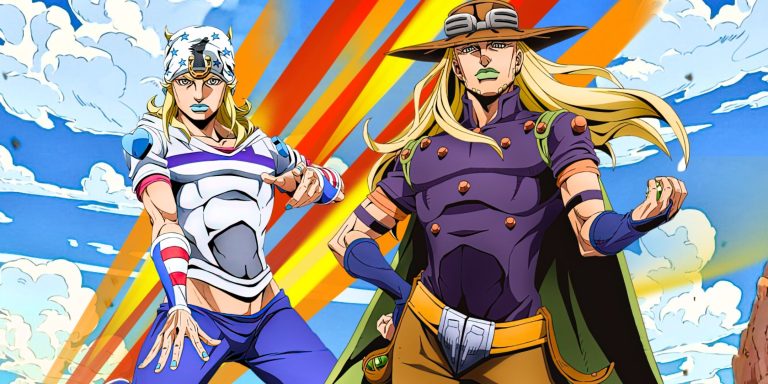
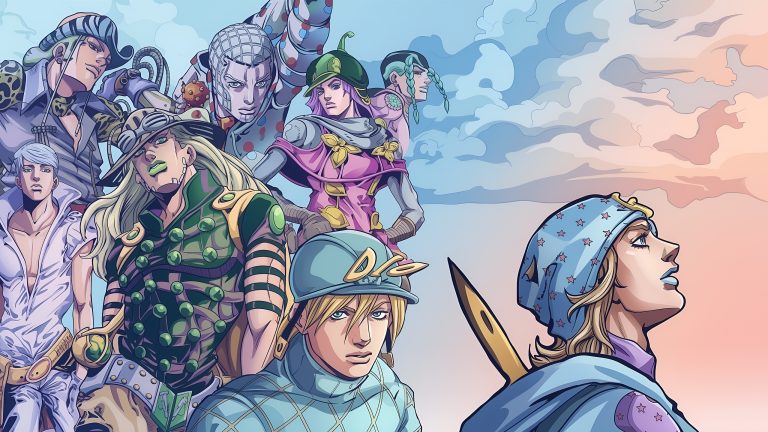
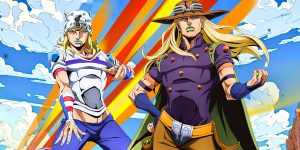
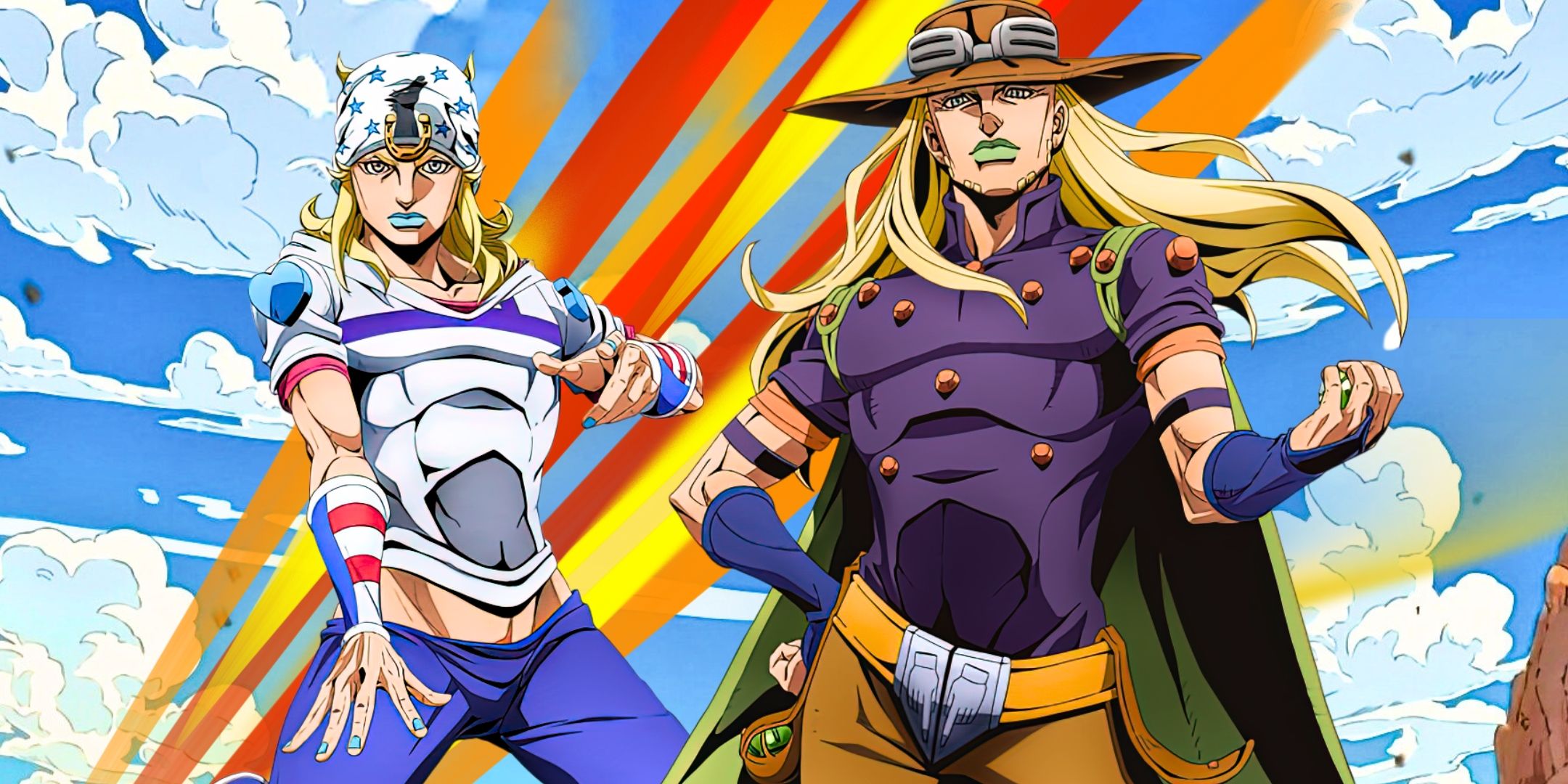
At the beating, bruised heart of *Steel Ball Run* lies arguably the most compelling deuteragonist dynamic in modern sequential art: Johnny Joestar and Gyro Zeppeli. Unlike Jonathan’s pure chivalry, Joseph’s brazen trickery, or Jotaro’s stoic coolness, Johnny Joestar begins his odyssey as an embittered, paraplegic ex-jockey drowning in self-loathing. Struck down by arrogance and paralyzed from the waist down, Johnny is profoundly flawed, desperate, and occasionally downright terrifying. His signature trait is not righteousness, but what Araki explicitly labels “dark determination”—the pitch-black flame of a man who will slaughter anything in his path just to crawl back from “negative” to “zero.”
The Philosophy of the Spin
Enter Gyro Zeppeli: an executioner’s son hailing from the Kingdom of Naples, outfitted with steel-plated teeth that spell out *GO! GO! ZEPPELI*, wielding a pair of revolving steel spheres with deadly surgical precision. Gyro acts as mentor, foil, comedic relief, and moral compass. Their journey is anchored by The Spin—Araki’s brilliant mechanical reimagining of Hamon through the lens of the Golden Ratio and sacred geometry. Where previous Stand battles often relied on punch-ghost brawling, the Spin transforms kinetic energy, physics, and evolutionary miracles into a philosophical way of life. Johnny’s Stand, Tusk, evolves strictly alongside his emotional recovery and mastery of this craft, escalating from shedding lethal fingernail bullets to tears in the very fabric of space-time.
The chemistry between Johnny and Gyro—oscillating seamlessly between absurdity (such as midnight debates about the days of the week or Gyro’s infamous “Pizza Mozzarella” ditty) and devastating emotional maturity—sets an impossibly high dramatic bar for David Production’s eventual voice cast and pacing directors.
The Elephant in the Stable: David Production’s Equestrian Nightmare
Why the prolonged hesitation? Why has an official anime confirmation felt like a mirage shifting across the Mojave Desert? The answer is simple, technical, and terrifying: horses.
Within the animation industry, horses are notorious as the single most grueling, anatomy-heavy, and budget-draining subject to render consistently in hand-drawn 2D. A single quadruped galloping across shifting perspectives requires immense spatial mastery, precise skeletal tracking, and an unforgiving volume of frames. *Steel Ball Run* doesn’t feature one or two casual horses passing through a village square; it features hundreds of them, locked in violent, high-velocity skirmishes across varying terrain, sustained over dozens of serialized episodes.
David Production, celebrated for its bold chromatic palette shifts, hand-lettered SFX katakana, and kinetic stylization, faces an unprecedented dilemma. Fans are rightly skeptical of poorly blended 3D CGI models, an issue that has crippled historical anime epics in the past. If the studio relies on hybrid CGI for the steeds—akin to modern techniques utilized in Chainsaw Man or WIT Studio’s high-octane Attack on Titan sequences—they must ensure the visual fidelity marries smoothly with Araki’s distinct, hyper-detailed chiaroscuro crosshatching. Insiders speculate that David Production has spent their post-*Stone Ocean* downtime restructuring their production pipeline specifically to tackle this logistical beast, signaling that patience may indeed yield cinematic perfection.
Corpse Parts, Patriotism, and Stand Evolution: The Narrative Stakes
Beyond the galloping hooves and rotating spheres, *Steel Ball Run* features one of the most intellectually compelling antagonist factions in fiction. The entire transcontinental race is gradually unmasked as an elaborate geopolitical conspiracy orchestrated by the 23rd President of the United States, Funny Valentine. Valentine’s quest to assemble the scattered, mummified relics of a mysterious “Saint” is driven not by cackling megalomania, but by fervent, unwavering patriotism.
His stand, Dirty Deeds Done Dirt Cheap (D4C), coupled with his chilling “First Napkin” philosophical monologue, elevates the conflict from a simple race to a staggering study of absolute utilitarianism versus personal salvation. The narrative morphs into a surrealist, holy war wrapped in an American flag, featuring stands that control localized time, mutate flesh via airborne raptor dinosaurs, and redefine spatial physics. Bringing these abstract, hallucinatory sequences to television screens requires a creative vision that refuses to cut aesthetic corners.
The Horizon Beckons: What SBR Means for Modern Anime Culture
When the starting pistol finally fires for the *Steel Ball Run* anime adaptation, it will not just mark the return of JoJo; it will mark an inflection point for high-prestige anime in an era dominated by seasonal disposable trends. Araki’s Part 7 proves that long-running action franchises can mature, deconstruct their own core tropes, and deliver a tragic, breathtaking masterwork that transcends its genre constraints.
David Production holds the reins to a cultural powder keg. If they tame the equestrian hurdle and give Johnny and Gyro the atmospheric, uncompromised production their legend deserves, *Steel Ball Run* won’t just break the anime internet—it will permanently etch itself into the medium’s pantheon.
What do you think, JoJo fans? Are you willing to embrace hybrid 3D animation for the horses if it means getting a fully realized adaptation sooner, or should David Production take all the years they need for pristine 2D execution? Drop your theories, voice-cast wishes, and favorite Stand battles in the comments below!