
For over a decade, anime fandom has lived through a cycle of breathless anticipation, speculative forum threads, and collective manifestos every time an adaptation of Hirohiko Araki’s legendary franchise wraps up. Yet, following the bittersweet, universe-collapsing finale of Stone Ocean on Netflix, the whisper network within the anime industry reached a fever pitch. The conversation is no longer about whether it will happen, but how. The subject in question is none other than JoJo’s Bizarre Adventure: Steel Ball Run—Araki’s seventh narrative installment, universally lauded by critics and readers alike as his undisputed magnum opus.
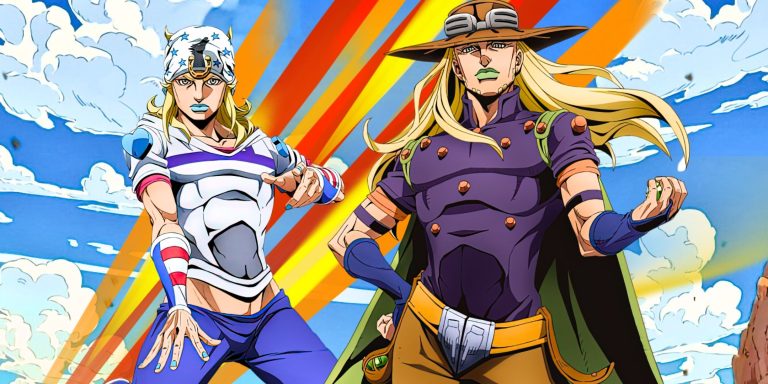
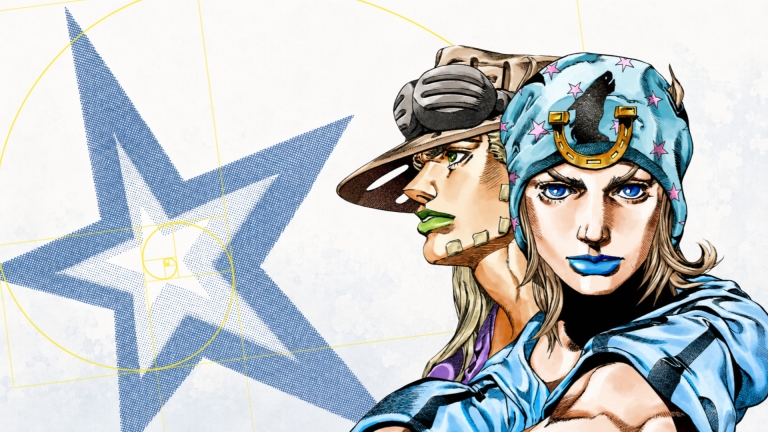
Ranking perpetually near the absolute apex of manga aggregates like MyAnimeList, Steel Ball Run is far more than a simple continuation of a multi-generational bloodline. It is a radical reinvention, a metaphysical western epic, and the ultimate white whale of modern anime production. As David Production quietly charts its trajectory toward its next frontier, the buzz surrounding Johnny Joestar and Gyro Zeppeli has shifted from idle wish-fulfillment to an urgent artistic reckoning. Bringing this 1890 transcontinental equestrian race to life presents a creative and logistical challenge unlike anything the industry has tackled in recent memory.
The Seinen Metamorphosis: Araki’s Narrative Summit
To understand the near-religious reverence surrounding Steel Ball Run, one must appreciate the context of its creation. When serialization began in 2004 in Weekly Shonen Jump, it was initially presented without the explicit “JoJo” moniker before pivoting into Ultra Jump in 2005. That editorial migration changed everything. Freed from the relentless weekly crunch and the demographic shackles of teenage shonen tropes, Araki underwent a breathtaking artistic evolution. The pacing breathed, panels expanded into Renaissance-level vistas, and the morality shifted from melodramatic binaries into murky, adult shades of gray.
A Transcontinental Odyssey Across the American Frontier
The premise is intoxicatingly cinematic: a grueling, 4,000-mile, coast-to-coast horseback race across the untamed American landscape of 1890, offering a monumental $50 million cash prize. But under the direction of race promoter Steven Steel and the shadowy machinations of the 23rd President of the United States, Funny Valentine, the contest is merely a smokescreen. The actual pursuit is an occult scavenger hunt for the mummified, miraculous Corpse Parts of an unnamed holy figure, widely understood to be Jesus Christ.
The setting strips away the urban eccentricities of Morioh or modern Florida, replacing them with sunburned deserts, freezing mountain passes, and dense Midwest forests. In doing so, Araki crafts a gritty revisionist Western that balances historical texture with hallucinatory supernatural combat.
Johnny Joestar and Gyro Zeppeli: Anatomy of a Fractured Brotherhood
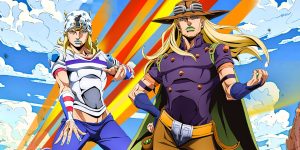
At the beating heart of this cross-country sprint lies what is arguably the most complex, psychologically nuanced dynamic in modern sequential art. Previous JoJo pairings—from Jonathan and Zeppeli to Jotaro and Kakyoin—operated on bonds of earnest virtue or steadfast camaraderie. Steel Ball Run subverts this entirely by thrusting together two deeply flawed, emotionally compromised anti-heroes.
Paraplegia, “Dark Determination,” and Johnny’s Fallen Prodigy
Johnny Joestar is not a virtuous hero. A former child-prodigy jockey whose arrogance led directly to a violent confrontation that left him paralyzed from the waist down, Johnny is introduced as a cynical, hollowed-out shell of a man. His obsession with the race isn’t fueled by patriotic ambition or noble justice; it is born of desperate, selfish survival when a brush with Gyro Zeppeli’s mystic Steel Balls momentarily restores motor function to his legs.
Araki frequently illustrates Johnny with literal “dark determination”—shadows pooling in his eyes, denoting a terrifying willingness to kill anyone who blocks his path to reclamation. Johnny’s Stand, Tusk, mirrors this painful internal metamorphosis. It evolves across distinct Acts, transforming from an infantile fingernail-spinning entity into an apocalyptic, reality-tearing monstrosity that reflects his descent into the philosophical abyss.
Gyro Zeppeli: The Executioner’s Burden
Counterbalancing Johnny’s brooding fatalism is Gyro Zeppeli, a disgraced officer from the Kingdom of Naples whose absurd outward eccentricities—gold teeth engraved with “GO! GO! ZEPPELI,” atrocious puns, and impromptu musical ballads about mozzarella cheese—mask a profound moral dilemma. Gyro enters the race to win royal amnesty for an innocent child condemned to execution by the State.
Where Johnny is ruthless, Gyro is guided by an aristocratic sense of chivalry and justice. Their shared journey across the United States is intimate and masterfully paced. They sit around lonely campfires sharing terrible jokes, clash violently over survival tactics, and slowly build a symbiotic fraternity that elevates both men beyond their initial traumas.
The Metaphysics of the Spin: Geometry Meets Supernatural Violence
From an aesthetic and mechanical standpoint, Steel Ball Run redefines how combat operates in the franchise. While Stands remain a cornerstone—ranging from Diego Brando’s dinosaur-morphing Scary Monsters to Funny Valentine’s dimensional-hopping Dirty Deeds Done Dirt Cheap (D4C)—Araki introduces an ancestral technique that precedes Stands: The Spin.
Harnessing the Golden Rectangle
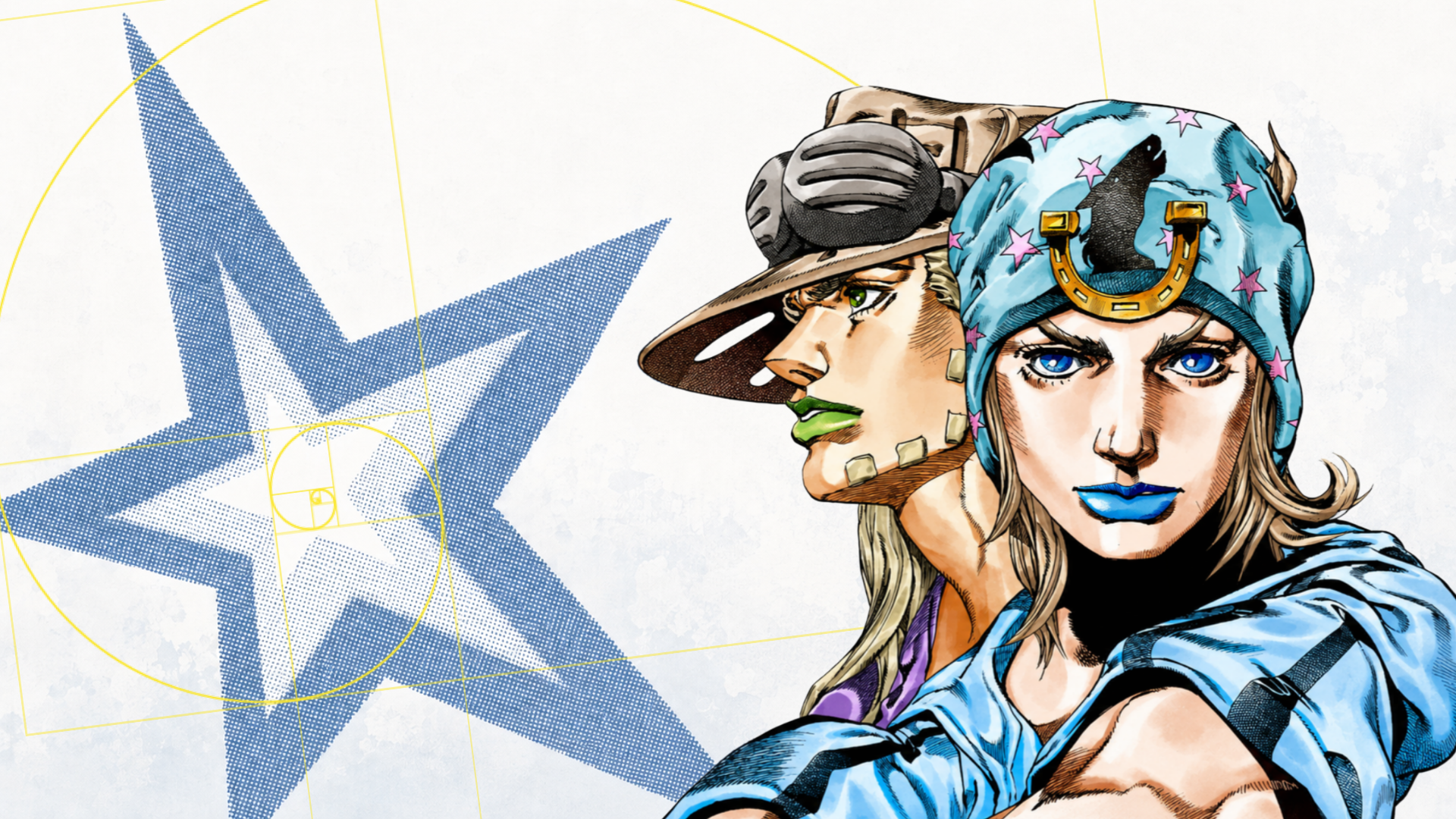
The Spin is Araki’s profound escalation of Part 1 and 2’s Hamon, reimagined through the lens of Renaissance mathematics and sacred geometry. By analyzing the Golden Ratio—nature’s recursive spiral found in shells, waves, and organic growth—Gyro and Johnny weaponize kinetic rotation through the thrown Steel Balls and spinning fingernails. It is a stunning visual and theoretical conceit that challenges the animator to render kinetic lines, centrifugal weight, and mathematical diagrams into fluid combat cinema.
The David Production Conundrum: The Nightmare of Equestrian Animation
If the creative upside of Steel Ball Run is limitless, the technical barrier to entry is notoriously catastrophic. Ask any animator in Tokyo what they dread illustrating most, and the answer is unanimous: galloping horses.
Equine Kinetics and the 2D vs. 3D Tightrope
Four-legged quadruped locomotion requires an immense volume of anatomically precise drawings per second. Unlike human characters whose movements can be masked with stylistic smears and dynamic foreshortening, a horse in a high-speed gallop involves intricate muscle shifts, skeletal compression, and rhythmic weight distribution. Multiply that by dozens of competing riders charging across unpredictable, changing terrains across dozens of episodes, and the budget constraints of traditional hand-drawn 2D animation become terrifying.
David Production has rightfully earned its crown as the definitive shepherd of Araki’s aesthetic, celebrated for using high-contrast color shifts, onomatopoeic typography, and dynamic sound design. However, taking on Steel Ball Run will inevitably require a sophisticated hybrid model. The studio will need to implement state-of-the-art 3D CGI models for background racing sequences—similar to the refined methods seen in MAPPA’s Attack on Titan or Studio Orange’s boundary-pushing productions—while preserving breathtaking, hand-drawn 2D close-ups for intimate character drama and climatic face-offs. Balancing these pipelines without jarring visual friction is the single greatest production hurdle the studio has ever faced.
A Transcendent Era Awaits
The anticipation surrounding a Steel Ball Run anime announcement is not merely about brand continuity; it is about witnessing one of sequential art’s greatest achievements translate to the television screen. The story possesses an operatic gravity—a collision of imperialist hubris, broken souls searching for grace, and relentless kinetic spectacle that transcends typical genre constraints.
Whenever David Production finally reveals that first teaser trailer—whether it begins with the haunting wind whipping across San Diego beach or the thundering clatter of hooves on iron rails—the anime landscape will shift on its axis. Until then, fans must hold fast, perfect their Golden Rectangles, and prepare for the longest, most magnificent ride in anime history.
What are your expectations for the Steel Ball Run adaptation? Do you think David Production should rely on high-end CGI for the equestrian sequences, or push for traditional 2D craft? Sound off in the comments below, and stay locked to Wibux for breaking industry news and deep-dive analysis!