
Ever since the bittersweet, universe-resetting chords of “Distant Dreamer” faded at the end of Stone Ocean, the anime community has inhabited a peculiar, collective state of suspended breath. For over a decade, David Production pulled off what critics once considered impossible: transforming Hirohiko Araki’s idiosyncratic, fashion-forward, hyper-stylized paneling into a cultural titan of modern television. Yet, for all the theatrical posturing of Stardust Crusaders and the kinetic brilliance of Golden Wind, every seasoned manga enthusiast knows that everything preceding was merely a prelude. The white whale of modern anime adaptations sits patiently on the horizon, bathed in the dust and glory of an alternate 1890: JoJo’s Bizarre Adventure: Steel Ball Run.
Ranking alongside Berserk at the absolute zenith of MyAnimeList’s critical rankings, Part 7 is not merely another chapter in the generational saga of the Joestars—it is Araki’s undisputed magnum opus. But as rumors swirl, production leaks spark frantic Reddit threads, and industry insiders whisper about David Production’s logistical preparations, a terrifying question looms: How does an animation studio actually adapt an epic horse race across continental America without breaking its budget, its staff, or its artistic soul?
A Clean Slate: Araki’s Reinvention and the Western Supernatural Canvas
To understand the unprecedented buzz surrounding a potential Steel Ball Run anime, one must grasp the seismic shift that occurred in 2004 when Araki moved the series from the rigid confines of Weekly Shonen Jump to the monthly, mature pastures of Ultra Jump. Unshackled from weekly deadlines and demographic guardrails, Araki pivoted from urban brawls to sweeping historical fiction, staging a grueling cross-country equestrian race spanning from San Diego Beach to the heart of New York City.
The Ultra Jump Renaissance: Maturing the JoJo Formula
In Part 7, the franchise threw away its traditional conventions. Stands were no longer simple ghostly manifestations punching each other at supersonic speeds; they evolved into abstract, metaphysical phenomena tied to resourcefulness, psychological resolve, and landscape survival. Araki embraced grit, mortality, moral ambiguity, and cinematic storytelling. It is a work steeped in Sergio Leone westerns, Cormac McCarthy-esque desolation, and American mythology—all collided head-on with divine relics and extradimensional conspiracies.
Manifest Destiny Meets the Divine Relic
The race itself, conceptualized by eccentric promoter Steven Steel, serves as a narrative Trojan Horse. Beneath the surface of a $50 million cross-country sprint lies a shadowy proxy war orchestrated by President Funny Valentine to gather the mummified Corpse Parts of an unnamed holy figure (unmistakably Jesus Christ). This thematic collision—Manifest Destiny, religious existentialism, and patriotic fanaticism—gives Steel Ball Run an emotional and philosophical gravity far heavier than the villain-of-the-week formula that characterized earlier installments.
Johnny Joestar and Gyro Zeppeli: Flawed Humanity and the Geometry of the Spin
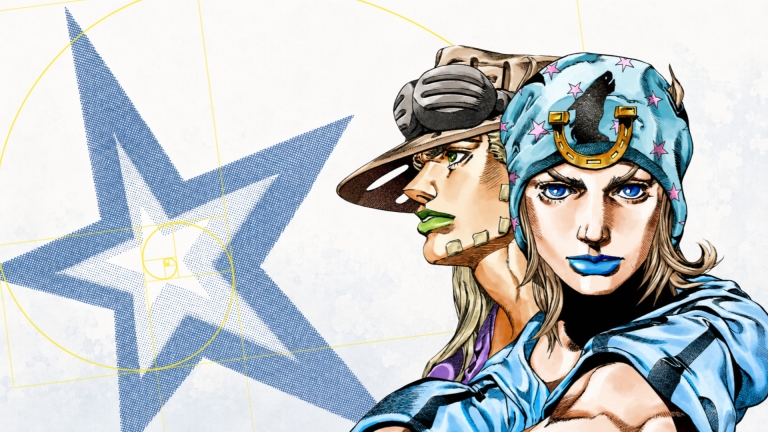
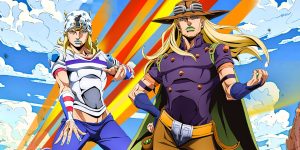
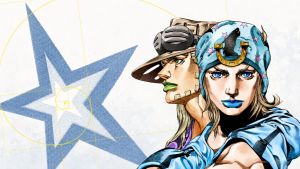
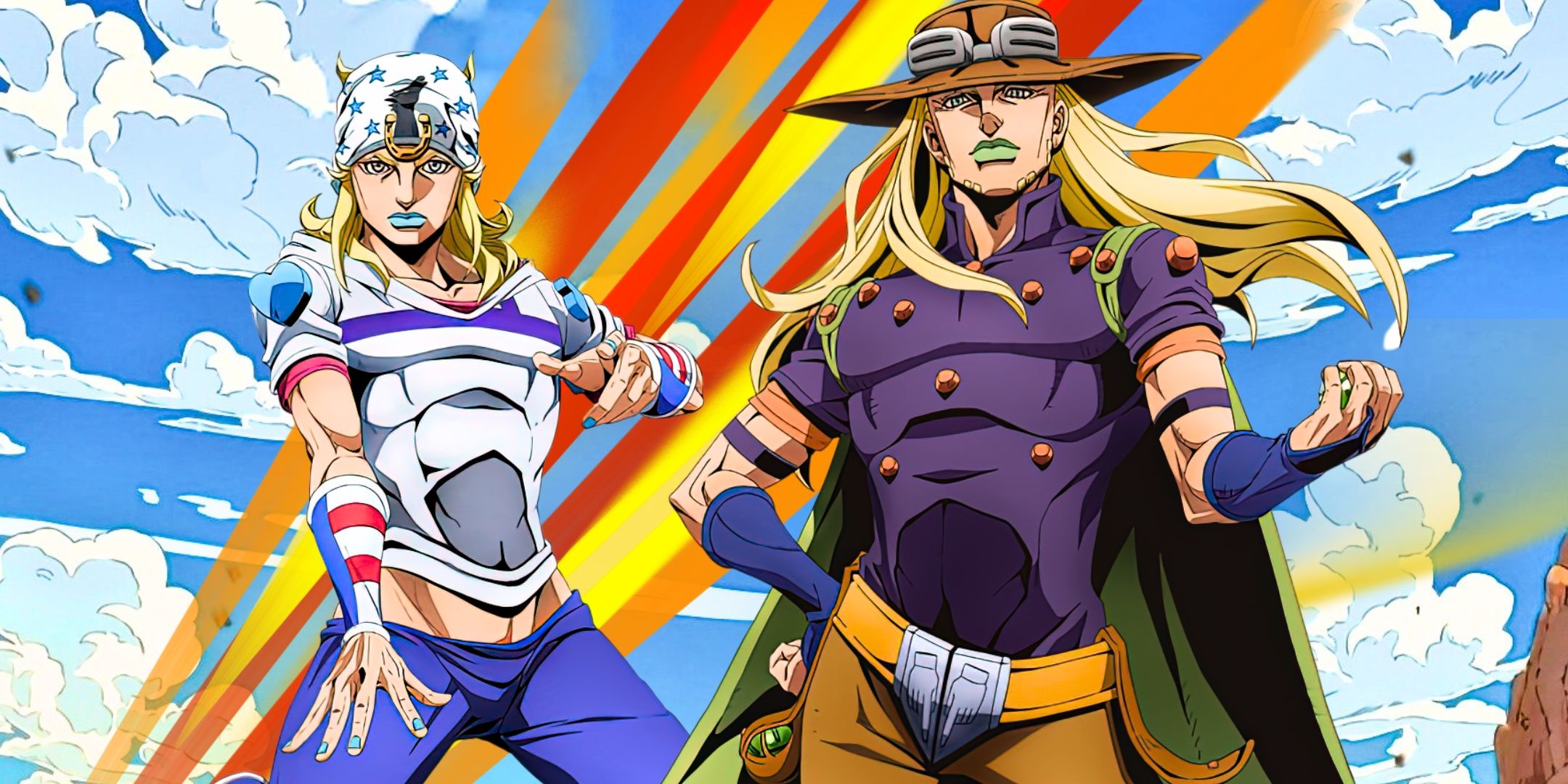
At the center of this blistering odyssey is arguably the most complex, compelling duo in modern sequential art: Johnny Joestar and Gyro Zeppeli. Their dynamic elevates Steel Ball Run from a stellar action manga to an intimate, tragic character study.
The Psychology of “Negative to Zero”: Johnny Joestar’s Dark Determination
Unlike his righteous ancestors Jonathan or Jotaro, Johnny Joestar begins his journey as an unlikable, fallen prodigy. Crippled from the waist down due to his own arrogance, Johnny is neither a traditional hero nor a shining beacon of justice. Araki crafts him around the concept of “Dark Determination”—a ruthless, terrifying survival instinct driven by a desperate desire not to reach a positive triumph, but merely to return from “negative to zero.” His Stand, Tusk, mirrors this internal evolution, developing through four distinct “Acts” that chart Johnny’s painful psychological metamorphosis from a self-pitying pariah into a relentless warrior.
The Noble Fool: Gyro Zeppeli and the Golden Ratio
Serving as Johnny’s mentor, companion, and philosophical foil is Gyro Zeppeli, a disgraced Neapolitan executioner competing in the race to secure an imperial pardon for an innocent child. Gyro brings with him the lore of the “Spin”—a mystical physical discipline rooted in the Fibonacci Sequence and the Golden Ratio. Where Hamon was mystical breathing, the Spin is sacred geometry, weaponized through the aerodynamic momentum of rotating steel balls. Gyro’s eccentric bravado, terrible jokes, and deeply buried nobility provide the emotional anchor for the entire story. A successful adaptation hinges entirely on casting voice actors who can effortlessly capture the delicate balance between their campy camaraderie and world-shattering pathos.
The “Equestrian Wall”: David Production’s Formidable Animation Challenge
If Steel Ball Run is universally heralded as a masterpiece, why hasn’t it been greenlit and fast-tracked immediately? The answer lies in the grim reality of commercial animation logistics: horses.
Why Horses Are an Animator’s Ultimate Nightmare
Within the anime industry, horses are widely recognized as the single most notoriously difficult subject to animate. Unlike human figures or mechanical vehicles, an equestrian gallop involves a complex, non-linear kinetic cycle: muscles shifting beneath skin, flexing tendons, perspective warping, and dust displacement. Now consider animating dozens of them simultaneously, galloping through prairies, canyons, and blizzards across a 100-plus chapter span. For a traditional hand-drawn 2D production, the labor costs and time requirements are catastrophic.
The 2D vs. 3D Hybrid Dilemma
David Production stands at an evolutionary crossroads. Purists shutter at the thought of full-CGI horses, citing the stiff, uncanny models that plagued early seasons of Kingdom or the 2016 Berserk adaptation. However, an intelligent hybrid approach—utilizing meticulously cel-shaded 3D base assets augmented by high-priority 2D key animation for close-ups and dramatic impact frames—is the only realistic path forward. Having cut their teeth on complex 3D integration in Fire Force and the intricate Stand choreography of previous JoJo parts, David Production possesses the technical pedigree, but Part 7 will push their digital department past its absolute limit.
The Cultural Zeitgeist: Why the Anime Community Won’t Stop Dreaming of SBR
The digital anticipation surrounding Steel Ball Run has reached a fever pitch, exacerbated by the turbulent release format of Stone Ocean. Fans who felt burned by Netflix’s sterile “batch-drop” model—which many argue robbed Jolyne Cujoh’s arc of the week-to-week viral engagement enjoyed by Golden Wind—are practically begging for a return to traditional, weekly broadcast pacing.
Escaping the Batch-Drop Limbo
The consensus across online communities is unanimous: Steel Ball Run cannot be dumped quietly onto a streaming platform in three disjointed batches. An adaptation of this stature demands the prestige television treatment—a sustained, 48-to-50 episode run that dominates social discourse, fuels weekly video essays, and allows the sprawling chapters of the race to breathe. The thematic weight of arcs like “The True Man’s World”—featuring the stoic gunslinger Ringo Roadagain—requires dramatic anticipation, not a rapid binge-watch session forgotten in a fortnight.
The Horizon of Part 7: The True Man’s World Awaits
Adapting JoJo’s Bizarre Adventure: Steel Ball Run is not just the next logical business step for David Production and Warner Bros. Japan; it is a monumental artistic gamble. It requires an unyielding production pipeline, an innovative synthesis of 2D artistry and 3D precision, and an unflinching dedication to Hirohiko Araki’s most mature thematic terrain. If handled with the reverence and explosive creativity the studio has displayed since 2012, Part 7 will not merely break the anime internet—it will permanently redefine the limits of what a serialized manga adaptation can achieve.
The race across the American frontier is coming. The golden ratio is already spinning. It’s only a matter of time before David Production sounds the starting gun, and anime fans worldwide are invited to step into the True Man’s World.
How do you think David Production should tackle the legendary horse-racing sequences in Steel Ball Run? Are you holding out hope for a return to weekly television broadcasts? Drop your theories and voice cast wishlists in the comments below!