
Ever since the cosmic, melancholy reset that concluded JoJo’s Bizarre Adventure: Stone Ocean aired on Netflix, a singular, electrifying question has reverberated through the anime ecosystem: When is Steel Ball Run coming? For over a decade, Hirohiko Araki’s seventh installment has occupied an almost mythical status among manga connoisseurs. Ranked consistently near the zenith of MyAnimeList and widely regarded by critics as Araki’s magnum opus, Steel Ball Run isn’t merely the next sequential chapter in a multi-generational saga—it is a total reinvention of the franchise’s creative DNA. As whisperings around David Production’s production pipeline reach a fever pitch, the prospect of seeing Johnny Joestar and Gyro Zeppeli cross the American frontier in glorious motion has evolved from a niche fandom dream into the anime industry’s most intensely monitored horizon.
The Seinen Rebirth: How Ultra Jump Liberated Hirohiko Araki
To understand the unprecedented buzz surrounding Steel Ball Run, one must grasp the seismic shift that occurred during its serialization in the mid-2000s. Originally launched in Weekly Shonen Jump before transitioning to the monthly seinen imprint Ultra Jump, the narrative broke free from the restrictive pacing and editorial guardrails of standard battle shonen. Araki was no longer constrained by weekly page quotas or demographic prudishness; he was granted the structural room to breathe, experiment, and bleed.
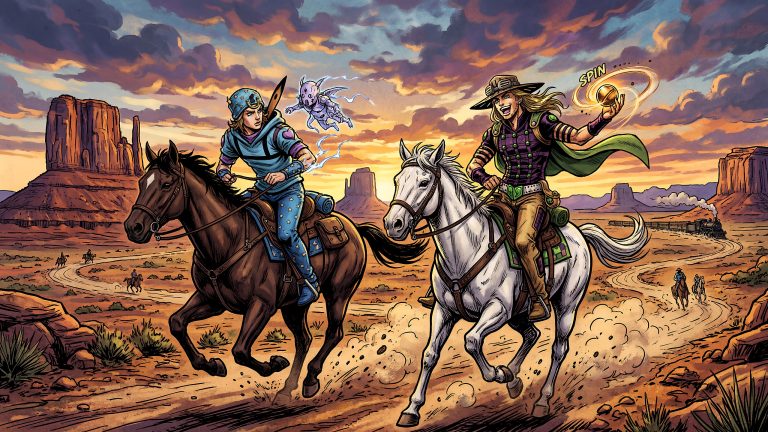
The result was a sweeping, dusty, blood-soaked Western epic set in an alternate 1890. The titular Steel Ball Run—a cross-country, high-stakes equestrian race from San Diego to New York with a fifty-million-dollar purse—serves as the grand canvas for a story that trades flamboyant pop melodrama for gritty, existential survivalism. By stripping away the established Joestar timeline and hitting the narrative reset button, Araki tapped into a rich reservoir of American frontier mythos, historical revisionism, and theological intrigue. It represents the purest synthesis of his trademark eccentricity and high-concept literary depth.
Johnny and Gyro: A Masterclass in Fractured Camaraderie
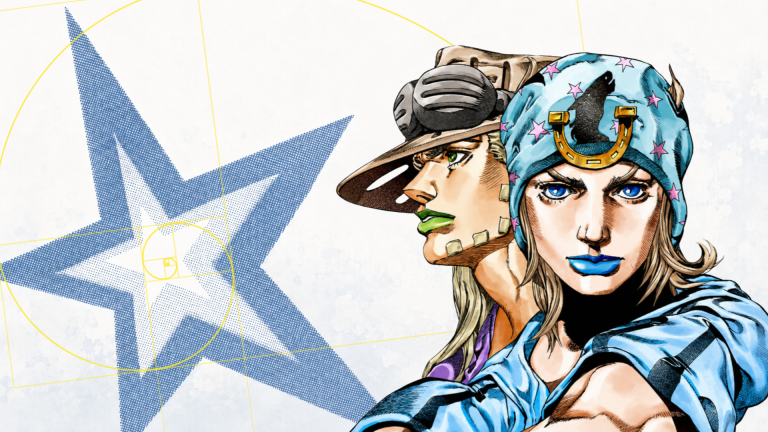
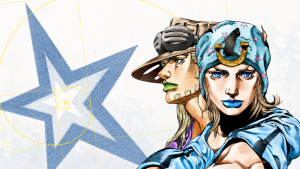
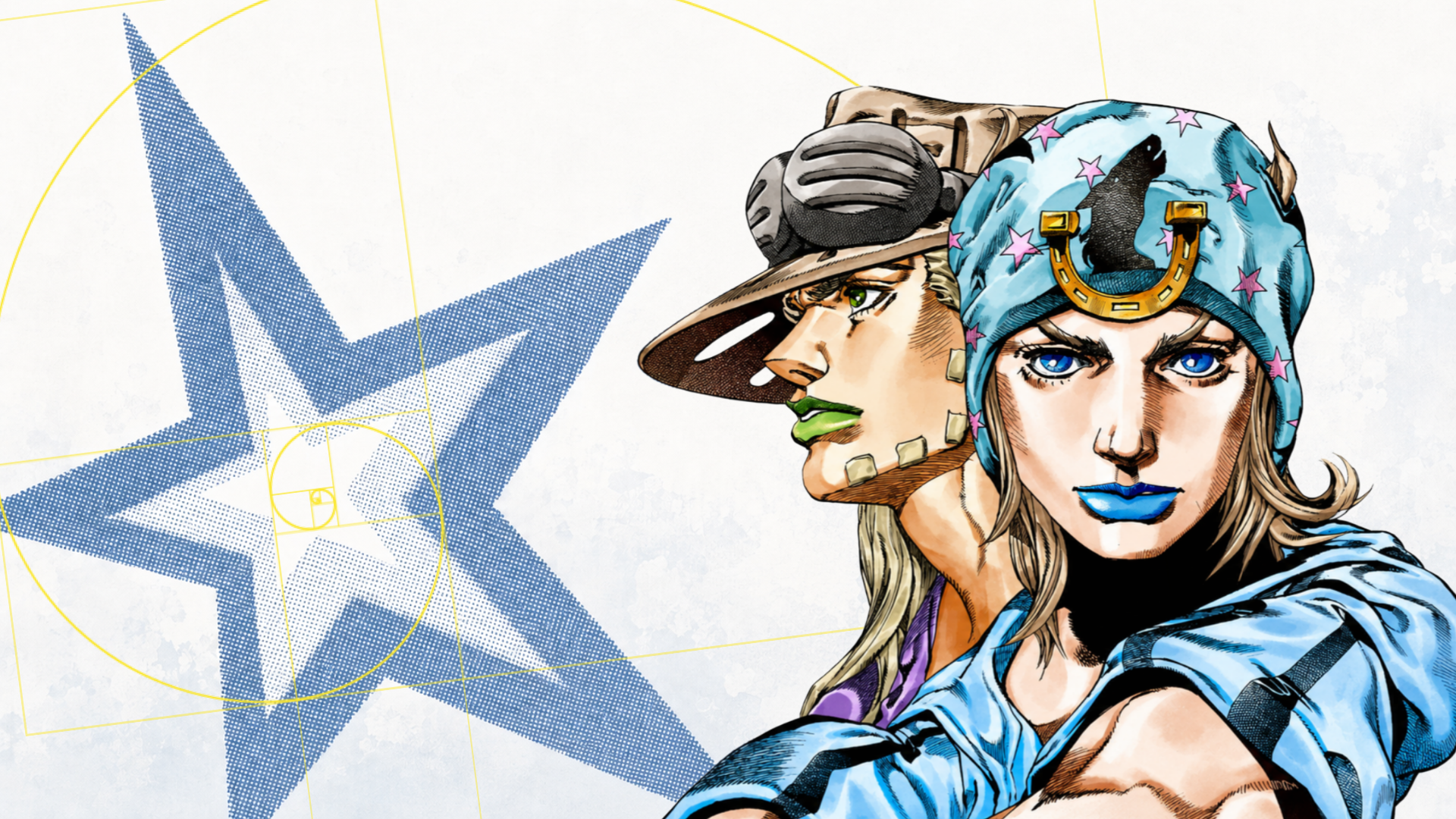
At the center of this sun-scorched cross-country trek lies what is arguably the most nuanced dynamic Araki has ever penned. In stark contrast to the infallible nobility of Jonathan Joestar or the slick, unshakeable bravado of Jotaro Kujo, Johnny Joestar enters the frame as a deeply broken figure. A former racing prodigy paralyzed from the waist down following an act of hubris, Johnny is cynical, resentful, and driven by a desperate, morally grey ambition. He doesn’t enter the race to save the world; he enters because catching a glimpse of a spinning steel ball momentarily made his dormant legs move. His journey is an agonizing psychological pilgrimage of self-worth and atonement.
Counterbalancing Johnny’s brooding anti-heroism is Gyro Zeppeli, a disgraced Neapolitan executioner armed with mystical steel spheres, ridiculous dad jokes, and an unyielding personal code of honor. Gyro is the flamboyant theatrical anchor the series requires, yet his master-pupil relationship with Johnny never lapses into trite archetypes. Their bond evolves through shared campfires, mundane roadside philosophy, and mutual reliance amid brutal Stand skirmishes. Watching their dynamic animate—transitioning from abrasive rivals to soulbound brothers-in-arms—promises to deliver some of the most emotionally devastating acting the medium has witnessed in years.
The Spin vs. Stands: Reinventing the Metaphysics of Battle
While Stands naturally return in Part 7, Araki fundamentally overhauled his combat language by introducing the Spin—a forgotten supernatural discipline grounded in the mathematical perfection of the Golden Ratio. Unlike the raw biological willpower of Stands or the solar-charged breathing of Hamon, the Spin is a craft of pure biomechanical discipline, physics, and geometry. Visualizing the sequential evolution of Johnny’s Stand, Tusk, alongside Gyro’s spherical trajectory calculations offers David Production a visual sandbox entirely unlike the urban street-brawls of Diamond is Unbreakable or the claustrophobic skirmishes of Green Dolphin Street Prison.
The Equestrian Nightmare: David Production’s Technical Gauntlet
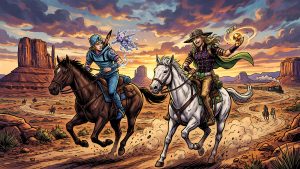
If Steel Ball Run is a creative goldmine, it is also an animator’s logistical purgatory. The primary culprit? Horses. The animator’s age-old adage that four-legged quadrupeds—particularly horses with complex skeletal anatomy, galloping mechanics, and dynamic muscle shifts—are a production team’s worst nightmare rings terrifyingly true here. The narrative doesn’t feature horses as occasional background props; they are the central kinetic vehicles of nearly every engagement, galloping through deserts, snowstorms, rivers, and volcanic gorges across thousands of panels.
David Production, the studio that has lovingly shepherded the JoJo anime since its 2012 inception, faces its most daunting technical tightrope yet. A purely traditional, hand-drawn 2D adaptation of dozens of horses racing across the American continent would drain even the most inflated budgets and break the back of any veteran key animation unit. Conversely, heavy reliance on clunky 3D CGI risks alienating a fiercely protective fanbase that prides itself on Araki’s expressive aesthetic flair.
Insiders suspect David Production will need to adopt a hybrid pipeline akin to Orange’s Trigun Stampede or the sophisticated horse rendering seen in MAPPA’s Attack on Titan final arcs—utilizing finely tuned cell-shaded 3D base assets painted over by master compositors and animators to preserve Araki’s distinct ink-heavy hatching. How the studio solves this equestrian conundrum will define the artistic legacy of Part 7 before a single Stand punch is even thrown.
The Saint’s Corpse and the Shadow of Funny Valentine
Beyond the mechanical challenges, the thematic resonance of Steel Ball Run demands an adaptation of profound gravitas. What begins as a kinetic sports tournament steadily peels back its layers to reveal a geopolitical conspiracy revolving around the holy mummified fragments of a divine Corpse. Enter Funny Valentine, the 23rd President of the United States and undeniably one of the most chillingly charismatic antagonists in modern fiction.
Valentine’s multidimensional Stand, Dirty Deeds Done Dirt Cheap (D4C), alongside his unyielding, fanatical doctrine of American exceptionalism and utilitarian patriotism, provides a thematic weight that eclipses standard anime villainy. The clash between Valentine’s collectivist imperial ambition and Johnny’s fiercely individualistic quest for spiritual rehabilitation elevates the final third of Steel Ball Run into an opera of tragic consequences. For an anime production, capturing the philosophical density of these exchanges alongside the reality-bending horror of D4C will require voice casting and sound direction of the highest caliber.
The Verdict: An Inevitable Cultural Milestone
The runway leading to an official Steel Ball Run announcement feels less like speculative wish-fulfillment and more like an impending storm. Between David Production wrapping up high-profile side projects like the Urusei Yatsura reboot and Warner Bros. Japan actively teasing future JoJo endeavors through anniversary exhibitions, the stars are quietly aligning. Part 7 is not merely another seasonal pickup; it is the transition into an era of mature, uncompromising storytelling that could permanently redefine how global audiences perceive the JoJo brand.
When the starting pistol finally fires and Johnny and Gyro ride onto our screens, the anime community will witness a milestone years in the making. The road will be grueling, technically punishing, and artistically treacherous—but if Araki’s masterwork has taught us anything, it’s that the longest detours often lead to the most breathtaking destinations.
Are you counting down the days until David Production confirms the Steel Ball Run anime, or do you harbor doubts about how they’ll handle the grueling horse animation and D4C’s spatial chaos? Sound off in the comments below, and stay locked to Wibux.com for all your frontline anime breakdowns!