
Ever since the melancholic, universe-resetting notes of Stone Ocean faded into the anime ether in late 2022, a singular, deafening murmur has echoed throughout every corner of the global anime community. It is a whispered prayer, an obsessive theory mill, and an absolute creative inevitability: Steel Ball Run. For over a decade, Hirohiko Araki’s seventh installment of JoJo’s Bizarre Adventure has occupied a mythical status. Consistently lodged beside Kentaro Miura’s Berserk at the absolute pinnacle of manga ranking aggregate sites like MyAnimeList, Part 7 is universally hailed as Araki’s magnum opus—a sweeping, hyper-violent, psychologically profound reinvention of everything his multi-generational saga ever stood for.
Yet, the deafening silence from David Production has only stoked the flames of anticipation. Adapting Steel Ball Run is not simply a matter of drawing up production schedules; it represents an epochal shift in tone, artistic maturity, and sheer logistical execution. As the studio finishes handling projects like Undead Unluck and Urusei Yatsura, the industry’s gaze inevitably shifts back to the dusty trails of 1890s America, where two mounted outcasts ride toward destiny, divinity, and damnation.
The Seinen Rebirth: How Araki Redefined JoJo in the American Frontier
To understand the immense buzz surrounding an animated Steel Ball Run, one must understand the tectonic shift it caused on paper. In 2004, Araki made the definitive jump from the weekly editorial constraints of Shueisha’s Weekly Shonen Jump to the monthly pages of the seinen-oriented Ultra Jump. Unshackled from juvenile demographic limits, Araki transformed his signature bizarre sensibilities into an unflinching, gritty, historical epic.
The premise is deceptively accessible yet breathtaking in scale: the Steel Ball Run race, an unprecedented 6,000-kilometer cross-country equestrian rally spanning from San Diego Beach to New York City, carrying an eye-watering prize of 50 million dollars. But what begins as a flamboyant Gilded Age spectacle orchestrated by promoter Steven Steel quickly spirals into a dark, occult struggle over the mummified relics of Jesus Christ—a macabre supernatural MacGuffin that recontextualizes global geopolitical dominance.
This was no longer just about charismatic lineage defeating flamboyant villains; it was a meditation on imperial ambition, trauma, bodily decay, and divine retribution, staged against the sweeping, sun-bleached vistas of a developing continent.
Johnny Joestar and Gyro Zeppeli: A Masterclass in Kinetic Tragedy
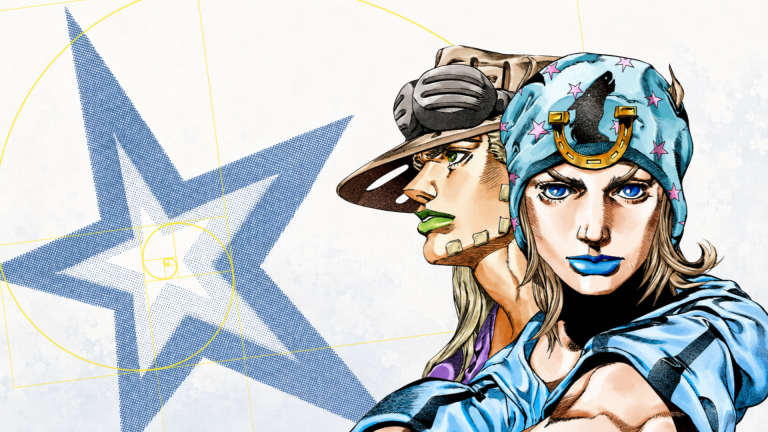
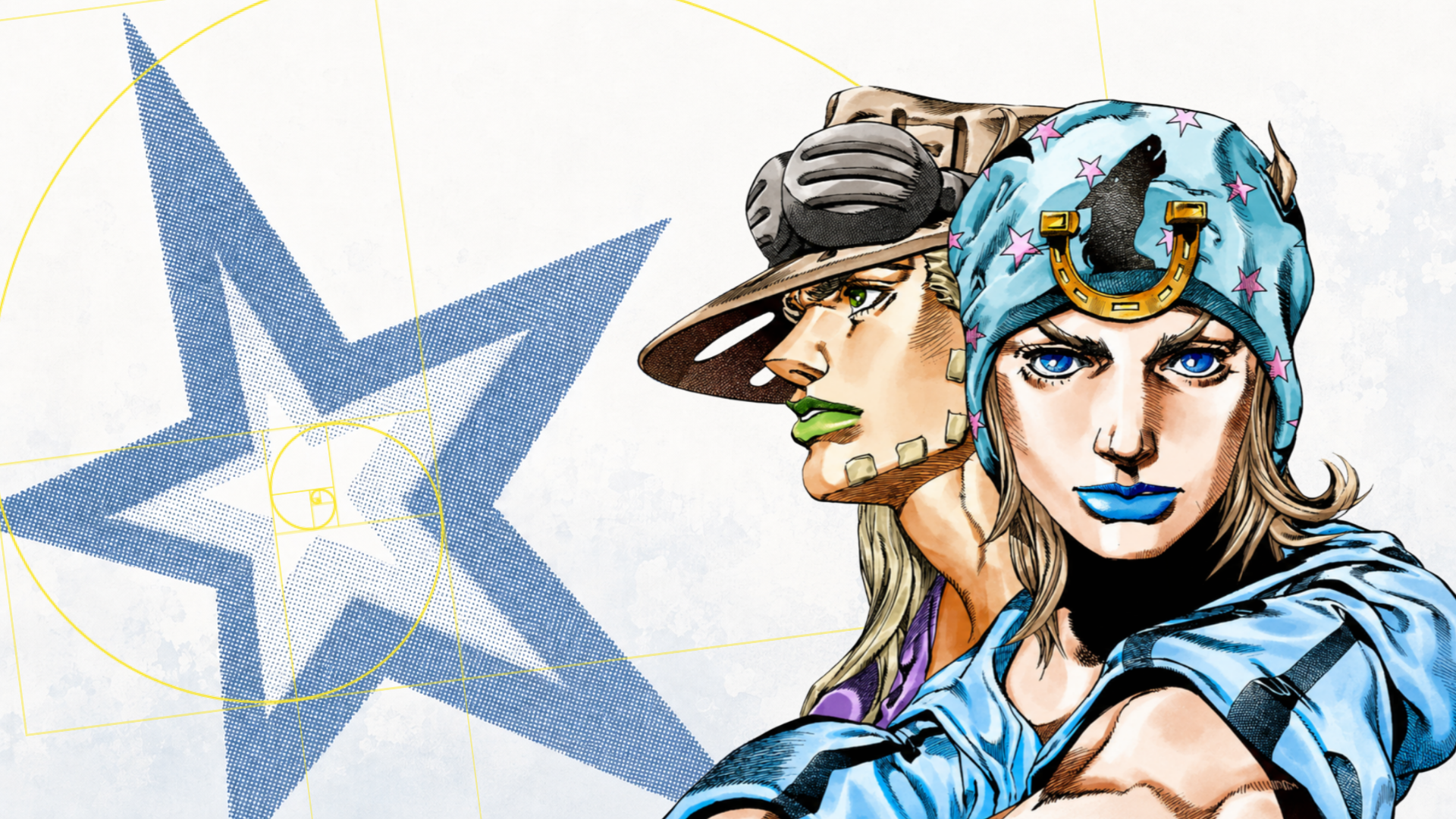
At the beating heart of Part 7’s critical reverence sits the relationship between its two protagonists—a duo whose chemistry effortlessly outshines almost any other pairing in modern sequential art.
Johnny’s Fall and Flawed Redemption
Unlike his righteous ancestors—Jonathan’s gentlemanly chivalry, Joseph’s trickster optimism, or Jotaro’s stoic coolness—Johnny Joestar enters the story completely shattered. A former prodigy jockey whose runaway arrogance cost him his family, his career, and the use of his legs, Johnny is not a traditional hero. He is petulant, profoundly depressed, and driven by a borderline villainous desperation—his infamous “dark determination”—to find something that can bring his broken body back from “negative” to “zero.” His Stand, Tusk, develops alongside his emotional evolution, migrating from simple rotational fingernail projectiles into a dimension-shattering force of absolute infinity.
The Spin, the Golden Ratio, and Gyro’s Stoic Whimsy
Contrasting Johnny’s inward melancholy is Gyro Zeppeli, a disgraced Neapolitan executioner possessing an aristocratic swagger and a mouth full of golden teeth inscribed with the phrase “GO! GO! ZEPPELI.” Gyro rides not for personal glory, but to win amnesty for an innocent child condemned to die on his homeland’s guillotine.
Through Gyro, Araki revitalized his original power system, replacing the sunlight-fueled Hamon with The Spin: an ancient, mathematically derived technique based on the Golden Ratio and the Fibonacci sequence. The kinetic choreography of Gyro hurling steel balls that warp flesh, manipulate terrain, and disrupt the laws of physics provides some of the most conceptually intoxicating action sequences ever inked. Their quiet campfires, punctuated by bizarre running gags about days of the week and Italian opera, grant the duo an intimacy that makes their inevitable march toward tragedy gut-wrenching.
The Equestrian Nightmare: David Production’s Formidable Technical Hurdle
If the narrative demands are stratospheric, the mechanical reality of animating Steel Ball Run is the industry’s ultimate stress test. There is a universal adage among veteran anime key animators: animating horses in continuous 2D motion is suicide.
Throughout Part 7, horses are not incidental background props; they are primary vehicles in continuous, high-speed kinetic motion, kicking up dynamic terrain, undergoing biomechanical strain, and interacting directly with supernatural Stand powers. Attack on Titan famously burned through premier animators and pivoted toward hybridized CGI to handle cavalry charges; Steel Ball Run features entire multi-episode chases contested solely on horseback.
The central question gripping fans and industry insiders is how David Production will engineer this adaptation:
- Hybrid 3D/2D Integration: Will the studio utilize hyper-stylized cell-shaded 3D rigs for the horses—similar to the approach pioneered by studio Orange (Trigun Stampede)—seamlessly rotoscoped under Araki-accurate 2D character models?
- Maintaining the “Araki Line”: Araki’s mid-2000s artistic zenith is characterized by dense cross-hatching, Michelangelo-inspired anatomical precision, and hyper-detailed fashion aesthetics. Replicating this detailed linework on moving models demands an unprecedented budget and time allotment.
- Production Pipeline Constraints: A serialized sprint through the trans-continental race cannot be handled on a seasonal whim; it requires years of dedicated pre-production and layout design to prevent the scheduling collapses that plagued Stone Ocean’s initial batch drops on Netflix.
The Corpse, The President, and the Thematic Crucible
Beyond its technical hurdles, the adaptation buzz is fueled by the cultural appetite for Steel Ball Run‘s primary antagonist: the 23rd President of the United States, Funny Valentine. Armed with his reality-hopping Stand, Dirty Deeds Done Dirt Cheap (D4C), Valentine is the quintessential patriotic extremist, operating on an ironclad philosophy of utilitarian nationalism. His famous monologue regarding “who takes the first napkin” is a masterwork of political rhetoric that blurs the moral boundaries between hero and villain to an intoxicating degree.
Pitting Johnny’s deeply selfish, localized desire to walk against Valentine’s grand, imperialist vision of unilateral prosperity for his country creates an electrifying thematic tension. It forces the audience to confront uncomfortable truths about justice, sacrifice, and the bloody foundation upon which modern empires are constructed.
The Horizon of an Anime Masterpiece
JoJo’s Bizarre Adventure: Steel Ball Run is not just the next season of a beloved franchise; it is the definitive crucible that will define David Production’s artistic legacy. If handled with the technical mastery, visual patience, and raw prestige it warrants, Part 7 has the narrative horsepower to transcend typical seasonal discourse and stand alongside works like Vinland Saga and Monster as a crowning achievement of mature animated storytelling.
The race has not yet begun, but the starting pistol feels primed. As we await the official confirmation that the saddle has been cinched, anime enthusiasts worldwide find themselves united in a single, breathless sentiment: lesson five is coming, and it is going to be magnificent.
How do you think David Production should tackle the legendary horse animation of Part 7? Do you prefer a seasonal weekly rollout over a batch release? Let us know your predictions in the comments below!