Ever since the cosmic, string-spun reset of Stone Ocean drew to a bittersweet close in late 2022, a singular, deafening murmur has echoed across the anime zeitgeist. For over a decade, David Production pulled off what critics once considered impossible: a faithful, stylistically kaleidoscopic adaptation of Hirohiko Araki’s generational saga, spanning six interconnected parts and three distinct generations. Yet, within every forum, convention panel, and late-night Discord discourse, every JoJo fan knows that everything before was merely a prelude. The genuine cultural mountain—the white whale of modern manga adaptations—is Part 7: Steel Ball Run.
Widely regarded not just as Araki’s crowning achievement, but as one of the greatest serialized manga ever committed to paper, Steel Ball Run sits perched near the absolute summit of international manga rankings, shoulder-to-shoulder with Berserk and Vinland Saga. The sheer buzz surrounding its inevitable anime translation is unlike anything the medium has seen since the return of Bleach: Thousand-Year Blood War. Yet, beneath the ravenous anticipation lies a sobering industry truth: bringing this sweeping, 19th-century equestrian odyssey to the screen represents the most brutal technical and thematic frontier David Production has ever dared to face.
The Seinen Evolution: Araki’s Definitive Masterpiece
To understand why the hype for Steel Ball Run burns with such feral intensity, one must understand the tectonic creative shift it represents for Hirohiko Araki. When serialization began in Weekly Shonen Jump in 2004, it was initially framed as an enigmatic standalone racing drama before formally revealing its JoJo lineage. However, the game changed permanently when Araki transitioned the title to the monthly pages of Ultra Jump in 2005.
Freed from the relentless crunch and juvenile editorial guardrails of the weekly shonen model, Araki transformed the narrative into a grueling, psychologically punishing Western noir. The monthly pacing allowed his draftsmanship to evolve into museum-grade fine art, defined by neoclassical anatomy, hyper-detailed crosshatching, and an atmosphere thick with frontier grit, existential dread, and religious iconography. Steel Ball Run severed ties with the increasingly tangled continuity of the original Joestar bloodline, hitting the ultimate creative reset button to construct an alternate-universe 1890 America that feels dirty, tactile, and uncompromisingly grand.
The Paraplegic and the Executioner: Character Deconstruction at High Velocity
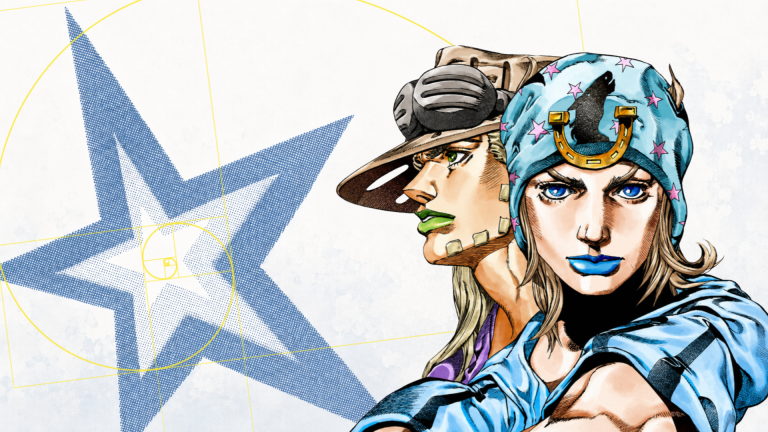
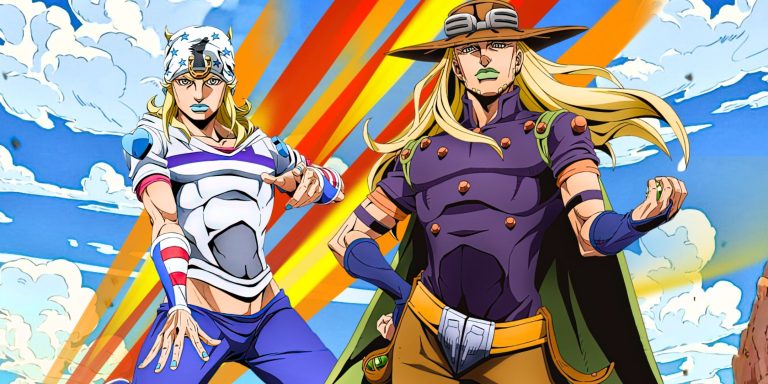
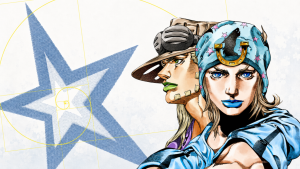
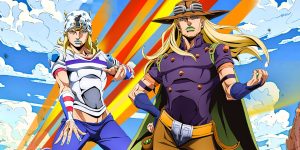
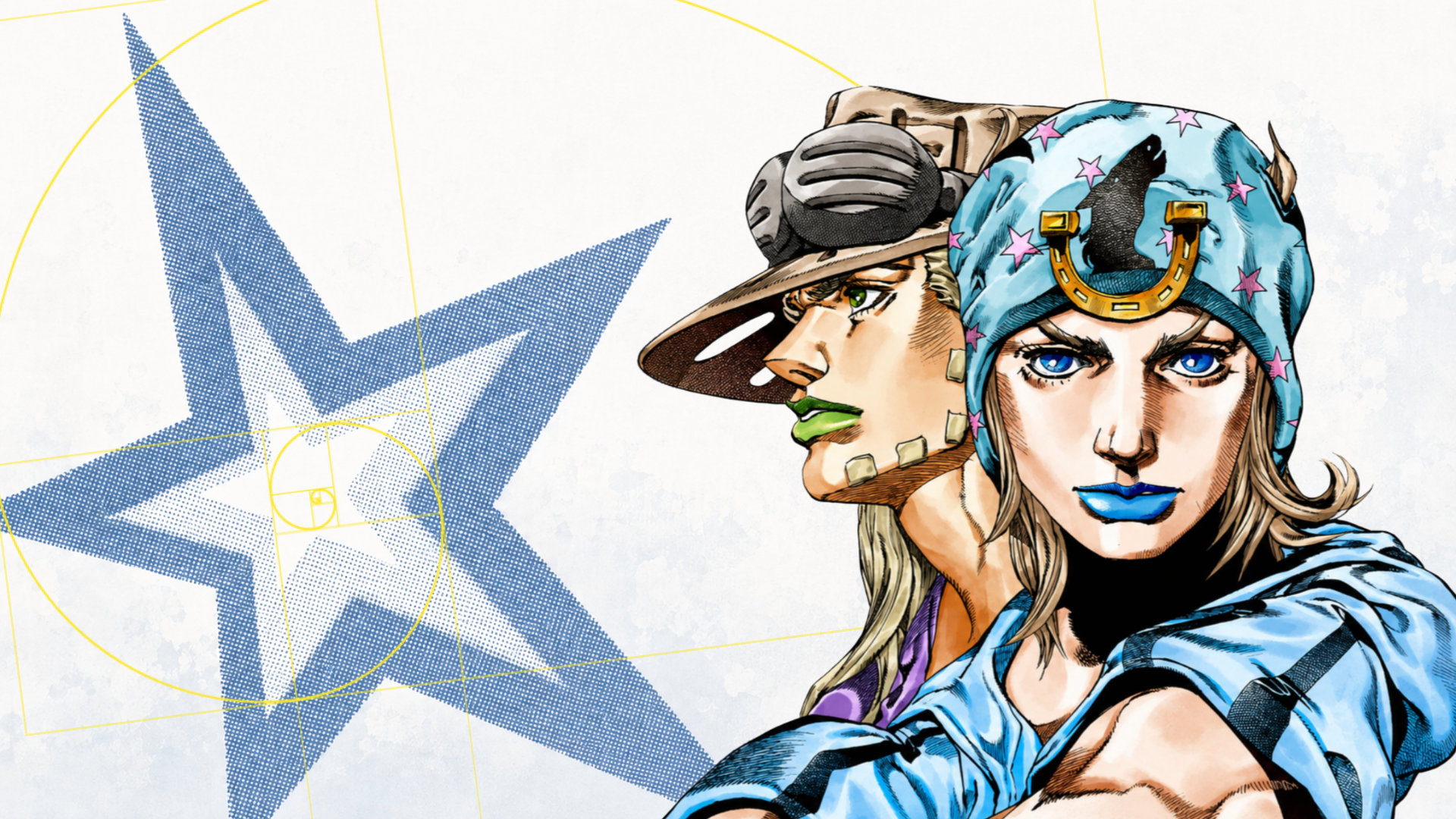
At the center of this cross-continental sprint is the most complex dynamic Araki has ever penned: the symbiotic brotherhood between Johnny Joestar and Gyro Zeppeli. In stark contrast to the noble, broad-shouldered chivalry of his Jonathan Joestar namesake, Johnny begins his journey as an arrogant former equestrian prodigy who was shot, paralyzed from the waist down, and discarded by high society. He is deeply flawed, cynical, and desperate—possessing what the narrative repeatedly calls a “dark determination,” a terrifying willingness to kill if it means crawling his way back from rock bottom.
Enter Gyro Zeppeli, a disgraced Neapolitan executioner armed with mystical steel orbs, gold-plated teeth, and an irrepressible brand of operatic absurdity. Gyro is the spiritual core of the epic, balancing eccentric humor—from terrible puns to songs about Italian cheeses—with a profound duty to save an innocent child slated for political execution in his homeland. Their bond doesn’t develop through the conventional shonen framework of rivalrous camaraderie; it is forged across thousands of miles of campfire philosophy, shared trauma, and visceral desperation across the Great Plains.
The Golden Ratio: Elevating Stand Combat into Sacred Geometry
Narratively, Steel Ball Run also revolutionizes the series’ trademark supernatural combat. While Stands remain a fixture, they are anchored by Araki’s most brilliant mechanical invention: The Spin. Rooted in Renaissance math, the Fibonacci sequence, and kinetic rotation, the Spin transforms physics into a near-sacred art form. Watching Johnny evolve his Stand, Tusk, across four distinct “Acts” through the mastery of the Golden Rectangle provides an intoxicating blend of hard magic and psychological breakthrough that will set the animation community ablaze once realized on screen.
The Technical Hurdle: David Production’s Equestrian Nightmare
Why hasn’t David Production officially stamped a release window onto Steel Ball Run? The answer can be summed up in a single, terrifying word: horses.
Within the modern Japanese animation industry, four-legged animal locomotion—specifically the anatomical complexity, fluid musculature, and shifting weight of galloping horses—is universally recognized as an animator’s worst nightmare. Steel Ball Run is not a story where horses are passive background dressing; it is a 3,800-mile race across unforgiving terrain featuring hundreds of competitors, dynamic cavalry battles, and split-second tactical maneuvering at breakneck speeds.
CGI Integration vs. Hand-Drawn Legacy
David Production has long relied on a signature aesthetic: hyper-stylized 2D key frames accentuated by bold onomatopoeia, shifting color palettes, and deliberate cinematic pacing. However, a purely hand-drawn Steel Ball Run would functionally bankrupt the studio’s talent pool within three episodes. The production faces an immense technological trial: they must develop a bespoke, high-end 3D CGI pipeline for the horses that can seamlessly blend with Araki’s hyper-intricate 2D character designs without inducing the jarring visual whiplash that plagued other modern adaptations like 2016’s Berserk or the background crowds in Stone Ocean.
If David Production takes the time to crack this code—perhaps blending the kinetic cell-shaded brilliance seen in Studio Orange’s portfolio with DP’s proprietary visual flair—it could set a brand-new technical standard for hybrid anime production. If they rush it, the community’s highest-rated manga adaptation risks immediate, heartbreaking visual compromise.
Manifest Destiny and the Saint’s Corpse: Thematic Weight
Beyond the logistical sprint, Steel Ball Run demands prestige-tier storytelling because its thematic ambitions outstrip almost anything airing today. At its core, the race is a covert geopolitical conspiracy orchestrated by the charismatic 23rd President of the United States, Funny Valentine. Valentine’s quest to assemble the scattered relics of a miraculous holy corpse introduces an ambiguous moral universe where the “villain” is driven by an unyielding, patriotic pursuit of national glory, while our “heroes” are motivated by raw, selfish personal redemption.
The philosophical clashes, culminating in the terrifying conceptual horrors of Valentine’s dimension-hopping Stand, Dirty Deeds Done Dirt Cheap (D4C), elevate the race from a high-stakes adventure into an epic interrogation of the American mythos, manifest destiny, and the cost of human sacrifice. Handled correctly, this storyline has the cultural resonance to puncture the mainstream consciousness in the same way Attack on Titan captured the broader prestige television audience.
The Horizon Awaits: A Defining Cultural Milestone
The collective breath held by the anime fandom is justified. JoJo’s Bizarre Adventure: Steel Ball Run is not just the next season of a popular franchise; it is David Production’s rubicon. After navigating the rocky waters of batch-release schedules on streaming platforms that somewhat stifled Stone Ocean’s weekly cultural momentum, the studio has an opportunity to reclaim the throne of event-television anime.
Every creative decision—from the vocal casting of Johnny and Gyro to the visual rendering of the first starting pistol firing on the shores of San Diego—will be scrutinized under an international microscope. But if the studio’s decade-long track record of passion and Araki-worshipping reverence holds true, we are on the precipice of witnessing one of the medium’s undisputed masterworks finally take flight.
What part of the Steel Ball Run adaptation are you most desperate to see David Production tackle? Are you holding out hope for full 2D horse animation, or is seamless 3D the only realistic path? Drop your thoughts, dream voice casts, and predictions in the comments below!