Ever since the cosmic strings of Stone Ocean collapsed into the bittersweet reset of Irene’s timeline, the global anime community has had its collective gaze locked onto a singular, sun-drenched horizon. For over a decade, Hirohiko Araki’s JoJo’s Bizarre Adventure: Steel Ball Run has held court as a near-mythological entity in manga culture—consistently rubbing shoulders with Berserk and Vinland Saga at the very summit of critical rankings. The persistent buzz surrounding its inevitable anime adaptation is not merely business as usual for franchise fans; it represents an existential turning point for David Production and a historic milestone for modern anime fandom.
Transitioning from the kinetic pop-art flamboyance of 1980s shonen to a gritty, sprawling, late-19th-century epic, Steel Ball Run is Araki’s undisputed masterpiece. Yet, bringing the grueling 6,000-kilometer cross-continental horseback race to our screens poses the most technically intimidating and culturally monumental challenge in anime today. As rumors, speculation, and pre-production whisperings swell, the question is no longer whether Steel Ball Run will be adapted, but whether the industry is actually prepared for the sheer scale of its ambition.
The Seinen Rebirth: How Part 7 Redefined Araki’s Universe
To understand why the hype for Steel Ball Run dwarfs almost every other modern anime adaptation rumor, one must examine its unique lineage. Serialized initially in Weekly Shonen Jump before migrating to the monthly, mature pages of Ultra Jump in 2005, Part 7 freed Araki from the grueling weekly deadlines and thematic constraints that defined standard teenage action manga. What followed was a total creative renaissance.
Set against the backdrop of 1890 America, the narrative orchestrates an audacious spectacle: an eccentric, high-stakes equestrian race from the shores of San Diego to the streets of New York City, bankrolled by a mysterious, iron-willed promoter and subtly manipulated by the Commander-in-Chief himself, Funny Valentine. However, beneath the adrenaline-soaked veneer of a trans-American derby lies a profound spiritual pilgrimage revolving around the scattered mummified fragments of a biblical figure, known simply as the Saint’s Corpse.
A Shift in Morality and Stakes
Unlike the clear-cut heroics of Jonathan Joestar or the juvenile delinquency of Jotaro Kujo, Steel Ball Run lives entirely within moral grey areas. The pursuit of the Corpse is fraught with nationalistic zeal, personal desperation, and existential dread. Characters kill without hesitation, alliances disintegrate over miles of treacherous desert sands, and the concept of justice becomes an ideological battlefield. It is a historical revisionist western bathed in Araki’s trademark surrealism—a work so deeply layered that an adaptation demands nothing less than cinematic prestige.
Johnny Joestar and Gyro Zeppeli: Subverting Shonen Protagonism
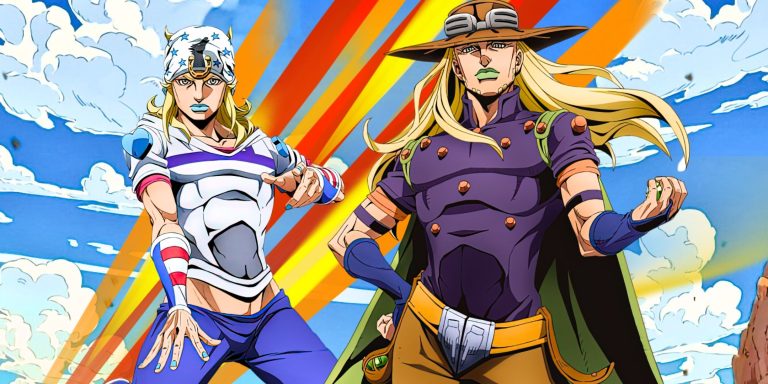
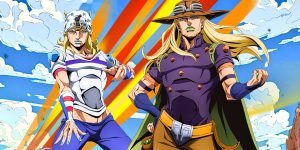
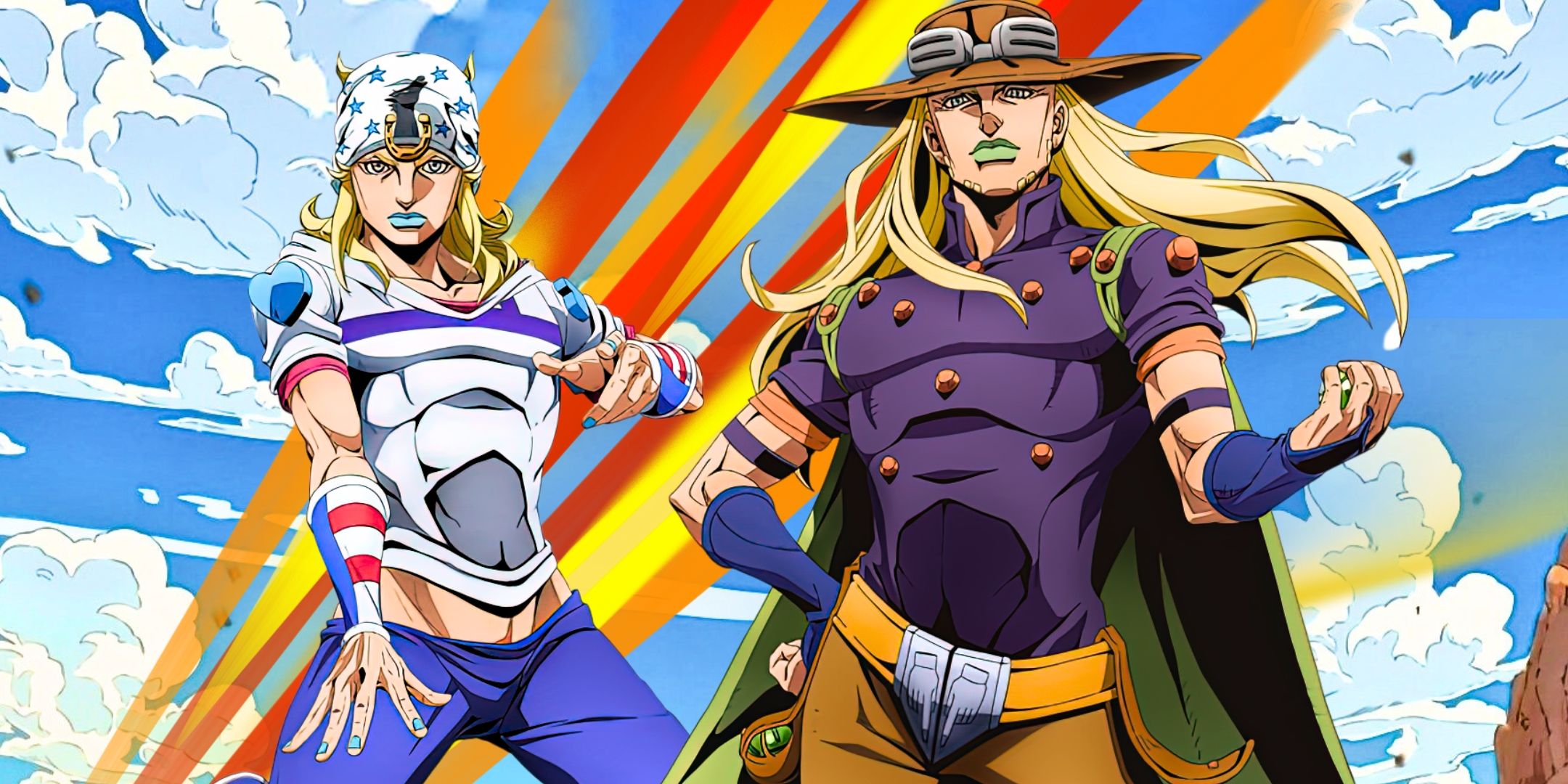
At the beating heart of this sprawling odyssey lies the relationship between Johnny Joestar and Gyro Zeppeli—widely considered the finest character pairing Araki has ever penned. Their dynamic completely dismantles the conventional shonen mentor-student archetype, replacing it with an emotionally vulnerable, co-dependent brotherhood forged in blood, sweat, and absurdity.
Johnny Joestar is unlike any JoJo who came before him. A former horse-racing prodigy who lost his career, family status, and the use of his legs due to his own youthful arrogance, Johnny is introduced not as a crusader of righteousness, but as a broken, cynical man trapped in a wheelchair. Araki emphasizes Johnny’s “dark determination”—a cold, ruthless gaze that flares whenever his survival or objective is threatened. Johnny is not fighting to save the world; he is fighting to bring his life from “negative to zero.”
Standing in sharp contrast is Gyro Zeppeli, a disgraced Neapolitan executioner armed with mystical, revolving steel spheres and a gold-toothed grin emblazoned with the words GO! GO! ZEPPELI. While Gyro initially appears to be the flamboyant comedic anchor of the journey—famous for his bizarre musical interludes about cheese—he carries the crushing weight of an impending child execution back in his homeland. Gyro seeks justice within an unjust legal system, while Johnny seeks personal salvation. As they traverse the untamed American frontier, their philosophical sparring and mutual dependence elevate the story into an agonizingly human drama.
The Equine Dilemma: David Production’s Technical Everest
If the narrative of Steel Ball Run is universally acclaimed, why hasn’t the anime adaptation materialized sooner? The answer lies in the fundamental physics of the medium: horses. Within the animation industry, quadrupeds—and horses in particular—are notoriously regarded as an animator’s worst nightmare.
The Anatomy of Motion
Unlike human characters, horses possess complex skeletal kinematics, delicate muscular tension, and rhythmic galloping gaits that are brutally difficult to capture convincingly in hand-drawn 2D. In Steel Ball Run, Araki doesn’t just draw horses standing idle; they are charging through mud, leaping over canyons, engaging in high-speed shootouts, and colliding in pack sprints across dynamic terrain. Multiplying that intricate motion across dozens of racers in every single episode represents a staggering logistical hurdle.
David Production, whose passionate and stylized adaptation of the franchise has defined the aesthetic standard since 2012, faces a monumental crossroads:
- Hand-Drawn Ambition: Pure 2D animation would deliver the raw, illustrative flair Araki’s manga is famous for, but the production pipeline would likely collapse under the immense time and labor demands.
- CGI Integration: Modern 3D CGI provides a scalable solution for complex horse rigging, but poor execution risks shattering the immersion of a fandom deeply attached to David Production’s traditional visual density.
- The Hybrid Pipeline: The most probable and promising route involves a sophisticated hybrid approach—similar to the seamless blending seen in modern high-budget action anime—utilizing rotoscoping or carefully shaded 3D horse models paired with expressive, hand-drawn character work.
Following the mixed community reception to the sporadic batch-release model of Stone Ocean on Netflix, David Production cannot afford a misstep. Steel Ball Run requires a bespoke production schedule, elevated budgets, and perhaps even dedicated co-production studios specializing in 3D mechanics to do the source material justice.
The Golden Ratio: Reimagining the Battle Paradigm
Beyond the technical obstacles of equine motion, Steel Ball Run introduces an entirely refreshed combat philosophy. While Stands remain a cornerstone of the tactical warfare, Araki intertwines them with The Spin—a supernatural martial art rooted in the mathematics of the Golden Rectangle and the Fibonacci sequence.
The Spin revitalizes the kinetic, physical roots of early JoJo Hamon battles while merging them seamlessly with bizarre metaphysical Stand manifestations, such as Johnny’s evolving Stand, Tusk. The visual representation of rotational energy—ripping through flesh, redirecting environmental forces, and warping spatial dimensions—demands a fresh artistic language. Sound design, a traditional strong point for David Production, will have to capture everything from the eerie hum of Gyro’s steel spheres to the tectonic rumbles of Funny Valentine’s reality-shifting abilities.
The Next Frontier Awaits
The cultural anticipation surrounding Steel Ball Run has crossed the threshold from eager wish-listing to an industry-defining moment. It is the story that catapulted Hirohiko Araki into museum galleries and cemented his status as an immortal titan of comic literature. David Production stands at the base of their tallest mountain yet; conquer it, and they will produce an adaptation hailed as an all-time classic of the anime medium.
The horses are at the starting gate, the spin is winding up, and the Saint’s Corpse is waiting to be assembled. As we hold our collective breath for the official announcement, the anime world watches David Production, waiting for the green flag to drop.
What do you think is the biggest hurdle for David Production in adapting Part 7: the horse physics, the pacing, or finding the right balance of CGI? Join the discussion in the comments below!