

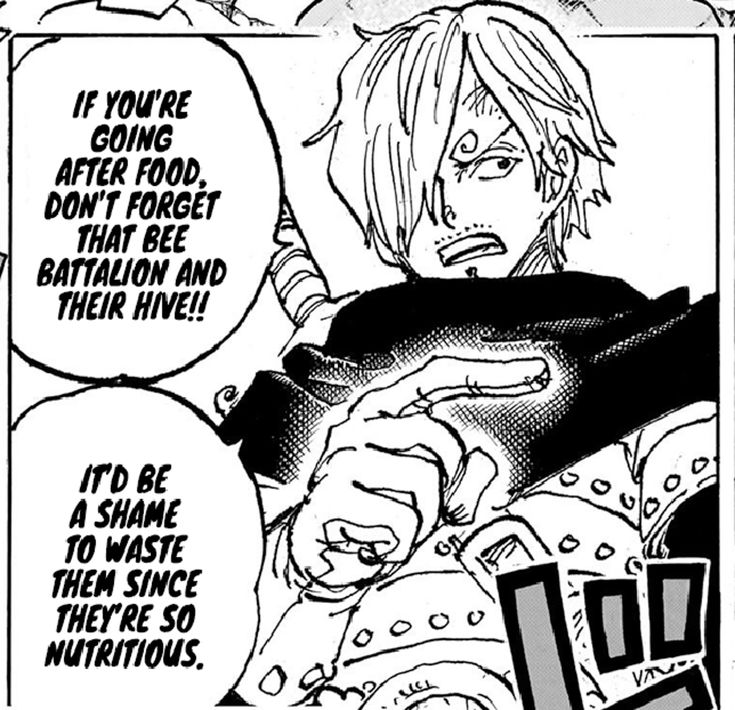
One Piece Chapter 1195, titled “Weakness,” just dropped one of the most explosive chapters in the Elbaf Arc so far. While fans are losing their minds over Zoro overpowering Saint Sommers with Conqueror’s Haki infusion, there is something far more groundbreaking lurking beneath the surface of this chapter. Sanji’s so-called “weakness” is not what you think it is, and Nefertari Lili’s 800-year-old secret could be the key that unlocks the entire mystery of the Void Century.
Here is a theory that connects the dots Eiichiro Oda has been scattering across hundreds of chapters. Buckle up, because this one changes everything.
Sanji’s “Weakness” Is Actually the Key to Conqueror’s Haki
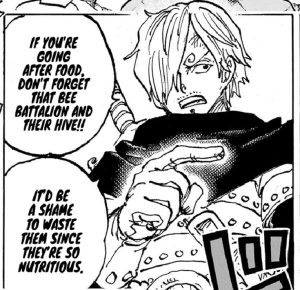
Chapter 1195 picks up with the brutal clash between Sanji and Saint Killingham. Sanji unleashes devastating kicks that shatter the Holy Knight’s defenses, yet Killingham keeps regenerating. The chapter’s title, “Weakness,” seemingly refers to Sanji’s well-known vulnerability around women. But there is a deeper layer here that most fans are missing.
The critical moment comes when the chapter flashes back to Scopper Gaban, the legendary third-in-command of the Roger Pirates. Gaban, who has been observing the Straw Hats on Elbaf, sees through Sanji’s personality and identifies his true weakness. But here is the twist: in One Piece lore, the greatest Conqueror’s Haki users are those who overcome their deepest personal flaws.
Luffy conquered his recklessness. Zoro conquered his pride against Mihawk. Now Oda is setting up Sanji to conquer his chivalric obsession, the very trait that nearly got him killed against Kalifa in Enies Lobby and Black Maria in Wano. When Sanji finally breaks through this psychological barrier against Killingham, he will not just win the fight. He will awaken Conqueror’s Haki.
The Ivankov Connection: Kamabakka Kingdom Was Training, Not Punishment
This theory gets even more compelling when you consider Emporio Ivankov’s role. During the timeskip, Sanji spent two years in the Kamabakka Kingdom, running from the Okama. Fans have always treated this as comic relief, but Chapter 1195 drops a subtle reference to Ivankov that reframes everything.
Ivankov, a known user of powerful Haki and one of the Revolutionary Army’s top commanders, did not just chase Sanji around for fun. The Okama training was designed to force Sanji to confront his deepest weakness: his inability to fight or even function around femininity. Ivankov knew that Sanji’s potential was being held back by this psychological block.
Think about it. Ivankov served on the same ship as Dragon, who almost certainly possesses Conqueror’s Haki. Ivankov would recognize the latent potential in Sanji. The Kamabakka training was never about the Attack Cuisine recipes alone. It was about breaking Sanji’s mental chains so that one day, when the stakes were highest, he could unleash his true willpower.
Nefertari Lili’s 800-Year Secret: The Hidden Room Inside Yggdrasil
Now here is where Chapter 1195 takes a wild turn. The chapter reveals that Nefertari Lili, the ancient queen of Alabasta who lived during the Void Century, hid something inside a tree branch of Yggdrasil, the World Tree on Elbaf. This is separate from the location of the Nidhogg Devil Fruit.
This is absolutely massive. Lili chose to store her secret item in a completely different location from the Nidhogg fruit, which means whatever she hid is potentially even more dangerous or valuable. A secret room inside Yggdrasil’s branch, untouched for 800 years, holding something that Lili specifically wanted to keep away from the World Government.
What could it be? The most compelling answer ties back to the Poneglyphs. We know Lili was responsible for scattering the Poneglyphs across the world instead of destroying them as the Twenty Kings demanded. But what if she kept something for herself? A final Poneglyph, a personal record, or even worse: the key to reading the Poneglyphs without needing the Voice of All Things.
The Lili-Imu Connection: Why This Changes Everything About the Final War
Nerona Imu and Nefertari Lili’s relationship is one of the biggest mysteries in One Piece. We know Imu possesses the Omen power, which he used to battle Prince Loki on Elbaf, generating weapons and increasing his size to overpower the giant. Imu claimed this power gave mankind their domination.
But if Lili hid something inside Yggdrasil 800 years ago, it means she was on Elbaf during or shortly after the Void Century. This raises an explosive question: did Lili and Imu both visit Elbaf? Was Elbaf a battleground during the ancient war between the Great Kingdom and the Twenty Kings?
The evidence is mounting. Loki’s knowledge of ancient history, the presence of the Nidhogg Devil Fruit on Elbaf, and now Lili’s hidden room all suggest that Elbaf was far more important during the Void Century than anyone realized. The giants may have been allies of Joy Boy himself, and Lili chose Elbaf specifically because she trusted the giants to guard her secret.
Brook’s Past and the Musical Connection to Lili
Chapter 1195 also provides flashbacks to Brook’s past, and this is where Oda’s genius storytelling connects seemingly unrelated threads. Brook, the musician of the Straw Hat crew, has been establishing his primary goal in Elbaf as rescuing Shuri from Imu’s clutches.
But what if Brook’s connection runs deeper? The Rumbar Pirates sailed the Grand Line decades ago, and Brook spent 50 years alone in the Florian Triangle. During that time, he may have encountered remnants of Lili’s era, musical records or songs that encode hidden messages about the Void Century. After all, Binks’ Sake is already confirmed to be an ancient song with deeper meaning.
If Lili’s hidden item inside Yggdrasil turns out to be a musical score or a sound-based Poneglyph, Brook might be the only person alive who can decode it. This would give the Straw Hat crew’s musician his defining moment in the final saga.
Sanji vs Killingham: The Battle That Will Shake Elbaf
Coming back to the immediate conflict, Sanji’s fight against Saint Killingham is reaching a critical point. Killingham’s regeneration ability makes him nearly impossible to defeat through brute force alone. Sanji has been ripping the Holy Knight apart with his enhanced kicks, but the enemy keeps coming back.
This is exactly the kind of scenario that would force a Haki breakthrough. When physical power is not enough, willpower must take over. Zoro just demonstrated this against Sommers by mastering Conqueror’s Haki infusion in real-time combat. Oda is clearly paralleling the two fights to build toward Sanji’s equivalent power-up.
The theory predicts that Sanji will not just defeat Killingham. He will do so by unleashing a Conqueror’s Haki-infused Diable Jambe, a technique so powerful that it burns through Killingham’s regeneration at the spiritual level. This would establish Sanji as one of the supreme fighters of the New World, right alongside Zoro and Luffy.
What This Means for the Elbaf Arc’s Endgame
If these theories prove correct, we are looking at several major developments converging on Elbaf:
- Sanji awakens Conqueror’s Haki, completing the Monster Trio’s supreme power set
- Lili’s hidden room inside Yggdrasil reveals critical Void Century information
- Brook decodes whatever Lili left behind, giving him a pivotal role
- Imu’s history with Elbaf is exposed, revealing why the World Government fears the giants
- Scopper Gaban’s mentorship plays a key role in unlocking the crew’s latent abilities
Oda has confirmed that the manga is on hiatus starting October 4 but will return soon. When it does, Chapter 1196 and beyond could deliver some of the most game-changing revelations in One Piece history.
What Do You Think?
Will Sanji awaken Conqueror’s Haki against Killingham? What did Nefertari Lili hide inside Yggdrasil’s branch? Could Brook be the key to unlocking Lili’s 800-year secret? Drop your wildest theories in the comments below!
For more One Piece analysis, check out our theories on Saint Sommers and the Holy Knights’ Sun God Heritage, our deep dive into the Void Century War Relics Beneath Elbaf, and our breakdown of Zoro’s Black Blade Awakening.