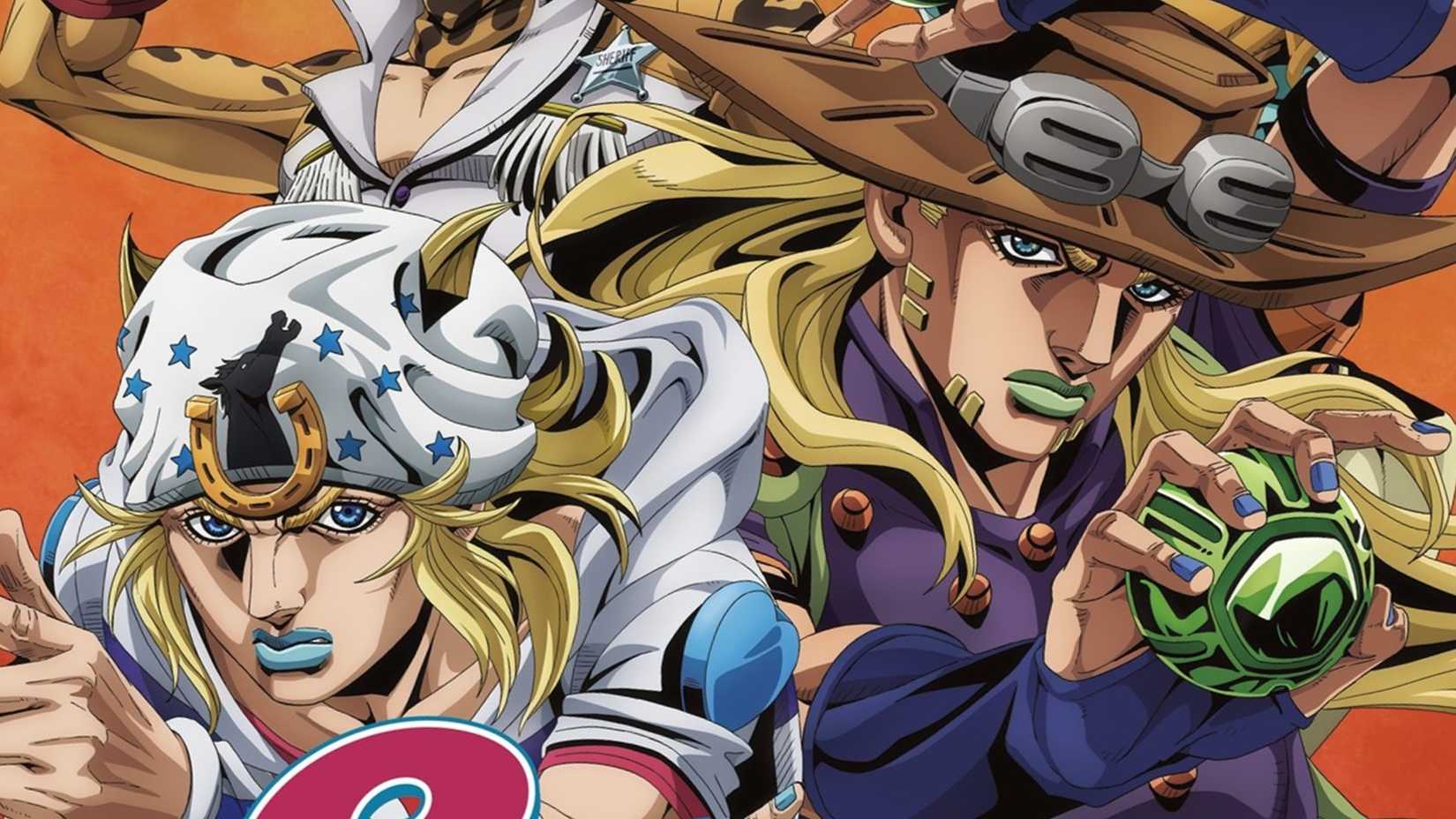
Ever since the melancholic final chords of Stone Ocean faded into the rain, bringing the multi-generational battle against Dio Brando’s curse to an emotional, universe-resetting climax, the global anime community has held a singular, collective breath. For casual observers, the question was simply whether David Production would keep the Joestar train rolling. But for die-hard franchise acolytes, the stakes are exponentially higher. The target isn’t just another installment; it is Steel Ball Run—Hirohiko Araki’s consensus magnum opus, an apocalyptic collision of historical Americana, hyper-tactical supernatural combat, and peerless character deconstruction.
Whispers of pre-production, speculative studio schedules, and subtle teases from industry insiders have turned the prospect of a Part 7 anime into an internet-wide event. Ranked perennially among the greatest manga ever written on aggregator sites like MyAnimeList, Steel Ball Run stands as the zenith of Araki’s craft. Yet adapting it represents the most perilous creative tightrope David Production has ever walked: a sweeping, continent-spanning epic that demands both unparalleled narrative nuance and a borderline impossible visual standard.
A New Universe, A Higher Stake: The 1890 Trans-Continental Race
To understand the ravenous buzz surrounding Steel Ball Run, one must understand how radically it redefined the DNA of JoJo’s Bizarre Adventure. Serialized initially in Weekly Shonen Jump before migrating to the monthly, mature pastures of Ultra Jump in 2005, Part 7 allowed Araki to sever the creative shackles of traditional teenage demographic constraints. The shift from weekly sprints to monthly marathons gifted the mangaka with expansive page space, cinematic panel layouts, and room for profound psychological decay.
Set in 1890, the narrative establishes an entirely separate continuity from the Phantom Blood–Stone Ocean saga. The premise is deceivingly straightforward: thousands of eccentric racers assemble on the beaches of San Diego to race cross-country to New York City for a staggering fifty-million-dollar purse. However, this grit-and-leather endurance test is merely the smoke screen for a cosmic conspiracy. Entangled within the race’s grueling checkpoints lies the quest to assemble the mummified relics of the “Saint’s Corpse”—sacred anatomical artifacts that grant unfathomable Stand capabilities and geopolitical dominion to whoever unites them.
Araki blends Sergio Leone’s widescreen cinematic grit with the existential dread of cosmic horror. It is a historical sandbox populated by eccentric outlaws, biomechanical dinosaurs, alternate-universe assassins, and the sitting President of the United States, Funny Valentine. For a modern anime adaptation, bringing this expansive, dust-choked frontier to life means ditching the urban backdrops of Morioh or Cairo in favor of monumental, wide-angle cinematic scale.
Dynamic Duos and Damaged Souls: Johnny Joestar and Gyro Zeppeli
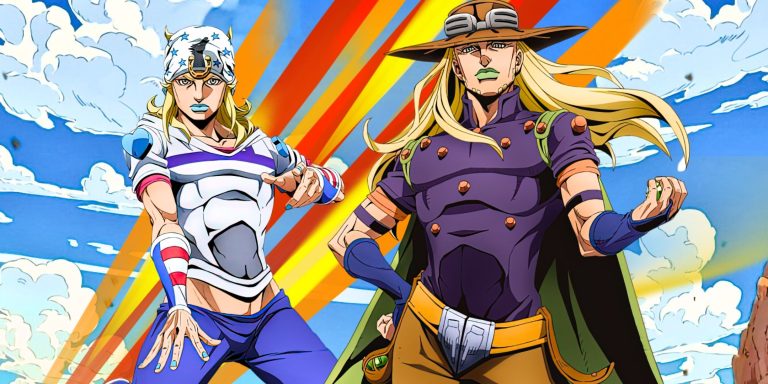
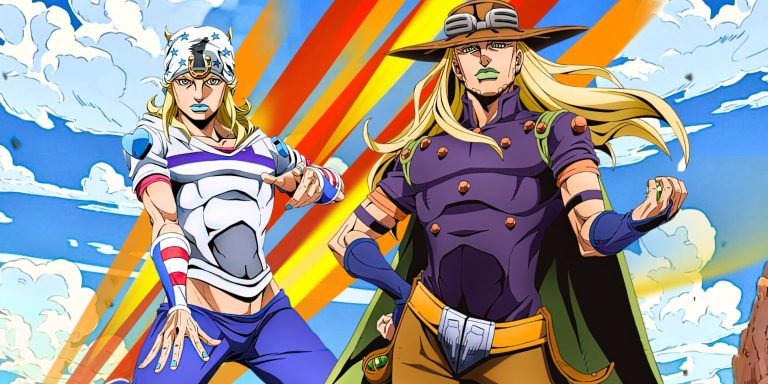
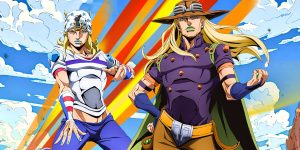
While the cross-country backdrop provides the spectacle, the emotional gravitational pull of Steel Ball Run rests squarely on the shoulders of its twin protagonists. The dynamic between Johnny Joestar and Gyro Zeppeli represents Araki’s most sophisticated character writing to date, eschewing the clean-cut heroics of Jonathan or the effortless swagger of Jotaro.
Johnny’s Search for “Negative to Zero”
In Johnny Joestar, audiences will meet perhaps the most morally compromised, vulnerable JoJo in history. A former equestrian prodigy whose arrogance resulted in a gunshot wound that left him paraplegic, Johnny begins the story not as an aspiring hero, but as an embittered, hollow wreck. His Stand, Tusk, does not emerge fully formed as an invincible brawler; it evolves through raw physical suffering and spiritual calibration across multiple “Acts.” Johnny is not racing to save the world; he is a desperate man with “dark determination” in his eyes, fighting simply to claw his way out of spiritual despair—to move his life from a negative number back to zero.
Gyro’s Steel Balls and the Enigma of the Spin
Counterbalancing Johnny’s brooding desperation is Gyro Zeppeli: a disgraced royal executioner from the Kingdom of Naples armed with eccentric charisma, gold-capped teeth, and a tragic, private altruism. Rather than leaning purely on Stand power, Gyro brings the Spin—a profound martial science rooted in the mathematical perfection of the Golden Ratio. By channeling kinetic energy through spinning steel spheres, Gyro manipulates anatomy, terrain, and even dimensional barriers.
The brotherly camaraderie that blossoms between Johnny and Gyro forms the beating heart of the narrative. From absurd campfire banter about mozzarella songs to gut-wrenching exchanges about sacrifice in the unforgiving desert, translating their chemistry to screen demands voice acting of extraordinary emotional dexterity. Fans are already obsessing over potential casting choices, knowing full well that whoever steps into Gyro’s eccentric boots must carry the emotional burden of the series’ most tragic crescendos.
The Technical Everest: David Production and the Equestrian Animation Challenge
If the narrative of Part 7 is ready-made for legendary status, its logistical reality is an animator’s waking nightmare. The elephant in the room—or rather, the horse—is the primary reason the production has taken so long to manifest. In the animation industry, horses are notoriously regarded as the single most difficult organic subject to animate. Their complex quadrupedal skeletal dynamics, flexing muscle mass, and constant shift of weight require immense technical discipline.
In Steel Ball Run, horses are not incidental set pieces; they are perpetual, frantic co-stars. Races feature dozens of steeds running abreast through rivers, blizzards, and rocky canyons, frequently mid-combat with physics-bending Stands. For David Production, who built their reputation on stylistic hand-drawn bombast, hyper-saturated color shifts, and meticulous kinetic choreography, the challenge is unprecedented.
Industry insiders widely speculate that the studio must deploy a sophisticated hybrid pipeline. While hero shots and dramatic facial close-ups will preserve Araki’s hyper-detailed, Michelangelo-esque line work, the grueling, extended gallops across the American midwest will almost certainly rely on cutting-edge 3D CGI cel-shading. The studio proved they could blend 3D and 2D with the vehicles in Stone Ocean and the infernal firefights of Fire Force, but Part 7 will necessitate the technical finesse of studios like Orange (Trigun Stampede) or MAPPA’s complex crowd simulations. Achieving this visual balance without alienating a fiercely protective fanbase is the technical mountain David Pro must conquer.
The Cult of Part 7: Viral Culture and Unprecedented Expectations
The anticipation surrounding the Steel Ball Run anime is not standard-issue seasonal hype; it is a full-blown cultural crusade. Long before an official greenlight was even announced, the series fostered a colossal digital footprint. Independent creators have spent years drafting elaborate fan-animated trailers, orchestral covers of nonexistent musical themes, and hyper-stylized mock openings that rack up millions of views on YouTube and TikTok.
Memes like Gyro’s obsession with “Pizza Mozzarella”, Johnny’s ruthless tactical coldness, and the grand political philosophy of Funny Valentine’s “First Napkin” speech circulate relentlessly across the internet. The expectations are dizzyingly high. Viewers don’t just want an adaptation; they expect an era-defining prestige anime that rivals the visual fidelity of Demon Slayer and the thematic resonance of Vinland Saga.
Crossing the Finish Line: What Comes Next?
The adaptation of Steel Ball Run represents a historic crossroads for modern anime. It marks the transition of Hirohiko Araki’s life work from a vibrant cult property into high-art, prestige television. If David Production can conquer the equine animation barrier and honor the harrowing, bittersweet journey of Johnny Joestar and Gyro Zeppeli, Part 7 will not merely be the anime of its season—it will redefine the medium’s action-drama landscape for the next decade.
The race of the century is looming on the horizon. Are you prepared to embrace the Golden Spin, or do you think the animation hurdles are too high for David Production to clear? Jump down into the comments below and let us know your dream voice cast and biggest expectations for the adaptation!