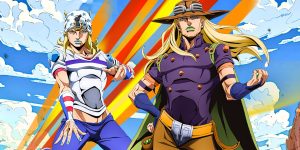
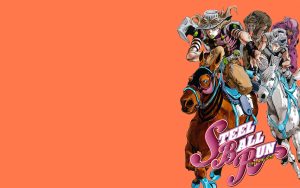
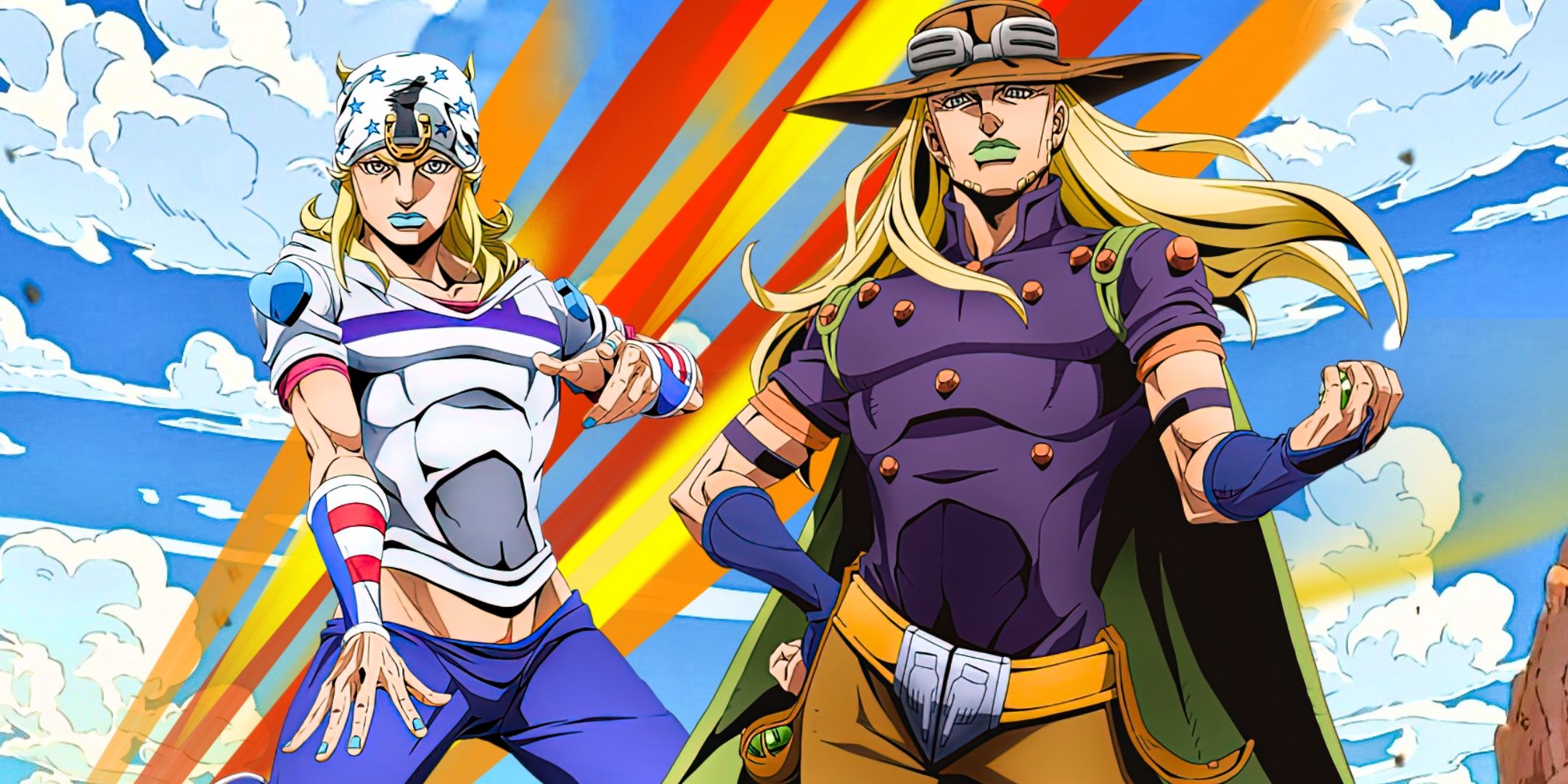
Within the pantheon of sequential art, few transitions are as mythic—or as intimidating—as the leap Hirohiko Araki took when he closed the book on the original JoJo continuity and gazed westward. Sitting comfortably at the upper echelon of critical acclaim, often neck-and-neck with Kentaro Miura’s Berserk on global manga rankings, JoJo’s Bizarre Adventure: Steel Ball Run is universally heralded as Araki’s magnum opus. Yet, for nearly a decade, as David Production meticulously adapted Parts 1 through 6, a quiet terror hung over the fandom: Can Steel Ball Run actually be animated? Following the climactic universe reset of Stone Ocean, the anime industry stands on the precipice of its most ambitious undertaking yet. The whispers have escalated into a deafening roar, and the journey of Johnny Joestar and Gyro Zeppeli across a brutal 1890s American landscape represents the ultimate final frontier for modern television animation.
The Equine Enigma: David Production’s Formidable Technical Hurdle
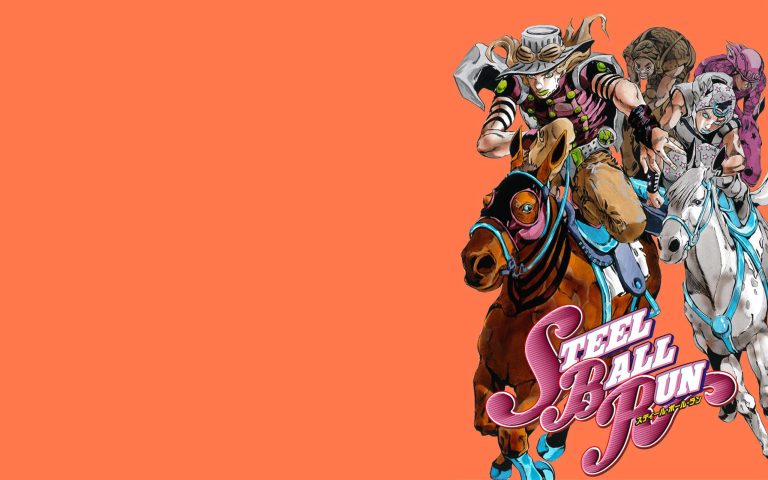
To understand why a Steel Ball Run anime hasn’t manifested overnight, one must look past Stand designs and supernatural abilities, directly into the stable. In the animation industry, horses are notorious production killers. The complex anatomical mechanics of a four-legged gallop—requiring distinct muscular contraction, skeletal shifting, shifting perspective, and fluid weight distribution—demand extraordinary time, budget, and draftsmanship. Multiply that single equine nightmare by several dozen, throw them into a grueling, high-speed, trans-continental race across open prairies, jagged canyons, and blizzard-swept plains, and you have an animator’s logistical hellscape.
David Production, the studio that turned Araki’s eccentric color shifts and sound-effect typography into iconic television over the past twelve years, faces its steepest technical ascent. Industry insiders and fans alike widely expect a hybridized production methodology. While purists may recoil at the mention of three-dimensional assets, a blended approach—marrying dynamic 2D character close-ups and key framing with high-end, cel-shaded 3D horse rigs for sweeping wide shots—is the only realistic path forward. We have seen studios like MAPPA and Wit test these waters in Attack on Titan and Vinland Saga, but Steel Ball Run demands that the horses themselves possess as much character and kinetic presence as their riders. The visual fidelity of the titular race will either cement David Production as industry titans or expose the limits of seasonal anime budgets.
A Paradigm Shift: The Reinvention of Hirohiko Araki’s Universe
Contextualizing Steel Ball Run requires recognizing its historical place in Araki’s career. Originally serialized in Weekly Shonen Jump before migrating to the monthly seinen magazine Ultra Jump in 2005, the structural change fundamentally liberated Araki’s storytelling. The frantic, week-to-week pacing of shonen mandates gave way to long, atmospheric vistas, intricate psychological games of cat-and-mouse, and a dramatically darker, more mature narrative tone.
This was no longer just a generational feud between the Joestars and the vampiric shadow of Dio Brando. By resetting the clock to an alternate 1890, Araki indulged in a sprawling, macabre reimagining of Americana. The trans-continental race organized by eccentric promoter Steven Steel isn’t just an athletic spectacle; it is a thinly veiled geopolitical expedition to excavate the mummified relics of a supernatural Saint. The shift allowed Araki to experiment with historical fiction, existential philosophy, and the stark moral ambiguity of Manifest Destiny, crafting a narrative that feels less like serialized manga and more like an epic, revisionist Western novel.
Johnny Joestar, Gyro Zeppeli, and the Tragic Hero Paradigm
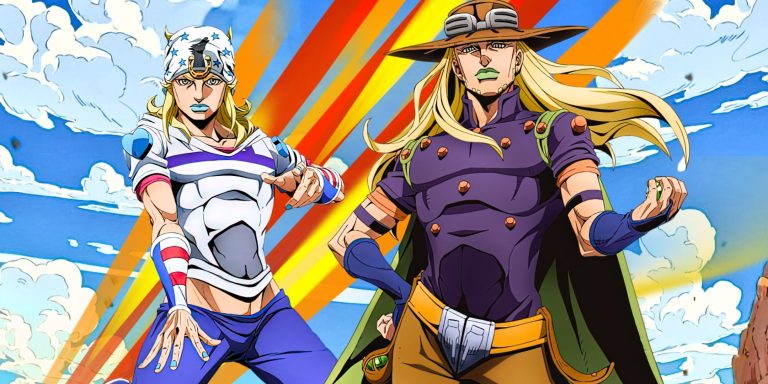
At the beating, bleeding heart of Part 7 is the dynamic between its two leads—a masterclass in character foil that completely subverts classic JoJo archetypes. Johnny Joestar is distinctly non-heroic. A former horse-racing prodigy who lost the use of his legs due to his own hubris, Johnny begins the story not with a quest to save the world, but with bitter, cynical survivalism. He is driven by what Araki frequently terms “dark determination”—an unblinking, borderline-sociopathic resolve to regain what he lost, regardless of who stands in his way.
Enter Gyro Zeppeli: flamboyant, grill-toothed, crackling with irreverent humor, yet burdened by an unbearable legacy. As a disgraced executioner for the Kingdom of Naples traveling to win the race and secure amnesty for an innocent child, Gyro becomes the moral and spiritual compass Johnny desperately needs. Their evolving camaraderie—forged over campfire banter, absurd musical riffs about mozzarella, and harrowing brushes with death—is arguably the most authentic, deeply felt relationship Araki has ever penned. It is a story of rehabilitation, physical and psychological, as Johnny learns that spiritual grace is far more elusive than the simple ability to stand upright.
From Hamon and Stands to the Sacred Geometry of the Spin
Nowhere is Araki’s creative genius more evident than in his reimagining of the series’ power systems. While Stands gradually weave their way into the narrative—beginning with Johnny’s tragic, parasitic Tusk—Steel Ball Run roots its combat mechanics in The Spin. An ancient, closely guarded martial art practiced by the Zeppeli family, the Spin weaponizes the Golden Ratio (the Fibonacci sequence) through the rotation of precision-weighted steel spheres.
The Spin is a profound evolution of Part 1 and 2’s Hamon, grounding supernatural power in physical balance, sacred geometry, and environmental resonance. Watching David Production translate the kinetic, swirling distortions of the Golden Rectangle from static, ink-heavy panels to vibrant, fluid motion is perhaps the most tantalizing prospect for long-time readers. Tusk’s terrifying multi-stage evolution, culminating in the reality-tearing, dimensional breach of ACT 4, promises some of the most psychedelic, conceptually jaw-dropping sequences in modern anime history.
The Moral Labyrinth of the Saint’s Corpse and Funny Valentine
No discussion of Steel Ball Run is complete without its primary antagonist, the 23rd President of the United States, Funny Valentine. Armed with the multiverse-hopping Stand Dirty Deeds Done Dirt Cheap (D4C), Valentine elevates the stakes beyond the cartoonish villainy of traditional antagonists. His motivations are strictly patriotic; he seeks the scattered pieces of the Holy Corpse not for petty megalomania, but to ensure America remains an untouchable geopolitical superpower at the expense of the rest of the world.
Valentine’s chilling monologue about “taking the first napkin” interrogates power dynamics, societal consensus, and nationalist fervor in ways that feel increasingly prophetic. The conflict between Johnny’s raw, selfish pursuit of self-actualization and Valentine’s selfless, yet horrifyingly utilitarian vision strips away any comforting binary of “good versus evil.” It is a profound, high-stakes ideological clash that demands an adaptation with emotional weight and cinematic gravity.
The Road to the Starting Line
The runway to the inevitable Steel Ball Run anime announcement remains tense. The fragmented, three-batch Netflix release model of Stone Ocean fractured community engagement and drew considerable ire from fans who missed the weekly cultural footprint of previous adaptations. For Part 7 to fulfill its immense potential, David Production and their production committee must honor the scale of the source material—ideally returning to a weekly broadcast format that allows the arduous, checkpoint-by-checkpoint tension of the race to breathe.
Adapting Steel Ball Run is not just about making another hit season of JoJo; it is about mounting a monument. It is the Everest of modern manga adaptations—a technical minefield wrapped in a literary, psychological, and supernatural triumph. When the starter’s pistol finally sounds and David Production sets those horses loose across the digital canvas, anime will never be quite the same.
What are your biggest hopes and fears for David Production’s adaptation of Steel Ball Run? How should they tackle the animation of the race? Drop your thoughts, dream voice casts, and wild theories in the comments below, and keep your browsers locked to Wibux.com for breaking updates on the next era of JoJo.