

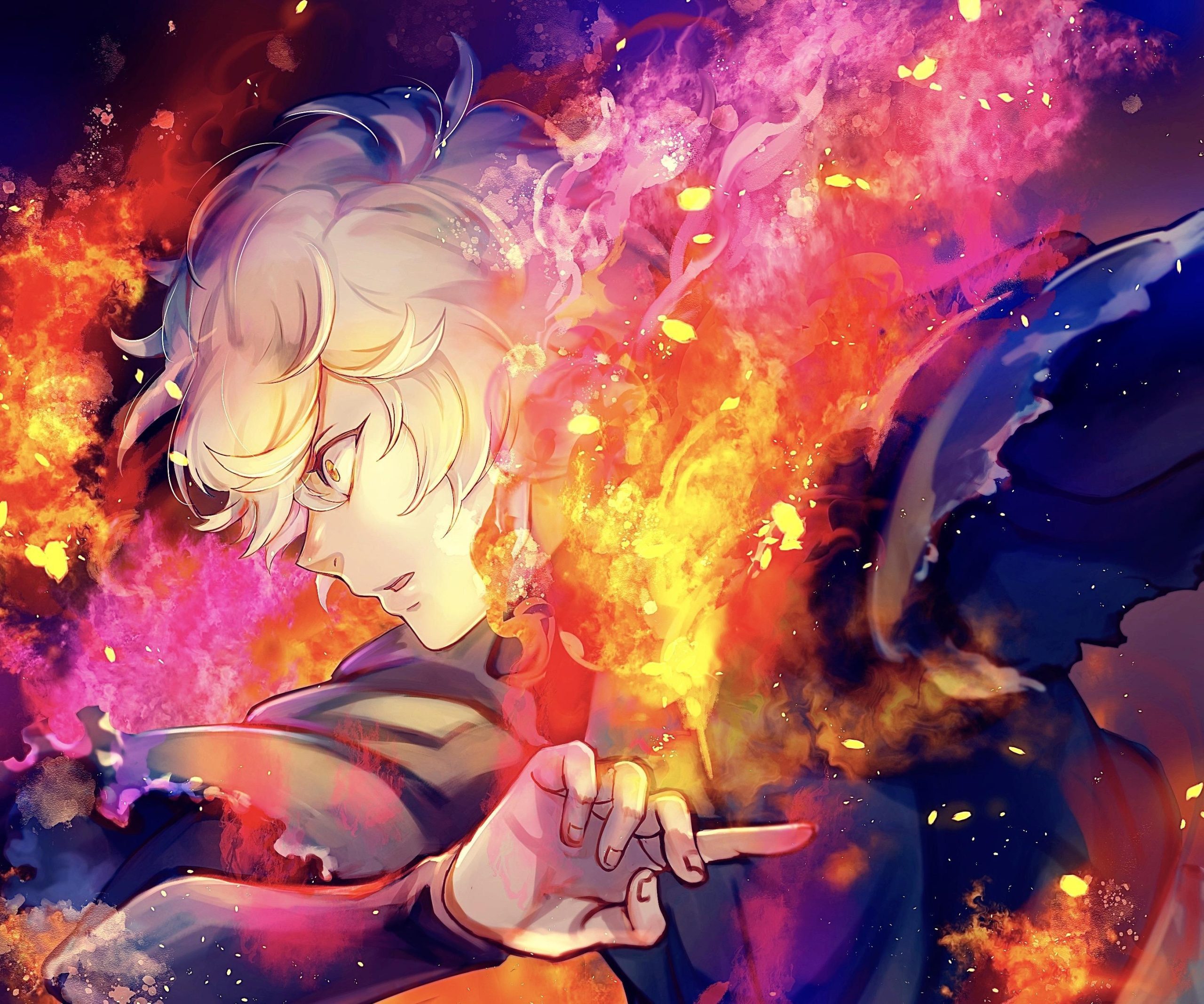
When the inaugural season of Hell’s Paradise: Jigokuraku concluded, it left the anime community suspended over a cliff of psychological dread and transcendent body horror. Standing shoulder-to-shoulder with its fellow MAPPA-animated siblings in the modern “Dark Trio”—Jujutsu Kaisen and Chainsaw Man—the adaptation of Yuji Kaku’s acclaimed manga captured lightning in a bottle. Yet, the preliminary skirmishes on the shores of Kotaku were merely a baptism of blood. As Hell’s Paradise Season 2 barrels toward its broadcast, the narrative scope contracts inward, zeroing in on the island’s beating, rotten core: Shinsa, the palace nestled inside the heavenly city of Horai, where the divine illusions rot away to reveal industrial-scale slaughter.
For Gabimaru the Hollow and Yamada Asaemon Sagiri, the mission has evolved beyond the feudal decree of securing the Elixir of Life for a mad Shogun. Survival now demands a direct confrontation with the Tensen—the seven immortal, gender-shifting rulers whose mastery over the life-force known as Tao elevates them to living gods. Season 2 promises not just a continuation of lethal martial arts choreography, but a profound philosophical clash between mortal impermanence and agonizing eternity.
The Breach into Shinsa: From Survival Horror to Imperial Infiltration
The first season of Hell’s Paradise excelled at environmental dread. The uncharted island was an open-air charnel house decorated in synthetic lotus blooms, misshapen Doushin, and grotesque Soshin abominations. However, the descent into Shinsa completely alters the series’ dramatic geometry. The chaotic foliage gives way to symmetrical, imposing Daoist-inspired architecture, transforming the setting from a wilderness survival scenario into a high-stakes, claustrophobic palace siege.
Shinsa is not merely a stronghold; it is a bio-spiritual laboratory. It is here that the immortal rulers process human bodies into Tan—the pseudo-elixir distilled from the liquified flesh and harvested souls of shipwrecked samurai, criminals, and the indigenous Hoko tribe. For Gabimaru, crossing this threshold strips away any lingering delusion that the Elixir of Life is a benevolent miracle. The stakes are laid bare: retrieve this macabre trophy to earn a pardon and return to his wife, Yui, or be converted into fertilizer for the Tensen’s millennia-long quest for true godhood.
Mastering Tao: The Fatal Calculus of Divine Warfare
If Season 1 was defined by raw physical supremacy—Gabimaru’s lethal ninjutsu clashing against monstrous fauna—Season 2 must reckon with the intricate metaphysical battle system that defines Yuji Kaku’s magnum opus: Tao. Confronting a Tensen without an understanding of Tao is akin to trying to cut smoke with a dull blade; their flesh regenerates instantaneously, their strikes ignore conventional armor, and their spiritual pressure alone can trigger spontaneous floral mutations in the human body.
The Elemental Cycle and the Price of Sight
The tactical crux of the upcoming clashes relies on the Wu Xing (the five elemental phases: Wood, Fire, Earth, Metal, and Water). Gabimaru, Sagiri, and the fractured alliance of death-row convicts and executioners must discern their innate elements and align them inversely against their divine oppressors. Fire overcomes Metal; Water overcomes Fire. Yet, the narrative refuses to treat Tao as a simple power-up. In true Jigokuraku fashion, the price of weaponizing one’s life force is catastrophic. Overusing Tao leads inevitably to arborification—the petrifying transformation into a wooden, flower-sprouting husk. Every strike Gabimaru unleashes brings him closer to spiritual blindness or physical ruin.
The Convergence of Gabimaru and Sagiri’s Dualities
Nowhere is this philosophical system more compelling than in the dual character arcs of Gabimaru and Sagiri. Tao operates on the reconciliation of opposites: strength through weakness, stillness through motion, yin through yang. Gabimaru has spent his life conditioned as an emotionless killing tool, desperately trying to repress the warmth that Yui sparked within him. Conversely, Sagiri has wrestled with the rigid gender expectations of the Yamada clan, constantly torn between her innate compassion and her brutal duty as a headsman.
To master Tao and stand against the Tensen in Shinsa, both characters must shatter their psychological compartmentalization. Sagiri must accept that her hesitation is not weakness, but the very seed of perception, while Gabimaru must acknowledge that his attachment to his humanity is the only shield keeping his inner demon from burning him alive. Their dynamic is the emotional anchor holding the narrative steady against the surreal horrors of Horai.
The Immortals’ Despair: Decoding the Tensen
A narrative is only as compelling as the shadows cast by its antagonists, and the Tensen stand among the most complex villain pantheons in modern dark fantasy. Led by Rien, the first and most calculating of the immortal siblings, the Tensen are not simply cackling tyrants. They are melancholic, emotionally stunted experiments created from puppet-master alchemical rituals gone awry, trapped in a thousand-year cycle of self-righteous perfection and profound boredom.
As the raid on Shinsa escalates, Season 2 will bring terrifying encounters against beings like Mu Dan, Ran, and Zhu Jin. What makes the Tensen uniquely disturbing is their ability to switch between Yin and Yang states, shifting sexes and combat doctrines on a whim to neutralize human tactics. Their martial arts are liquid, seamless, and horrifyingly detached. They do not view the Asaemon executioners or the Iwagakure shinobi as threats; they view them as weeds overrunning a meticulously sculpted garden. Piercing that arrogance will require the surviving human squads to push beyond mortal limits, giving birth to some of the most emotionally exhausting, pyrrhic victories ever written in the shonen genre.
MAPPA’s Visual Alchemy: Rendering Psychedelic Carnage
When analyzing the transition from page to screen, immense pressure rests on studio MAPPA. Season 1, directed by Kaori Makita, was lauded for its striking color scripting—juxtaposing pastel cherry blossoms and nauseatingly vibrant florid hues with viscous, ink-black arterial spray. In Shinsa, the visual demands multiply exponentially.
The inner sanctums require an aesthetic blending of traditional Taoist temple design with hallucinatory body horror. When the Tensen undergo their Kishikai transformations—blooming into colossal, bio-mechanical, multi-limbed floral deities—the animation must convey both breathtaking majesty and sickening vertigo. Leaked production tidbits and manga reader expectations suggest that MAPPA is dedicating heavy resources to the kinetic, multi-combatant skirmishes. If the studio can maintain anatomical fluidity amidst the blinding particle effects of Tao manipulation, Season 2 has the raw material to challenge the industry’s highest benchmarks for seasonal action animation.
The Gathering Storm: Shugen and the Secondary Incursion
Beyond the immediate peril within Shinsa, Season 2 carries a ticking clock that intensifies the pressure on Gabimaru and Sagiri: the looming arrival of the second expedition. Led by Yamada Asaemon Shugen—a chillingly upright fanatic whose loyalty to the Shogunate is matched only by his peerless swordsmanship—this reinforcement fleet has no intention of negotiating with convicts or forgiving Asaemon who have allied with criminals.
This structural genius turns the assault on Shinsa into a three-way meat grinder. The protagonists must assassinate the immortal rulers of the island before Shugen’s landing party arrives to purge every living breathing soul, guilty or innocent, in the name of divine imperial righteousness. The pacing promises to be relentless, leaving no room for filler or narrative respite.
The Final Verdict: An Epochal Clash of Flesh and Spirit
Hell’s Paradise Season 2 is not merely setting the stage for bigger explosions or flashier swordplay. It is a razor-sharp, thematic exploration of human fragility overcoming static immortality. In the heart of Shinsa, Gabimaru’s bloody journey ceases to be an assassination mission and becomes a desperate philosophical declaration: that a life lived briefly, with love, pain, and inevitable death, is infinitely more divine than an eternity of stagnant, unfeeling power.
As we edge closer to the premiere, the hype is palpable. The stage is swept, the Tao is coalescing, and the gates of the inner sanctum are finally swinging open.
Are you siding with the desperate survivalists of the criminal-executioner vanguard, or do you believe Rien’s machinations are justified? Drop your theories, favorite Tensen matchups, and animation expectations in the comments below, and stay tuned to Wibux.com for exclusive episode reviews and deep-dive lore guides!