

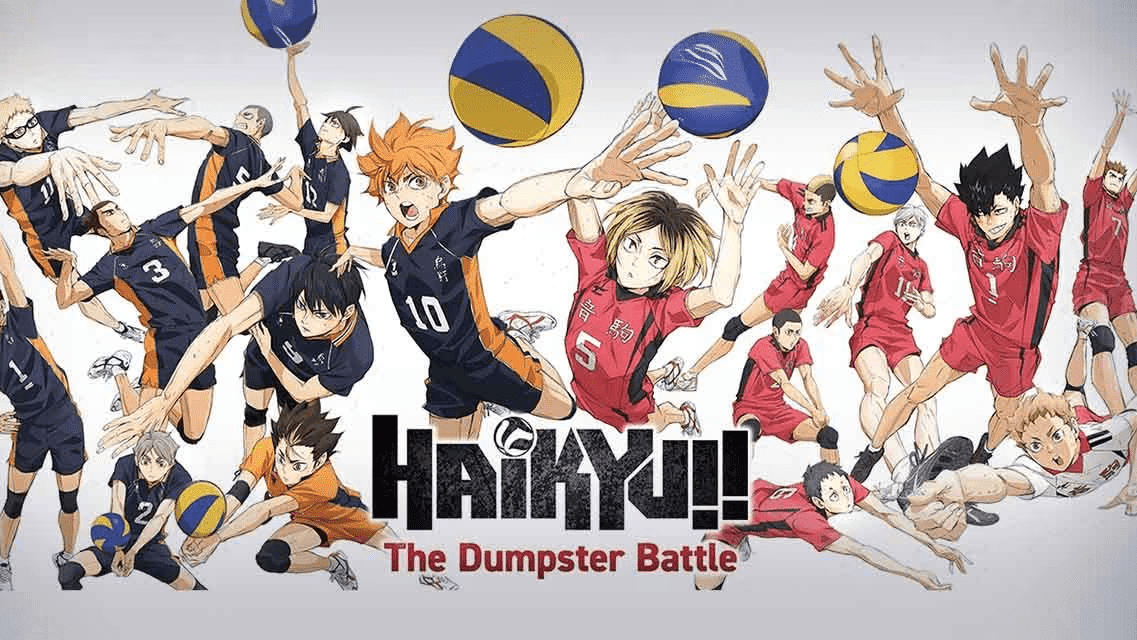
After conquering the Japanese box office with over 11.5 billion yen and dominating international theaters throughout early 2024, Haikyu!! The Dumpster Battle (Gekijōban Haikyu!! Gomi Suteba no Kessen) has finally landed on global streaming platforms. For millions of fans who spent years tracking Shoyo Hinata’s impossible vertical leaps from manga panels to television screens, the digital release is far more than a convenient streaming update. It is the accessible enshrinement of a generational sports anime milestone. Directed by franchise veteran Susumu Mitsunaka and animated by the titan that is Production I.G, the film resolves an eighty-five-minute, single-elimination clash that has been simmering across four seasons, numerous training arcs, and half a century of fictional athletic heritage.
Sports anime has historically traded in hyper-stylized melodrama, villainous opposing aces, and reality-bending special moves. Yet, The Dumpster Battle distinguishes itself by leaning entirely into emotional realism, structural intimacy, and mutual respect. This is not Karasuno fighting for survival against an arrogant juggernaut like Shiratorizawa, nor is it an underdog taking revenge on an aristocratic rival. It is a promised scrimmage between blood brothers who know each other’s habits down to the millimeter. With the film now available for home viewing and granular frame-by-frame dissection, it is clear why this match represents the undisputed artistic pinnacle of Haruichi Furudate’s magnum opus.
The Inherited Destiny: A Rivalry Forged in Dirt and Practice Matches
To understand the sheer narrative velocity of The Dumpster Battle, one must first recognize the decades of unspoken longing baked into its court. The rivalry between Karasuno High School and Nekoma High was never born out of malice; it was inherited. Originating in the youth of former coaches Ikkei Ukai and Yasufumi Nekomata, the concept of the “Dumpster Battle”—a clash between the opportunistic crows and the resourceful alley cats—spent decades as a myth. They crossed paths in practice matches, locked horns during the iconic Tokyo training camp arcs, but never met on the official, unforgiving stage of the Spring National Tournament. Until now.
The Contrast of Athletic Philosophies
Narratively, Furudate designed both teams as thematic mirror images operating on diametrically opposed athletic paradigms. Karasuno represents erratic, kinetic evolution. They are birds of prey who throw themselves into the sky, constantly improvising, diving into the dirt, and relying on the freakish offensive synchronization of Tobio Kageyama and Shoyo Hinata. They score in bursts of overwhelming audacity.
Nekoma, conversely, is an organism defined by biological harmony. As their team mantra states, they are the blood that flows smoothly to keep the brain functioning. They do not overpower opponents; they endure them. With defensive savants like libero Morisuke Yaku and middle blocker Tetsuro Kuroo digging out impossible spikes, Nekoma turns every rally into an attritional nightmare designed to wear down Karasuno’s high-octane engine. When these two philosophies collide under the bright lights of the Tokyo Metropolitan Gymnasium, the cinematic stakes feel colossal because neither side is framed as an antagonist. The tragedy of the single-elimination tournament hangs over every serve: to fulfill the dream of playing this game means that one team’s high school journey must end forever.
The Psychological Chess Match: Hinata’s Wings vs. Kenma’s Cage
While the entire roster receives deliberate moments of grace, the ideological nucleus of The Dumpster Battle belongs to Shoyo Hinata and Nekoma’s reclusive setter, Kenma Kozume. From their serendipitous meeting in an alleyway back in season one, their dynamic has served as the emotional compass of the franchise. Hinata is pure, sun-drenched athletic passion—a boy who lives to jump, sprint, and touch the sky. Kenma, on the other hand, is a cerebral shut-in who views physical exertion as an inconvenience and volleyball as merely a puzzle to be solved.
Deconstructing the Brain of Nekoma
The middle act of the film functions as a masterclass in sports psychology as Kenma executes a cold, algorithmic plan to neutralize Karasuno’s talisman. Recognizing that Hinata feeds on open court space and momentum, Kenma systematically cuts off his approach angles. By placing serves with surgical precision and forcing Hinata backward, Kenma robs the Karasuno middle blocker of his four-step running approach. The crow’s wings are systematically clipped, not with brute force, but with geometric confinement.
The visual storytelling here is harrowing. Production I.G illustrates Kenma’s tactical constriction through suffocating spatial metaphors—visualizing Hinata literally trapped inside an encroaching birdcage. The tension is palpable because Furudate’s writing refuses to let Karasuno break the trap through shonen willpower alone. Instead, Hinata must adapt his very biomechanics. The breakthrough arrives when Hinata executes a vertical, flat-footed jump—sacrificing forward velocity for altitude—soaring cleanly over Kenma’s analytical ceiling. When Kenma’s eyes widen in genuine astonishment, the game transitions from a strategic exercise into an exhilarating spiritual awakening for the setter himself.
Kinetic Mastery: How Production I.G Redefined Court Physics
Adapting this particular match into an 85-minute feature film was an inherently risky proposition that required directorial ruthlessness. Pacing had to be breathless without skipping the quiet character beats that grant Haikyu!! its emotional resonance. Returning director Susumu Mitsunaka proved to be the franchise’s greatest asset, utilizing cinema-grade visual language to elevate the material beyond the traditional television anime aesthetic.
Susumu Mitsunaka’s Directorial Masterclass and the Climax
The animation pedigree on display throughout the film is breathtaking, balancing stylized line-work with anatomical rigor. Character weights shift realistically; sneakers squeak against hardwood with terrifying acoustic precision; jerseys cling to sweat-drenched shoulders. Rather than relying on static speed lines, the camera drifts, tilts, and tracks the volleyball in continuous, hyper-kinetic camera sequences that simulate the overwhelming chaos of an elite-level rally.
Nothing demonstrates this technical prowess better than the film’s tour-de-force climax: an uninterrupted, first-person point-of-view sequence from Kenma’s perspective. As the final set reaches its breaking point, the camera locks inside Kenma’s exhausted, oxygen-deprived frame. The viewer experiences the muffled gasp of heavy breathing, the peripheral blur of running teammates, sweat stinging the eyes, and the sheer desperation of a rally that refuses to die. When the ball finally slips from Kenma’s sweaty palms—not because of a tactical miscalculation, but due to pure, unscripted human exhaustion—the cinematic impact is profound. It strips away all artifice to reveal the raw, unglamorous, and ecstatic reality of competitive athletics.
The Catharsis of “Tanoshii”: An Era Reaches Its Apex
For four seasons, the recurring question surrounding Kenma Kozume was simple: Why do you play volleyball? His answer was always indifferent: “Just because.” He didn’t hate it, but he certainly didn’t love it. He played because his childhood friend Kuroo asked him to, and because it was a manageable diversion.
The thematic payoff of The Dumpster Battle crystallizes immediately after the final ball touches the floor. Covered in floor burns, chest heaving, hair plastered to his forehead, Kenma looks up at Kuroo and whispers the word fans waited an entire decade to hear: “Tanoshii” (It’s fun). In that brief, understated moment of catharsis, the outcome of the match ceases to matter. Nekoma did not win the set, but Kenma finally fell in love with the sport. It validates Kuroo’s tireless years of mentorship, pays homage to their childhood in suburban Tokyo, and serves as an emotional gut-punch that transcends typical sports anime victory conditions.
A Bittersweet Milestone for Shonen Anime
The global streaming arrival of The Dumpster Battle allows the international community to celebrate what may very well be the sharpest execution of sports storytelling in modern animation. It doesn’t rely on apocalyptic stakes or manufactured drama. Its emotional currency is earned purely through the honest passage of time, the beauty of competitive camaraderie, and the bittersweet finality of high school sports. As Karasuno moves on toward the impending battle against Kamomedai, the alley cats leave the gym floor behind—not in disgrace, but in quiet, glorious completion of a promise kept.
Where does the Karasuno vs. Nekoma showdown rank among your favorite anime matches of all time? Did the first-person POV climax live up to the manga’s intensity? Drop your reactions and favorite moments in the comments below, and stay tuned to Wibux.com for continued analysis of the Haikyu!! cinematic finale.