



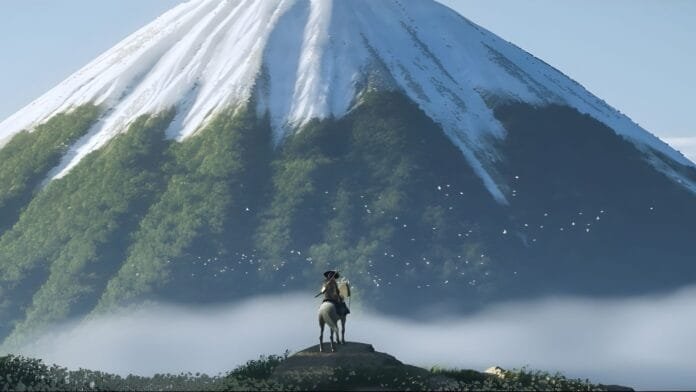
When Sucker Punch Productions unveiled Ghost of Yōtei, the entire gaming community felt a collective jolt of pure adrenaline. Setting their sprawling sequel more than 300 years after Jin Sakai’s legendary defense of Tsushima Island, creative directors Nate Fox and Jason Connell are taking an astonishing creative leap. Rather than continuing a predictable linear saga, the studio is transporting players to the breathtaking, untamed wilderness of Mount Yōtei in 1603 Japan, placing the katana firmly into the hands of a fierce new protagonist named Atsu.
Stepping Beyond Jin Sakai: The Lone Wanderer of Mount Yōtei
Jin Sakai’s transformation into the mythical “Ghost” defined one of the most memorable narratives of the previous console generation. His moral conflict between rigid samurai honor and the brutal reality of guerrilla warfare set a high bar for emotional storytelling. However, Ghost of Yōtei pivots into uncharted historical territory. Set in the lush yet dangerous northern frontier of Ezo (modern-day Hokkaido), the year 1603 represents the pivotal dawn of the Tokugawa Shogunate, a time when central authority was virtually non-existent in the north.
Atsu is not a noble samurai defending ancestral clan estates. Portrayed with fierce charisma by actress and voice artist Erika Ishii, Atsu is an underdog wanderer navigating a perilous lawless wilderness. Hunted by cutthroat ronin, rival mercenaries, and dangerous regional factions, Atsu’s journey is one of personal vengeance, redemption, and raw survival. Sucker Punch has emphasized that her path to becoming a legendary warrior will offer players deeper agency, moral ambiguity, and freedom than ever before.
Revolutionary Combat Mechanics: Dual Katanas, Kusarigama, and Early Firearms
The combat in Ghost of Tsushima was celebrated for its razor-sharp precision, cinematic parries, and satisfying stances. In Ghost of Yōtei, Sucker Punch is pushing the combat sandbox far wider to reflect Atsu’s pragmatic survival instincts:
- Dual-Wielding Blades: Atsu can fluidly slice through surrounding mobs with twin katanas, trading defensive posture for blistering multi-directional strikes.
- The Deadly Kusarigama: Mastering the weighted chain and sickle allows players to disarm heavily armored enemies and sweep their footing from mid-range.
- Period-Accurate Matchlock Firearms: The early Edo period brought primitive matchlock rifles (tanegashima) to Japanese warfare, offering devastating single-shot stopping power at the cost of deliberate reload times.
- Shamir and Stealth Enhancements: Upgraded stealth takedowns and grappling utilities let players manipulate high alpine terrain and dense foliage with complete vertical freedom.
For gamers eager to see how modern developers elevate combat design, comparing this evolution to the stylish tactical overhauls seen in Metaphor: ReFantazio shows just how high the standard has risen across Japanese action titles.
Unleashing the Full Architectural Power of PlayStation 5
Unlike its predecessor, which was engineered around the hardware constraints of the PlayStation 4, Ghost of Yōtei was developed from the ground up exclusively for the PlayStation 5 and PlayStation 5 Pro. Head of PlayStation Studios Hermen Hulst has spotlighted Sucker Punch’s technical mastery, noting how the title utilizes the hardware’s custom ultra-high-speed SSD to render massive draw distances with zero load screens.
Players will experience dynamic weather simulations where freezing blizzards sweep across Mount Yōtei, actively deforming snowdrifts and affecting player footing. Every blade of windblown pampas grass responds realistically to Atsu’s stride, while the DualSense wireless controller delivers nuanced haptic feedback for every sword clash, bow string draw, and crack of thunder echoing across the Hokkaido peaks. Fans who appreciate deep combat sandboxes can also check out our breakdowns on recent releases like Dragon Quest III HD-2D Remake and the latest updates on gaming platforms and streaming.
Can Ghost of Yōtei Outshine Its Predecessor?
Replacing an iconic protagonist like Jin Sakai is never without creative risk, yet Sucker Punch’s bold decision to build an anthology series under the “Ghost” moniker proves their dedication to fresh world-building. With legendary historical figures, breathtaking natural vistas, and an enigmatic protagonist driven by revenge, Ghost of Yōtei is shaping up to be one of the most monumental gaming experiences of this generation.
What Do You Think?
Are you excited to step into the boots of Atsu and conquer the wild peaks of Mount Yōtei, or do you find yourself missing Jin Sakai and the battle-worn shores of Tsushima? Which new weapon are you most eager to master—the dual blades, the kusarigama, or the matchlock rifle? Drop your thoughts, theories, and combat wishlist in the comments below!





One thought on “Ghost of Yōtei: How Sucker Punch and Atsu Are Revolutionizing Open-World Samurai Action on PlayStation 5”