

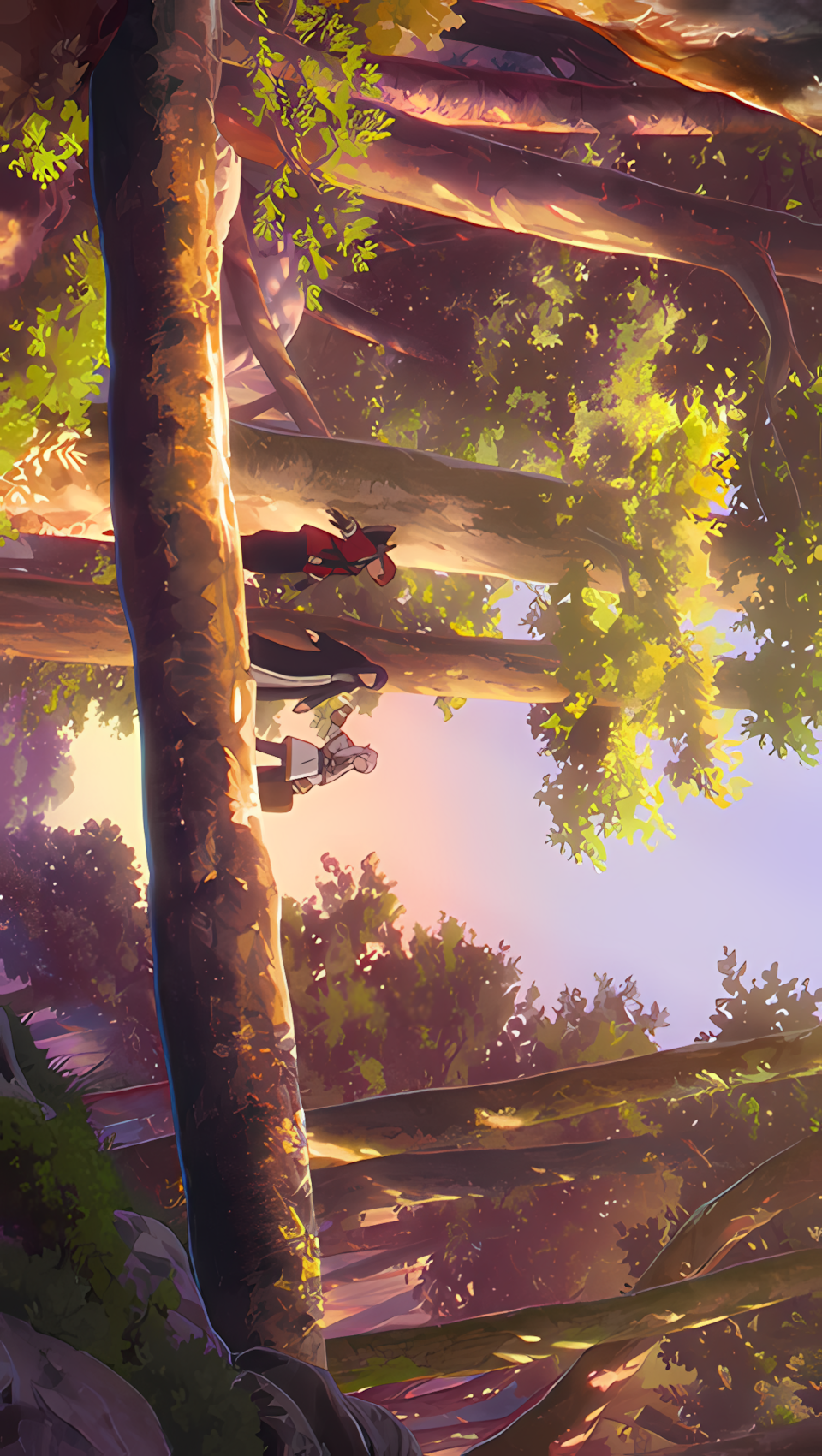
When the final notes of Evan Call’s wistful orchestral score swelled over the closing frames of Frieren: Beyond Journey’s End Season 1, it marked more than just the end of a 28-episode masterclass. It cemented an ideological triumph. In an era dominated by adrenaline-soaked shonen climaxes and high-concept isekai, Studio Madhouse achieved what few thought possible: turning an introspective, languid treatise on grief, memory, and the slow passage of time into an undisputed global phenomenon. But while the First-Class Mage Exam showcased blistering tactical sorcery and bureaucratic intrigue, it was merely the calm before a catastrophic storm. As fans brace for the inevitable greenlight of Season 2, the narrative sights shift away from the cobbled streets of Äußerst toward the unforgiving frontier of the Northern Plateau—and toward what manga readers rightfully herald as a modern masterpiece of high-fantasy storytelling: the Golden Land, El Dorado.
Leaving Äußerst Behind: The Structural Pivot from Bureaucracy to Survival
The First-Class Mage Exam arc, for all its visual brilliance, was fundamentally an anomaly within Kanehito Yamada and Tsukasa Abe’s narrative architecture. It placed the wandering elven mage into a standardized shonen tournament framework, pitting prodigies against ancient veterans under the watchful, hyper-pragmatic eye of Serie. Yet, the arc’s true purpose was never simply about who walked away with a mythical privilege; it was about defining the human cost of magical ambition.
With Fern successfully claiming her First-Class certification—and Frieren earning a characteristically petty banishment from Serie’s immediate presence—the party’s dynamic undergoes an essential recalibration. Stark, Fern, and Frieren are no longer leisurely wandering pastoral villages clearing out overgrown gardens or finding blue moon weeds for sentimental gratification. Securing passage into the Northern Plateau demands dealing with imperial checkpoints, severe climate hazards, and lingering anti-demon fortifications that have rotted under centuries of neglect. The transition back into a pure road-trip narrative carries a starker, colder edge. The comfort blanket of civilization is stripped away, forcing Frieren’s small retinue to confront the terrifying reality that the Demon King’s death did not sanitize the world—it merely left behind radioactive pockets of ancient terror.
The Northern Plateau: Where Wilderness Becomes the Antagonist
The upcoming voyage through the Northern Plateau strips romanticism from the concept of adventure. Here, the ecosystem itself is hostile to human life. We are introduced to environments where mana-suppression techniques become mandatory for survival, where beasts have evolved specifically to prey on spellcasters, and where the Shadow Warriors—shadowy imperial operatives—remind us that human malice often runs parallel to the demonic threat.
Madhouse laid the groundwork for this shift with their immaculate environmental worldbuilding in Season 1, but the Northern Plateau demands an even bleaker palette. The terrain mirrors Frieren’s psychological distance from mortal perception: vast mountain ranges that take months to cross, remnants of ruined fortresses buried under glacial permafrost, and an ambient stillness that feels less like peaceful solitude and more like impending doom. For Stark and Fern, this journey represents a trial by fire. Fern must grow beyond being a miraculously fast casting prodigy into a resilient combatant capable of improvising under lethal exhaustion, while Stark must face martial horrors that surpass the trauma of his destroyed homeland.
The Tragedy of El Dorado: Macht and the Impossible Dream of Coexistence
Every legendary fantasy series possesses a watershed arc that redefines its philosophical limits. For Frieren, that watershed is Macht of the Golden Land. Stationed within the walled territory of Weise—now entombed in silent, immutable gold—stands Macht, the most enigmatic of the Seven Sages of Destruction. Macht is not a rampaging brute like Qual, nor an arrogant trickster like Aura. He is a gentleman clothed in aristocratic silks, a thinker armed with Di Agolze, the ultimate curse that turns anything and everything into unbreakable gold.
Deconstructing Demon Psychology: Words as Weapons, Not Bridges
Where lesser fantasy defaults to the cliché of the misunderstood, redeemable monster, Yamada’s writing remains uncompromising: demons are hyper-intelligent apex predators born without mirror neurons. They possess no concept of empathy, remorse, or moral conscience. They speak human language solely because it allows them to manipulate, deceive, and consume human beings. Yet Macht represents an existential anomaly within his species. He develops an intellectual obsession with the human concepts of “malice” and “guilt”—not out of a desire for redemption, but out of a clinical, scientific curiosity. He genuinely desires to coexist with humanity, yet lacks the biological and psychological hardware to understand why murdering a friend is fundamentally antithetical to that coexistence.
The Golden Curse and the Fate of Weise
The tragedy of Weise, orchestrated through Macht’s decade-spanning relationship with Lord Gluck and the imperial court, is a breathtaking triumph of character-driven tragedy. Denken, who established himself as a fan-favorite grandfather figure during the Exam arc, suddenly takes center stage in an emotional crucible. Weise is his ancestral home, and Gluck was his father-in-law. When Season 2 adapts Macht’s methodical, almost tender transformation of an entire vibrant civilization into a gleaming, lifeless graveyard, it will force audiences to reckon with one of the most chilling antinomies in contemporary fiction: what happens when curiosity is decoupled entirely from morality?
Madhouse’s Blueprint: Elevating Manga Poetics into Cinematic Drama
Translating the Golden Land arc to the screen is an intimidating technical challenge. Director Keiichiro Saito and the elite production staff at Studio Madhouse set an almost impossible benchmark with Season 1, treating quiet pauses with the same reverence as earth-shattering combat sequences. For the confrontation in Weise, the visual language must achieve a delicate balance.
Macht’s transmutation magic is not inherently kinetic; it is creeping, inevitable, and visually suffocating. The animation must contrast the terrifying, blinding opulence of a golden metropolis against the barren rot of the surrounding wilderness. Furthermore, Evan Call’s musical direction will be forced to evolve. The Celtic whimsy and pastoral woodwinds that defined the early pilgrimage must inevitably yield to discordant strings, hollow choral arrangements, and brass motifs that evoke the sheer, alien majesty of the Seven Sages. Frieren’s own combat methods will need to shed their usual stoic economy. Against Macht, we will see an elven archmage driven to the absolute outer perimeter of her capabilities, forced to use spells preserved from an era when gods still walked the earth.
The Fandom’s Quiet Reckoning: Redefining Modern Fantasy
The online discourse surrounding Frieren has long praised its subversion of modern fantasy pacing, but the Golden Land arc promises to ignite an entirely new tier of cultural discussion. In a media landscape saturated with stories that insist every monster simply needs to be understood and loved, Macht’s narrative stands as a defiant, brilliant counterargument. It argues that some chasms cannot be bridged by conversation, and that attempting to force coexistence between species separated by insurmountable predatory instincts yields only petrified tragedy.
Denken’s desperate, aging quest to reclaim the soil of his youth will resonate profoundly with an audience that has already fallen in love with Frieren’s themes of time and regret. Macht does not hate Denken, nor did he hate Lord Gluck. In fact, he cherished them as much as his nature allowed. And that, terrifyingly, is precisely why they had to be turned to gold.
The Long Road to Ende
As we wait for Madhouse to pull back the curtain on Season 2, the stakes could not be higher. The First-Class Mage Exam proved that the production could execute high-octane spectacle without losing its soul. But the journey into the Golden Land El Dorado will require something far rarer: the stamina to explore a deep, unrelenting philosophical darkness without forsaking the gentle, compassionate light that makes Frieren who she is. When the mist clears over the golden spires of Weise, modern anime will meet its greatest tragedy yet—and we are more than ready to bear witness.
How do you think Studio Madhouse will handle Macht’s terrifying magic? Are you ready to see Denken’s tragic backstory unfold? Drop your thoughts, theories, and coping mechanisms in the comments below, and stay locked to Wibux for our continuing anime analysis.