
When the opening notes of Dragon Ball Daima echoed across screens worldwide, the collective breath of the global anime community hitched. It was a moment laden with unprecedented emotional weight. Following the sudden, tragic passing of Akira Toriyama in March 2024, the premiere of Daima ceased to be merely another seasonal tentpole release; it transformed into an interactive wake, a monumental celebration of a 40-year legacy, and the final, unfiltered creative statement from the patron saint of modern shonen. For decades, fans have debated canon, power levels, and the escalating cosmic stakes of Dragon Ball Super. Yet, in its spectacular premiere, Dragon Ball Daima subverts every modern expectation by orchestrating a triumphant, soulful retreat to what made Toriyama’s universe immortal in the first place: whimsical curiosity, tactile martial arts, and an unapologetic sense of wonder.
Toriyama’s Direct Fingerprints: A Swansong Steeped in Whimsy
Unlike previous television projects where Toriyama provided rough plot outlines or occasional character sketches, Dragon Ball Daima boasts an extraordinary level of direct intervention from the late master. Toriyama conceived the original story, plotted the world geometry, designed nearly every fresh entity, and penned the intricate comedic scenarios that drive the narrative. The distinction is immediately palpable. Daima does not rush headlong into the deafening, multiverse-shattering power creep that defined the Tournament of Power. Instead, the premiere exudes the infectious, unhurried charm of early 1980s Dragon Ball and Dr. Slump.
Toriyama’s genius always lived in his peculiar marriage of grand mythological stakes and mundane, domestic absurdity. Daima‘s debut honors this balance masterfully. While the shadow of the Majin Buu saga looms heavily over the narrative architecture, the premiere finds its heartbeat in character interplay. Watching legendary defenders of the universe bicker over snacks and celebrate a child’s ninth birthday provides a poignant warmth. It serves as an overt declaration of Toriyama’s creative philosophy: heroes do not exist solely to scream through transformation sequences; they exist to live, laugh, and eat together before the storm inevitably breaks.
Unveiling the Demon Realm: Lore Expansion Decades in the Making
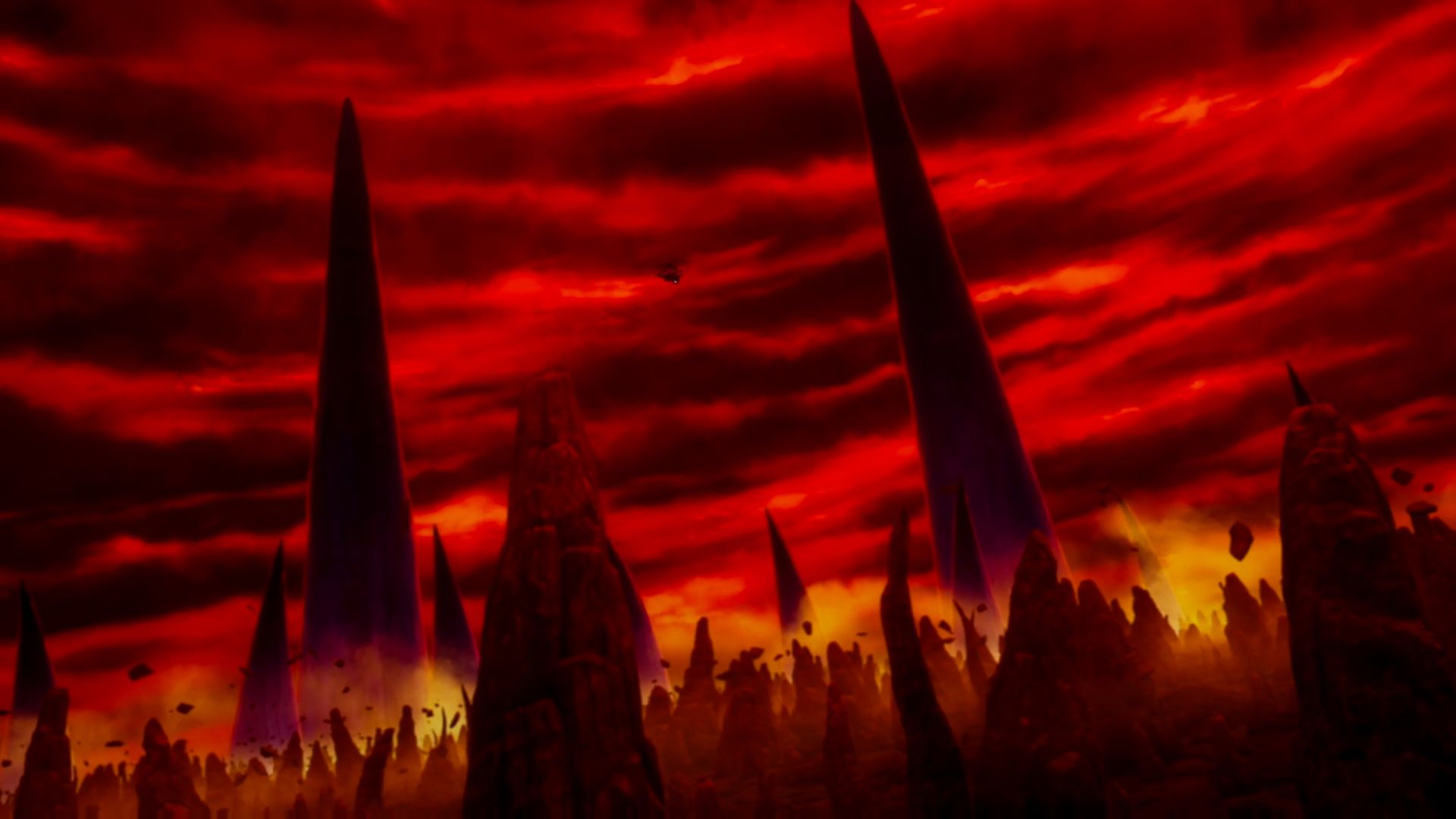
For decades, the Demon Realm (Makai) remained one of the franchise’s most tantalizing, underutilized frontiers. Relegated mostly to ancillary video games like Dragon Ball Heroes or fleeting canon mentions via Dabura, this shadowy dimension finally steps into the canonical spotlight as the primary setting of Daima.
The Shadow Throne of King Gomah and Degesu
The premiere dedicates significant real estate to contextualizing the power vacuum left in the wake of Babidi and Majin Buu’s defeat. We are introduced to King Gomah, the newly minted ruler of the Demon Realm, alongside his scheming attendant Degesu—who shares an unmistakable, spine-chilling visual lineage with Universe 7’s own Supreme Kai (Shin). The narrative brilliantly reframes the climax of the Buu saga from the perspective of an anxious subterranean bureaucracy monitoring events on Earth through an enchanted “Omnibus” monitor. Gomah’s neurotic dread upon watching Goku annihilate Buu with the Super Spirit Bomb provides both brilliant comedic friction and logical motivation for what follows.
Rather than seeking to overpower the Saiyans through raw, destructive force, Gomah’s maneuver is brilliantly petty and subversive: utilizing the Demon Realm’s obscure Dragon Balls—guarded by formidable biomechanical sentries known as the Tamagami—to reduce the Earth’s defenders to diminutive children. This narrative catalyst cleverly avoids the tired cliché of simply inventing a stronger, meaner warlord. By manipulating Shenron’s magic to shrink our heroes, Toriyama fundamentally resets the playing field without rendering four decades of character growth obsolete.
Visual Spectacle: Toei Animation Reclaims Kinetic Martial Arts
From an aesthetic and production standpoint, the premiere of Dragon Ball Daima is nothing short of breathtaking. Under the collaborative directorial vision of Yoshitaka Yashima and Aya Komaki, with veteran animator Katsuyoshi Nakatsuru translating Toriyama’s designs, the episode displays a fluidity and cinematic reverence that outshines much of modern serialized television.
Choreography Over Armageddon
Where recent iterations leaned heavily into digital compositing, blinding aura effects, and planet-busting energy beams, Daima stages a glorious return to grounded, bone-crunching choreography. The prologue recapping the battle against Majin Buu is rendered with jaw-dropping fluidity, honoring classic 1990s cel aesthetics while employing cutting-edge digital staging. The line-work is intentionally organic, capturing Toriyama’s signature rounded, buoyant anatomical geometry.
Crucially, the return to “Mini” status is not just a cosmetic gimmick; it recalibrates the visual mechanics of combat. Goku cannot merely rely on effortless teleportation or instantaneous god-ki bursts. The brief martial demonstrations teased in the premiere—most notably the triumphant return of the Power Pole (Nyoibo)—signal a conscious pivot back to weight, balance, spatial awareness, and staff-fighting choreography. By stripping Goku of his hyper-elevated stature, the series immediately restores stakes to hand-to-hand combat.
Character Psychology: The Vulnerability of the Diminutive
The immediate narrative comparison drawing murmurs within the community is, predictably, 1996’s Dragon Ball GT. However, Daima diverges fundamentally in its thematic intentionality. Where GT isolated Goku by shrinking only him, Daima engulfs the entire ensemble—Goku, Vegeta, Piccolo, Bulma, and even the divine Shin—in this bizarre existential regression. This collective handicap sparks entirely new comedic and emotional vectors.
Seeing the perpetually stoic Prince of All Saiyans navigate the sensory frustration of a toddler’s physique creates immediate narrative gold, but it also induces genuine vulnerability. These god-killers are suddenly alienated from their own center of gravity, their reach dramatically shortened, their ki management fundamentally disrupted. The psychological recalibration forces the characters to rely on cunning, camaraderie, and raw fundamental technique. Enter Glorio, the enigmatic pilot from the Demon Realm, whose entrance promises a classic, adventurous road-trip dynamic reminiscent of the original 1984 hunt for the Dragon Balls.
The Verdict: An Irreplaceable Monument to a Legend
Any lingering skepticism regarding Dragon Ball Daima being a superficial diversion has been thoroughly shattered by its premiering chapters. What could have easily been an uninspired, commercialized celebration of the franchise’s 40th anniversary has revealed itself to be an intensely personal, lavishly produced labor of love. Toriyama chose not to exit the stage with another predictable escalation of divine tournaments, but rather by holding a mirror up to his earliest masterpieces.
Daima feels vibrant, mysterious, and profoundly unburdened by the weight of modern franchise expectations. It invites longtime fans and curious newcomers alike to step into an unknown realm aboard a celestial ship, armed with a mystical staff and an insatiable hunger for the next horizon. Akira Toriyama may have left our mortal realm, but in Daima, his spirit remains perpetually youthful, smiling warmly, and daring us to seek the next grand adventure.
What were your favorite moments from the Dragon Ball Daima premiere? Do you think the exploration of the Demon Realm will reshape franchise lore forever? Jump into the comments below and share your thoughts with the Wibux community!