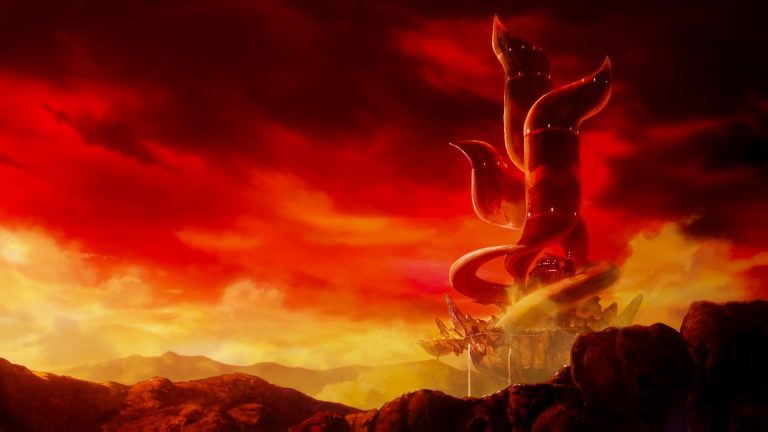



When Senku Ishigami first awoke in the year 5738, peeling the calcified stone from his skin with nothing more than raw cognitive endurance, the prospect of modern civilization seemed impossibly distant. The early days of Dr. STONE were characterized by the primal thrill of early humanity: rubbing sticks together to spark Promethean flame, refining calcium carbonate from sea shells, and celebrating a single bowl of foxtail millet ramen like a Michelin-starred triumph. Yet, seven years after TMS Entertainment first brought Riichiro Inagaki and Boichi’s visionary manga to the screen, the Kingdom of Science stands on the precipice of the impossible. With the official announcement and rollout of Dr. STONE: Science Future, the fourth and final season, the series is preparing to make its ultimate thematic leap—leaving the terrestrial dirt behind to conquer the cold, unforgiving vacuum of space.
This is not merely the close of another high-profile shonen adaptation; it is the grand culmination of modern anime’s most unapologetically intellectual epic. By sending Senku, Ryusui, and their battle-hardened cadre of craftsmen, warriors, and navigators directly to the lunar surface, Science Future shifts the stakes from post-apocalyptic survival to an existential cosmic reckoning. Waiting on the moon is Why-Man, the shadowy architect of humanity’s 3,700-year slumber. The stage is set for a climax that promises to redefine how modern anime tackles science fiction, legacy, and human perseverance.
From Earthen Kilns to Cape Canaveral: The Audacious Scope of Science Future
The sheer narrative audacity of Dr. STONE has always rested on its accelerated timeline of technological progress. What took real-world civilization millennia to invent, Senku’s Kingdom of Science has reverse-engineered in a single decade. However, the logistical nightmare awaiting the cast in Science Future dwarfs every previous achievement. Constructing a working cellphone in the Stone Wars arc or forging a steel-hulled seafaring vessel in New World were staggering feats, but assembling a staging ground for a crewed lunar expedition demands a global supply chain.
This final season marks the anime’s transition into an expansive, globe-trotting saga. Viewers will witness the construction of satellite facilities across continents, the harvesting of petrochemicals, the mass extraction of rare-earth metals, and the synthesis of computer logic arrays using vacuum tubes and magnetic ferrite cores. The series meticulously honors the iterative agony of engineering. Space travel is an unforgiving science where a decimal point error translates to instantaneous atmospheric incineration, and Inagaki’s script refuses to give Senku an easy shortcut. The narrative tension derives not from magical power escalations, but from the terrifying reality of mass-to-payload ratios and thermodynamic stress.
The Architecture of the Moon Mission
To put a three-man landing party on the moon—comprising a pilot, a warrior, and an intellect—Senku must systematically assemble the technological backbone of the mid-20th century. For fans who fell in love with the show’s grounded, do-it-yourself ethos, Science Future delivers the ultimate payoff. The blueprint requires everything from solar panels and telemetry communication systems to custom spacesuits woven from synthetic fibers. It is a stunning visual reminder that rocketry is not a solitary miracle; it is the compound interest of every foundational invention that came before it.
The Enigma on the Lunar Horizon: Deconstructing Why-Man
Since the midpoint of season two, when Senku’s radio receiver first crackled with the rhythmic, mechanical cadence of Morse code asking a solitary, chilling question—“WHY?”—the specter of Why-Man has hung over the franchise like an executioner’s blade. Unlike the ideological clashes Senku waged against Tsukasa Shishio’s naturalistic Darwinism or Hyoga’s ruthless meritocracy, Why-Man represents an existential cosmic dread. It is an antagonist stripped of immediate emotional vanity, communicating via cold synthetic broadcasts and mimicry of Senku’s own voice.
The showdown with Why-Man is poised to subvert classic shonen expectations. For years, the anime community has speculated wildly: Is Why-Man an artificial intelligence that developed rogue sentience? A rogue human faction that weaponized the petrification technology from orbit? Or is the petrification beam, the infamous “Medusa,” the vanguard of an extraterrestrial entity indifferent to terrestrial suffering? Without dipping into manga-spoiler territory, TMS Entertainment’s adaptation must delicately balance the transition from hard-science celebration into speculative cosmic horror. The lunar surface provides the ultimate blank canvas for this confrontation—a silent, airless colosseum where screams carry no sound, and victory cannot be claimed with a punch, but with absolute rational comprehension.
TMS Entertainment’s Endgame: Adapting Boichi’s Kinetic Astronomy
One of the quiet triumphs of the Dr. STONE anime adaptation has been TMS Entertainment’s steadfast visual consistency. Director Shinya Iino and subsequent creative leads have consistently married Boichi’s hyper-detailed, muscular character designs with accessible, educational vibrancy. But the material in the manga’s final arcs features some of Boichi’s most breathtaking, kinetically overwhelming art: double-page spreads of multi-stage orbital rockets cutting through the stratosphere, intricate diagrams of internal combustion chambers, and the desolate, cratered beauty of the lunar terrain.
Adapting this fidelity into weekly animated sequences poses a colossal compositing challenge. Early promotional assets for Science Future suggest a significant cinematic polish, particularly in the lighting engines used to depict orbital mechanics and zero-gravity sequences. The key will be maintaining the franchise’s hallmark comedic timing and emotional warmth while elevating the spectacle to meet the cinematic demands of deep-space cinematography. If TMS can replicate the visual momentum of the Apollo-era launch sequences with Boichi’s trademark dynamic perspective, Science Future could easily stand among the visual landmarks of modern sci-fi anime.
A Millennial Inheritance: Senku, Byakuya, and Science as Empathy
Beneath the formulas for gunpowder and the chemistry of sulfa drugs, Dr. STONE has always possessed an intensely humanistic heart. That emotional engine is rooted in the bond between Senku and his adoptive father, Byakuya Ishigami. When the petrification light enveloped the globe, Byakuya and his fellow astronauts on the International Space Station watched the world go dark from the heavens. Byakuya dedicated the rest of his life to founding Ishigami Village, leaving behind resources, stories, and scientific seeds specifically so his son might find them thousands of years in the future.
There is profound visual poetry in Senku’s return to the stars. In launching himself into space, Senku is not just hunting Why-Man; he is retracing Byakuya’s trajectory, finally closing the loop on a 3,700-year-old conversation. In an era where post-apocalyptic narratives are dominated by grim survivalist cynicism, Dr. STONE champions a radically optimistic philosophy: science is not a weapon of destruction or a cold pursuit of dominance, but an unbroken relay race of human empathy. Every transistor, every glass vial, and every line of code is a gift passed down through generations to conquer the dark.
The Giant Leap for Anime Sci-Fi
As Dr. STONE: Science Future readies its engines for the final frontier, the stakes could not be higher. Riichiro Inagaki crafted a manga finale that was daringly unconventional, balancing technical resolution with deeply philosophical musings on what it means to be alive, conscious, and mortal. If the anime adaptation can harness that same creative bravado, it will secure its legacy as one of the definitive anime epics of the modern era—a show that made millions of viewers fall in love with the sheer, unadulterated beauty of human intellect.
The countdown has begun, the launch pad is set, and the Kingdom of Science is about to step onto the moon. For Senku Ishigami, this is not just ten billion percent exhilarating; it is the ultimate proof that with human science, there is no corner of the cosmos beyond our reach.
What are your boldest theories regarding Why-Man’s true identity, and how do you think TMS Entertainment will pace the manga’s sprawling finale? Sound off in the comments below, and stay tuned to Wibux.com for exclusive episode breakdowns, production interviews, and science analysis!