
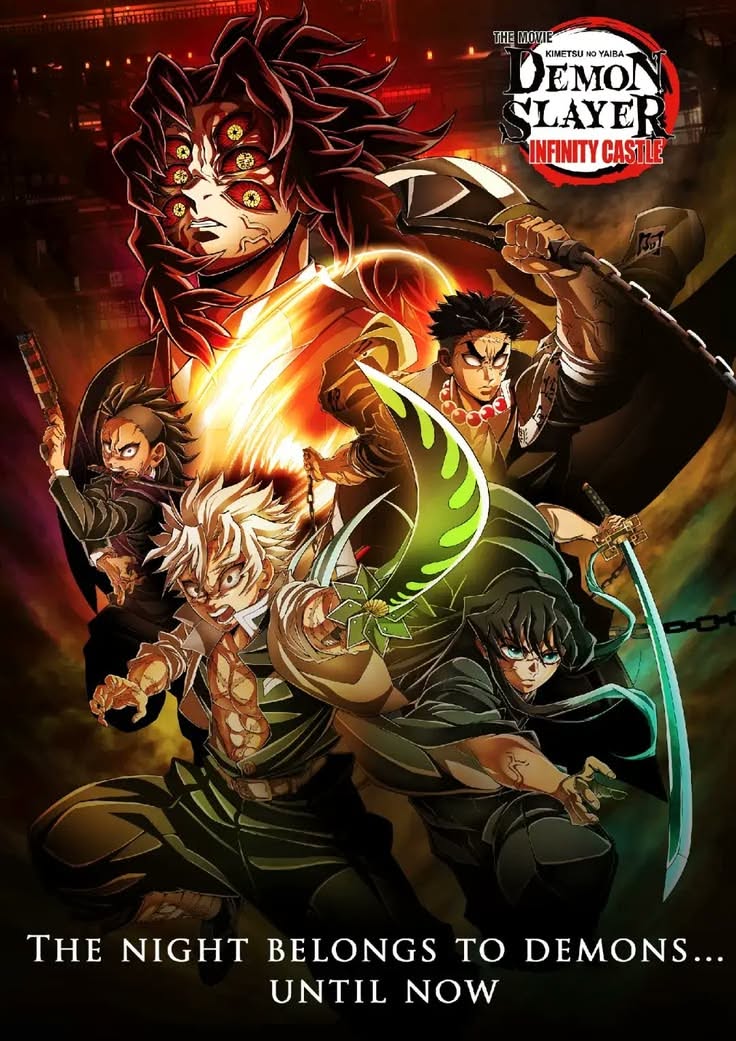
When the Demon Slayer Corps plunged through the shoji screens into an endless, shifting dimensional fortress at the climax of the Hashira Training Arc, anime history stood completely still. Fans across the globe expected a standard television broadcast for the grand finale. Instead, studio ufotable, Aniplex, and Shueisha unleashed an unprecedented announcement: the final confrontation against Muzan Kibutsuji will arrive as an epic theatrical movie trilogy. But what makes this daring gamble by director Haruo Sotozaki and creator Koyoharu Gotouge not just another cinema release, but potentially the biggest box office phenomenon in global animation history?
The Ufotable Revolution: Beyond Mugen Train’s Historic Crown
In 2020, Demon Slayer: Mugen Train stunned the cinematic industry by generating over 500 million dollars worldwide in the midst of global theatrical shutdowns, dethroning Hayao Miyazaki’s legendary Spirited Away in Japan. Studio founder Hikaru Kondo and chief producer Yuma Takahashi recognized that television serialization alone could not do justice to the sheer spatial complexity and emotional gravitas of the final war.
By transforming the Infinity Castle Arc into three full-length feature films, ufotable frees chief animation director Akira Matsushima and the digital effects team from standard weekly broadcast constraints. The production pipeline leverages proprietary 3D CGI architecture rendered in seamless harmony with traditional hand-drawn key frames. Every shifting corridor, rotating tatami room, and gravity-defying blood demon art demands cinematic rendering power that traditional episodic production cycles simply cannot sustain.
Much like how MAPPA pushed boundaries with dark fantasy storytelling in the Jujutsu Kaisen Culling Game, ufotable is setting an uncompromising standard for theatrical combat choreography. The Infinity Castle represents an architecture without gravity, demanding fluid camera rotations and photorealistic lighting calculations across every frame.
Clash of Fates: Upper Moon Showdowns and Tragic Destinies
What elevates Koyoharu Gotouge’s narrative beyond mere spectacle is the devastating psychological depth woven into each demonic confrontation. The Infinity Castle trilogy will not merely feature extended action sequences; it serves as the ultimate crucible for the Hashira and the remaining Upper Rank demons.
- Akaza vs. Tanjiro Kamado and Giyu Tomioka: The rematch anime fans have anticipated since the tragic demise of Kyojuro Rengoku. Beyond the explosive martial clash of the Destructive Death technique and Sun Breathing, this battle dives into Hakuji’s heartbreaking backstory, testing Tanjiro’s empathy and Giyu’s Water Hashira resolve.
- Doma vs. Shinobu Kocho and Kanao Tsuyuri: A chilling duel steeped in vengeance, biological warfare, and sacrificial brilliance. Shinobu’s confrontation with the emotionless Upper Rank Two provides one of the manga’s most shocking narrative twists.
- Kokushibo vs. Gyomei Himejima, Sanemi Shinazugawa, and Muichiro Tokito: The pinnacle of swordsmanship. Facing the six-eyed progenitor of Moon Breathing requires the combined might of humanity’s strongest Hashira and unveils the tragic brotherhood that shaped the Demon Slayer Corps centuries ago.
Just as Eiichiro Oda constructs monumental lore revelations in the One Piece Elbaf Arc, Gotouge carefully constructed each Upper Moon battle to reflect the philosophical struggle between humanity’s ephemeral mortality and Muzan’s hollow pursuit of eternal perfection.
Orchestral Grandeur: The Musical Chemistry of Yuki Kajiura and Go Shiina
A vital dimension of Demon Slayer’s emotional resonance is its unforgettable musical landscape. Legendary composers Yuki Kajiura and Go Shiina return to orchestrate the trilogy’s expansive score. While Kajiura crafts haunting vocal motifs and operatic tragedy for pivotal narrative milestones, Shiina delivers ferocious orchestral swells and traditional Japanese instrumentation tailored specifically to high-octane battle set pieces.
The cinematic sound design, mastered in immersive Dolby Atmos and IMAX theatrical formats, allows every Nichirin sword clash, sonic shockwave, and Biwa strum from Nakime to vibrate through theater halls with overwhelming intensity. Following modern visual reinventions in Japanese pop culture, such as Science SARU’s boundary-pushing vision for Ghost in the Shell 2026, ufotable’s theatrical trilogy represents a peak convergence of visual mastery and acoustic power.
Can Part 1 Dethrone Hollywood Titans at the Global Box Office?
With Crunchyroll and Sony Pictures Entertainment spearheading the worldwide theatrical rollout across over 140 countries and territories, industry analysts anticipate opening weekend figures rivaling major Hollywood superhero blockbusters. The anticipation surrounding Tanjiro’s final path toward defeating Muzan Kibutsuji has transcended traditional anime subculture, cementing Demon Slayer as an undeniable global entertainment juggernaut.
What Do You Think?
Which battle inside the Infinity Castle are you most desperate to see animated on the giant IMAX screen? Will Akaza’s tragic past move you to tears, or are you holding your breath for Kokushibo’s devastating Moon Breathing? Share your theories and hype in the comments below!