


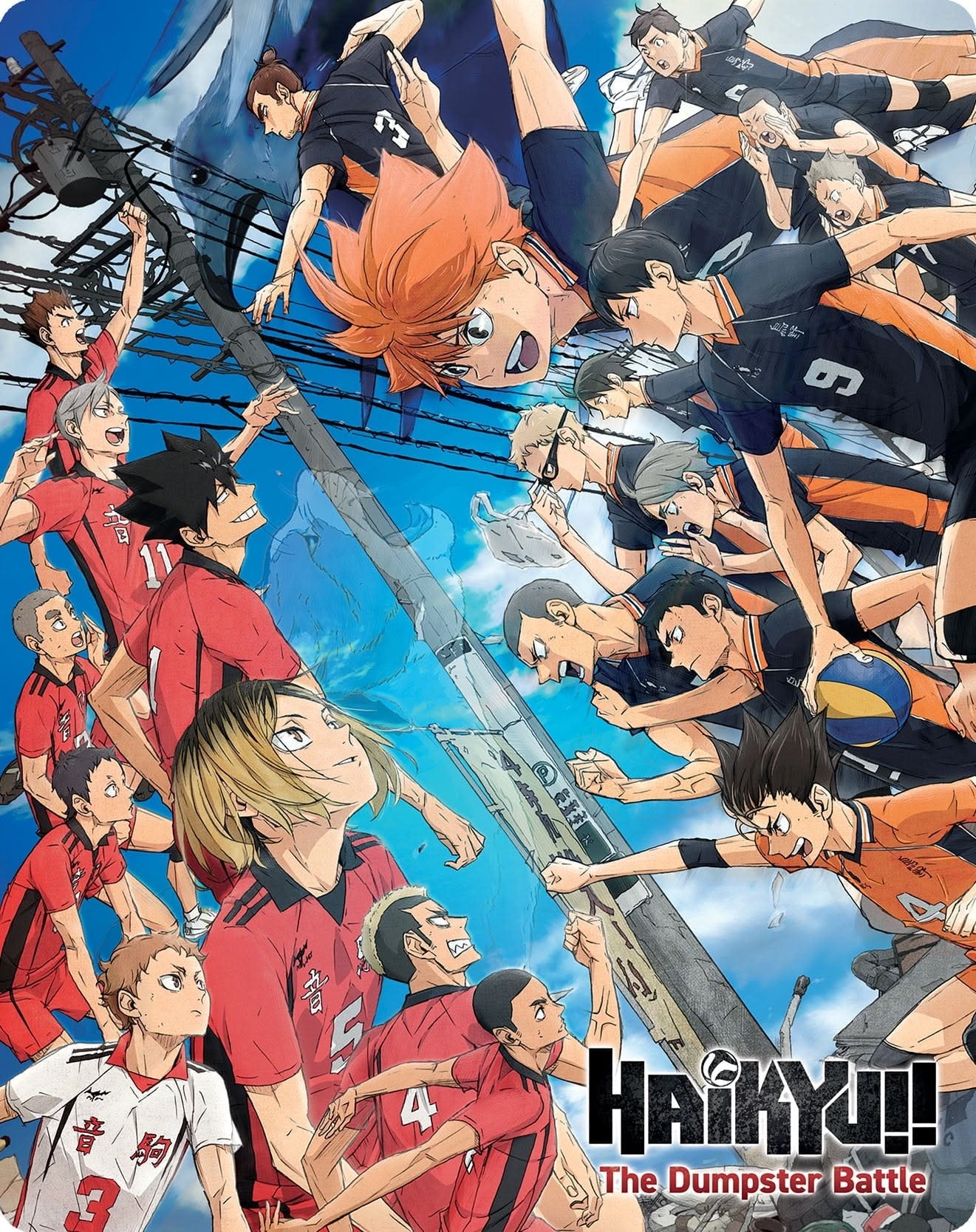
For nearly a decade, sports anime enthusiasts have lived with a singular, unspoken promise etched into their minds: the clash between the crows and the cats on an official, national stage. Now that Haikyu!! The Dumpster Battle (Gekijōban Haikyu!! Gomi Suteba no Kessen) has officially touched down on global streaming platforms, the monumental showdown between Karasuno High and Nekoma High is no longer confined to festival circuits or record-shattering theatrical runs across Tokyo and North America. It is right in our living rooms—raw, breathtaking, and endlessly replayable.
When the film originally tore through the Japanese box office, raking in over 11.5 billion yen (north of $70 million USD), it proved that Haikyu!! is not merely a high-tier shonen franchise; it is a global cultural juggernaut. But theatrical receipts only tell half the story. The transition to streaming allows fans to pause, dissect, and obsess over every microscopic tactical play, camera shift, and emotional micro-expression. Director Susumu Mitsunaka’s masterwork stands as a monument to why the Karasuno-Nekoma rivalry isn’t just the crown jewel of Haruichi Furudate’s manga—it is the platonic ideal of modern sports storytelling.
Decades in the Making: The Narrative Ghost of Ikkei Ukai and Yasufumi Nekomata
To understand why The Dumpster Battle lands with such immense emotional force, one has to look backward into the foundational lore of the series. Most sports anime construct rivals as antagonistic brick walls—arrogant prodigies or ruthless machines designed to elicit satisfaction when they finally topple. Nekoma, however, was never an enemy to be conquered; they were the mirror in which Karasuno learned how to see themselves.
The rivalry carries the weight of a generational ghost story. Decades before Hinata ever leaped over a net or Kenma calculated an angle of trajectory, their former coaches—Ikkei Ukai and Yasufumi Nekomata—spent their youth staging fierce, informal practice matches, always dreaming of the day their respective teams would meet on the hallowed hardwood of the Spring National Tournament. Life, illness, and tournament brackets kept that dream perpetually out of reach.
By the time Karasuno and Nekoma step onto Court Orange in Tokyo, the narrative tension isn’t rooted in malice; it is rooted in reverence. This is not a grudge match. It is the realization of an ancestral promise. The phrase “A match where there are no ‘take-backs'” hangs heavily over every single rally. In a practice match, you can wipe the sweat from your forehead and demand one more game. At Nationals, the moment the Mikasa ball hits the floor, someone’s high school career ends forever.
The Chess Master vs. The Sun: Kenma Kozume’s Psychological Cage
Where The Dumpster Battle truly transcends standard shonen dynamics is in its deliberate structural pivot: this is not Shoyo Hinata’s movie, nor is it Tobio Kageyama’s. It is entirely, unapologetically the internal gospel of Kenma Kozume.
Clipping the Crow’s Wings
Kenma has always functioned as an antithesis to the genre’s protagonist tropes. He is physically unimposing, fundamentally averse to exertion, and views volleyball less as a passionate calling and more as an intricate tactical game to be solved and deactivated. Facing Karasuno, Kenma implements an agonizingly brilliant strategy: he doesn’t try to out-jump Hinata; he systematically strips away Hinata’s joy.
Through pinpoint set distributions and coordinated blocking corridors, Nekoma deliberately limits Hinata’s run-up space. For an athlete whose entire game revolves around unchained momentum and the thrill of flight, Kenma’s suffocating cage is an existential crisis. The film captures this tactical claustrophobia visually, narrowing the aspect frames and darkening the color grade around Hinata’s periphery, visually communicating the terrifying reality of a bird trapped in a shoebox.
The “Fun” Epiphany
Yet, the match’s philosophical core rests on the paradoxical dynamic between hunter and prey. Hinata does not resent the trap; he relishes the puzzle. When Hinata breaks Kenma’s visual cage with his iconic open-space jump—skyrocketing off the court toward the national stadium’s ceiling lights—it doesn’t just disrupt Nekoma’s defense; it breaks Kenma’s apathy.
The climactic realization—when an utterly spent Kenma drops to the floor, sweat stinging his eyes, gasping for breath, and looks at Kuroo to utter the words, “Thank you for teaching me volleyball. It’s fun”—hits like an emotional seismic shift. In that singular, understated whisper, years of emotional alienation dissolve. It is the single most rewarding character payoff in modern sports anime, validating every drop of sweat Kuroo poured into raising his friend from an isolated screen-gazer into a warrior on the court.
Production I.G’s Masterclass: Directorial Kineticism and the First-Person Gaze
Directorial returns rarely feel as vital as Susumu Mitsunaka’s return to the helm for this film. Following fan anxieties over the inconsistent visual production of Season 4: To the Top, Production I.G brought the full weight of their tier-one talent to bear, resulting in an 85-minute feast of dynamic kineticism.
The film rejects traditional anime visual pacing. Instead of cutting to the bench for lengthy tactical monologues, the script lets the animation tell the tactical story. Serves don’t just carry speed lines; they exhibit realistic aerodynamic wobble and the brutal tactile snap of rubber on wrist. Rotations flow organically, with dynamic camera pans capturing the dizzying geometric shifting of six-player floor defenses.
The crowning technical achievement of the entire production—and perhaps of Production I.G’s storied catalog—is the match-point final rally, executed from Kenma’s first-person perspective. The camera moves with erratic, sweat-drenched realism. We see the blur of the yellow-and-blue ball, the desperate lunging limbs of Kuroo and Yaku, the distorted depth perception of an oxygen-starved brain, and the damp strands of pudding-dyed hair sticking to the lens of his vision.
By forcing the viewer inside Kenma’s physical collapse, Mitsunaka strips away the cinematic glamour of anime sports and replaces it with the hyper-real, agonizing intimacy of elite athletics. When the ball finally slips from Kenma’s sweat-slicked fingers—ending the match not with a thunderous spike, but with an unceremonious, tragic physical slip—the collective intake of breath is palpable. It is a cinematic triumph.
The Anti-Cynical Triumph: Why Sports Anime Needed This Match
We live in an era of media saturated by grimdark subversions, cynical deconstructions, and high-stakes survival dramas. The Dumpster Battle operates on a fundamentally different, almost radical frequency: unabashed emotional purity.
There are no villains on Court Orange. There are no systemic injustices being combated, no catastrophic consequences awaiting the losers. The stakes are entirely self-contained within the hearts of twelve teenage boys who simply love a game so intensely that the thought of it ending brings them to tears. The film’s greatest thematic triumph is its refusal to let defeat feel like humiliation. When Tetsuro Kuroo shakes Daichi Sawamura’s hand across the net, the atmosphere isn’t one of bitterness—it is a shared, bittersweet recognition that they have together touched the absolute ceiling of their youths.
The Final Whistle: Why You Must Stream It Now
The availability of Haikyu!! The Dumpster Battle on global streaming services marks the end of an agonizing wait for the international fandom, but it also signals the countdown to the franchise’s final cinematic act. As the anime prepares to adapt Karasuno’s harrowing duel with Kamomedai and the legendary time-skip epilogue, The Dumpster Battle serves as the emotional high-water mark of the entire series.
Whether you are revisiting the match with a frame-by-frame critical eye or experiencing the sheer auditory brilliance of Yuki Hayashi’s score for the very first time, this is essential viewing. Clear your schedule, turn the volume to maximum, and prepare your heart: sports anime simply does not get better than this.
Have you streamed the Karasuno vs. Nekoma showdown yet? Did Kenma’s final realization leave you in tears, or are you still processing that breathless first-person final rally? Drop your reactions and favorite moments in the comments below, and let’s keep the Dumpster Battle debate alive!