
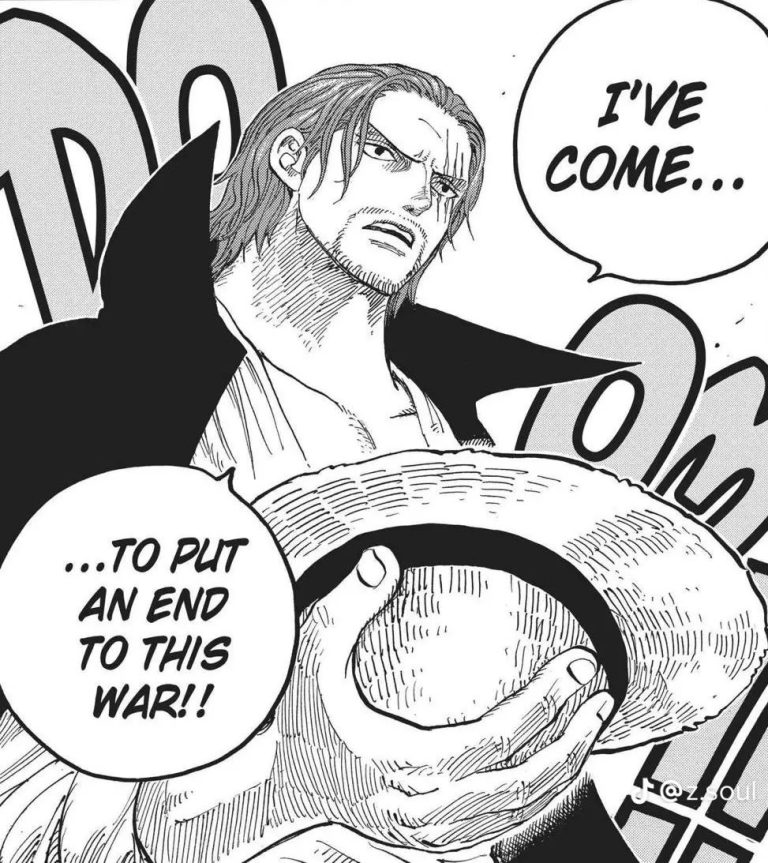
In the grand, sprawling tapestry of modern serialized storytelling, few cultural events carry the ceremonial weight of a milestone One Piece chapter. Eiichiro Oda does not merely celebrate century marks; he weaponizes them. Chapter 100 gave us “The Legend Begins” in the rain-slicked alleys of Loguetown; Chapter 1000 delivered “Straw Hat Luffy” atop Onigashima, crystallizing decades of thematic destiny; and Chapter 1100 shattered our collective hearts with Bartholomew Kuma’s tragic bargain. Now, as the narrative compass firmly points toward the colossal horizon of Chapter 1200, the manga world is holding its collective breath. Set squarely within the titanic, long-awaited shores of Elbaf, the fandom’s prevailing theory suggests that Chapter 1200 will not just be an action set-piece, but a tectonic reckoning: the excavation of the Void Century’s greatest war relics buried within the roots of the realm, paired with the catastrophic unshackling of Prince Loki’s divine, pent-up fury.
The Milestone Pedigree: Why Chapter 1200 Demands a Narrative Paradigm Shift
Oda’s structural cadence is legendary. While casual observers might view chapter numbers as arbitrary serialization counters, seasoned analysts recognize them as deliberate narrative pivot points. With Egghead Island acting as the expositional dam-break—revealing the submerged nature of the pre-flood world and the true voice of Joy Boy via Vegapunk’s broadcast—Elbaf cannot simply be a whimsical Viking detour. It is, by all thematic measurements, the final staging ground before the war for the One Piece reaches Mary Geoise.
Expectations for Chapter 1200 are reaching a fever pitch because Elbaf represents Oda’s oldest unresolved destination, first teased during Little Garden over two decades ago. To deliver a typical transition chapter at this specific milestone would run counter to twenty-seven years of editorial showmanship. The stage is set for an ideological and historical collision that mirrors the gravity of Joy Boy’s first recorded failure eight hundred years ago.
The Subterranean Truth: Yggdrasil, Treasure Tree Adam, and Joy Boy’s Forgotten Arsenal
Central to the prevailing Chapter 1200 discourse is the physical and mythological architecture of Elbaf itself. For years, theorists have pointed out the botanical polarity within the One Piece world: the Sunlight Tree Eve, which funnels light down to Fish-Man Island beneath the Holy Land, and the legendary Treasure Tree Adam, the war-tested timber that birthed the Thousand Sunny.
The Roots That Mirror Mary Geoise
The core theory posits that Elbaf’s colossal world-tree—modeled heavily after the Norse Yggdrasil—is not just an environmental marvel, but a structural anchor covering a submerged Void Century necropolis. When the ancient world flooded during the First Great War, high-altitude civilizations and resilient sovereign nations like Elbaf became ideological fortresses. What lies beneath the snow and moss of the giant realm is not mere bedrock; it is the subterranean staging ground where Joy Boy’s ancient alliance stored their most terrifying counter-measures against the World Government.
Following the revelations of the Iron Giant Emet on Egghead, fans are anticipating that Chapter 1200 will pull back the curtain on ancient war relics far more devastating than single-unit automata. We are talking about dormant continental engines, the foundational blueprints for the Ancient Weapon Pluton’s terrestrial counterparts, or perhaps the original arsenal of the ancient Giant race that served as Joy Boy’s royal guard. In uncovering these relics, Elbaf transforms from a sanctuary of warrior heritage into the armory of the final apocalypse.
Loki Unbound: The Psychology of the Cursed Prince and Divine Zoan Awakening
If the relics below Elbaf represent the technological weight of the past, Prince Loki is the untamed, volatile catalyst of the present. Introduced as the “Cursed Prince,” bound by colossal Seastone chains and cast into the freezing wilderness of Elbaf’s underworld, Loki represents a breed of character Oda excels at writing: the misunderstood monster whose moral alignment refuses to conform to binary heroics.
Mythological Resonance: From Trickster to Ragnarok Engine
In Norse mythology, Loki’s binding is the direct precursor to Ragnarok—the doom of the gods. Oda’s visual language surrounding Loki is deliberately ominous: bandaged eyes, serpentine smiles, and a reputation stained by patricide after consuming Elbaf’s “legendary Devil Fruit.” The reigning theory for Chapter 1200 predicts the formal shattering of these chains. But unlike previous allied rulers such as Vivi, Rebecca, or Momonosuke, Loki is not a victim waiting to be rescued by Luffy’s Nika persona. He is an apocalyptic equalizer.
Should Chapter 1200 stage Loki’s divine fruit awakening, the narrative stakes will pivot violently. The prevailing belief within lore communities is that Loki’s fruit is an Ancient or Mythical Zoan of cataclysmic proportions—perhaps tied to the World Serpent Jörmungandr, the wolf Fenrir, or an archaic deity of pure terrestrial devastation. His unchaining will not be a tidy celebration of freedom; it will be an unleashing of divine wrath aimed squarely at the celestial status quo that orchestrated his bloodline’s isolation.
The Shadow of Mary Geoise: The Holy Knights Converge
No theory regarding Chapter 1200’s magnitude is complete without acknowledging the looming threat of Mary Geoise. With Saint Figarland Garling elevated to the Five Elders and the world in socio-political freefall following Vegapunk’s global transmission, the World Government can no longer afford to leave Elbaf unmonitored. The Holy Knights (God’s Knights) have stepped into the narrative spotlight precisely to handle sovereign defiance of this scale.
If Elbaf’s subterranean depths indeed harbor Joy Boy’s forgotten war machines, the World Government’s elite vanguard will not wait for the Straw Hats to unearth them peacefully. Chapter 1200 presents the immaculate narrative timing for a multi-front breach: the Straw Hats descending into Elbaf’s roots, Loki breaking free in a cataclysm of unbound Haki and mythological power, and the Holy Knights making landfall to execute an unholy purge. It carries the distinct signature of Oda’s escalating third-act chaos, where multiple legendary factions collide over an ancient secret.
Community Pulse and Thematic Destiny
Across dedicated forums, social media spaces, and analytical video essays, the global One Piece fandom is experiencing an unprecedented surge of collective theorizing. The consensus is clear: the post-Wano era has stripped away narrative filler, shifting into an unapologetic, breakneck endgame sprint. Fans are no longer asking if the Void Century’s greatest truths will be revealed, but whose perspective will frame them.
Thematically, Elbaf embodies the convergence of honor, inherited will, and the physical resistance against tyranny. Luffy’s liberation ethos—embodied by Sun God Nika—must inevitably interact with Loki’s violent, destructive brand of rebellion. When the chains snap in Chapter 1200, it won’t just signify another epic duel; it will signify the dawn of the final war’s mythological prelude.
The Horizon Beckons
Whether Oda validates every beat of the subterranean war relic hypothesis or, as he so often does, pulls the rug out from beneath our feet to deliver something entirely unimaginable, Chapter 1200 stands as an indisputable milestone in modern pop culture. The foundations of the world are cracking, the ghosts of the Void Century are speaking through iron and stone, and Prince Loki’s shackles are rattling loose in the dark. The stage is set for an epochal paradigm shift—and the world of manga will never be the same.
What do you think lies buried in the depths beneath Elbaf? Is Prince Loki destined to be Luffy’s greatest wild-card ally or a terrifying harbinger of Ragnarok? Drop your hottest Void Century theories in the comments below, and stay tuned to Wibux.com for breaking coverage and chapter breakdowns.
One thought on “One Piece Chapter 1200 Theory: The Void Century War Relics Beneath Elbaf and Loki’s Unshackled Divine Wrath”