

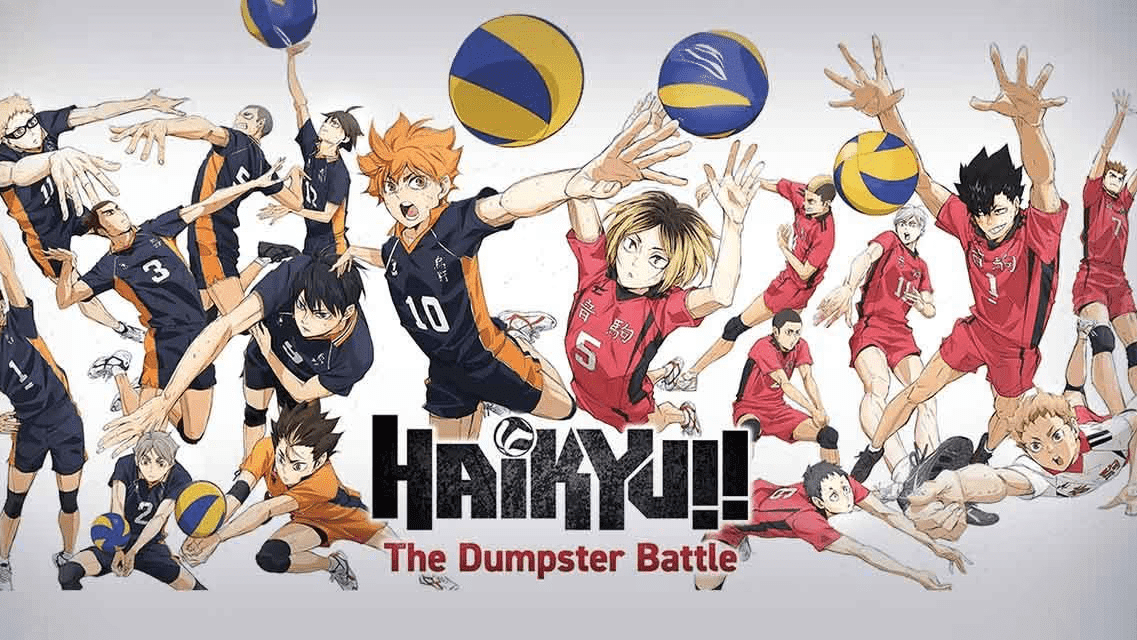
For over a decade, sports anime has lived under the towering shadow of a promise whispered across dirt courts and Tokyo training camps: the long-awaited “Battle at the Garbage Dump.” When Haikyu!! The Dumpster Battle (Gekijōban Haikyu!! Gomi Suteba no Kessen) finally tore through international box offices earlier this year, it didn’t just break commercial records by raking in over 11 billion yen in Japan alone—it shattered the structural conventions of modern shonen cinema. Now that the cinematic juggernaut has officially landed on global streaming platforms, audiences worldwide can dissect what may very well be the emotional and mechanical apex of Haruichi Furudate’s volleyball epic.
Unlike standard sports anime fare, which frequently relies on melodramatic villainy, high-stakes revenge, or apocalyptic stakes to manufacture tension, The Dumpster Battle operates on a fundamentally pure premise: mutual reverence. The showdown between Miyagi’s Karasuno High and Tokyo’s Nekoma High is not a fight for survival; it is the realization of a generational dream nurtured by their former coaches, Ikkei Ukai and Yasufumi Nekomata. It is sports storytelling stripped of cynicism, transformed into a relentless, kinetic masterclass in character psychology and cinematic craft.
The Philosophy of Play: When Rivalry Transcends Antagonism
Most sports narratives live and die by the friction between protagonist and antagonist. Think of the bitter, pride-shattering grudge matches in Blue Lock or the existential dread woven into the fabric of Hajime no Ippo. Haikyu!!, however, has always championed a radical brand of empathy. Karasuno and Nekoma do not hate each other; they are mirrors held up across the net, their respective animal motifs—the scavenging, opportunistic Crows and the patient, bloodhound Cats—serving as twin philosophies of survival.
This dynamic grants the match an excruciating, bittersweet tension. In the single-elimination bracket of the Spring Tournament, a victory for one program marks the absolute end of the high school careers of the other’s third-years. There are no rematches. There is no “next set.” The script constantly reminds the viewer of this finitude, turning routine digs and cross-court spikes into micro-tragedies. When Nekoma captain Tetsuro Kuroo orchestrates a perimeter defense, or Daichi Sawamura dives desperately to save an errant bounce, we aren’t rooting for someone to fail; we are dreading the inevitable moment the whistle blows for the last time.
A Generational Relay Fulfilled
The match serves as a deeply poignant emotional catharsis for Ukai and Nekomata, two aging mentors who never managed to stage their dream duel on the national stage during their youth. By capturing this ancestral thread, director Susumu Mitsunaka frames every rally not just as a contemporary clash of athletic titans, but as an heirloom being polished by the next generation. It validates every grueling training camp, every combined practice match, and every painful developmental failure Karasuno endured to climb back from the abyss of their “fallen crows” reputation.
The Digital Chessboard: Kenma Kozume’s Psychological Siege
While Shoyo Hinata and Tobio Kageyama remain the engine of Karasuno’s offense, The Dumpster Battle belongs undeniably to Nekoma’s introverted setter, Kenma Kozume. The film structures itself as a cerebral horror film disguised as a volleyball match, with Kenma acting as the quiet, calculated architect of Karasuno’s confinement.
Kenma treats life like an energy-conservation simulation and volleyball as a game he merely tolerates to keep his friends happy. Facing Hinata—a creature of pure, kinetic instinct and limitless stamina—Kenma doesn’t attempt to overpower the freak quick. Instead, he systematically deconstructs Hinata’s geometry. By calculating trajectory, forcing awkward returns, and deliberately narrowing Hinata’s approach runs, Kenma builds an invisible cage around the court. The visual metaphor of a bird having its wings clipped in real time is executed with bone-chilling clarity.
Yet, the true genius of the narrative lies in Hinata’s response. Rather than despairing, Hinata thrives on the suffocating constraint, inventing a higher vertical leap out of thin air—the “jump that stops the world.” In forcing Kenma to sweat, sprint, and breathe through burning lungs to keep the ball alive, Hinata does the unthinkable: he forces the gamer to care.
The thematic culmination of this duel isn’t a miraculous game-winning kill; it is Kenma, collapsed onto the hardwood, drenched in sweat, looking up at Kuroo with genuine awe and uttering the words the series spent hundreds of chapters building toward: “Tanoshii” (“It’s fun”). That single, breathless confession is a more potent victory than any gold medal.
Kinetic Poetry: Susumu Mitsunaka and Production I.G’s Visual Tour de Force
When Toho Animation announced that the conclusion of Haikyu!! would be adapted across a two-part cinematic project rather than a full episodic season, fandom anxiety flared. How could an 85-minute film capture the dense, chapter-heavy tactical war of the Gomi Suteba? Director Susumu Mitsunaka, returning to helm the project after directing the series’ celebrated first three seasons, answered those doubts with aggressive, boundary-pushing cinema.
The pacing of The Dumpster Battle is frantic yet surgical. Mitsunaka trims structural fat, eschewing extended bench reactions and expository side-commentary to plunge the audience directly onto the court floor. The sound design is hyper-tactile: the thunderous squeak of rubber soles against polished wood, the sharp snap of leather against forearms, and the increasingly ragged gasps for air mimic the sensory overload of high-tier competitive athletics.
The Climax: A Groundbreaking First-Person Masterclass
The film’s technical crowning achievement arrives in its final rally. Rather than keeping the camera detached, Production I.G shifts the visual perspective entirely into Kenma’s first-person point of view. The screen blurs with sweat and fatigue; the camera whips wildly as Kenma’s field of vision narrows, desperately tracking the ball as his limbs refuse to obey his brain. It is an astonishing sequence of kinetic animation that places the viewer not in the stands as a spectator, but inside the suffocating, glorious agony of competitive exhaustion.
The Cultural Legacy and the Looming Threat of Kamomedai
The global streaming premiere of The Dumpster Battle marks a watershed moment for modern anime distribution. By capturing the global sports zeitgeist, it validates the shift toward theatrical event-releases for pivotal anime arcs—a paradigm made mainstream by Demon Slayer: Mugen Train and The First Slam Dunk. It proves that sports anime, often historically perceived as niche in Western markets compared to battle shonen, possesses universal, blockbuster appeal when anchored by uncompromising visual fidelity.
However, this film also leaves Karasuno in a precarious narrative position. With Nekoma finally laid to rest, the stage is set for the second feature film: the Quarterfinal clash against Kamomedai High. There, Hinata will meet Korai Hoshiumi, the true modern heir to the “Little Giant” title, in a match characterized by sheer physical and psychological warfare. If The Dumpster Battle was the series’ emotional heart, the upcoming conclusion promises to be its philosophical trial by fire.
Verdict: Sports Anime in Its Purest Form
Haikyu!! The Dumpster Battle succeeds because it understands what makes sports intrinsically beautiful. It isn’t the trophies, the headlines, or the vindication over an enemy. It is the communal experience of collective effort; the sacred, ephemeral space where two teams bring out the absolute best in one another, knowing only one will walk away to fight another day.
By treating its athletes with radical respect and pairing Furudate’s unmatched psychological depth with Production I.G’s peak animation pedigree, this film doesn’t just conclude a legendary rivalry—it cements Haikyu!! as an undisputed masterpiece of the modern animation canon.
Have you streamed Haikyu!! The Dumpster Battle yet? Did Kenma’s climactic realization break your heart, or are you already bracing yourself for the brutal showdown against Kamomedai? Sound off in the comments below, and let us know where this showdown ranks among your favorite anime matches of all time!