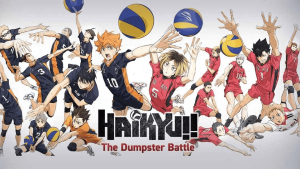

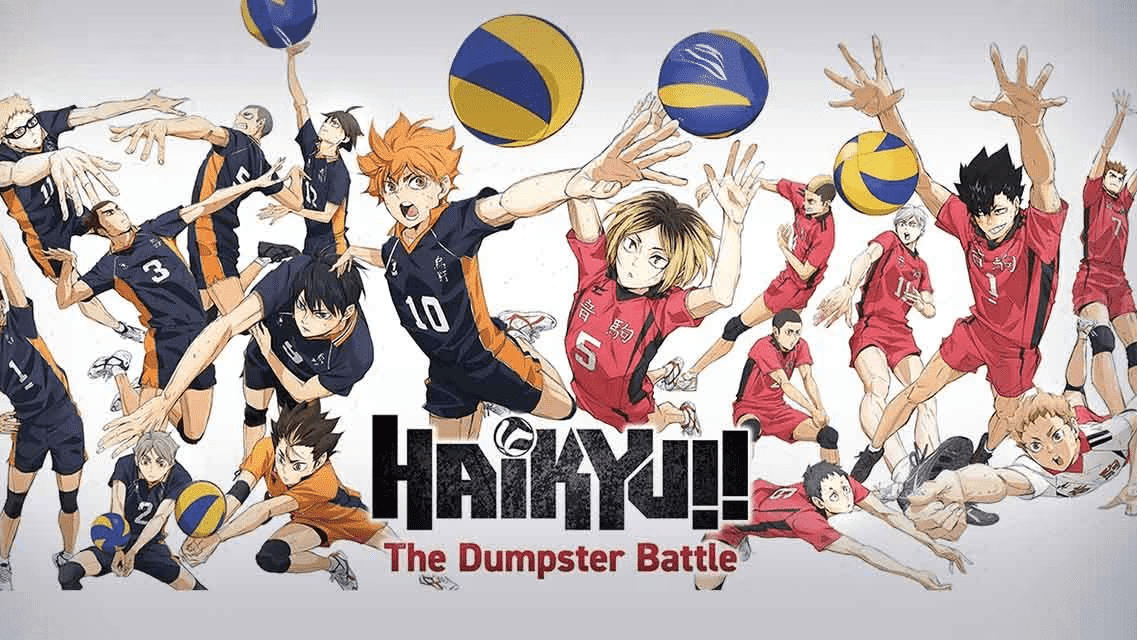
For over a decade, sports anime enthusiasts have lived in anticipation of a singular, sacred clash. It wasn’t a championship final, nor was it an antagonistic vendetta steeped in bad blood. It was a promise forged on dirt courts decades ago between two stubborn old coaches, inherited by a murder of airborne crows and a litter of resilient alley cats. With Haikyu!! The Dumpster Battle (Gomi Suteba no Kessen) finally landing on global streaming platforms following a monster $100 million-plus international theatrical run, the world can now dissect at will what is undeniably the emotional and mechanical apex of Haruichi Furudate’s magnum opus.
Clocking in at an economical, relentless 85 minutes, the film bypasses standard narrative filler to plunge viewers straight into the Miyagi-Tokyo crucible. This is not merely a high-stakes match at the Spring High National Tournament; it is an ideological summit. The battle between Karasuno High and Nekoma High is the definitive rebuttal to sports shonen tropes, trading bitter enmity for radical empathy, tactical brilliance, and a love letter to the simple act of play.
The Bloodline of the “Garbage Dump”: Inherited Will Without Malice
Most sports narratives rely heavily on external friction to manufacture tension. We are conditioned to root against the arrogant prodigy, the ruthless powerhouse, or the Machiavellian tactician who treats opponents with contempt. Haikyu!! subverts this entirely. The Karasuno-Nekoma rivalry thrives precisely because both programs are mirror reflections bound by mutual reverence.
The roots trace back to Karasuno’s former coach, Ikkei Ukai, and Nekoma’s Yasufumi Nekomata. Their lifelong, friendly animosity passed down through generations of players who never managed to meet on the national stage until now. What makes The Dumpster Battle so poignant is its acute awareness of finality. This is the “match that cannot be replayed”—a stark contrast to the casual practice games at the Shinzen training camps where sets were won, lost, and immediately followed by penalty laps and barbecues. Every dig and tip in this movie carries the spectral weight of generations, yet the players on the court are buoyed by joy rather than suffocated by dread.
The Grand Chess Match: Kenma Kozume’s Claustrophobic Cage
At the center of this theatrical masterpiece is the psychological tug-of-war between two diametrically opposed athletes: Karasuno’s Shoyo Hinata and Nekoma’s setter, Kenma Kozume. If Hinata is raw, kinetic solar energy, Kenma is quiet gravity. The film fundamentally frames the match not through the eyes of Karasuno’s protagonists, but through Kenma’s analytical, often detached perspective.
Suffocating the Sun
Kenma’s game plan is terrifyingly elegant. Recognizing that Hinata thrives on momentum, spatial freedom, and pure tempo, Kenma systematically dismantles Karasuno’s offensive rhythm. He forces Karasuno into predictable passing lanes, pins Hinata behind blockers, and denies him the runway required for his signature broad jump. For an agonizing stretch of the second set, the viewer feels the walls closing in alongside Hinata. The film visualizes this psychological trapping with haunting clarity: Hinata is cast into a metaphorical birdcage, clipped of his wings by a gamer who treats volleyball as a puzzle to be solved.
The Breakthrough and the “Fun” of Exhaustion
Yet, the genius of Furudate’s writing—and director Susumu Mitsunaka’s execution—is that Kenma doesn’t want Hinata to fail permanently; he wants him to be interesting. When Hinata finally shatters Kenma’s trap via an unorthodox, high-arcing open toss that grants him the vertical clearance to soar above Nekoma’s triple block, the reaction isn’t despair—it is sublime awe. The climax of Kenma’s arc arrives not with a victory or defeat, but with a sweat-drenched, lung-burning realization: “It’s fun.” For a character who spent three seasons viewing volleyball as a chore undertaken solely for his childhood friend Tetsuro Kuroo, this quiet admission lands with the seismic impact of an Olympic gold medal.
Production I.G’s Kinetic Masterclass: Directing Sweat, Momentum, and First-Person Realism
When it was announced that the conclusion of Haikyu!! would be adapted across two feature films rather than a full television season, fandom skepticism was rampant. Condensing dozens of manga chapters into a single feature felt like a precarious gamble. However, the return of veteran series director Susumu Mitsunaka proved to be the project’s saving grace. Mitsunaka understood that a match of this psychological density required cinema-grade pacing that television simply could not accommodate.
Production I.G elevates every rally into a masterclass in kinetic anatomy. The sound design is hyper-tactile: the squeak of sneakers gripping court varnish, the muffled thud of a chest receive, the terrifying resonance of a clean spike meeting a defender’s forearms. There are no static exposition breaks or freeze-frames masquerading as high-stakes drama. The camera moves with liquid ferocity, swooping through the net, tracking rotations, and utilizing dynamic shifts in depth-of-field to simulate peripheral court awareness.
The film’s absolute tour-de-force occurs in its final moments—an audacious, extended sequence animated entirely from Kenma’s first-person point-of-view. As Kenma stumbles through the final rally, the camera wobbles with exhaustion. His vision blurs at the edges; drops of sweat sting the lens; ragged, hyperventilating breaths dominate the soundscape. We aren’t just watching high-level volleyball; we are trapped inside the biological reality of extreme physical exertion. It is one of the most mechanically daring sequences in modern shonen animation, stripping away all glamor to honor the sheer grit of the sport.
Tetsuro Kuroo: The Architect of Karasuno’s Arsenal
It is impossible to discuss the perfection of The Dumpster Battle without highlighting Nekoma’s captain, Tetsuro Kuroo. The match serves as a structural testament to his generosity. During the Tokyo Expedition arc, it was Kuroo who voluntarily mentored Karasuno’s Kei Tsukishima, teaching him the nuances of “read blocking” and how to properly funnel attackers. Kuroo nurtured the very weapons that would eventually dismantle his own offense.
This dynamic reframes sports shonen conflict entirely. When Tsukishima successfully blocks Nekoma’s spikes, Kuroo smiles like a proud older brother. When Kuroo pulls off an impossible one-touch receive, Tsukishima’s game face tightens in begrudging admiration. In Nekoma’s philosophy of “connecting”—the concept that a volleyball match is an unbroken chain of human effort—Kuroo connects not just with his teammates, but with his rivals. He embodies the thematic heart of the franchise: that iron sharpens iron, and victory is hollow if you haven’t forced your opponent to become their absolute best self.
The Anti-Climactic Masterstroke That Redefines the Genre
Perhaps the boldest artistic decision in The Dumpster Battle is its ending. There is no blistering service ace to cap the match, no gravity-defying super spike, no cinematic miracle. The final point is decided by a mundane, heartbreaking reality of athletic exhaustion: a sweat-slicked ball slipping off a setter’s trembling fingertips.
It is a devastatingly realistic conclusion that reminds us of the fragility of high school athletics. In sports, dreams do not always end with an opponent outplaying you; sometimes, your body simply reaches its absolute limit. Yet, because the match was played with such complete, unreserved passion, there are no tears of bitter regret. There are only handshakes, exhausted smiles, and two old men across the gymnasium raising their hands in a long-overdue, invisible salute.
Haikyu!! The Dumpster Battle avoids every trap of lazy sports melodrama to deliver something transcendent. Now that global audiences can stream, pause, and study every frame, its legacy is set in stone: this is sports anime operating at the absolute peak of its thematic, emotional, and technical powers.
Now that the match has officially cleared the net on streaming, where does The Dumpster Battle rank among your favorite anime films of the modern era? Did Kenma’s final realization pull a tear from your eye, or are you already anxious about how Production I.G will handle the Kamomedai showdown? Sound off in the comments below!