

When the screen faded to black at the end of the premiere of Dragon Ball Daima, the collective sigh from the global anime community wasn’t merely one of relief—it was an overwhelming wave of emotional catharsis. Following the devastating loss of legendary creator Akira Toriyama in March 2024, every frame of this 40th-anniversary project carries an immense, historical gravity. What could easily have felt like a cynical marketing ploy to peddle merchandise has instead arrived as a vibrant, visually spectacular love letter to Toriyama’s enduring creative spirit. Far from a hollow repetition of franchise tropes, Dragon Ball Daima feels like an intimate reunion with the master’s purest instincts: boundless curiosity, lighthearted irreverence, and kinetic martial arts joy.
A Bittersweet Milestone: Toriyama’s Direct Fingerprints on the 40th Anniversary
To understand the sheer cultural weight of Dragon Ball Daima, one must understand how rare Toriyama’s direct, holistic involvement had become. While the late author provided broad narrative outlines for Dragon Ball Super and conceptual character designs for cinematic outings like Broly and Super Hero, Daima represents an unprecedented degree of hands-on authorship unseen since the original manga run ended in 1995. Toriyama personally conceptualized the entire overarching story, drafted original lore bibles, designed the characters and their mechanical conveyances, and coined the series title himself—drawing from the nuance of “Daima” as a play on “evil” and grand supernatural mystery.
The result is a production that immediately separates itself from modern franchise bloat. There is an unmistakable warmth pulsating beneath the narrative architecture. Rather than escalating directly into the next tier of multiversal godhood—a path that had begun to strain the narrative limits of Super—Toriyama deliberately pulled back on the cosmic throttle. Premiering on the precipice of the franchise’s 40th anniversary, the series serves not just as a retrospective, but as a reaffirmation of what made Dragon Ball a global phenomenon in the first place: the sheer, childlike thrill of stepping into the unknown.
Beyond the ‘Mini’ Gimmick: Unraveling the Secrets of the Demon Realm (Makai)
When Toei Animation first revealed that Goku and the Z-Fighters would be transformed into children, skeptical fans immediately sounded the alarm, fearing a tone-deaf retread of 1996’s divisive Dragon Ball GT. Yet the premiere decisively puts those anxieties to rest within its meticulously plotted opening sequence. This transformation is not an accidental wish or an afterthought; it is the calculated opening move in a high-stakes political intrigue originating from the deepest shadows of canon: the Demon Realm (Makai).
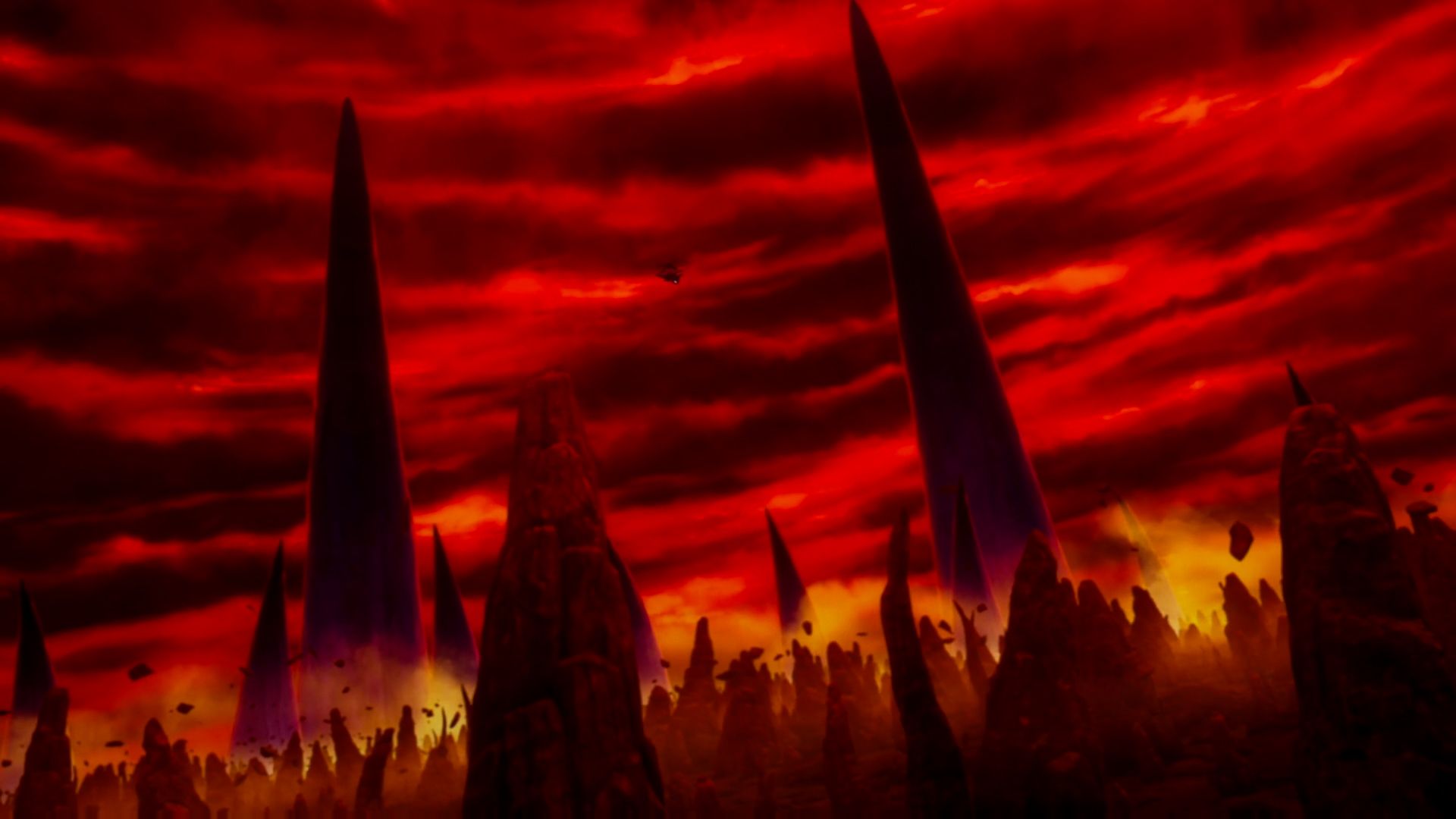
For decades, the Demon Realm existed as a tantalizing footnote in official databooks, briefly personified by Dabura before being left largely unexplored in favor of alien conquerors and celestial deities. Daima rectifies this with staggering depth. The premiere introduces King Gomah, the nervous yet ambitious successor to Dabura’s throne, and Degesu, brother to Universe 7’s own Supreme Kai (Shin). Watching the events of the Majin Buu saga unfold via crystal-ball surveillance, Gomah identifies the Saiyans as an existential threat to his sovereign power. His preventative strike—using Earth’s Dragon Balls to de-age its defenders—is a tactical masterstroke driven by raw political paranoia.
Rewriting Namekian Mythology and Dragon Lore
Toriyama’s most fascinating conceptual pivot lies in his expansion of Namekian origins. The premiere introduces Neva, an ancient, wizened Namekian native to the Demon Realm whose presence subtly rewrites decades of assumptions regarding the green-skinned race. By showcasing that the Demon Realm possesses its own distinct set of Dragon Balls, guarded not by peaceful clan elders but by menacing entities known as the Tamagami, Daima injects an exotic, dangerous mysticism back into the franchise’s namesake relics. The wish is granted, the heroes are altered, and the geopolitical landscape of Toriyama’s cosmos is irrevocably widened.
Kinetic Masterclass: Toei Animation Reclaims the Lost Art of Martial Arts
Visually, the premiere of Dragon Ball Daima stands as an indisputable triumph of modern television animation. Directed by Yoshitaka Yashima and Aya Komaki (renowned for her transcendent work on One Piece’s Wano Arc), the production demonstrates an absolute mastery of pacing, light, and anatomical weight. Character designs adapted by veteran Katsuyoshi Nakatsuru bridge the gap between Toriyama’s softer, rounder contemporary art style and the razor-sharp punchiness of classic 90s Shonen Jump aesthetics.
Nowhere is this production pedigree more apparent than when Goku discovers his miniaturized body and immediately takes to the grass to test his physical center of gravity. Instead of relying on the instantaneous ki-flashes, screen-shaking auras, and static blast-exchanges that frequently bogged down long stretches of modern shonen, the choreography is grounded, tactile, and delightfully physical. When Goku reclaims his iconic Power Pole (Nyoibo)—a weapon virtually abandoned since the 23rd Tenkaichi Budokai—it signals a definitive philosophical shift. Combat in Daima demands footwork, balance, momentum, and weapon-based ingenuity. It is an exhilarating return to the classic martial-arts cinema roots that Toriyama obsessively pulled from when he first put pen to paper in 1984.
Nostalgia Done Right: Psychological Grounding in the Post-Buu Era
Narratively nestled in the quiet window between the defeat of Kid Buu and the arrival of Beerus in Battle of Gods, Daima exploits this specific timeline placement to deliver rich character interactions that feel earned. We witness the core cast during a rare moment of peacetime: celebratory banter, a birthday party for the eccentric Mr. Satan, and Vegeta nursing his trademark, begrudging sociability. This idyllic domesticity makes the sudden biological regression hit with genuine comedic and character-driven bite.
Rather than spiraling into despair, the psychological response of the Z-Fighters is quintessentially Toriyama-esque. Vegeta is primarily furious about the indignity to his Royal Saiyan pride, Piccolo assesses the tactical implications with deadpan analytical calm, and Goku displays an infectious, indomitable grin. Goku’s joy at encountering a physical handicap—a shorter reach, altered muscle memory, and unfamiliar physics—is the quintessential distillation of his character psychology. He does not fight merely to protect; he fights for the pure, unadulterated sensation of personal evolution. Accompanied by the enigmatic demon pilot Glorio and a miniaturized Supreme Kai, Goku’s voyage into the Demon Realm feels less like an obligatory rescue mission and more like an intoxicating, fantastical odyssey.
The Verdict: Toriyama’s Timeless Gift to Waku-Waku Adventure
Dragon Ball Daima’s opening salvo accomplishes the seemingly impossible: it pays profound homage to a forty-year history while simultaneously opening up entirely untrodden creative ground. It does not trade on cheap nostalgia, nor does it collapse under the crushing grief of Toriyama’s absence. Instead, it moves with the breezy, effortless confidence of a creator who knew his universe inside and out, inviting the audience along for one final ride packed with waku-waku—that untranslatable Japanese sense of heart-pounding, joyous anticipation.
As Goku leaps aboard Glorio’s ship, Power Pole slung over his back and a determined glint in his de-aged eyes, Daima cements itself as an indispensable chapter in the anime canon. It is a stunning, emotionally resonant victory lap for the undisputed father of modern shonen, proving that while legends may pass, the spirit of genuine adventure never truly ages.
What did you think of the Dragon Ball Daima premiere? Did the Demon Realm lore and the return of the Power Pole hit your nostalgic sweet spot, or are you waiting for the cosmic power scaling to ramp back up? Sound off in the comments below, and keep your scouters locked to Wibux.com for weekly episode breakdowns, lore analyses, and exclusive anime industry deep dives!