Ever since the melancholic, universe-resetting chords of Stone Ocean faded into memory, the global anime community has collectively held its breath for one singular, monumental milestone: the animated adaptation of JoJo’s Bizarre Adventure: Steel Ball Run. Long hailed as Hirohiko Araki’s undisputed magnum opus—perennially perched near the very pinnacle of MyAnimeList’s top-rated manga—Steel Ball Run is far more than just a seventh installment. It represents a dramatic philosophical reset, a transition from shonen pulp to high-art seinen, and the most technically daunting mountain that David Production has ever dared to climb.
Whispers of pre-production rumors, trademark filings, and cryptic animator tweets have ignited the internet into a continuous state of speculative frenzy. Yet beneath the meme-laden surface of the JoJo fandom lies a palpable reverence for what Part 7 actually represents. Adapting this 4,000-mile trans-American horseback odyssey is not simply a matter of drawing stylized poses; it demands a collision of grueling equestrian animation, complex geopolitical grit, and two of the most nuanced characters ever conceived in sequential art.
The Seinen Rebirth: Why Steel Ball Run Stands as Araki’s Masterpiece
To understand the sheer magnitude of the anticipation, one must appreciate the context of Steel Ball Run’s inception. Debuting in 2004, the series began its life in Weekly Shonen Jump before transitioning in 2005 to the monthly seinen imprint Ultra Jump. Unshackled from the restrictive demographics and grueling weekly delivery schedules of shonen publishing, Araki’s storytelling blossomed into something profoundly introspective, tactile, and uncompromisingly violent.
Part 7 takes place in an alternate 1890, replacing the century-spanning familial melodrama of the Joestar bloodline with a gritty, sun-baked historical western. The narrative is framed around the titular Steel Ball Run—a cutthroat cross-country equestrian race organized by eccentric promoter Steven Steel, stretching from San Diego Beach to New York City. The prize: fifty million dollars. The reality: a global convergence of outlaws, assassins, and supernatural operatives fighting for the literal pieces of a miraculous holy relic.
From Hamon to the Golden Ratio: The Physics of The Spin
Where earlier parts relied on vampire-slaying martial arts or punch-ghost manifestation, Steel Ball Run fundamentally reimagines supernatural combat through The Spin. An ancient, closely guarded discipline hailing from the Kingdom of Naples, the Spin is a weaponization of natural rotational physics governed by the Fibonacci sequence and the Golden Ratio.
Unlike traditional Stands, the Spin is a learned craft requiring intense anatomical calculation and spatial awareness. By unleashing steel spheres that distort muscle fibers, deflect projectiles, and bend reality around the curvature of nature itself, Araki crafted an aesthetic system that feels deeply mathematical yet wildly abstract. Bringing this visual geometry to life on screen presents David Production with a mesmerizing graphic design opportunity—one that could easily redefine their signature dynamic color palettes and kinetic text flourishes.
Johnny Joestar and Gyro Zeppeli: Flawed Humanity and Dark Determination
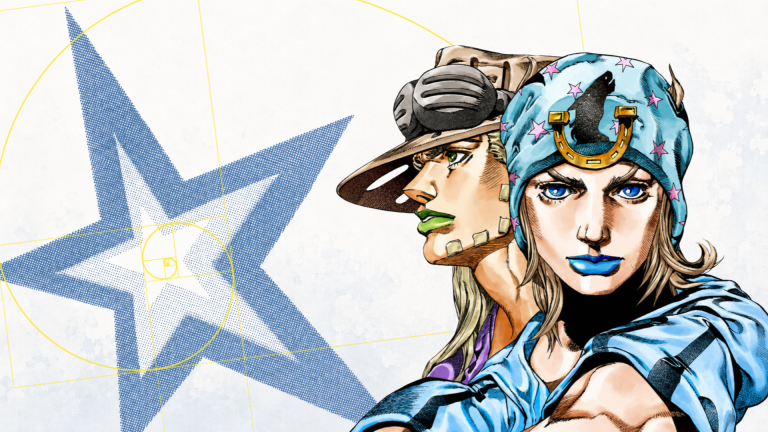
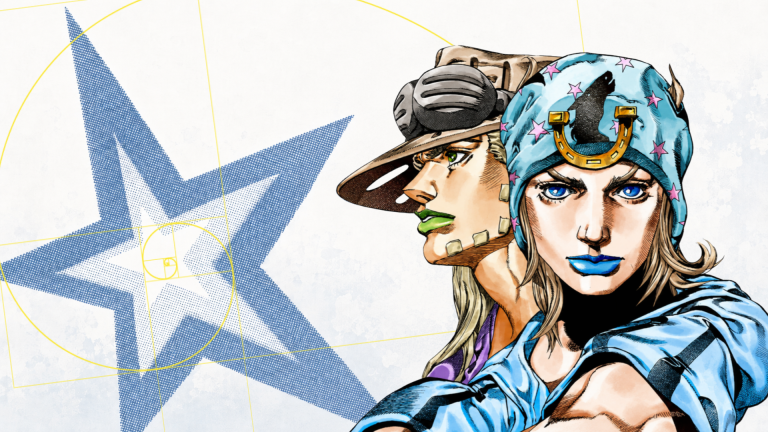
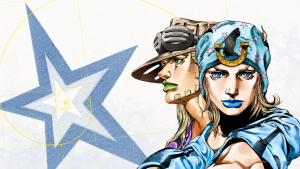
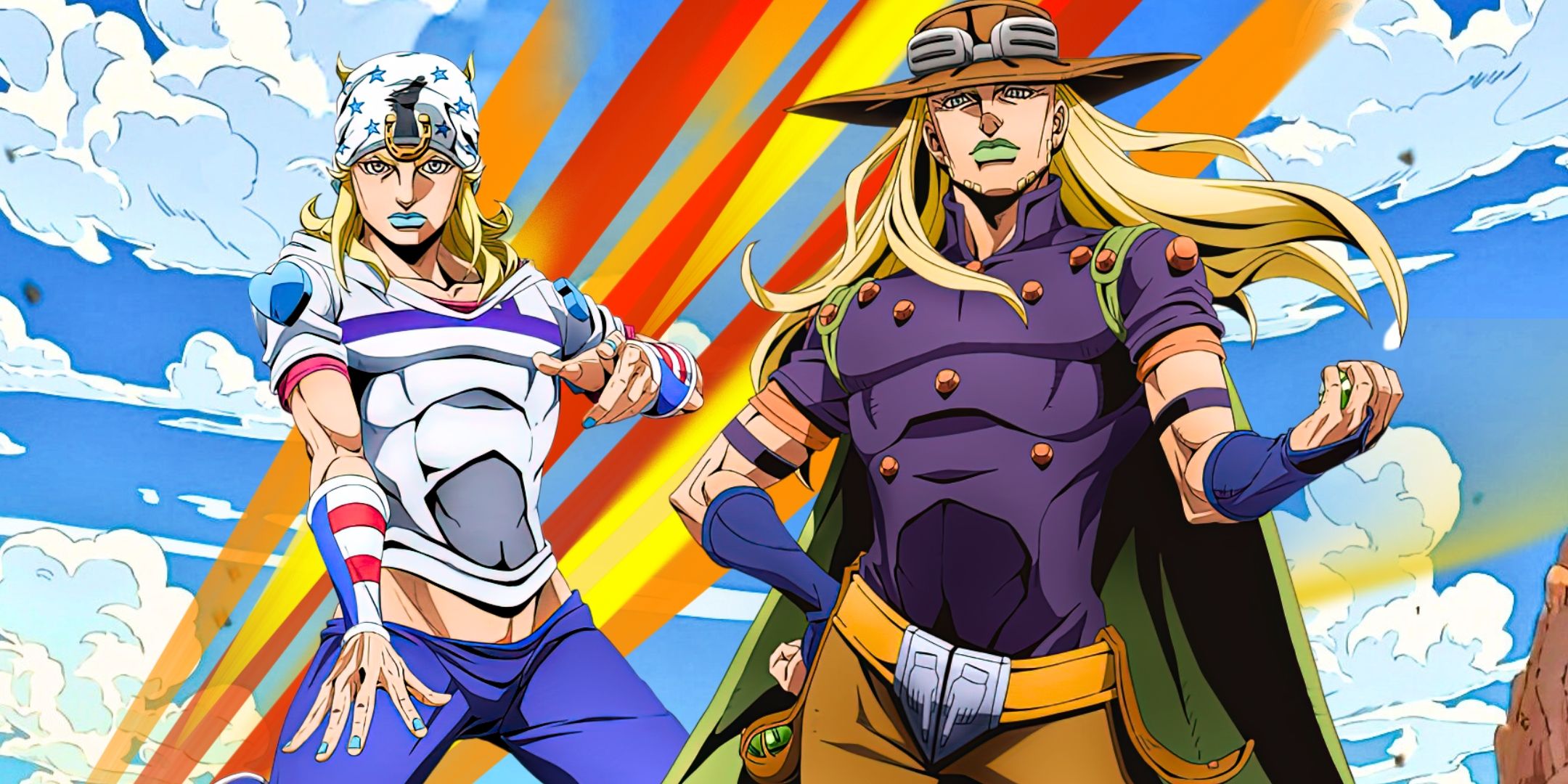
At the beating emotional heart of this grand American traversal is the partnership between Johnny Joestar and Gyro Zeppeli. In an era where shonen protagonists were often defined by boundless optimism and unshakeable moral rectitude, Johnny arrived as a breath of cold, bitter air. A former racing prodigy rendered paraplegic by his own vanity and arrogance, Johnny begins the story not as a hero, but as an emotionally scarred opportunist driven by an obsession to reclaim the use of his legs after catching a fleeting glimpse of Gyro’s Spin.
Araki frequently refers to Johnny’s defining trait as his “dark determination”—a cold-eyed willingness to kill without hesitation if it means reclaiming his humanity. His Stand, Tusk, visually reflects this traumatic maturation, evolving through four distinct “Acts” from a pathetic, worm-like avatar into an interdimensional colossus capable of defying space-time itself.
Balancing Johnny’s brooding existential despair is Gyro Zeppeli, easily one of the most charismatic, tragic figures in modern manga history. Flamboyant, absurdly proud, yet burdened by an agonizing moral duty to save a condemned child from execution in his home country, Gyro acts as mentor, foil, and soulmate to Johnny. Their fireside conversations—spanning juvenile running gags about days of the week to poignant meditations on faith, luck, and sacrifice—form an intimate emotional core that elevates Steel Ball Run far beyond a standard tournament arc. Nailing the voice casting and chemistry between these two will make or break the entire adaptation.
The 4,000-Mile Hurdle: David Production’s Equestrian Nightmare
If the narrative demands are stratospheric, the physical production demands are arguably borderline catastrophic. For years, industry veterans have pointed to one foundational truth of 2D animation: drawing galloping horses is the ultimate artist-killer.
A quadruped in full motion requires a deep understanding of weight distribution, muscle deformation, and complex skeletal movement. Multiply that by dozens of riders surging across dynamic wilderness terrains—canyons, blizzard-choked forests, open plains, and torrential rivers—and the production pipeline becomes a monumental challenge. Historical precedents across anime, from Attack on Titan’s occasional reliance on stiff 3D horses to Vinland Saga’s selective framing, illustrate how treacherous equestrian combat truly is.
The CGI Hybrid Solution: A Test of Stylistic Fidelity
The prevailing discourse among production insiders is that David Production cannot realistically hand-draw every horse over what will inevitably be a 40-to-60 episode commitment. The prevailing theory suggests a sophisticated hybrid model:
- Cel-Shaded 3D CGI Rigs: Proprietary models dynamically rendered with custom shaders that mimic Araki’s thick line weights and cross-hatch shading for wide, high-speed gallop sequences.
- Hand-Drawn 2D Close-Ups: Pure, bespoke 2D cuts reserved for intense character interactions, close-quarters Stand clashes, and visceral equestrian stunts.
David Production has already proven its mettle by balancing stylized CGI with traditional animation across earlier parts—most notably the complex mechanical Stands of Golden Wind and Stone Ocean. However, Part 7 will require a radical leap forward in composite engineering to prevent the horses from looking disconnected from their riders and environments.
American Mythos, Funny Valentine, and the Stakes of Destiny
Beyond the logistical sprint, Steel Ball Run resonates because of its unapologetic thematic grandeur. Anchoring the antagonistic force is the 23rd President of the United States, Funny Valentine, whose Stand, Dirty Deeds Done Dirt Cheap (D4C), allows him to traverse parallel dimensions with chilling philosophical conviction. Valentine is not a cartoonish supervillain; he is a hyper-nationalist patriot who genuinely believes he is securing an eternal golden age for his country by monopolizing the Holy Corpse Parts.
The conflict between Johnny’s desperate, selfish quest for personal redemption and Valentine’s collective, utilitarian vision of American supremacy forms a moral crossroads rarely seen in mainstream anime. Set against the backdrop of an untamed frontier featuring transformed raptor-assassins (Diego Brando’s Scary Monsters) and surreal pocket-dimension duels, the narrative unfolds with the relentless cadence of a classic Western epic filtered through cosmic surrealism.
The Verdict: An Inevitable Horizon
The cultural buzz surrounding the Steel Ball Run anime is neither manufactured hype nor fleeting nostalgia; it is the culmination of nearly two decades of reverence for a story that transformed modern manga. Fans do not merely want an anime—they want a masterclass. With David Production having nurtured Araki’s universe since 2012, there is no studio better equipped, nor more scrutinized, to execute this monumental vision.
Whether Part 7 arrives as a seasonal broadcast or a staggered theatrical rollout to preserve its visual ambition, one reality is certain: the race across America will redefine the limits of JoJo’s cinematic potential.
What are your biggest hopes for the Steel Ball Run adaptation? Do you think David Production should rely on full 2D or embrace modern cel-shaded CGI for the horses? Let us know in the comments below, and stay tuned to Wibux.com for all breaking anime updates.