JoJo’s Bizarre Adventure: Steel Ball Run — The Anime Adaptation That Could Redefine a Generation
There are anime adaptations, and then there are events. The long-anticipated animated version of JoJo’s Bizarre Adventure Part 7: Steel Ball Run doesn’t just fall into the latter category — it threatens to obliterate it entirely. For over a decade, fans of Hirohiko Araki’s sprawling, genre-defying magnum opus have whispered, theorized, and outright pleaded for David Production to bring the Steel Ball Run race to life. Now, with the studio having successfully shepherded Parts 1 through 6 onto screens — culminating in the ambitious, universe-resetting Stone Ocean — the question is no longer if Steel Ball Run will be animated, but how a studio can possibly do justice to what many consider the single greatest manga arc ever written. The stakes are monumental. The hype is deafening. And the challenges are unlike anything David Production has ever faced.
The Weight of a Masterpiece: Why Steel Ball Run Is Araki’s Crown Jewel
Let’s establish something upfront: Steel Ball Run isn’t just another JoJo part. Originally serialized in Weekly Shōnen Jump before migrating to the monthly Ultra Jump in 2004, Part 7 represents a radical creative pivot for Araki. It’s a soft reboot of the entire JoJo universe, set in an alternate 1890 America where the continuity of the Joestar bloodline is reimagined from the ground up. The central premise — a grueling, continent-spanning horseback race from San Diego to New York City called the Steel Ball Run — is deceptively simple. Beneath it lies a labyrinthine narrative about faith, disability, national mythology, the corrupting nature of power, and the almost holy bond between two men who couldn’t be more different.
Araki’s art during this period reached an almost painterly level of sophistication, drawing from Renaissance composition, Clint Eastwood westerns, and the vast, indifferent landscapes of the American frontier. The manga consistently tops reader polls — it holds the #1 spot on MyAnimeList’s manga rankings and is frequently cited by critics and fans alike as the pinnacle of shōnen storytelling. Adapting it isn’t just a production challenge; it’s a cultural responsibility.
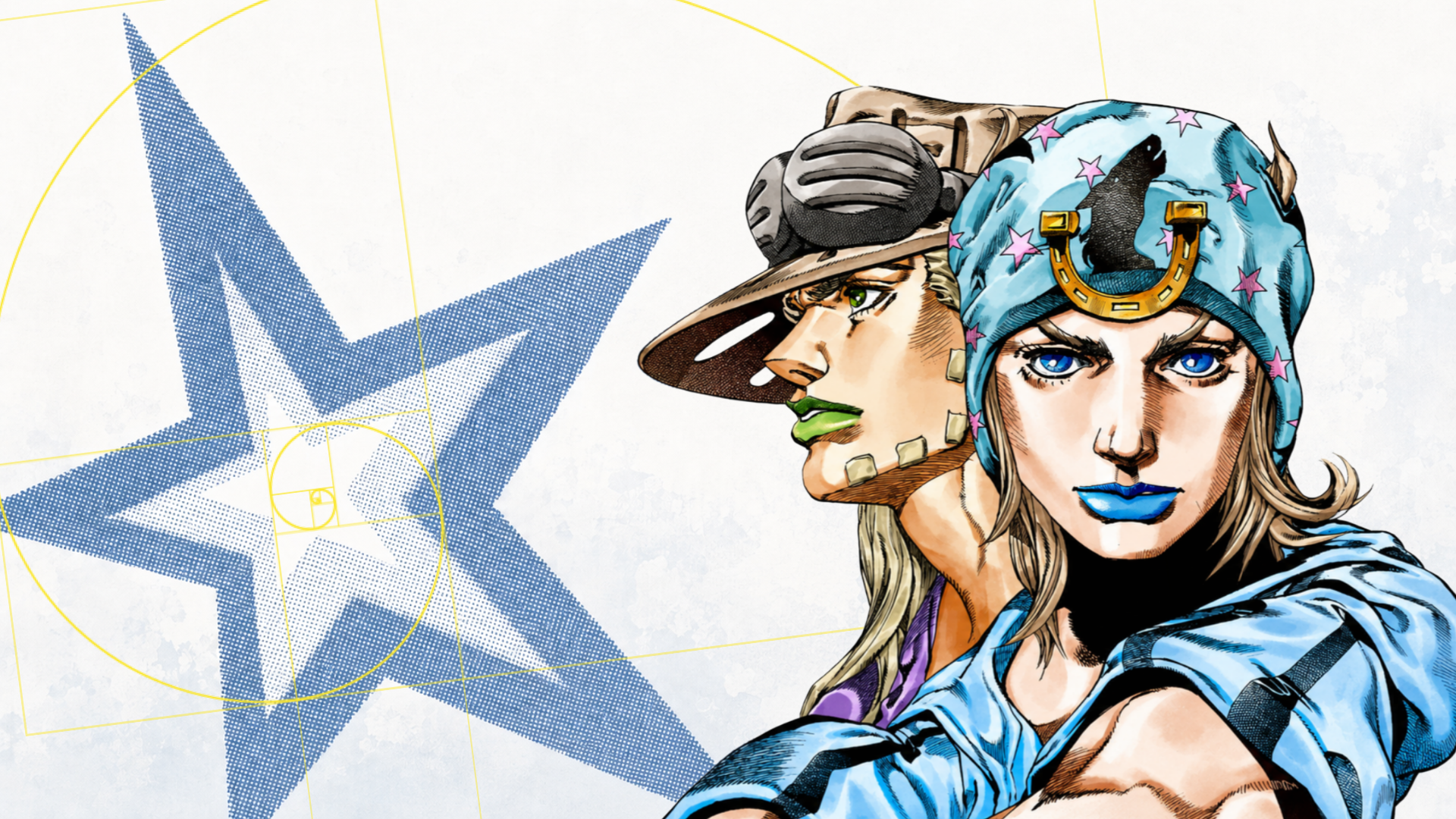
Johnny Joestar and Gyro Zeppeli: The Most Human Duo in JoJo History
Johnny: A Protagonist Defined by Vulnerability
Johnny Joestar is, without exaggeration, the most psychologically complex protagonist Araki has ever created. A former horse-racing prodigy left paraplegic after a shooting incident rooted in his own arrogance, Johnny enters the Steel Ball Run not as a hero but as a broken, self-loathing young man desperate for any reason to keep living. His journey isn’t about saving the world — at least not initially. It’s about standing up, both literally and metaphorically. His Stand, Tusk, evolves across four distinct acts, each transformation tied directly to his emotional and spiritual growth. Tusk ACT 4, in particular, represents one of the most visually and conceptually staggering abilities in all of manga — the power of infinite rotation, a force so absolute it transcends dimensional barriers.
What makes Johnny resonate so deeply is his refusal to fit the mold of a traditional shōnen hero. He’s selfish, he’s scared, and he makes morally questionable decisions. He earns his heroism not through birthright or destiny but through sheer, agonizing will. Animating his internal struggle — those quiet, devastating panels where Araki strips away all bravado — will require a level of directorial sensitivity that goes far beyond flashy action cuts.
Gyro: The Heart, the Humor, the Soul
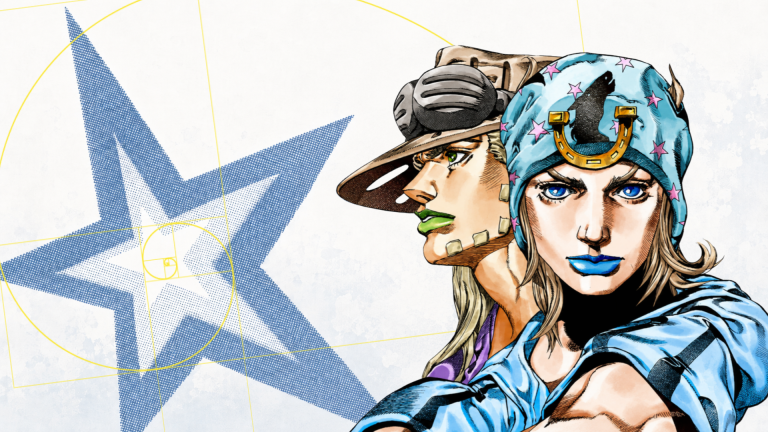
And then there’s Gyro Zeppeli — the flamboyant, gold-toothed Neapolitan executioner who teaches Johnny the art of the Spin. Gyro is the beating heart of Steel Ball Run. He’s funny, abrasive, deeply principled, and carrying a burden he rarely speaks about: his quest to save a young boy condemned to death by his family’s judicial legacy. Gyro’s Steel Balls aren’t just weapons; they’re extensions of a philosophy — the Spin, a technique rooted in the Golden Ratio and the mathematical beauty of natural spirals. It’s Araki at his most intellectually ambitious, weaving Fibonacci sequences and equestrian physics into a combat system that feels simultaneously grounded and transcendent.
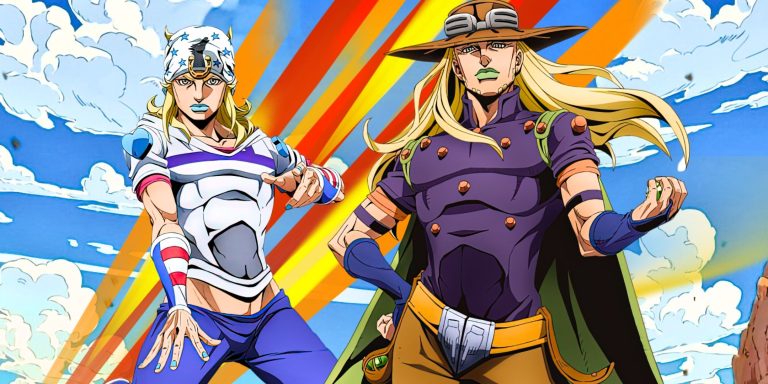
The chemistry between Johnny and Gyro is arguably the finest character dynamic in JoJo’s entire fifty-year history. Their relationship — mentor and student, friends, reluctant partners — carries an emotional weight that elevates every encounter, every Stand battle, every quiet campfire conversation into something genuinely moving. If David Production nails this dynamic, Steel Ball Run won’t just be a great anime. It will be an all-timer.
David Production’s Greatest Technical Challenge: Horses, Dust, and the Infinite Spin
Here’s the elephant — or rather, the horse — in the room. Steel Ball Run is fundamentally a story about horseback riding, and animating horses well is one of the most notoriously difficult tasks in the medium. Equine anatomy is complex, their gaits require precise frame-by-frame choreography, and the sheer volume of mounted action in Part 7 means David Production can’t rely on shortcuts or static panning shots. We’re talking about full-speed cavalry charges through desert canyons, intimate racing sequences where positioning and momentum are narratively critical, and Stand battles conducted on horseback at full gallop.
David Production has steadily leveled up its technical game over the years — the CG-enhanced opening sequences, the fluid Stand battles in Golden Wind, the dimensional effects in Stone Ocean — but Steel Ball Run demands a quantum leap. The studio will almost certainly need to integrate advanced 3D-CG horse models blended with traditional 2D character animation, a hybrid approach that studios like MAPPA and ufotable have pioneered but that requires extraordinary compositing skill to avoid the uncanny valley.
Beyond the horses, there’s the matter of scale. The race crosses deserts, mountains, forests, and cities. The environments need to feel vast, oppressive, and authentically American in a way that JoJo has never had to achieve before. And then there are the Spin effects themselves — the Golden Rectangle, the spiraling nail bullets of Tusk, the gravitational impossibilities of Ball Breaker — all of which demand VFX work that is both visually spectacular and mathematically coherent. This is a production that will test every department David Production has.
The Villains and the Corpse: Americana Meets the Supernatural
No discussion of Steel Ball Run is complete without addressing its antagonist, Funny Valentine — the 23rd President of the United States and one of the most compelling villains in manga history. Valentine’s Stand, Dirty Deeds Done Dirt Cheap (D4C), allows him to travel between parallel dimensions, creating a threat that is as philosophically terrifying as it is visually complex. His motivation — to secure the scattered parts of a holy corpse (implied to be the remains of Jesus Christ) to ensure America’s dominance — is unsettling precisely because it’s understandable. Valentine believes he is the hero. His famous “napkin speech” is one of the most discussed monologues in anime and manga discourse, a chilling articulation of manifest destiny wrapped in elegant logic.
Araki’s willingness to engage with American mythology, Christian iconography, and the dark underbelly of patriotism gives Steel Ball Run a thematic density that most anime wouldn’t dare attempt. The holy corpse isn’t just a MacGuffin — it’s a mirror reflecting each character’s deepest desires and moral limits. Animating these themes with the gravity they deserve will require not just technical skill but genuine artistic courage from the adaptation team.
Community Anticipation and What Comes Next
The JoJo fandom is, to put it mildly, ravenous. Social media erupts with speculation after every industry event. Fan animators have already produced stunning proof-of-concept clips of Steel Ball Run sequences, setting a bar that David Production is undoubtedly aware of. The community’s expectations are sky-high, but so is their loyalty — this is a fanbase that has waited patiently through years of production cycles, trusting that the studio will deliver.
The real question is format. Will Steel Ball Run be a seasonal television anime, a series of theatrical films à la Demon Slayer, or a streaming exclusive? Each approach carries trade-offs. A TV series offers narrative breathing room but risks inconsistent animation quality across a long run. Films guarantee production polish but compress the story. A Netflix or streaming model provides global reach but has drawn criticism for its impact on weekly community engagement — something Stone Ocean‘s batch-release model painfully demonstrated.
Whatever form it takes, Steel Ball Run is poised to be the defining anime adaptation of its era. It has the source material, the cultural momentum, and the studio pedigree. What it needs now is the courage to match Araki’s ambition — to animate not just the action, but the philosophy; not just the Spin, but the soul.
Stay locked to Wibux.com for every update, trailer breakdown, and deep dive as the Steel Ball Run anime takes shape. In the meantime, tell us: what scene are you most desperate to see animated? Drop your picks in the comments below — and remember, the Golden Ratio waits for no one.