For over a decade, David Production pulled off one of the most audacious, aesthetically uncompromising runs in modern anime history. Adapting Hirohiko Araki’s multi-generational epic was once deemed impossible; its hyper-stylized anatomy, idiosyncratic fashion, and avant-garde color scripting represented a logistical minefield. Yet, from Jonathan Joestar’s theatrical ham-fisted punches in Phantom Blood to the reality-unraveling climax of Jolyne Cujoh’s Stone Ocean, the studio faithfully steered the Joestar curse through sixty continuous years of manga history. When the celestial strings snapped and the original universe folded into the bittersweet expanse of the Ireneverse, the anime landscape was left with a singular, deafening question: what happens now?
The answer lies along the dust-choked trails of 1890s North America. For manga purists and anime-only converts alike, JoJo’s Bizarre Adventure: Steel Ball Run is not just another seasonal cour on the horizon—it is Araki’s undisputed magnum opus. Across social media, forum threads, and production corridors, the buzz surrounding Part 7 has reached a fever pitch. But bringing this hyper-detailed western-supernatural tour de force to life presents creative and mechanical hurdles so steep they border on cinematic folly.
The Seinen Metamorphosis: Araki’s Trans-American Reinvention
To understand the monumental cultural weight of Steel Ball Run, one must understand its origin. Debuting in 2004 under the auspices of Weekly Shonen Jump before migrating to the monthly publication Ultra Jump, Part 7 signaled a fundamental metamorphosis in Hirohiko Araki’s storytelling. Free from the breakneck pacing constraints and demographic editorial mandates of traditional shonen, Araki indulged his wildest impulses: sprawling historical settings, unapologetic moral ambiguity, visceral violence, and existential philosophy.
Set against the backdrop of a grueling, trans-continental horseback race spanning 6,000 kilometers from San Diego to New York City, Steel Ball Run reboots the JoJo chronology entirely. It does away with the ancestral shackles of Dio Brando and the original bloodline, using the familiar names as mythological echoes rather than literal blueprints. In their place is a desperate, dusty scramble for a fifty-million-dollar purse that quietly masks a clandestine race to unearth the sacred parts of a miraculous holy relic. This is not simply a high-stakes athletic showdown; it is a cutthroat autopsy of American ambition, manifest destiny, and human fragility.
Broken Spirits and Golden Rotations: Johnny and Gyro
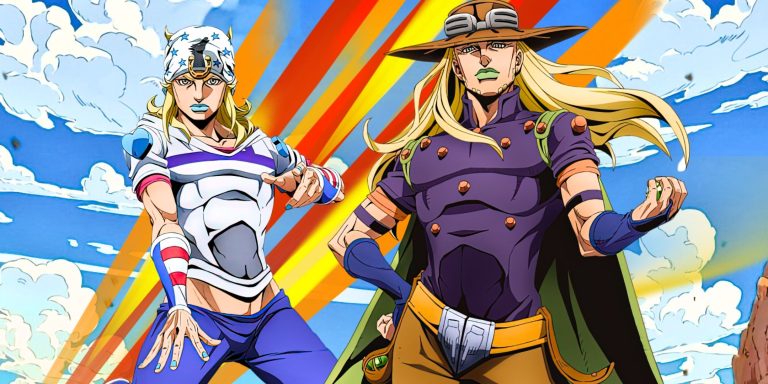
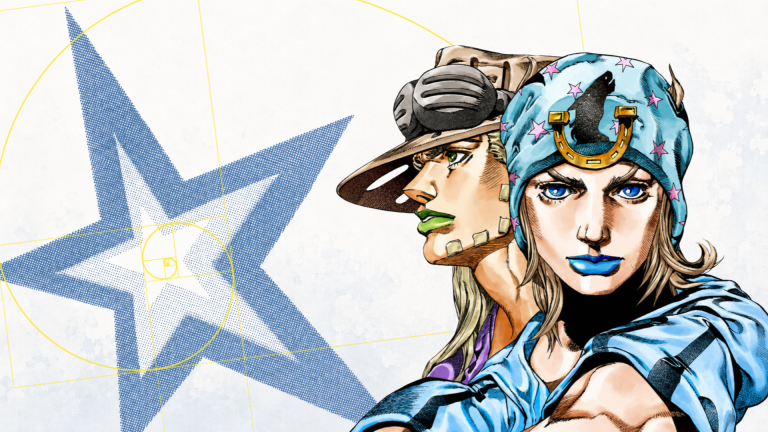
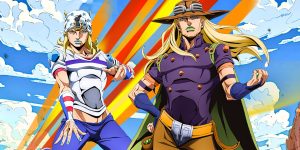
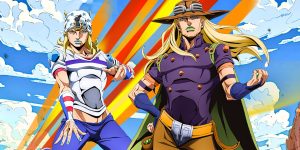
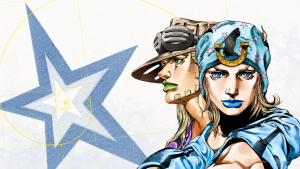
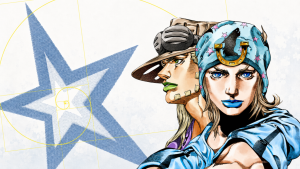
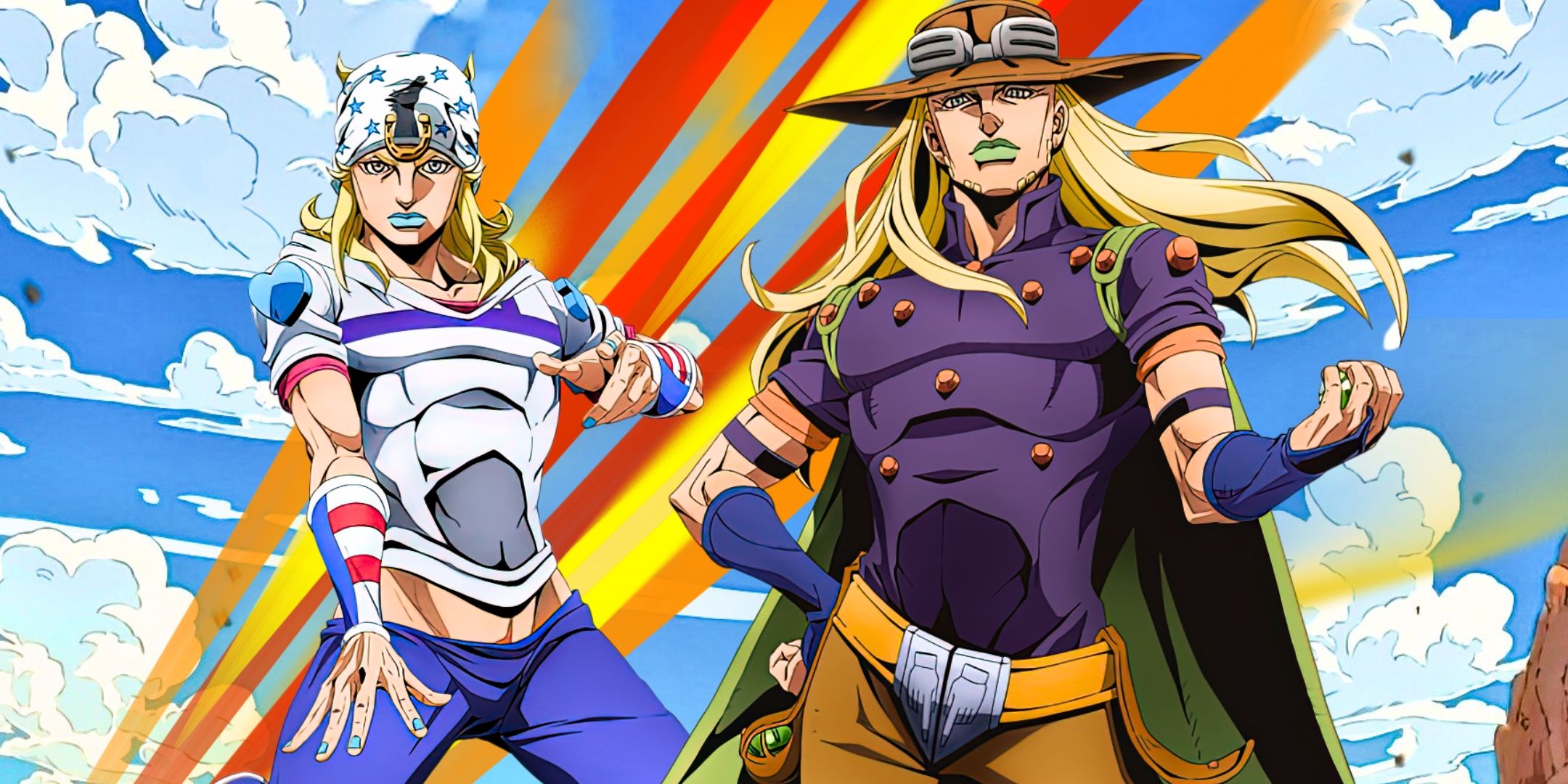
At the beating heart of this cross-country sprint is the finest deuteragonist dynamic Araki has ever penned: Johnny Joestar and Gyro Zeppeli. Their bond forms the emotional bedrock that elevates Steel Ball Run beyond conventional battle narrative into an intimate character study.
Johnny Joestar: Paraplegia and the Flame of “Dark Determination”
Unlike his chivalrous, square-jawed 19th-century predecessor, Johnny Joestar begins his narrative arc at absolute rock bottom. A former prodigy jockey struck down by arrogance and a stray bullet, Johnny is a paraplegic stripped of his prestige, family love, and purpose. He is petty, bitter, and selfish—a protagonist driven not by universal justice, but by an obsessive, quiet yearning to get his physical and spiritual self back to “zero.” When Johnny develops his Stand, Tusk, its evolution through ACTs 1 through 4 mirrors his psychological trajectory: crawling out of childhood trauma, through weaponized grief, and into an unforgiving, transcendent willpower that Araki explicitly dubs “dark determination.”
Gyro Zeppeli and the Mastery of the Spin
Balancing Johnny’s brooding desperation is Gyro Zeppeli, a disgraced Neapolitan royal executioner whose flamboyant theatrics, gold-plated grill, and nonsensical gag songs hide a lethal moral burden. Armed with steel spheres instead of a standard Stand at the outset, Gyro introduces the Spin—Araki’s mathematically grounded successor to the early seasons’ Hamon. Rooted in the Fibonacci sequence and the visual harmony of the Golden Ratio, the Spin turns kinetic energy into a metaphysical phenomenon capable of bending gravity, distorting anatomical muscles, and warping localized dimensions. Gyro serves as mentor, brother, and mirror to Johnny, grounding their journey through arid deserts and freezing blizzards with a raw, comedic, yet deeply profound camaraderie.
David Production’s Technical Everest: The Equestrian Animation Hurdle
If the narrative of Steel Ball Run is pure gold, its production realities are absolute lead. There is a persistent, half-joking myth within the anime industry that animators break down in tears when handed a script containing a single horse. Horses are universally recognized as an animator’s nightmare: their complex quadrupedal skeletal structure, shifting muscle mass, and cyclical galloping strides demand immense kinetic precision.
Now, consider a story featuring dozens of dynamic steeds racing side-by-side across shifting terrains—blasting through rivers, navigating rocky canyons, and dodging reality-splitting Stand attacks. If David Production tackles Steel Ball Run, they cannot rely purely on hand-drawn, high-frame-rate 2D animation without ballooning the production timeline into an untenable purgatory. The studio faces a massive creative dilemma:
Do they pioneer a bespoke hybrid workflow, utilizing stylized, cel-shaded 3DCG models for the horses—akin to Orange’s masterclass in Trigun Stampede or MAPPA’s action sequences—while reserving hand-drawn sakuga for close-ups and dramatic rider beats? Fans burned by clumsy CGI in modern anime harbor genuine anxieties, but David Production has quietly perfected the integration of stylized digital assets since the opening themes of Part 1. The community isn’t asking for perfection; they are asking for kinetic weight, grit, and the tactile clatter of hooves on gravel.
Patriotism, Morality, and the True Man’s World
A great JoJo part demands an iconic antagonist, and Steel Ball Run boasts what many consider the most fascinating villain in modern manga: President Funny Valentine. Armed with the reality-shifting dimensional Stand Dirty Deeds Done Dirt Cheap (D4C), Valentine defies the cartoonish villainy of modern tropes. His quest to assemble the Corpse Parts is fueled by pure, unadulterated, yet horrific utilitarian patriotism: to guarantee that the United States claims the absolute center of global prosperity, even if the rest of the world must absorb collateral suffering.
The philosophical clashes in Part 7 are sharp, uncompromising, and poetic. Characters like Ringo Roadagain, with his temporal rewind Stand Mandom, force the cast to adopt the ruthless mindset of the “True Man’s World”—a stoic pursuit of spiritual self-actualization through lethal contest. These psychological layers lift the series above simple punch-ghost mechanics, transforming every Stand skirmish into a high-noon duel of ideological survival.
When Will the Starting Pistol Fire?
David Production has remained characteristically silent regarding official Part 7 timelines. With their recent energy channeled into projects like Undead Unluck and Fire Force, alongside lingering discussions on how the controversial batch-release model damaged Stone Ocean‘s seasonal momentum, the studio is undoubtedly proceeding with calculated caution. An adaptation of this scale cannot afford compromised pacing or outsourced, under-baked visual sequences.
Yet, the cultural momentum is entirely unstoppable. From fan animations circulating across YouTube with millions of views to passionate debates over the prospective English voice cast, the demand for Steel Ball Run represents a landmark moment in contemporary pop culture. It stands as a bridge between high-octane anime spectacle and gritty historical fiction—a serialized epic that fundamentally redefined what an action franchise can achieve.
The horses are at the starting gate. The Golden Ratio is waiting to be traced. All that remains is for David Production to fire the gun and unleash Hirohiko Araki’s greatest masterpiece upon the world.
What are your biggest hopes and fears for the Steel Ball Run anime adaptation? Do you think David Production should lean into CGI for the horses, or wait as long as needed for hand-drawn fidelity? Sound off in the comments below, and stay tuned to Wibux.com for all your breaking anime updates!