For more than three decades, Hirohiko Araki’s generational chronicle has defied the boundaries of serialized manga, morphing from Victorian gothic horror to 1980s globe-trotting action, suburban murder mysteries, and Italian mafia epics. Yet across anime conventions, social media discourse, and industry whispers, one title consistently looms over the fandom like a sacred monolith: JoJo’s Bizarre Adventure: Steel Ball Run. Following the bittersweet, universe-altering conclusion of Stone Ocean on Netflix in late 2022, the anime community found itself standing on the precipice of a monumental threshold. Part 7 is not merely the next canonical entry in a beloved franchise; it is widely hailed as Araki’s undisputed magnum opus—a masterwork consistently lodged beside Berserk at the absolute summit of manga literature. The buzz surrounding its inevitable anime adaptation by David Production has reached a fever pitch, sparking equal parts euphoria and technical apprehension.
The American Frontier Reimagined: Araki’s Seinen Renaissance
To understand the unprecedented hype surrounding a Steel Ball Run anime, one must first appreciate the dramatic metamorphosis Araki underwent during its creation. Serialized initially in Weekly Shonen Jump before migrating to the monthly pages of Ultra Jump in 2005, Part 7 unshackled the author from the relentless weekly deadlines and demographic constraints of typical youth-oriented manga. The resulting work represents a sublime synthesis of high-stakes sports drama, historical revisionism, and psychological grit.
Set against the backdrop of 1890s America, the narrative follows the inaugural Steel Ball Run race—a grueling, 6,000-kilometer equestrian odyssey stretching from San Diego Beach to New York City. With a grand prize of fifty million dollars on the line, the transcontinental race draws a mosaic of outlaws, mercenaries, aristocrats, and savants. Yet, under the orchestration of the enigmatic race promoter Steven Steel and the chilling, ideologically potent 23rd President of the United States, Funny Valentine, the contest is secretly a front for a grander, esoteric objective: the unearthing of the scattered, sacred mummified Corpse Parts of a holy figure. By grounding supernatural Stand battles within a dust-caked, historical wilderness, Araki traded urban corridors for open horizons, crafting a breathless Western epic where survival hinges as much on traversing brutal topography as it does on tactical wit.
Johnny Joestar and Gyro Zeppeli: A Masterclass in Dual Protagonism
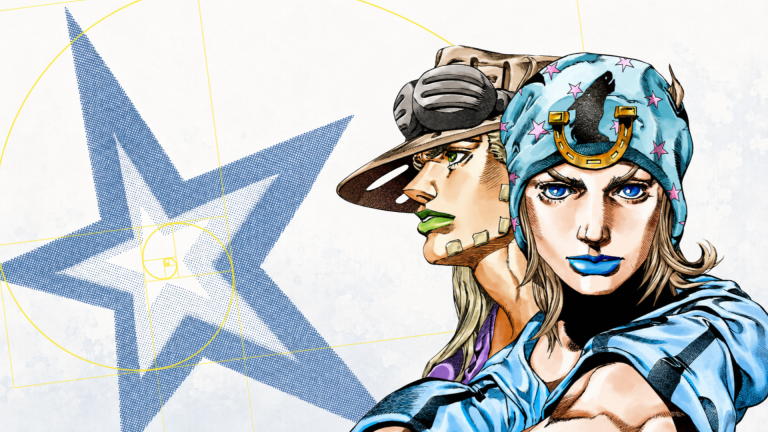
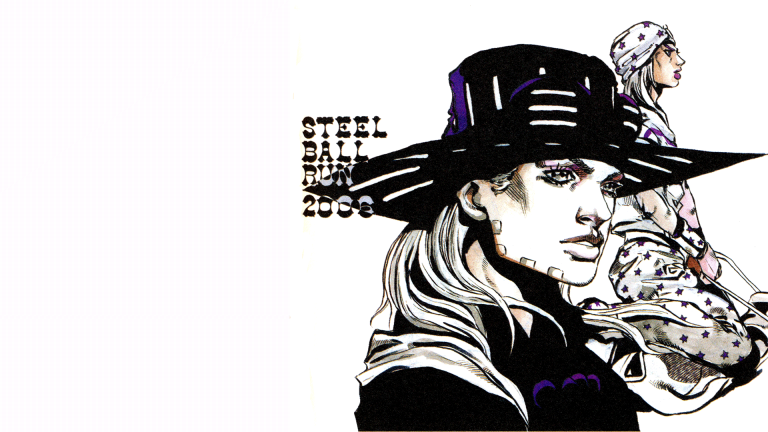
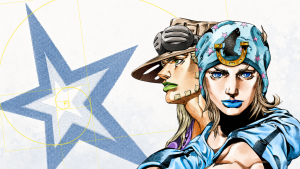
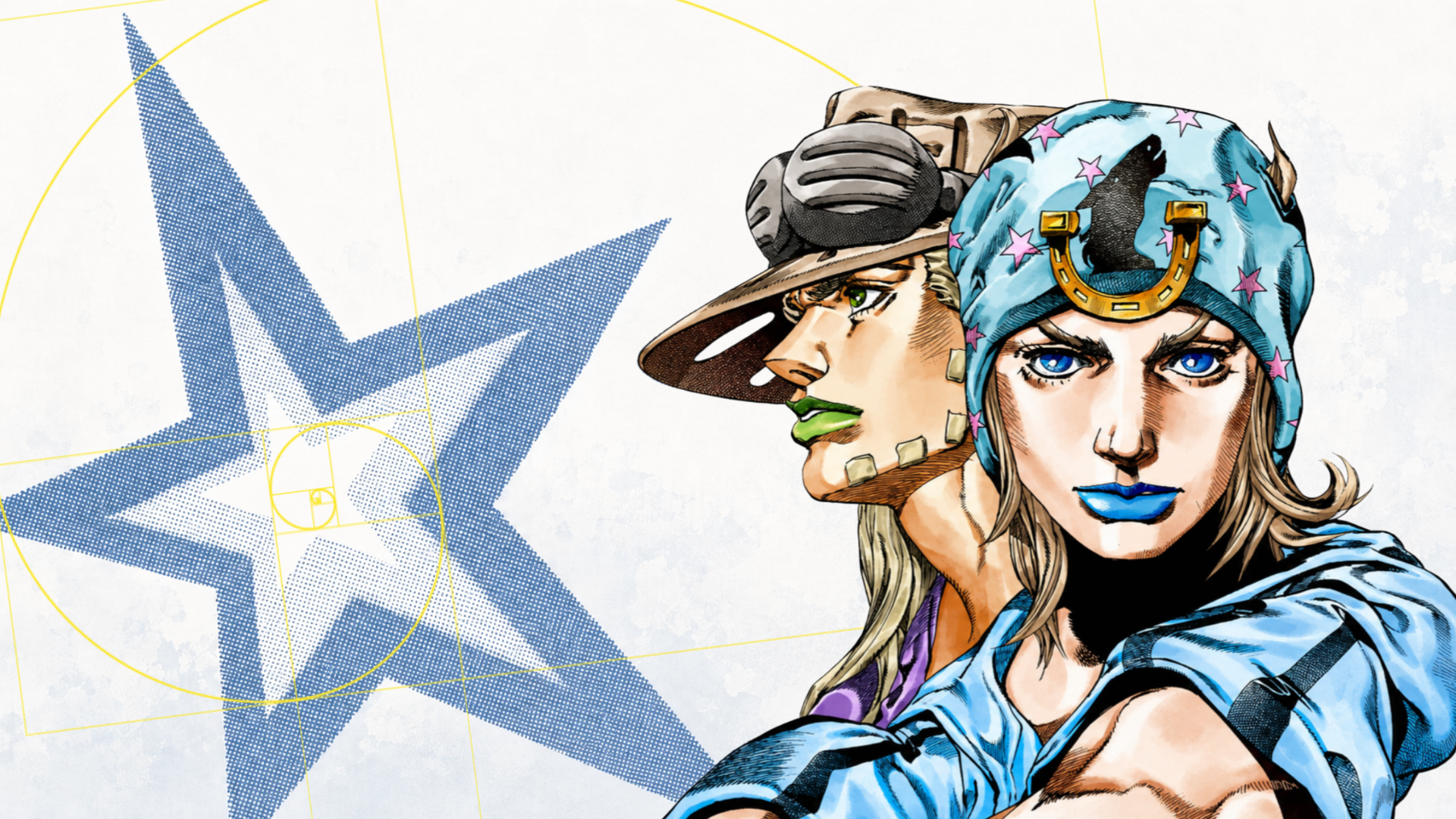
At the beating heart of this sprawling trans-American expedition is arguably the finest character dynamic Araki has ever penned: the complex, emotionally tangled brotherhood between Johnny Joestar and Gyro Zeppeli.
The Paraplegic Anti-Hero
Unlike his heroic predecessors Jonathan or Jotaro, Johnny Joestar begins his journey far removed from conventional virtue. Once a prodigal equestrian superstar whose meteoric rise was eclipsed by vanity and reckless arrogance, Johnny was shot and permanently paralyzed from the waist down, stripped of his accolades, his family’s love, and his will to live. He is an explicitly flawed, morally ambiguous protagonist defined by what characters describe as a “dark determination”—an unblinking, pitiless flame in his eyes that will stop at nothing to regain what he lost. When Johnny witnesses Gyro using a mysterious, spinning steel sphere that temporarily allows his paralyzed legs to move, his obsession is ignited. Johnny’s arc is not about saving the world; it is a desperate, intimate quest for personal rebirth, moving from negative zero back to zero.
The Flamboyant Executioner
Counterbalancing Johnny’s brooding desperation is Gyro Zeppeli, a disgraced Neapolitan royal executioner who enters the race to win an amnesty plea for an innocent boy sentenced to death back home. Gyro is quintessential Araki: brazen, theatrical, adorned with grillz that spell out “GO! GO! ZEPPELI,” and possessed of an absurd, deadpan sense of humor. Yet beneath his theatrical bravado lies an unwavering moral compass and a strict code of surgical mastery. The interplay between the two—oscillating between quiet campfire existentialism, absurd musical musings about mozzarella cheese, and visceral life-or-death skirmishes—elevates Steel Ball Run beyond mere action fiction into an enduring, poignant study of camaraderie and grief.
Beyond Stands: Harnessing the Golden Ratio and the Mysticism of the Spin
While the concept of Stands remains integral to Part 7, Araki ingeniously reimagined the power system by resurrecting and refining the ancestral kinetic mysticism seen in Parts 1 and 2. Enter the Spin (Kaiten), a physiological and physical discipline developed by medical executioners that manipulates rotational energy.
The Spin taps directly into the natural harmony of the universe, rooted in the mathematical elegance of the Golden Rectangle and the Fibonacci sequence. By observing the natural curves of living organisms—from the whorls of sunflower seeds to the curvature of a galloping steed—a user can produce infinite, self-sustaining kinetic rotations. When Johnny integrates this esoteric art into his evolving Stand, Tusk, the progression feels earned and monumental. The visual transition of Tusk across its four progressive Acts—transforming from modest spinning fingernail projectiles into a dimension-shattering, gravity-defying avatar of absolute rotational force—presents an irresistible visual playground for animators. Animating sacred geometry, kinetic trajectories, and dimensional distortions offers the potential for some of the most avant-garde sequences in modern animation history.
The Technical Crucible: The Nightmare of Equestrian Animation
For all the rapturous adoration showered on the source material, a persistent shadow hangs over the adaptation: the sheer mechanical logistics of animating it. Within the animation industry, horses are notoriously recognized as a logistical nightmare. Unlike human anatomy, a galloping horse demands a profoundly intricate understanding of skeletal articulation, shifting muscle volume, dynamic mane physics, and rapid, four-legged gait cycles—all while maintaining visual perspective across wide, panning desert canvases.
David Production has proven its absolute reverence for the franchise since 2012, delivering iconic pop-art color palettes, kinetic sound-effect typography, and bold stylistic fidelity. However, the studio’s output on Stone Ocean saw mixed reactions concerning compositing, heavy production crunch, and the divisive Netflix batch-release schedule. To realize Steel Ball Run without sacrificing its sweeping majesty, David Production faces an existential crossroads:
- The Hybrid 3D Approach: Utilizing high-end cel-shaded CGI models for horses and crowd scenes, integrated with hand-drawn 2D rider close-ups—a technique successfully refined by studios like Orange (Trigun Stampede) and MAPPA (Chainsaw Man).
- The Traditionalist Path: Marshaling a bespoke assembly of industry-veteran mechanical and animal key animators, an approach that would demand unprecedented pre-production lead time, massive budget allocation, and likely a multi-cour traditional broadcast model.
Rumors regarding early pre-production, visual tests, and talent acquisition have simmered across Japanese animation boards for months. If David Production can strike the delicate balance between cutting-edge digital integration and bespoke hand-drawn artistry, they will not just meet expectations; they will redefine how prestige action anime handles dynamic animal movement.
The Inevitable Horizon: What Steel Ball Run Means for Modern Anime
We are currently living in an era dominated by hyper-polished shonen spectacles, yet JoJo’s Bizarre Adventure: Steel Ball Run operates in a visual and thematic league entirely its own. It is an unapologetic, mature epic that treats its audience with narrative sophistication, marrying pulpy historical fiction with metaphysical philosophy and tragic, operatic drama. Its eventual broadcast will not just be another seasonal premiere; it will be a major cultural event for pop culture at large.
The starting gun for the 1890 transcontinental race hasn’t fired just yet, but the wind across the San Diego shoreline is unmistakable. The path forward for David Production is fraught with monumental artistic hurdles, but for Johnny Joestar and Gyro Zeppeli, impossible journeys are the only ones worth taking.
What do you think is the biggest hurdle facing the Steel Ball Run anime adaptation? Do you want to see a full 2D production or modern cel-shaded hybrid animation for the horses? Let us know your thoughts and voice-casting dreams in the comments below!