
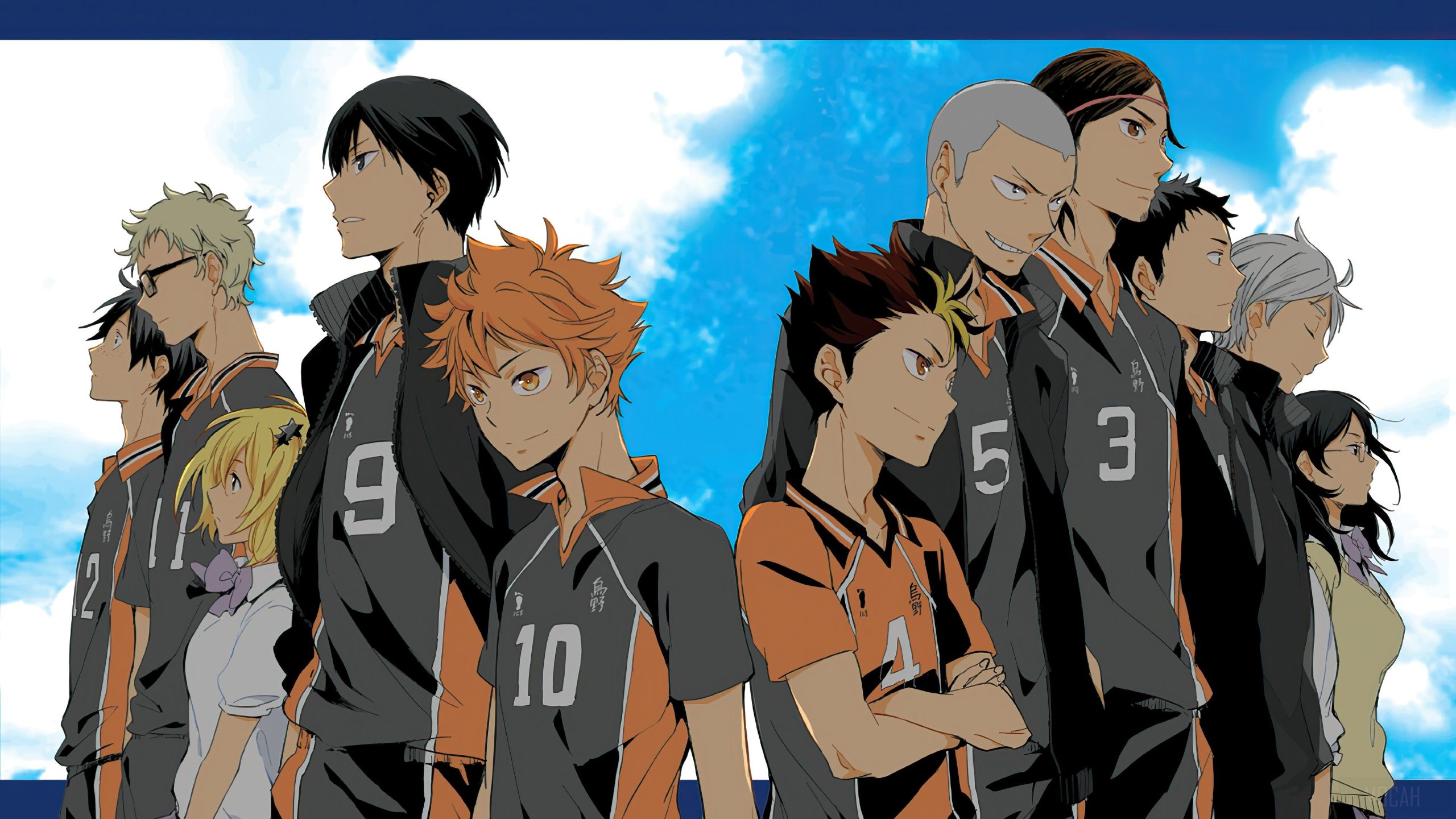
For nearly a decade, sports anime enthusiasts have lived with a singular, unspoken longing: the realization of a match contested on a suburban Tokyo court decades ago between two stubborn, chain-smoking coaches. With Haikyu!! The Dumpster Battle (Gekijōban Haikyu!! Gomi Suteba no Kessen) finally touching down on global streaming platforms, that generational promise has transitioned from the sacred ink of Haruichi Furudate’s manga into a cinematic tour de force. This isn’t just another tournament match, nor is it merely a commercially packaged recap movie. It is the thematic zenith of a franchise that quietly revolutionized modern shonen storytelling, condensing years of emotional investment, tactical obsession, and character growth into eighty-five heart-stopping, kinetic minutes.
When the film shattered Japanese box office records earlier this year, hauling in over ten billion yen, it signaled something critical: the appetite for Haruichi Furudate’s volleyball odyssey had not waned during its hiatus. Now, unspooling across screens worldwide, The Dumpster Battle proves why the clash between the crows of Karasuno and the cats of Nekoma represents the uncontested pinnacle of sports anime.
The Battle of the Trash Heap: A Multigenerational Grudge Without Malice
The sports genre is routinely fueled by friction. From the venomous rivalries of Blue Lock to the existential intimidation of Kuroko’s Basketball, conflict in athletic shonen typically demands a villain or an insurmountable ideological foe. Haikyu!!, however, has always operated on an entirely different emotional frequency, and the Karasuno versus Nekoma face-off is its purest thesis statement.
The roots of the “Dumpster Battle” run deep into the soil of postwar Japanese volleyball lore. Coaches Ikkei Ukai and Yasufumi Nekomata forged an unspoken brotherhood across decades of practice matches, yet neither could ever steer their respective alma maters to the official national stage for a true, stakes-laden showdown. By the time their grandsons and disciples—Keishin Ukai and Nekoma’s current roster—step onto the orange court of the Tokyo Metropolitan Gymnasium, the contest carries the weight of ancestral continuity.
Yet, what makes this clash exceptional is its complete absence of hostility. Karasuno and Nekoma are tactical foils and emotional mirrors. Karasuno is chaos, aggression, and relentless forward momentum—a murder of crows willing to fling themselves off cliffs just to learn how to fly. Nekoma is water, stillness, and ruthless attrition—a cat slinking through alleyways, content to wait until its prey tires itself out. There are no trash-talking antagonists here; instead, the match plays out as an ecstatic, agonizing dialogue between soulmates who happen to stand on opposite sides of a net.
Psychological Warfare: Kenma Kozume’s Birdcage and Hinata’s Wings
The Gamer’s Gambit
At the beating heart of The Dumpster Battle is the psychological chess match between Nekoma’s brain, Kenma Kozume, and Karasuno’s sun-drenched decoy, Shoyo Hinata. Kenma has always been an anomaly in sports media: a lethargic, conflict-averse gamer who plays volleyball not out of a burning passion, but because his childhood friend Tetsuro Kuroo asked him to, and because he treats the court like a strategy RPG to be solved.
In this film, Kenma becomes an architect of pure claustrophobia. Understanding that Hinata’s threat lies entirely in his uncontainable kinetic freedom, Kenma systematically designs an invisible birdcage. Through deliberate server placement, calculated commit-blocks, and spatial manipulation, Kenma denies Hinata his running start. The film visualizes this with harrowing, expressionistic flair: Hinata’s expansive sky shrinks, replaced by cold walls and descending iron bars. For the first time in the series, Hinata is grounded, his infectious joy smothered under the weight of Nekoma’s flawless floor defense.
The Breakthrough of the “Open”
The beauty of Furudate’s writing—and director Susumu Mitsunaka’s execution—is that evolution requires trauma. Hinata’s answer to Kenma’s cage isn’t a miraculous superpower; it is the culmination of every bitter lesson he has absorbed. When Tobio Kageyama sends Hinata a high, floating “open” toss, giving him the temporal window to jump not for speed, but for height, the birdcage shatters. It is a moment of transcendent sports choreography, proving that Karasuno’s ultimate weapon is not raw velocity, but their terrifying capacity to adapt within the jaws of defeat.
Kinetic Mastery: Production I.G Returns to Its Directoral Throne
Following the stylistic shifts and controversial animation outsourcing that plagued portions of Haikyu!! To the Top (Season 4), fans were understandably apprehensive about the cinematic format. The return of series veteran Susumu Mitsunaka to the director’s chair laid those fears to rest within seconds of the opening whistle. Production I.G did not merely produce a movie; they crafted a masterclass in kinetic anatomy.
The animation prioritizes tactile reality over exaggerated anime flourishes. You feel the squeak of rubber against polished hardwood; you see the heavy, salt-stained jerseys clinging to players’ ribs as the third set drags on; you hear the increasingly ragged intake of oxygen between rallies. Mitsunaka understands that in volleyball, momentum is a living organism. The camera swoops and dives through the rafters, tracking the ball’s parabolic flight with whiplash-inducing precision.
Nothing exemplifies this technical mastery better than the film’s climactic rally: a breathtaking, extended sequence animated almost entirely from Kenma Kozume’s first-person perspective. As the rally refuses to die, the lens distorts. Sweat blurs the frame; peripheral vision narrows; the sound of the crowd recedes into a muffled heartbeat, replaced by the terrifying, deafening reality of sheer physical exhaustion. When Kenma’s hands finally slip against a ball soaked in sweat, the camera lingers on that tragic, beautiful tactile failure. It is, without hyperbole, one of the most stunning directorial sequences in the history of sports anime.
The Tragic Elegance of the Single-Elimination Tournament
What elevates The Dumpster Battle beyond standard theatrical spectacles is its profound thematic maturity. This is the match that “cannot be replayed.” In training camps, Karasuno and Nekoma played hundreds of sets, resetting the scoreboard after every loss, laughing off mistakes over barbecue and water bottles. But the Spring Interhigh is merciless.
When the final ball drops, there is no celebratory explosion of rock music, nor is there bitter despair. Instead, there is silence, punctuated by Kenma lying flat on the wood, turning to Kuroo, and whispering the four words Kuroo has spent years waiting to hear: “Thank you for teaching me volleyball. It’s fun.”
In that singular exchange, The Dumpster Battle transcends its athletic constraints. It becomes a meditation on gratitude, friendship, and the ephemeral nature of youth. Karasuno advances, Nekoma goes home, but both teams leave the court transformed. The film honors the losing team with a reverence few sports narratives dare to display, acknowledging that the value of an athletic pursuit is found not in the trophy at the end of the bracket, but in the connections forged between the lines.
The Verdict: An Unmissable Masterpiece
As Haikyu!! The Dumpster Battle dominates global watchlists, it stands as an unassailable triumph. It honors the fans who waited years for this confrontation, rewards newcomers with blistering visual storytelling, and solidifies Kenma and Hinata’s dynamic as one of modern fiction’s greatest rivalries. While purists may lament the truncation of certain minor manga interactions to fit the film’s runtime, the trade-off is an unrelenting, white-knuckle pacing that never allows the viewer to catch their breath.
With Karasuno set to face the monolithic Kamomedai High and the enigmatic Korai Hoshiumi in the upcoming final chapter, the bar has not just been raised—it has been vaulted entirely out of the stadium. The Dumpster Battle is sports anime at its most magnificent: kinetic, heartbreaking, and brimming with boundless, incandescent joy.
Have you streamed Haikyu!! The Dumpster Battle yet? Did Kenma’s climactic POV rally live up to your expectations, or did you miss the multi-episode television format? Sound off in the comments below!