

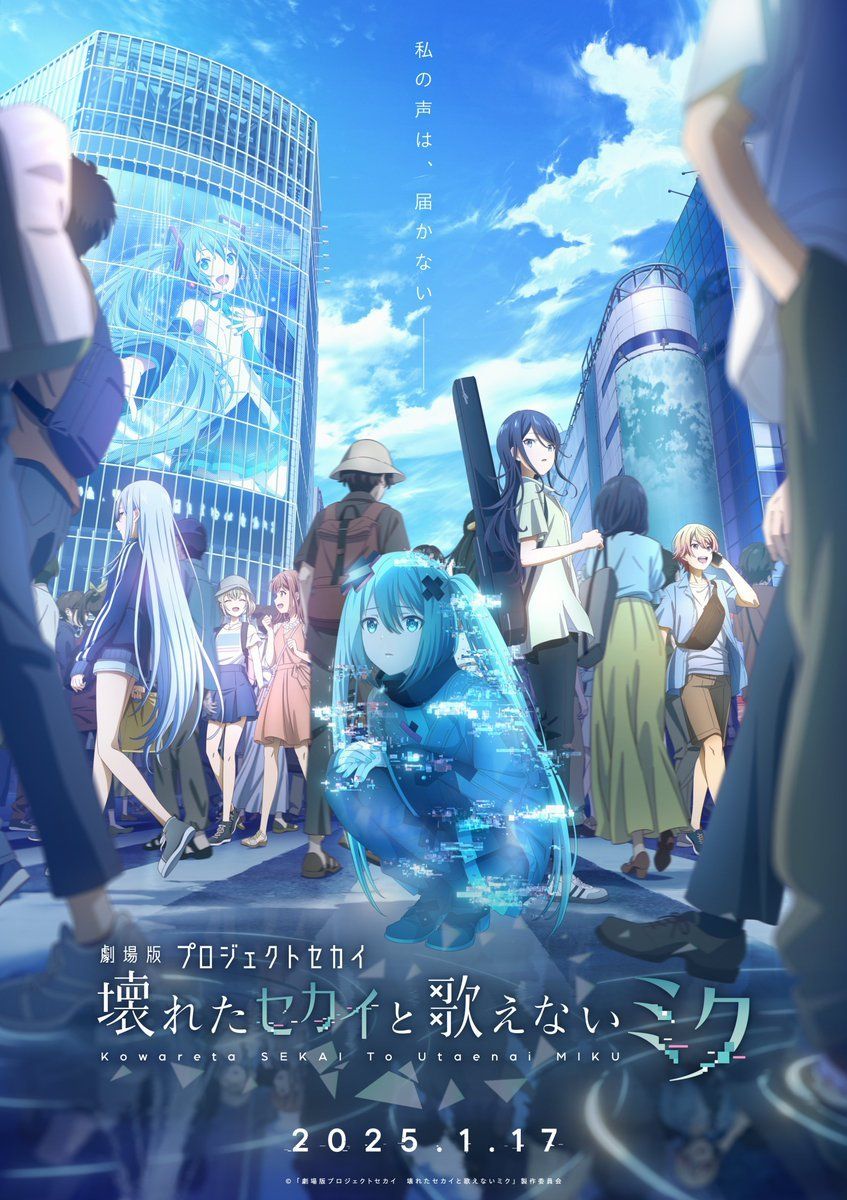
What happens when the world’s most iconic virtual pop star suddenly loses the ability to sing? For more than a decade and a half, Hatsune Miku has stood as an omnipresent beacon of digital optimism, electrifying sold-out arenas worldwide and giving voice to millions of fan-made anthems. Yet, the newly unveiled theatrical trailer for Project Sekai: The Movie – The Broken World and the Miku Who Can’t Sing (Gekijouban Project Sekai: Kowareta Sekai to Utaenai Miku) just shattered that immaculate image in the most chilling way possible, leaving the global anime and rhythm game community in a collective state of emotional disbelief.
Co-produced by gaming giants SEGA and Colorful Palette alongside acclaimed animation studio P.A. Works, the upcoming anime feature takes the astronomical popularity of the mobile sensation Project Sekai: Colorful Stage! feat. Hatsune Miku and thrusts it onto the grand cinematic canvas. But rather than serving up a lighthearted jukebox musical or standard promotional spin-off, director Hiroyuki Hata and screenwriter Yoko Yonaiyama have crafted a poignant, existential psychological drama that tackles creative burnout, isolation, and the terrifying silence when artistic expression vanishes.
The Mystery of the Nameless Sekai and a Glitched Icon
The explosive trailer opens with high school musician Ichika Hoshino browsing records in a Shibuya CD store, only to stumble upon an unreleased, unlabeled audio track. The moment she presses play, a surreal phenomenon transports her beyond physical reality into an unprecedented, desolate pocket dimension known as the “Nameless Sekai.” Unlike the vibrant, genre-themed pocket dimensions familiar to long-time players, this newly discovered world is a cracked, monochromatic wasteland blanketed in suffocating fog.
At the center of this barren landscape sits a disheveled, mute incarnation of Hatsune Miku, whose digital twin-tails flicker with static and mournful melancholia. Deprived of the ability to communicate melodies or reach the hearts of listeners, this forgotten Vocaloid embodies the despair of lost dreams. The haunting juxtaposition of Japan’s most celebrated voice trapped in absolute silence delivers an immediate emotional gut-punch that has sent ripples across internet message boards, evoking the cinematic emotional resonance seen in modern theatrical blockbusters like Chainsaw Man The Movie: Reze Arc.
P.A. Works Delivers Breathtaking Cinematic Craftsmanship
Visually, the project represents a monumental artistic leap under the stewardship of studio P.A. Works (renowned for visual masterworks such as Shirobako, Nagi-Asu: A Lull in the Sea, and Ya Boy Kongming!). Character designer Yuki Akiyama translates the beloved character models into expressive, fluid cinematic animation, blending breathtaking watercolor backgrounds with cutting-edge digital compositing.
From the bustling, rain-slicked neon avenues of Shibuya to the surreal, floating debris of the Nameless Sekai, the theatrical production elevates the franchise far beyond standard mobile game cutscenes. Every subtle twitch of expression and atmospheric lighting choice highlights the psychological weight carried by the ensemble cast, proving that studio adaptations can achieve world-class prestige similar to recent genre-defining productions like Jujutsu Kaisen’s Culling Game.
A Star-Studded Vocaloid Musical Tapestry
Music has always been the pulsating lifeblood of the Vocaloid phenomenon, and The Broken World and the Miku Who Can’t Sing is pulling no punches in its sonic landscape. The film’s soundtrack gathers legendary producers from across two decades of internet culture, featuring deeply resonant compositions arranged specifically to chart Miku’s journey toward reclaiming her lost song.
The cultural gravity of this release mirrors the broader global renaissance of contemporary Japanese vocal powerhouses. Just as real-world phenomenon Ado is selling out arena tours worldwide with Hibana, Hatsune Miku represents the foundational creative spark that inspired an entire generation of modern utaite, composers, and digital illustrators. Watching this cinematic narrative deconstruct her symbolic immortality into something deeply vulnerable and human has resonated profoundly with lifelong fans.
Why This Theatrical Adaptation Is a High-Stakes Gamble
Adapting massive mobile rhythm games into compelling full-length films is an notoriously precarious endeavor. Too often, productions crumble under the weight of excessive fan service, bloated rosters, and disjointed pacing. However, by grounding the story squarely through the intimate relationship between Ichika Hoshino and this broken version of Hatsune Miku, director Hiroyuki Hata has established a clear, character-driven emotional core.
The film delves into universal human struggles: What happens when the creative spark burns out? How do artists navigate the overwhelming loneliness of expectations? In confronting these raw, philosophical themes, the feature promises to transcend its niche gaming origins to deliver one of the most poignant anime films of the modern era.
What Do You Think?
Are you excited to witness Hatsune Miku’s emotional journey on the big screen, or does seeing the iconic virtual singer lose her voice break your heart? Can P.A. Works deliver the ultimate tearjerker of the year? Drop your thoughts, favorite Vocaloid songs, and predictions in the comments below!