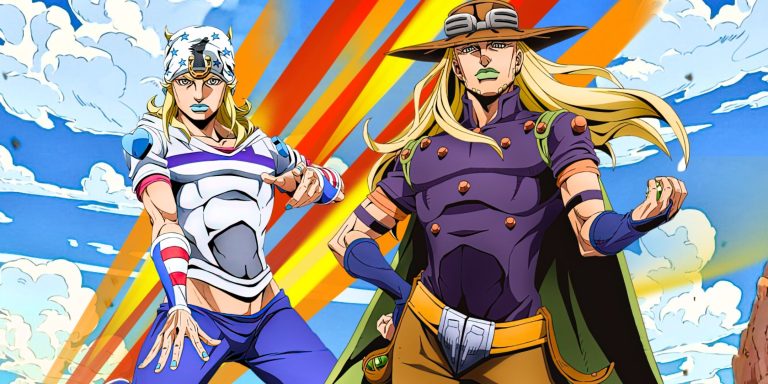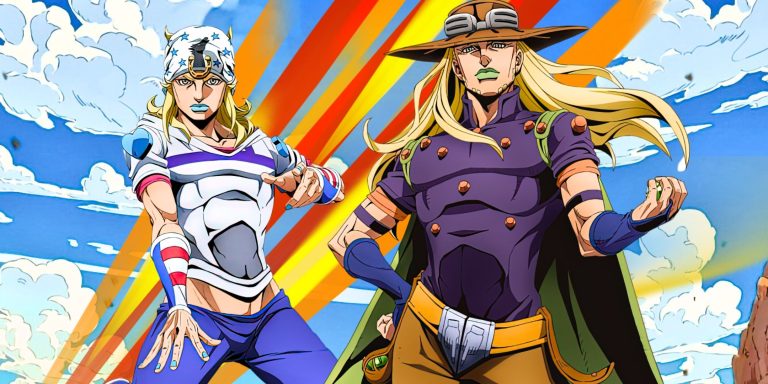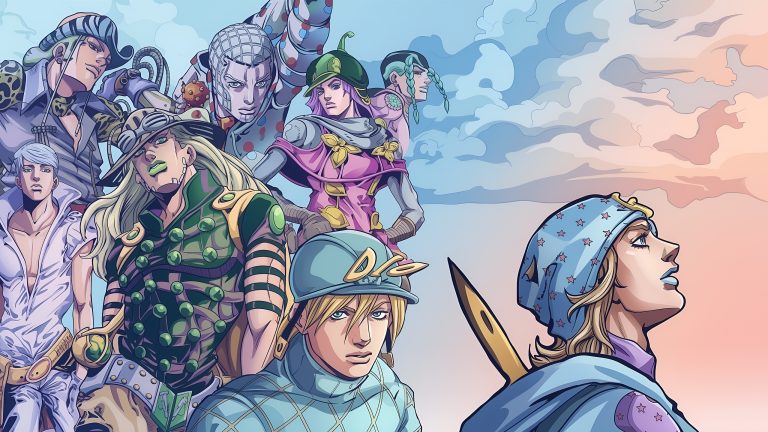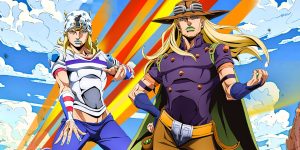
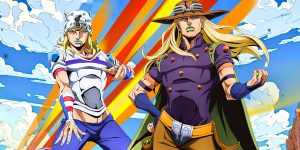
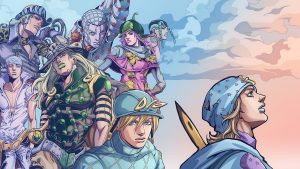
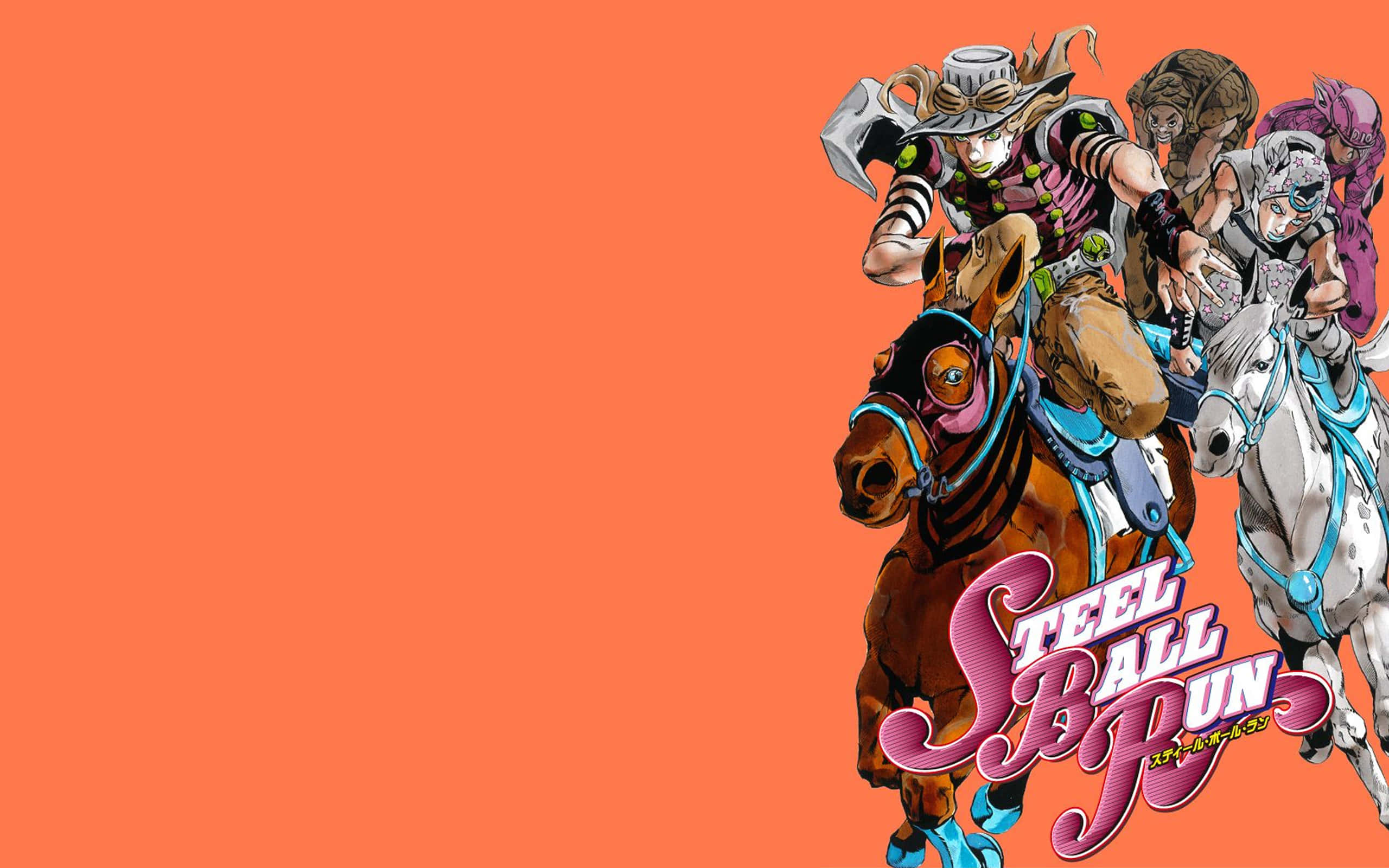
Whenever David Production concludes an era of JoJo’s Bizarre Adventure, an eerie, expectant hush falls over the anime landscape. Following the bittersweet, cosmos-resetting climax of Stone Ocean, that silence has transformed into an earth-shattering roar. For nearly two decades, manga purists, casual viewers, and industry insiders have recognized Hirohiko Araki’s Part 7, Steel Ball Run, as not merely another chapter in an eccentric multi-generational saga, but as a monumental turning point in modern sequential art. The collective internet holds its breath with every Warner Bros. Japan showcase and studio recruitment listing, waiting for the definitive confirmation that Johnny Joestar and Gyro Zeppeli are finally saddling up. Yet behind the deafening fan clamor lies a profound creative crossroad: adapting Steel Ball Run is both the ultimate artistic triumph and the most terrifying logistical minefield David Production will ever encounter.
The Paradigm Shift: How Hirohiko Araki Forged His Magnum Opus
To understand the sheer magnitude of the Steel Ball Run anime buzz, one must grasp its historical context within Araki’s creative evolution. Serialized initially in Weekly Shonen Jump before migrating to the monthly, adult-oriented pages of Ultra Jump in 2005, Part 7 freed Araki from the grueling weekly grind and the editorial guardrails of juvenile fiction. Set in a reimagined 1890s America, the narrative stages a grueling, continent-spanning equestrian race from San Diego to New York City, promising a staggering fifty-million-dollar bounty. What begins as a breathless sporting spectacle quickly devolves into a desperate, supernatural geopolitical scramble for the scattered relics of a miraculous Holy Corpse.
The relocation to Ultra Jump unchained Araki’s artistic instincts. Gone were the primary-colored, muscle-bound heroics of 1980s Phantom Blood. In their place emerged hyper-stylized Western neo-realism, painterly panel layouts, complex existential musings, and a world drenched in dust, sweat, and moral ambiguity. Steel Ball Run consistently ranks near the zenith of MyAnimeList and community aggregate charts precisely because it bridges flamboyant high-concept battle mechanics with the mature, meditative pacing of historical literary fiction. Translating this specific aesthetic shift requires David Production to reinvent their visual language entirely.
Subverting Shonen Heroism: The Complicated Duality of Johnny and Gyro
At the beating heart of Part 7’s enduring legacy is a co-protagonist dynamic unlike anything else in contemporary pop culture. In Johnny Joestar, Araki crafts an unapologetically flawed lead. A former equestrian prodigy struck down by vanity and paralyzed from the waist down by a senseless gunshot wound, Johnny begins his odyssey not out of altruism, but out of raw, desperate self-interest. He is bitter, cynical, and spiritually broken—a man standing at absolute “zero” who merely wants to crawl back to “one.”
The Cynic and the Executioner
Johnny’s dark, almost terrifying determination finds its counterweight in Gyro Zeppeli, an eccentric Neapolitan executioner who enters the trans-American race to secure an imperial amnesty for an innocent child condemned to death. Gyro is flamboyant, armed with steel balls, gold-plated grillz, and an absurd repertoire of campfire jokes about mozzarella cheese. Yet, beneath his theatricality lies an unwavering code of duty and profound human empathy.
Unlike previous JoJo pairings, Johnny and Gyro do not share a mentor-apprentice hierarchy or a clean buddy-cop rhythm. Their relationship is an organic, hard-fought brotherhood forged across campfire philosophizing, shared trauma, and visceral, blood-soaked skirmishes. Watching Johnny rediscover his agency alongside Gyro’s moral guidance provides the narrative with an emotional gravity that demands nuanced voice acting and delicate directorial pacing in its inevitable adaptation.
Beyond Stands: The Physics, Philosophy, and Mysticism of the Spin
While Stands naturally return in Steel Ball Run, Araki boldly recalibrated the power architecture by introducing The Spin. Rooted in the Zeppeli family’s ancestral execution techniques, the Spin is a weaponized application of the Golden Ratio—the divine, infinite spiral ubiquitous in nature and classical art. By harnessing this mathematical harmony through rotational kinetic energy, Gyro turns spherical steel orbs into devastating instruments capable of distorting muscle tissue, manipulating sound waves, and bending external trajectories.
For Johnny, mastering the Spin is synonymous with physical and psychological rehabilitation. His Stand, Tusk, does not arrive fully realized; it evolves through four distinct “Acts,” charting Johnny’s painful ascent from firing spinning fingernails out of sheer desperation to mastering the insurmountable domain of the Golden Spin. Visually, animating the Spin presents a dazzling kinetic opportunity. David Production has always excelled at graphic, comic-book-inspired flourishes—such as sound-effect onomatopoeia and shifting psychedelic color palettes. The rotational mechanics of the Spin will push that stylized kineticism into overdrive, demanding dynamic visual effects that communicate celestial geometry in real-time motion.
The Equine Enigma: David Production’s Formidable Production Hurdle
If the thematic depth of Steel Ball Run makes it enticing, its logistical reality makes it intimidating. The elephant—or rather, the horse—in the room is the race itself. Four-legged locomotion is widely acknowledged by veteran key animators as one of the most grueling, time-consuming, and budget-draining subjects in the hand-drawn medium. An anatomical horse gallop requires precise bone tracking, muscle deformation, and complex rhythmic weight shifting. Now multiply that by dozens of competing thoroughbreds sprinting across open plains, dense forestry, and jagged canyons.
This technical obstacle has historically delayed greenlight speculation:
Modern anime productions regularly deploy 3D CGI to handle complex mechanical vehicles or massive creature sequences. However, JoJo fans are notoriously protective of the franchise’s expressive, hand-drawn heritage. If David Production leans too heavily on stiff, unblended 3D models for Slow Dancer, Valkyrie, and the sweeping peloton of the race, they risk breaking the atmospheric immersion that defines Araki’s American frontier. Conversely, animating hundreds of miles of equestrian combat entirely on two-dimensional planes threatens to collapse production schedules under unsustainable crunch.
The industry consensus suggests that David Production must engineer a revolutionary hybrid pipeline—blending bespoke cell-shaded 3D rigs for wide-angle panoramic sprints with lavish, hand-drawn 2D close-ups during intimate Stand skirmishes. Finding that elusive balance is likely why the studio has taken a deliberate, measured pause after wrapping Stone Ocean in late 2022.
The Moral Ambiguity of Manifest Destiny
A crucial reason Steel Ball Run resonates so deeply beyond its stylish veneer is its central antagonist, Funny Valentine, the 23rd President of the United States. Valentine is neither a chaotic megalomaniac like Dio Brando nor an unhinged suburban serial killer like Yoshikage Kira. He is a charismatic ideologue driven by absolute, unyielding patriotism. Armed with the reality-shifting Stand Dirty Deeds Done Dirt Cheap (D4C), Valentine seeks to gather the Holy Corpse to ensure the United States claims the metaphorical “first napkin”—guaranteeing permanent prosperity for his nation at the direct expense of the rest of the globe.
This philosophical conflict blurs traditional ethical lines. Johnny’s journey is fundamentally personal, driven by his selfish yearning for redemption, while Valentine’s motives are superficially noble yet horrifically callous in practice. This thematic maturity demands a sophisticated cinematic approach that avoids flattening complex sociopolitical critiques into basic good-versus-evil anime tropes.
The Horizon Beckons: Why SBR is Worth the Wait
We are currently living through a golden era of anime adaptations where high-risk, auteur-driven projects like Chainsaw Man, Jujutsu Kaisen, and Frieren: Beyond Journey’s End prove that audiences reward technical mastery and uncompromising narrative integrity. Steel Ball Run possesses all the ingredients necessary to eclipse its predecessors and redefine global expectations for what a prestige anime can accomplish.
David Production has consistently proven their reverence for Araki’s creative vision, treating every panel as sacred script while elevating the source material through inventive directing, iconic sound design, and infectious musical flair. The road across the nineteenth-century American frontier is paved with immense artistic perils, but the rewards are historic. When that starter pistol finally fires, anime history will be written anew.
What do you think is the biggest challenge facing David Production for Steel Ball Run? Can CGI horses ever do Araki’s stunning artwork justice, or should the studio take all the time it needs for a full-scale 2D triumph? Sound off in the comments below!