Ever since the bittersweet, universe-resetting final chords of Stone Ocean faded out in late 2022, the collective anime hivemind has fixated on a singular, almost mythic milestone: JoJo’s Bizarre Adventure: Steel Ball Run. In the pantheon of sequential art, Hirohiko Araki’s seventh installment occupies rarified air. Frequently trading blows with Kentaro Miura’s Berserk for the top spot on global manga rating registries, Steel Ball Run is universally heralded as Araki’s magnum opus—a gritty, transcendent re-imagining of the entire JoJo mythos that swaps out flamboyant teenage standoffs for a blood-soaked, 6,000-kilometer equestrian race across the 1890s American frontier.
Yet, as production rumors bubble across forums, David Production finds itself standing before its most towering creative and technical precipice to date. Adapting Steel Ball Run isn’t merely a matter of greenlighting a sequel; it demands conquering the single most notorious logistical nightmare in traditional animation, handling nuanced seinen philosophy, and rebooting a generational franchise without sacrificing its soul. Here is an exhaustive breakdown of the cultural fervor, technical hurdles, and artistic genius awaiting David Production’s next frontier.
The Seinen Shift: Araki’s Renaissance and the Rebirth of JoJo
To understand the sheer magnitude of the anticipation, one must understand what Steel Ball Run represents in Hirohiko Araki’s creative timeline. When serialized in 2004, the series initially ran in Weekly Shonen Jump before making its monumental shift to the monthly seinen imprint Ultra Jump in 2005. This transition freed Araki from the strictures of teen demographics, allowing for visceral body horror, morally ambiguous political intrigue, and sprawling narrative pacing.
Set in an alternate universe unconnected to the multi-generational Joestar-versus-Dio bloodline of Parts 1 through 6, Steel Ball Run serves as both a soft reboot and a thematic masterclass. The narrative framework—a high-stakes, cross-continental horse race from San Diego Beach to New York City with a $50 million grand prize—quickly peels back its sports-adventure veneer to reveal something far more transcendent: a geopolitical race for the mummified, miraculous relics of a divine Holy Corpse.
Araki blends American Western mythology, gothic supernatural horror, and esoteric mathematics into a cocktail unlike anything else in contemporary pop culture. It is ruthless, melancholic, and grand in scope. Fans aren’t merely clamoring for an adaptation; they are waiting to see if anime as a medium can truly honor a literary work of this ambition.
Johnny Joestar and Gyro Zeppeli: A Masterclass in Character Psychology
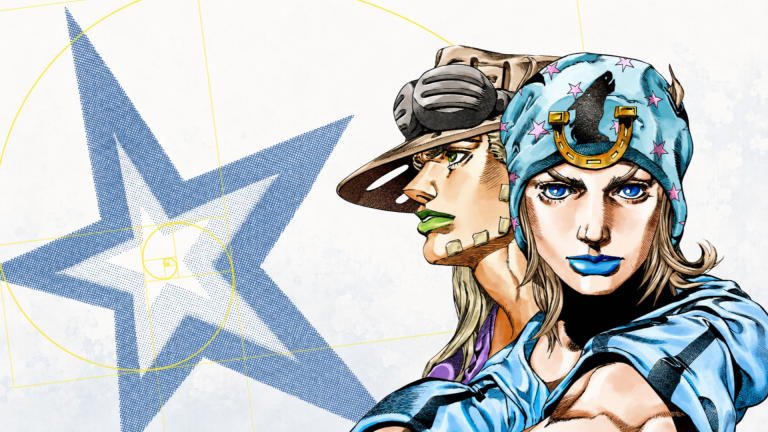
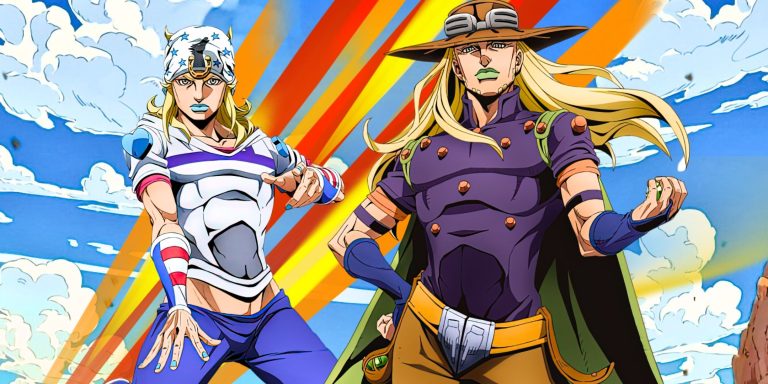
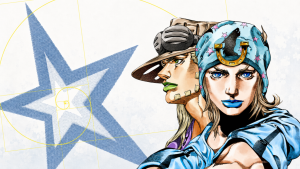
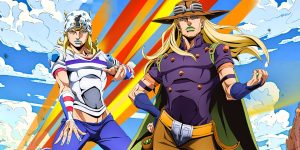
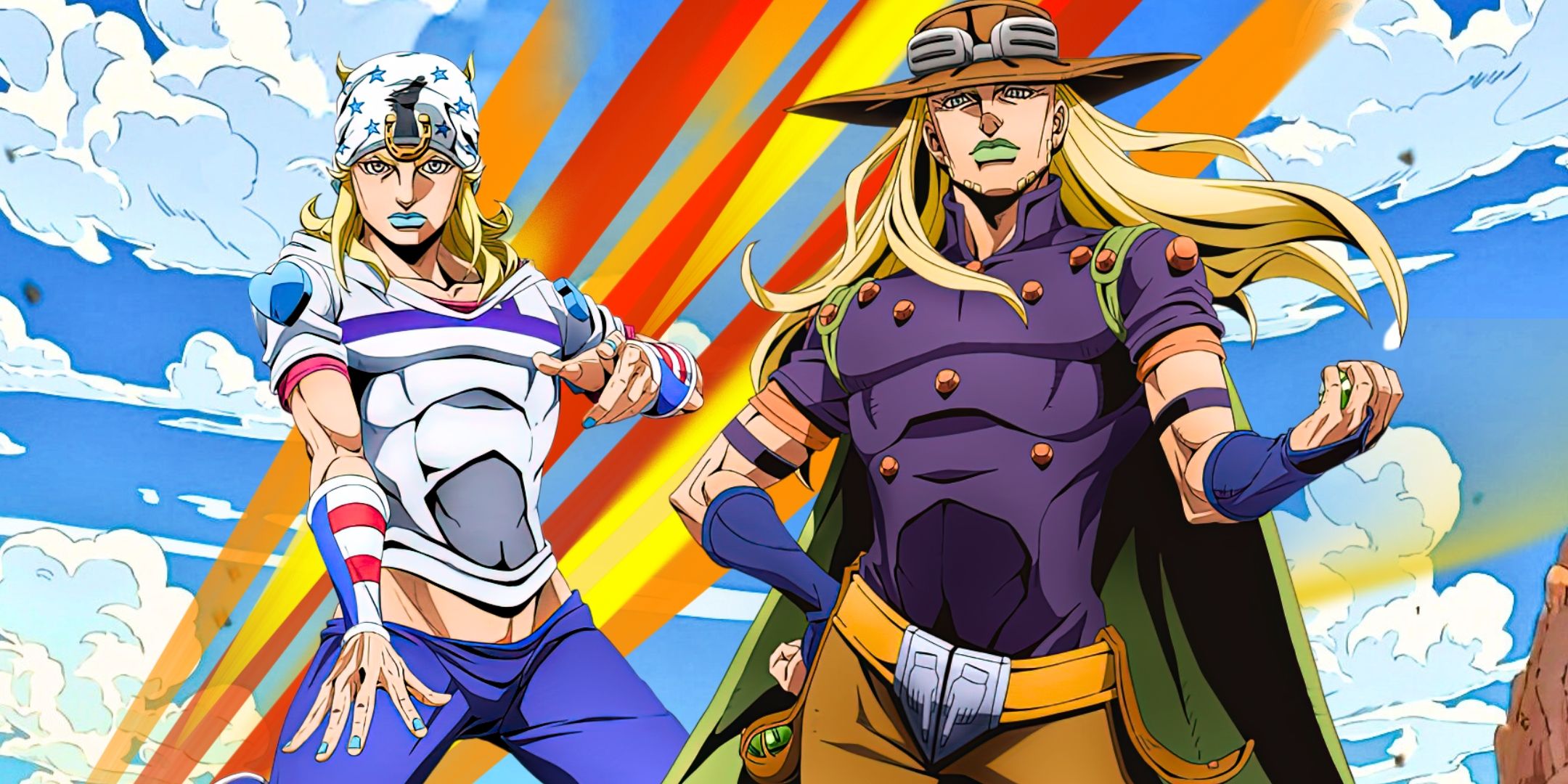
At the beating heart of Steel Ball Run is the electric, deeply human dynamic between its co-protagonists: Johnny Joestar and Gyro Zeppeli. While previous JoJo pairings relied heavily on buddy-cop theatrics or fierce warrior brotherhood, Johnny and Gyro’s relationship reads like a profound exercise in mutual salvation.
Dark Determination: Johnny’s Subversive Heroism
Johnny Joestar is an aberration among traditional anime leads. A former prodigy jockey struck down by hubris and paralyzed from the waist down, Johnny enters the narrative bitter, cynical, and stripped of classic shonen virtue. Unlike Jonathan Joestar’s incorruptible nobility, Johnny possesses what Araki explicitly terms “dark determination”—a terrifying, cold-eyed willingness to commit murder or sacrifice the greater good if it means clawing back his sense of self-worth.
His Stand, Tusk, acts as a visual and psychological metaphor for his evolution: beginning as an infantile, nail-shooting sprite (ACT 1) that evolves alongside his physical and mental growth into an imposing, dimensional-shattering juggernaut (ACT 4). Johnny’s pursuit of the Corpse Parts is not altruistic; it is an unapologetic, deeply vulnerable search for personal redemption and spiritual mobility.
The Philosophy of the Golden Ratio and the Spin
Counterbalancing Johnny’s inner void is Gyro Zeppeli, a disgraced executioner from the Kingdom of Naples whose boisterous, grill-flashing exterior masks a devastating moral dilemma. Gyro seeks to win the race to secure an amnesty for an innocent child sentenced to death. More importantly, Gyro introduces the Spin—a supernatural martial art grounded in Renaissance geometry and the Fibonacci sequence.
The Spin refines the mystical breathing of early JoJo Hamon through the lens of physics and kinetic rotational energy. Unleashed via hardened steel balls, the Spin creates optical illusions, distorts muscle memory, and manipulates gravity itself. For David Production, capturing the fluid, dizzying visual momentum of Gyro’s steel spheres tracing the Golden Spiral across desolate desert landscapes will be essential to matching Araki’s signature visual poetry.
The Equine Elephant in the Room: David Production’s Greatest Challenge
If the narrative demands are steep, the technical demands are staggering. There is a running joke throughout the anime industry that animating quadrupedal animals in motion is where animator budgets go to die. In Steel Ball Run, the horses are not peripheral set dressings—they are persistent, core characters operating at breakneck speeds across dynamic terrains.
A galloping horse requires precise anatomical articulation: the complex articulation of hocks and hooves, flexing muscular silhouettes, swaying manes, and synchronized rider physics. When multiplied across twenty jockeys simultaneously navigating dust storms, rivers, and volcanic passes, pure hand-drawn 2D animation becomes a financial and human logistical impossibility for a weekly television production.
The studio’s success hinges on its implementation of hybrid 3DCG technology. While CG often evokes skepticism within the anime community, studios like MAPPA (Chainsaw Man) and Orange (Trigun Stampede) have demonstrated that non-photorealistic rendering can soar when integrated with directorial finesse. David Production must pioneer a custom cel-shaded pipeline that replicates Araki’s heavy, cross-hatched line work onto 3D equine models without sacrificing the raw, kinetic impact of the Stand battles taking place in the saddle.
Distribution, Hype, and David Production’s Creative Direction
The discourse surrounding Steel Ball Run isn’t isolated to the animator’s desk; it also intersects with the contentious landscape of modern anime distribution. The release model of Stone Ocean—dumped onto Netflix in massive, episodic batches with minimal promotional cadence—severely dampened the viral, week-to-week cultural footprint that defined Stardust Crusaders and Golden Wind.
Fans and industry analysts alike are vocal: Steel Ball Run cannot survive the sterile vacuum of the binge-drop model. The psychological warfare between Johnny and President Funny Valentine, the reality-warping complexity of Valentine’s Stand D4C (Dirty Deeds Done Dirt Cheap), and the gut-wrenching climaxes require room to breathe, theorize, and dominate social timelines week after week.
David Production has proven its reverent loyalty to Araki’s universe over the past twelve years, constantly refining sound design, color shifts, and thematic musical scoring. For Part 7 to claim its rightful throne, the studio must balance artistic pedigree with an intentional, event-television broadcast strategy.
The Final Frontier of JoJo
JoJo’s Bizarre Adventure: Steel Ball Run is the ultimate litmus test for the modern anime industry. It asks whether a production committee can muster the resources, patience, and visual ingenuity required to adapt an unapologetic, high-concept, American Gothic epic without cutting corners. From the golden plains of the frontier to the cold dread of Valentine’s political machinations, Johnny and Gyro’s journey remains one of the finest stories ever committed to paper.
When David Production finally drops that long-awaited first key visual, the internet will inevitably break. Until then, we wait on the starting line, watching the horizon for dust, steel, and the golden spin.
What are your biggest hopes and fears for the Steel Ball Run anime? Do you think David Production should use 3D horses, or are you praying for pure 2D spectacle? Sound off in the comments below!