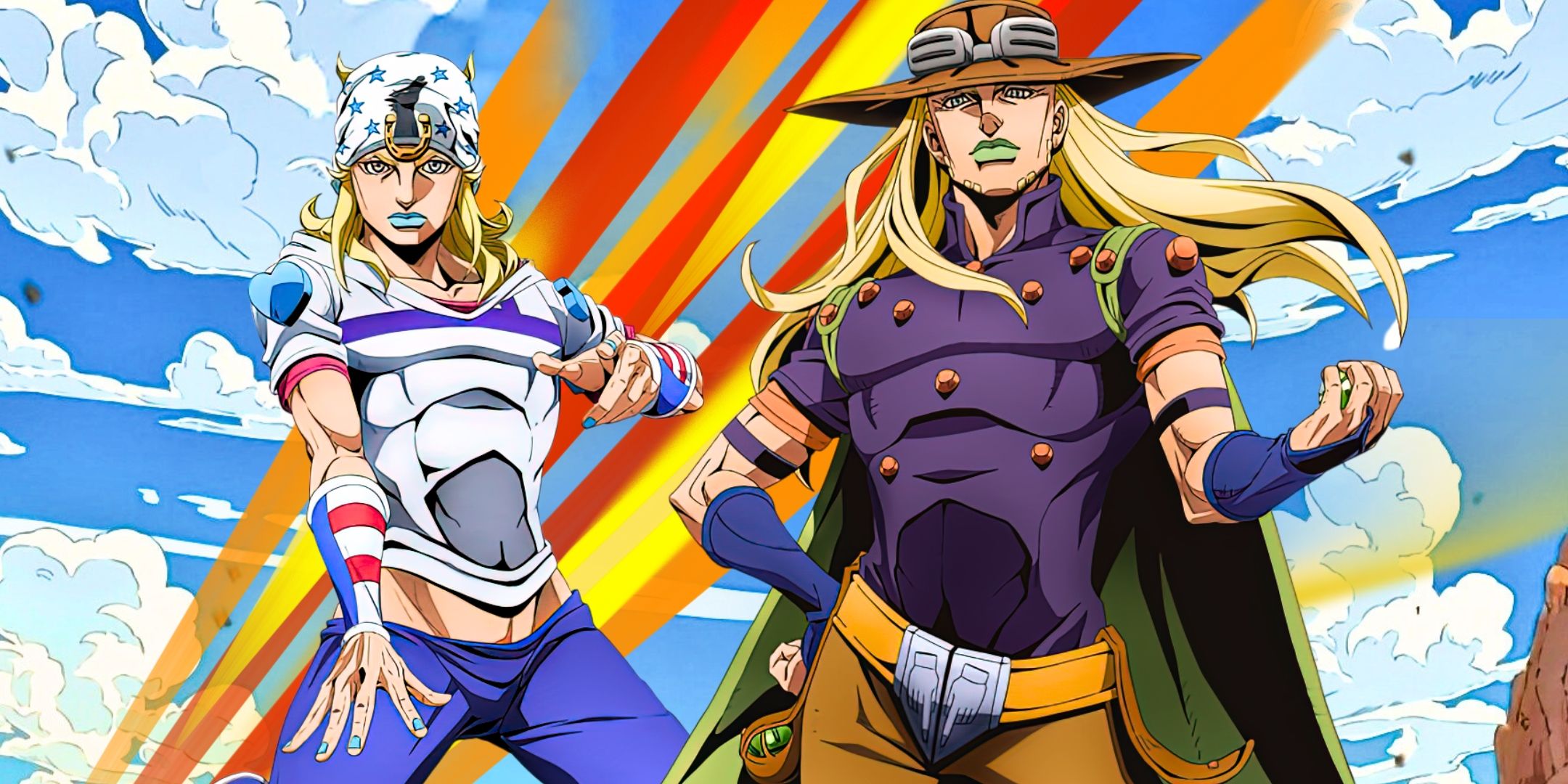
In the vast, hyper-stylized cosmos of Hirohiko Araki’s manga universe, few titles evoke the reverent hushes and feverish speculation commanded by JoJo’s Bizarre Adventure: Steel Ball Run. Consistently jockeying for the top spots on global manga leaderboards like MyAnimeList, Part 7 isn’t merely viewed by fans as another sequential chapter in a multi-generational saga; it is widely heralded as Araki’s undisputed magnum opus. Ever since the melancholic final chords of Stone Ocean faded in early 2023, the global anime community has turned its collective gaze toward David Production with an urgent question: How, and when, will the studio dare to tackle the American frontier?
Adapting Steel Ball Run is not just a standard production pipeline decision—it is a monumental creative gamble. Bridging alternate timelines, philosophical reinventions, visceral body horror, and groundbreaking kineticism, Part 7 represents the absolute zenith of Araki’s storytelling. Yet, behind the unyielding buzz lurks a technical gauntlet so notorious it has become an industry meme: the near-impossible task of animating hundreds of galloping horses across a 4,000-mile transcontinental race.
The Magnum Opus of Hirohiko Araki: A Rebirth on the Frontier
To understand the ravenous appetite for a Steel Ball Run anime, one must examine the transformative shift it brought to the franchise in 2004. Originating in Weekly Shonen Jump before migrating to the monthly seinen imprint Ultra Jump, Part 7 liberated Araki from the grueling weekly deadlines and thematic constraints of traditional shonen demographics. The result was a dramatic metamorphosis: panel compositions widened into sweeping cinematic panoramas, pacing matured into deliberate character studies, and the overarching tone shifted into a gritty, neo-Western epic steeped in historical fiction and existential dread.
Set in 1890, the narrative chronicles the Steel Ball Run—a grueling, high-stakes trans-American equestrian race stretching from the shores of San Diego to the streets of New York City. The $50 million prize lures eccentric gunslingers, international outlaws, indigenous warriors, and desperate dreamers from every corner of the globe. But beneath the dust, gunpowder, and roaring crowds lies an esoteric conspiracy of biblical proportions: an expedition secretly orchestrated to recover the mummified relics of the Saint’s Corpse, artifacts granting godlike power over dimensional fortune.
The Anatomy of Anti-Heroes: Johnny Joestar and Gyro Zeppeli
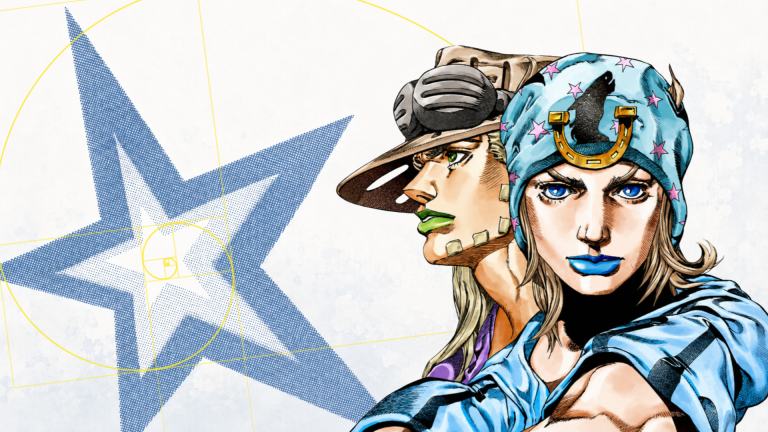
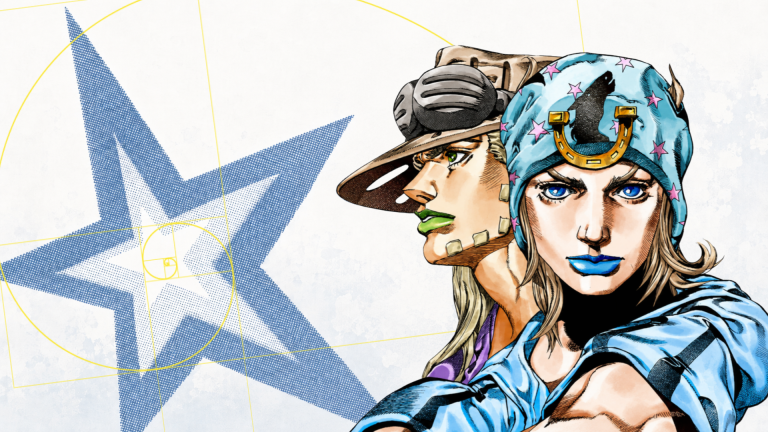
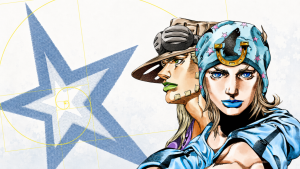
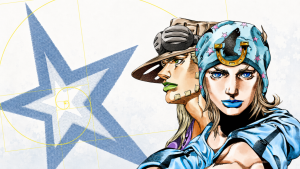
At the beating heart of this sprawling race is what stands as undeniably the finest character dynamic Araki has ever penned. Rather than presenting another paragon of righteous justice like Jonathan Joestar or the cool detachment of Jotaro Kujo, Steel Ball Run introduces us to Johnny Joestar—a fallen prodigy stripped of his glory, his prestige, and the use of his legs due to an act of sheer, youthful arrogance.
A Tale of Redemption, Cynicism, and the ‘Spin’
Johnny is not an uncomplicated hero; he is bitter, pragmatic, and frequently dominated by what Araki explicitly terms “Dark Determination”—a cold, black flame of unyielding resolve willing to kill without moral hesitation. His journey alongside his horse, Slow Dancer, is not primarily about saving the world or claiming prize money. It is an excruciating, profoundly human quest to reach “below zero” and bring himself back to “zero.”
Counterbalancing Johnny’s brooding introspection is Gyro Zeppeli, a disgraced Neapolitan royal executioner riding the proud steed Valkyrie. Armed with throwing steel spheres, an absurd sense of humor, and teeth embedded with the words “GO! GO! ZEPPELI,” Gyro appears at first blush to be standard comic relief. Yet beneath the eccentricities lies a deeply burdened soul running the race to win royal clemency for an innocent boy sentenced to death back home.
Rather than relying purely on the conventional Stand abilities that defined Parts 3 through 6, Gyro introduces the concept of the Spin—a sacred discipline manipulating the mystical properties of the Golden Ratio. By turning kinetic rotation into a supernatural martial art, Araki crafts an intricate magic system that fundamentally alters combat. The slow-burn synergy between Johnny’s evolving Stand, Tusk, and Gyro’s ancient Spin mechanics creates a tactical masterclass, while their fireside banter and burgeoning brotherhood provide the emotional bedrock that elevates the series far above standard battle-manga tropes.
The Technical Everest: David Production’s Equestrian Conundrum
While the demand for the anime is deafening, the practical realities facing David Production are genuinely staggering. Animators across the Japanese animation industry acknowledge that four-legged quadrupeds—specifically horses—are among the single most difficult, labor-intensive subjects to render in traditional 2D hand-drawn animation. Their anatomy is intricate, their muscular contractions are complex, and maintaining consistent volume and weight throughout varying gallop cadences pushes key animators to absolute exhaustion.
The 3D vs. 2D Dilemma of Animating Horses
In Steel Ball Run, horses are not secondary background dressing; they are central protagonists. Tactical maneuvers depend on drafting behind another horse’s slipstream, reading ground vibrations, and riding through lethal terrain while engaged in high-speed, Stand-infused shootouts. David Production, despite their universally celebrated triumphs with Parts 1 through 6, faces a profound stylistic crossroads:
- Full 2D Hand-Drawn: Aesthetically ideal for purists, but economically and temporally ruinous over an estimated 36-to-48 episode run.
- Hybrid 3D CGI Integration: Modern cel-shaded CGI (akin to techniques seen in Studio Orange’s Trigun Stampede or MAPPA’s grander set pieces) could provide fluid equestrian movement, yet risks triggering the uncanny valley backlash from fans accustomed to DP’s textured, pop-art hand-drawn aesthetic.
- Rotoscope-Assisted Animation: A viable middle ground, utilizing live-action reference models blended with heavy 2D illustrative key-framing to retain Araki’s razor-sharp crosshatching.
Industry insiders have long speculated that this technical hurdle is precisely why a quiet gap followed Stone Ocean. David Production cannot merely copy-paste its previous production pipelines; adapting Steel Ball Run requires rebuilding their workflow from the ground up, likely demanding specialized co-studios to manage the equestrian kinematics without sacrificing Araki’s signature fashion-forward visual intensity.
Geopolitical Stakes: The Enigma of Funny Valentine
Any dissection of the anticipation surrounding Part 7 is incomplete without acknowledging its central antagonist: the 23rd President of the United States, Funny Valentine. Far removed from the sadistic megalomania of Dio Brando or the chaotic paranoia of Diavolo, Valentine is an ideological titan driven by an absolute, unflinching pursuit of American prosperity.
Wielding the reality-shattering Stand Dirty Deeds Done Dirt Cheap (D4C)—which allows him to traverse parallel dimensions by compressing himself between objects—Valentine challenges audiences with questions of nationalistic fervor, utilitarian ethics, and moral justification. His famous “first napkin” monologue remains one of the most culturally resonant dialogues in modern manga. The clash between Johnny’s raw, personal desperation and Valentine’s grandiose, self-righteous vision of national dominance turns the climax of Steel Ball Run into an unforgettable clash of philosophies that will set social media ablaze upon its eventual broadcast.
The Horizon: Why Steel Ball Run Will Redefine David Production
The buzz surrounding Steel Ball Run isn’t mere nostalgia; it is the anticipation of a genre-defining watershed moment. With the mainstreaming of prestige anime, an adaptation executed with the love, budget, and directorial flair it deserves could easily propel the franchise into the same global awards conversations occupied by the medium’s highest artistic achievements.
Whether David Production opts for a seasonal multi-cour television rollout or kickstarts the journey with a high-budget theatrical feature to capture the opening legs of the race, one truth remains unassailable: Steel Ball Run is the ultimate frontier. When the starting gun finally fires, anime history will be written on the dust of the American trail.
How do you think David Production should tackle the legendary horse animation of Part 7? Are you hoping for a multi-season weekly broadcast or cinematic features? Sound off in the comments below, and keep your browsers locked to Wibux.com for all breaking anime news and deep-dive analysis!