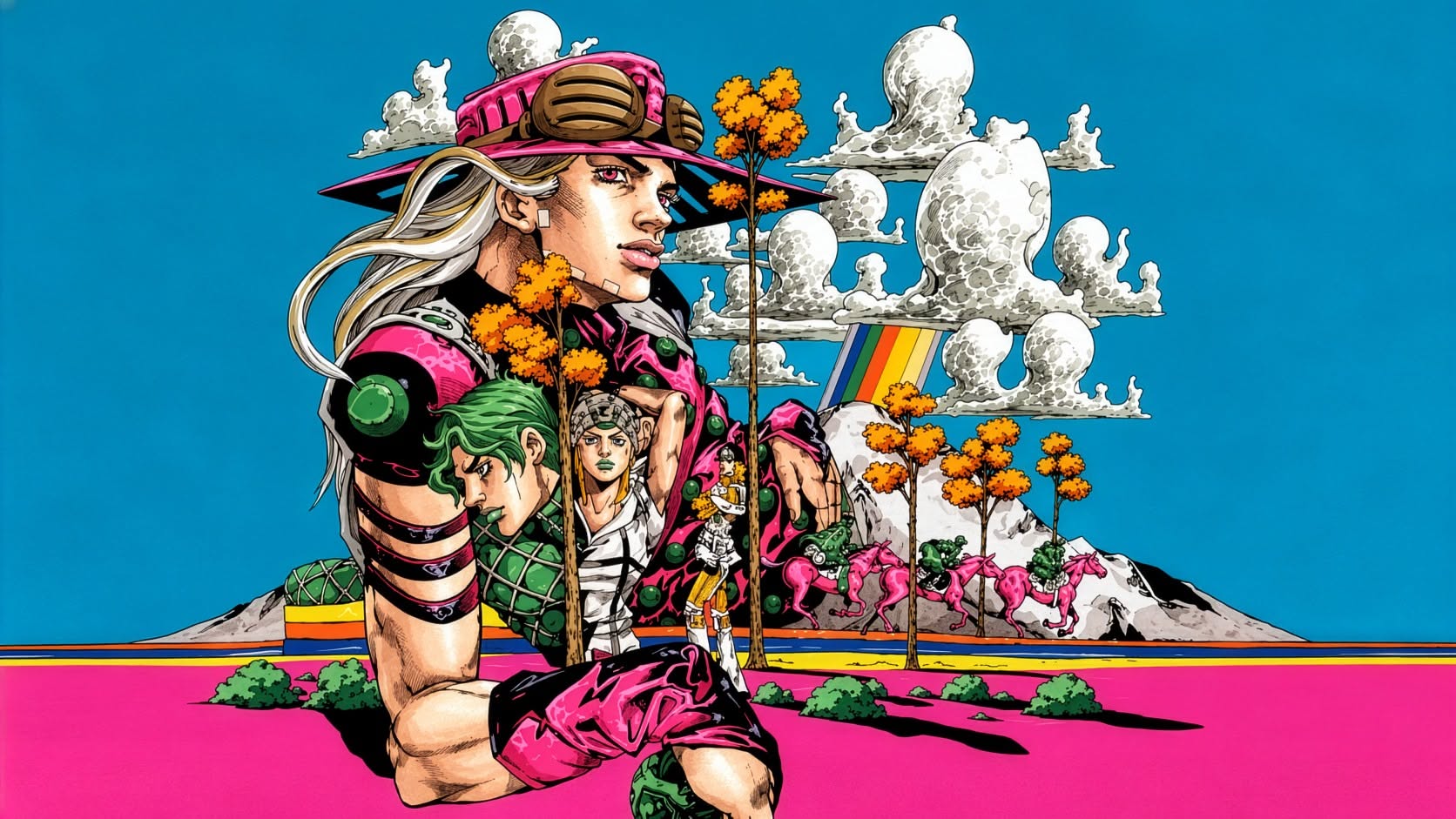
Ever since the bittersweet, universe-altering notes of Jolyne Cujoh’s journey faded into the horizon at the end of Stone Ocean, the anime community has inhabited a state of collective, breathless anticipation. For casual viewers, JoJo’s Bizarre Adventure is a stylish, meme-generating parade of fabulous poses and psychokinetic punch-ghosts. But for the initiated, every animated part was merely a prelude to the true summit: Steel Ball Run.
Widely regarded as Hirohiko Araki’s magnum opus, Part 7 isn’t just another installment in a multi-generational bloodline saga—it represents a complete structural and thematic rebirth. It is the holy grail of modern manga adaptations, currently holding a legendary iron grip on the top tier of MyAnimeList right alongside Berserk. Yet, as whispers around David Production’s next moves grow deafening, the reality of translating this trans-American equestrian epic into television animation brings an equal mix of euphoria and logistical dread.
A Trans-American Odyssey: Araki’s Seinen Metamorphosis
To understand the immense weight of the Steel Ball Run anime buzz, one must examine the pivot point of Araki’s creative trajectory in 2004. Originally serialized in Weekly Shonen Jump before migrating to the monthly, mature pastures of Ultra Jump, Part 7 afforded Araki the breathing room to abandon rapid-fire shonen tropes in favor of an expansive, dust-choked historical Western.
Set against the backdrop of 1890, the narrative chronicles the titular cross-continental horse race: a grueling, 6,000-kilometer sprint from San Diego Beach to New York City, orchestrated by the eccentric promoter Steven Steel with a staggering $50 million grand prize on the line. But underneath the spectacle of steaming locomotives, rugged terrain, and cutthroat opportunists lies a deeply mystical conspiracy involving the shattered, mummified relics of an unnamed saint—a narrative gambit that marries manifest destiny with cosmic horror.
This historical framing elevates the series beyond standard battle-manga confines. Steel Ball Run operates as an existential, sun-bleached journey where nature is as violent and unpredictable as any enemy Stand user, setting an unprecedented tone for the franchise.
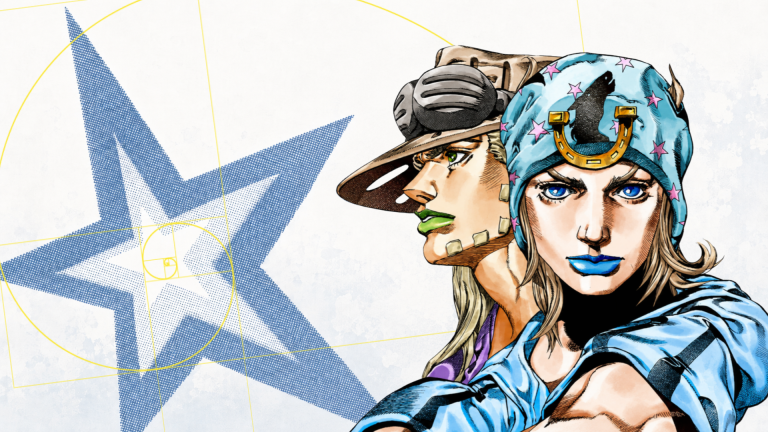
The Golden Ratio: Johnny Joestar, Gyro Zeppeli, and Flawed Humanity
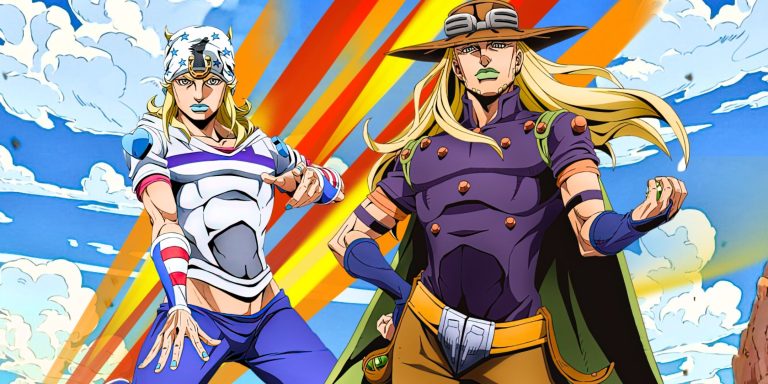
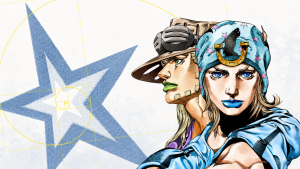
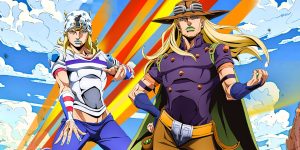
At the beating heart of this cross-country marathon is the greatest duo Araki has ever penned: Johnny Joestar and Gyro Zeppeli. Their dynamic represents a profound leap in character psychology, diverging radically from the archetypal heroism of Jonathan or the effortless swagger of Jotaro.
Johnny Joestar: The Struggle from Negative to Zero
Johnny is not a traditional hero; in fact, for significant stretches of the story, he is barely even righteous. A former horse-racing prodigy whose hubris cost him both his fame and the use of his legs, Johnny begins the story as a bitter, paraplegic outcast hollowed out by self-pity. His journey is not driven by noble altruism, but by a desperate, feral obsession with walking again—a state he describes not as striving to reach positive ground, but merely clawing his way from “negative back to zero.” Johnny exhibits a terrifying, cold-eyed resolve—what Araki terms “dark determination”—that makes him one of the most morally complex protagonists in modern fiction.
Gyro Zeppeli: Charisma, Comedy, and Heritage
In contrast stands Gyro Zeppeli, a Neapolitan executioner’s son riding to win the race to secure amnesty for an innocent child condemned to death. Flamboyant, absurdly humorous (his operatic compositions about mozzarella cheese remain fan favorites), and heavily burdened by his family’s surgical duties, Gyro is the philosophical anchor of the tale. Through his mentorship of Johnny, the story balances psychological grit with transcendent emotional resonance, culminating in a bond that carries the weight of brothers in arms facing an indifferent, unforgiving frontier.
The Physics of Miracles: Moving Beyond Stands into the Spin
Where previous parts treated Stand battles as tactical puzzles based on idiosyncratic superpowers, Steel Ball Run introduces the Spin—a diegetic martial art and metaphysical law deeply intertwined with classical mathematics. Developed by the Zeppeli family, the Spin harnesses the rotational momentum of steel spheres, eventually unlocking the terrifying potential of the Golden Rectangle and the Fibonacci sequence.
This reimagined power system revitalizes combat. When Stands do emerge—such as Johnny’s evolving Tusk, Gyro’s Ball Breaker, or the dimension-hopping nightmare of President Funny Valentine’s Dirty Deeds Done Dirt Cheap (D4C)—they feel like natural physical manifestations of supreme biological and mechanical mastery rather than arbitrary supernatural gifts. For an adaptation, animating the visual geometry of the Spin presents a dazzling challenge: visualizing rotational force, trajectory arcs, and invisible spatial distortions in a way that respects Araki’s intricate, draftsmanship-heavy linework.
The Elephant—and Horse—in the Room: David Production’s Technical Gauntlet
If fans are universally united in wanting the adaptation, the sakuga and industry-savvy communities are equally united in their sympathy for the production staff. There is a notorious adage among 2D animators: nothing destroys a studio schedule quite like drawing horses.
Unlike humanoid fighters who duel in fixed arenas, Steel Ball Run constantly features dozens of thoroughbreds in full, galloping motion across diverse topographies. Quadrupeds require anatomically intricate skeletal shifting, muscle deformation, and complex perspective shifts that push traditional hand-drawn key animation to the brink of financial and temporal feasibility.
David Production has built a legendary reputation on their stylistic fidelity, expressive color-shifts, and vibrant onomatopoeic typography. Yet, to bring Part 7 to life without completely collapsing under the weight of production deadlines, the studio will inevitably have to pioneer an unprecedented hybrid approach:
- Advanced 3DCG Integration: Utilizing highly stylized, cel-shaded 3D models for crowd shots and mid-distance gallops—a technique seen in shows like Attack on Titan or Studio Orange projects—while saving meticulous 2D sakuga cuts for close-ups and dramatic impact frames.
- Atmospheric Cinematography: Leaning heavily into dynamic lighting, heat hazes, and dust particles to seamlessly blend disparate assets and capture the sweltering atmosphere of the 19th-century American wilderness.
- Pacing and Format: Part 7’s sheer density cannot survive a rushed, single-cour treatment. Speculation leans toward a multi-season or split-cour architecture that gives key set-pieces—like the Sugar Mountain spring or the clash against Diego Brando—the cinematic breathing room they deserve.
The Road Ahead: Reclaiming the Monumental Hype
The cultural anticipation surrounding Steel Ball Run goes beyond typical seasonal anime excitement; it is the impending adaptation of an undisputed cultural artifact. While Netflix’s batch-drop release model somewhat blunted the organic, week-to-week cultural discourse for Stone Ocean, fans and industry insiders alike are calling for a return to traditional episodic distribution to let the suspense of the race build naturally across global fandoms.
Whether David Production is already quietly building 3D equestrian rigs behind closed doors or waiting for their full production pipeline to clear, one fact is immutable: whenever the first whistle blows on the San Diego starting line, the anime landscape will experience a seismic shift. Araki’s magnum opus has spent nearly two decades waiting in the wings—and when it finally gallops onto our screens, it promises to redefine what anime epic fantasy can achieve.
Are you hoping for a fully hand-drawn adaptation, or do you trust David Production to nail a hybrid 3D approach for the horses? Which Stand battle are you most desperate to see animated? Let us know in the comments below!